
- Release Year: 2024
- Platforms: Windows
- Publisher: Gearbox Publishing, LLC
- Developer: Blackbird Interactive, Inc.
- Genre: Strategy, Tactics
- Perspective: 3rd-person
- Game Mode: Online Co-op, Online PVP, Single-player
- Gameplay: Base building, Real-time strategy, Space flight, Unit control
- Setting: Futuristic, Sci-fi
- Average Score: 77/100
Description
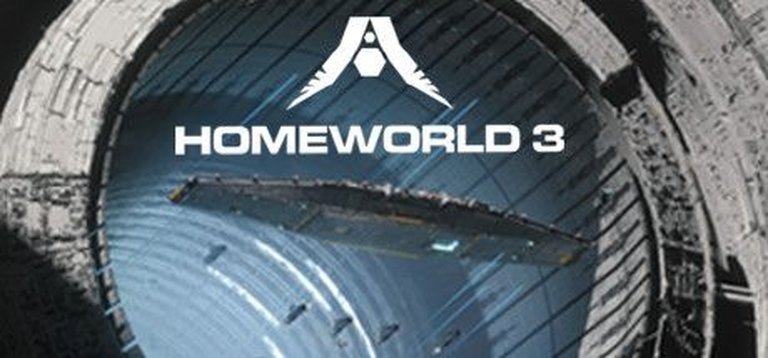
Homeworld 3 is a real-time strategy game set in a sci-fi universe, continuing the epic space saga of the Homeworld series. Players command fleets of starships in large-scale battles, navigating through a richly detailed 3D environment with a free camera perspective. The game introduces new features like terrain with tunnels and a roguelike mode, while maintaining the series’ signature tactical depth and immersive storytelling. Developed by Blackbird Interactive and published by Gearbox Publishing, Homeworld 3 blends strategic gameplay with stunning visuals, offering both single-player and multiplayer experiences.
Gameplay Videos
Where to Buy Homeworld 3
PC
Homeworld 3 Free Download
Homeworld 3 Mods
Homeworld 3 Guides & Walkthroughs
Homeworld 3 Reviews & Reception
metacritic.com (75/100): Homeworld 3 is everything I hoped it could be. It improves on its predecessors in every conceivable way, and adds meaningful new features including a cooperative War Games mode.
pcgamer.com (77/100): Homeworld 3 takes some big swings, but while it’s a very good RTS, it never quite comes together in the same way as its predecessors.
game8.co (68/100): Homeworld 3 is yet another case of a legacy sequel losing sight of what made the original games so memorable.
inverse.com (90/100): Homeworld 3 carries on that legacy to near-perfection, crafting an impeccable campaign that stands among the genre’s best.
opencritic.com (77/100): Homeworld 3 feels like a great return to form for this iconic RTS franchise.
Homeworld 3: A Triumphant Return to the Stars, Marred by Narrative Stumbles
Introduction: The Legacy of a Space Odyssey
The Homeworld series has long stood as a titan in the real-time strategy (RTS) genre, a franchise that redefined what it meant to command fleets in the vast, three-dimensional expanse of space. With its debut in 1999, Homeworld captivated players with its immersive storytelling, innovative 3D combat, and a hauntingly beautiful orchestral score. Its sequel, Homeworld 2 (2003), expanded on these foundations, deepening the lore and refining the gameplay. Now, over two decades later, Homeworld 3 (2024) emerges as a long-awaited continuation, developed by Blackbird Interactive—a studio founded by veterans of the original series—and published by Gearbox Publishing. This review will dissect Homeworld 3 in exhaustive detail, exploring its development, narrative, gameplay, world-building, reception, and legacy.
Development History & Context: A Labor of Love and Legacy
The Studio and the Vision
Blackbird Interactive, helmed by Rob Cunningham (a co-founder of Relic Entertainment, the original creators of Homeworld), embarked on Homeworld 3 with a clear mission: to revive the essence of the series while modernizing its mechanics. The studio’s prior work on Homeworld: Deserts of Kharak (2016) demonstrated their ability to honor the franchise’s roots while innovating. For Homeworld 3, the team sought to return to the series’ signature 3D space combat, leveraging Unreal Engine 4 to deliver a visually stunning and mechanically deep experience.
Technological Constraints and Innovations
The development of Homeworld 3 was not without challenges. The game’s ambitious 3D combat system, which allows fleets to maneuver freely in all directions, required sophisticated AI pathfinding and physics simulations. The introduction of “megaliths”—massive, destructible structures that add verticality and cover to battles—was a particularly bold innovation, demanding significant technical refinement. The game’s persistent fleet system, where units carry over between missions, also required careful balancing to ensure strategic depth without overwhelming players.
The Gaming Landscape at Release
Homeworld 3 launched into a gaming landscape vastly different from the one that greeted Homeworld 2 in 2003. The RTS genre, once dominant, had waned in mainstream popularity, with many classic franchises fading into obscurity. Homeworld 3 thus faced the dual challenge of appealing to nostalgic fans while attracting new players. Its release on May 13, 2024, was met with anticipation, but also skepticism—could a game so deeply rooted in the past find relevance in the present?
Narrative & Thematic Deep Dive: A Story of Legacy and Loss
Plot Overview
Homeworld 3 picks up approximately 100 years after the events of Homeworld 2. The Hiigaran Empire, now in a golden age thanks to the Hyperspace Gate Network, faces a new existential threat: the Anomaly, a catastrophic disruption in hyperspace that threatens to unravel interstellar travel. The legendary Fleet Command, Karan S’jet, disappears while investigating the Anomaly, leaving her protégé, Imogen S’jet, to take command of the newly rebuilt Khar-Kushan mothership. The campaign follows Imogen’s journey to uncover the truth behind the Anomaly and confront the Incarnate, a rogue AI faction tied to ancient Progenitor technology.
Characters and Dialogue
The narrative centers on Imogen S’jet, a scientist-turned-commander whose journey is both personal and monumental. Her relationship with Karan, the revered Fleet Command of the previous games, is a focal point, though the story struggles to fully develop their dynamic. Supporting characters, such as Intel Officer Isaac Paktu, provide exposition but lack depth. The antagonist, the Incarnate Queen, is a particularly weak link—her motivations are vague, and her dialogue often veers into clichéd villainy.
Themes: Exile, Redemption, and the Cost of Progress
Homeworld 3 grapples with themes of exile and redemption, echoing the original game’s narrative of the Kushan people’s return to Hiigara. The Anomaly serves as a metaphor for the unintended consequences of technological progress, a cautionary tale about the dangers of unchecked ambition. The game also explores the idea of legacy, as Imogen steps into Karan’s shoes, burdened by the weight of her predecessor’s achievements.
Narrative Weaknesses
Despite its thematic ambitions, Homeworld 3’s story is its weakest element. The plot is often convoluted, with key events—such as the nature of the Anomaly and the Incarnate’s origins—left under-explained. The pacing is uneven, with some missions feeling rushed while others drag. The lack of emotional resonance, a hallmark of the original Homeworld, is glaring. Where Homeworld (1999) made players feel the loss of Kharak and the triumph of returning to Hiigara, Homeworld 3 struggles to evoke similar emotional stakes.
Gameplay Mechanics & Systems: A Masterclass in 3D Strategy
Core Gameplay Loop
Homeworld 3 retains the series’ signature 3D combat, where fleets maneuver freely in space, engaging in tactical battles that emphasize positioning and unit composition. The game’s core loop revolves around resource management, fleet construction, and mission-based objectives. Players harvest resources from asteroids and salvage debris, using these to build and upgrade ships. The mothership serves as the central hub, with production modules allowing for the construction of fighters, corvettes, and capital ships.
Combat and Unit Dynamics
Combat is where Homeworld 3 shines. The game’s 3D movement system allows for complex tactical maneuvers, such as flanking enemy fleets or using megaliths for cover. Unit dynamics follow a rock-paper-scissors model: fighters excel against capital ships but struggle against corvettes, which in turn are vulnerable to fighters. This system encourages strategic diversity, as players must adapt their fleet composition to counter enemy threats.
Innovations: Megaliths and Persistent Fleets
The introduction of megaliths—massive, destructible structures—adds a new layer of tactical depth. These structures can be used for cover, ambushes, or even as weapons, as players can collapse sections to crush enemy fleets. The persistent fleet system, where units carry over between missions, is another standout feature. This system allows players to customize their fleets over time, fostering a sense of progression and attachment to individual ships.
UI and Controls
The game’s UI is sleek and functional, with a rotatable 3D tactical map that provides a clear overview of the battlefield. Controls are intuitive, though the game’s reliance on 3D movement can be disorienting for newcomers. The hyperspace jump mechanic, which allows for rapid relocation of units, is a welcome addition, though its cooldown system can feel restrictive in heated battles.
Flaws and Frustrations
Despite its strengths, Homeworld 3 is not without flaws. AI pathfinding can be erratic, with units occasionally colliding or taking inefficient routes. The game’s difficulty curve is inconsistent, with some missions feeling unfairly punishing. The lack of a robust tutorial system may alienate newcomers, while veterans may find the campaign’s mission structure repetitive.
World-Building, Art & Sound: A Feast for the Senses
Setting and Atmosphere
Homeworld 3’s setting is a sprawling, visually stunning cosmos. The game’s environments range from the icy wastes of Noctuua-27 to the ruins of ancient Progenitor structures, each rendered in meticulous detail. The sense of scale is breathtaking, with fleets clashing amid the wreckage of colossal space stations and asteroid fields. The game’s atmosphere is further enhanced by its use of lighting and particle effects, creating a sense of immersion that few RTS games can match.
Visual Direction
The game’s art direction is a triumph, blending the series’ classic aesthetic with modern graphical fidelity. Ship designs are intricate and distinctive, with each faction—Hiigaran, Taiidan, and Incarnate—boasting unique visual identities. The megaliths, in particular, are a standout feature, their towering, alien architecture adding a sense of mystery and grandeur to the battlefield.
Sound Design and Music
The sound design in Homeworld 3 is equally impressive. The game’s orchestral score, composed by Paul Ruskay (who also scored the original Homeworld), is a masterpiece, evoking the same sense of awe and melancholy that defined the series’ earlier entries. The use of dynamic music, which shifts in intensity based on the player’s actions, further enhances the game’s immersive qualities. Sound effects, from the hum of engines to the thunder of capital ship broadsides, are crisp and impactful, adding to the game’s tactile feel.
Reception & Legacy: A Mixed but Enduring Impact
Critical Reception
Homeworld 3 received generally favorable reviews from critics, with a Metacritic score of 75/100. Reviewers praised the game’s faithful recreation of the series’ signature 3D combat, stunning visuals, and atmospheric storytelling. However, criticisms were leveled at the game’s repetitive mission structure, inconsistent AI, and underwhelming narrative. Some outlets, such as PC Gamer, noted that while the game captured the essence of Homeworld, it failed to innovate in meaningful ways.
Commercial Performance
Commercially, Homeworld 3 performed modestly, selling approximately 170,000 units on Steam by late 2024. The game’s niche appeal and lack of console releases likely limited its reach, though its inclusion in bundles and periodic sales helped sustain its player base. The game’s post-launch support, including DLC expansions and free updates, was well-received, though some players criticized the accelerated release schedule for paid content.
Influence and Legacy
Homeworld 3’s legacy is still unfolding. While it may not have revolutionized the RTS genre, it has reinvigorated interest in the Homeworld series, proving that there is still an audience for deep, narrative-driven strategy games. The game’s innovations, such as the megaliths and persistent fleet system, could influence future RTS titles, particularly those set in space. However, its narrative missteps serve as a cautionary tale about the dangers of prioritizing spectacle over substance.
Conclusion: A Flawed but Essential Return to Form
Homeworld 3 is a game of contradictions. It is a triumphant return to the series’ roots, delivering the same sense of scale, tactical depth, and atmospheric storytelling that made the original Homeworld a classic. Yet, it is also a game that stumbles in its narrative execution, failing to evoke the emotional resonance of its predecessors. Its gameplay innovations are bold and largely successful, but its AI and mission design can be frustratingly inconsistent.
Ultimately, Homeworld 3 is an essential experience for fans of the series and a worthy addition to the RTS genre. It may not be the perfect sequel that some had hoped for, but it is a testament to the enduring appeal of the Homeworld universe. For those willing to overlook its narrative flaws, Homeworld 3 offers a deeply rewarding strategic experience, one that captures the awe and wonder of commanding fleets in the vast, uncharted expanse of space.
Final Verdict: 8.5/10 – A flawed but magnificent return to the stars.