
- Release Year: 2017
- Platforms: Macintosh, Windows
- Publisher: Gambitious Digital Entertainment
- Developer: Arachnid Games
- Genre: Action, RPG
- Perspective: Behind view
- Game Mode: Single-player
- Gameplay: Naval, RPG elements, Shooter, watercraft
- Setting: Fantasy, Underwater
- Average Score: 77/100
Description
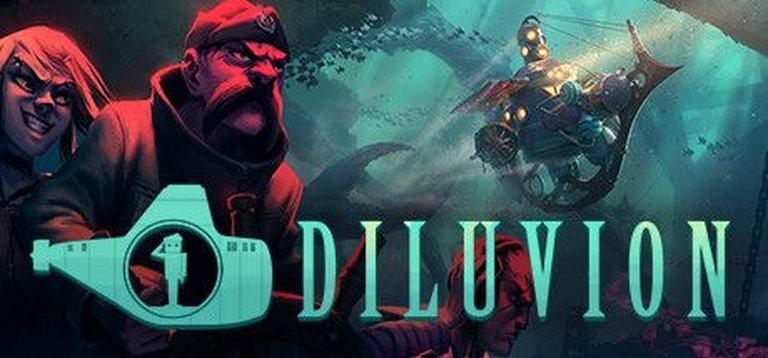
Diluvion is an action-RPG set in a post-apocalyptic underwater world where players command a submarine, exploring vast ocean depths, engaging in naval combat, and uncovering the mysteries of a drowned civilization. With RPG elements, direct control, and a mix of behind-view and side-view perspectives, the game blends exploration, resource management, and tactical battles in a visually immersive environment.
Gameplay Videos
Where to Buy Diluvion
Diluvion Free Download
Diluvion Patches & Updates
Diluvion Guides & Walkthroughs
Diluvion Reviews & Reception
metacritic.com (88/100): Diluvion is one great sea adventure like you’ve never seen. A must-buy if you hold on to the stigma around under water games.
opencritic.com (72/100): An interesting setting let down by frustrating checkpoints and rough UI.
steamcommunity.com (72/100): An interesting setting let down by frustrating checkpoints and rough UI.
saveorquit.com : Diluvion is a 3D deep sea exploration game which lets you control your own submarine.
Diluvion Cheats & Codes
PC (MrAntiFun Trainer V01.15e)
Start game world first then activate health cheat. Open inventory window then activate money cheat.
| Code | Effect |
|---|---|
| F1 | Inf. Health |
| F2 | Inf. Money |
PC (FLiNG Trainer V1.0 – 1.16)
| Code | Effect |
|---|---|
| Numpad 1 | Immortality (Inf. Health) |
| Numpad 2 | Bes. Acceleration (Inf. Acceleration) |
PC (Cheat Happens Trainer V1.3.28)
Press F1 at main menu. Listen for ‘Trainer Activated’. Press desired hotkey.
| Code | Effect |
|---|---|
| NumPad1 | Mega Money |
| NumPad2 | Unlimited Hull |
| NumPad3 | No Overdrive Heat |
| NumPad4 | Unlimited Bolts |
PC (Cheat Happens Trainer V1.2.33)
| Code | Effect |
|---|---|
| Unlock Built-In Cheat Menu | Unlocks the built-in cheat menu in the game |
PC (Cheat Happens Trainer V1.17.95)
| Code | Effect |
|---|---|
| NumPad1 | Mega Money |
| NumPad2 | Mega Hull |
| NumPad3 | Unlimited Oxygen |
| NumPad4 | Unlimited Bolts/Super Mode |
| NumPad5 | Unlimited Overdrive |
PC (Cheat Happens Trainer V1.17.92)
| Code | Effect |
|---|---|
| NumPad1 | Mega Money |
| NumPad2 | Mega Hull |
| NumPad3 | Unlimited Oxygen |
| NumPad4 | Unlimited Bolts/Super Mode |
| NumPad5 | Unlimited Overdrive |
PC (Cheat Happens Trainer V1.17.2)
| Code | Effect |
|---|---|
| NumPad1 | Mega Money |
| NumPad2 | Mega Hull |
| NumPad3 | Unlimited Oxygen |
| NumPad4 | Unlimited Bolts/Super Mode |
| NumPad5 | Unlimited Overdrive |
PC (PLITCH)
Download and install PLITCH. Create a free or premium account. Open the client, search for your game, and start PLITCHing.
| Code | Effect |
|---|---|
| Money +5.000 | Adds 5,000 money |
| Infinite bolts/ammo | Unlimited bolts/ammo |
| Godmode | Invincibility |
Diluvion: A Deep Dive into the Abyss of Ambition and Flaw
Introduction: The Siren Call of the Deep
In the vast ocean of indie games, few titles dare to plunge players into the crushing depths of a post-apocalyptic aquatic world with the audacity of Diluvion. Released in 2017 by Arachnid Games, this underwater exploration RPG promised a unique blend of submarine combat, crew management, and deep-sea discovery. Yet, like the treacherous waters it depicts, Diluvion is a game of stark contrasts—its breathtaking beauty and innovative design often obscured by frustrating mechanics and unpolished execution. This review will navigate the murky depths of Diluvion, examining its development, narrative, gameplay, and legacy to determine whether it sinks or swims in the annals of gaming history.
Development History & Context: A Labor of Love in the Indie Ocean
The Studio and Vision
Arachnid Games, a small indie studio, embarked on Diluvion with a clear vision: to create a game that captured the isolation, wonder, and peril of underwater exploration. Inspired by Jules Verne’s 20,000 Leagues Under the Sea and the steampunk aesthetic, the team sought to craft a world where humanity’s last remnants cling to life beneath an unbreakable ice sheet. The game’s Kickstarter campaign in 2015 reflected this ambition, promising a rich, atmospheric experience that blended 3D exploration with 2D crew management.
Technological Constraints and Challenges
Developed using the Unity engine, Diluvion faced the typical challenges of indie development: limited resources, a small team, and the need to balance scope with feasibility. The game’s dual perspective—3D for submarine navigation and 2D for crew interactions—was a bold choice that required careful integration. However, this ambition also led to technical hurdles, particularly in the game’s UI and control scheme, which would later become points of criticism.
The Gaming Landscape of 2017
Diluvion emerged in a year crowded with indie darlings and AAA blockbusters. Games like The Legend of Zelda: Breath of the Wild and Horizon Zero Dawn dominated headlines, while indie titles such as Hollow Knight and Cuphead set new standards for polish and innovation. In this competitive environment, Diluvion struggled to carve out its niche, despite its unique premise. Its release on February 2, 2017, was met with cautious optimism, but the game’s rough edges quickly became apparent.
Narrative & Thematic Deep Dive: A World Drowned in Lore
The Plot: A Flood of Mystery
Diluvion’s narrative is set in a world ravaged by a cataclysmic flood, where humanity survives in scattered underwater settlements. Players assume the role of a submarine captain tasked with exploring the depths, uncovering ancient secrets, and navigating the political intrigues of the surviving factions. The story is delivered through a mix of environmental storytelling, dialogue trees, and crew interactions, creating a sense of a living, breathing world.
Characters and Dialogue
The game’s characters are a mixed bag. While some crew members and NPCs offer intriguing backstories and personalities, others feel underdeveloped or repetitive. The dialogue, though often atmospheric, can be clunky, and the lack of voice acting limits the emotional impact of key moments. However, the game’s lore—revealed through books, artifacts, and environmental details—is one of its strongest aspects, painting a vivid picture of a civilization clinging to survival.
Themes: Isolation, Survival, and Discovery
Diluvion’s themes are as deep as its setting. The game explores humanity’s resilience in the face of extinction, the loneliness of the deep sea, and the thrill of discovery. The crushing pressure of the ocean mirrors the weight of the player’s responsibilities—managing resources, upgrading the submarine, and keeping the crew alive. These themes are reinforced by the game’s mechanics, which emphasize survival and exploration over combat or narrative-driven gameplay.
Gameplay Mechanics & Systems: Navigating the Depths
Core Gameplay Loop
At its heart, Diluvion is an exploration game with RPG elements. Players navigate their submarine through vast underwater zones, discovering landmarks, salvaging wrecks, and engaging in combat with enemy vessels and sea creatures. The game’s progression is tied to upgrading the submarine, recruiting crew members, and uncovering new areas, each with its own challenges and rewards.
Combat: A Mixed Bag
Combat in Diluvion is a blend of real-time action and tactical decision-making. Players must manage their submarine’s weapons, crew assignments, and positioning to outmaneuver enemies. However, the combat system is marred by inconsistent difficulty spikes and clunky controls. Enemy submarines often feel overpowered, and the lack of a robust targeting system can make battles frustrating. The game’s turn-based salvaging system, introduced in the Resubmerged update, adds a layer of strategy but does little to alleviate the core issues.
Character Progression and UI
The game’s RPG elements allow players to upgrade their submarine and crew, unlocking new abilities and equipment. However, the UI is one of Diluvion’s most significant flaws. Menus are cluttered, controls are unintuitive, and the lack of a proper tutorial leaves players to fend for themselves. The game’s save system—reliant on swimming through schools of blue fish—is particularly egregious, often leading to lost progress and frustration.
Innovative Systems
Despite its flaws, Diluvion introduces several innovative mechanics. The dual 3D/2D perspective is a standout feature, seamlessly transitioning between submarine navigation and crew management. The game’s resource management system—balancing oxygen, food, and fuel—adds tension and realism to the exploration. Additionally, the Resubmerged update introduced turn-based salvaging and a forging system, which deepened the game’s strategic elements.
World-Building, Art & Sound: A Hauntingly Beautiful Abyss
Setting and Atmosphere
Diluvion’s world is its greatest strength. The game’s underwater environments are meticulously crafted, filled with sunken cities, bioluminescent flora, and eerie wrecks. The sense of isolation is palpable, reinforced by the game’s atmospheric lighting and sound design. The world feels alive, with schools of fish, drifting debris, and the ever-present threat of the unknown lurking in the depths.
Visual Direction
The game’s art style is a fusion of steampunk and nautical aesthetics, with submarines and settlements designed to evoke a sense of both wonder and decay. The 3D environments are richly detailed, while the 2D crew management screens feature hand-drawn artwork that complements the game’s tone. However, the visuals are not without their issues—draw distance can be problematic, and the game’s performance occasionally suffers from frame rate drops.
Sound Design
Diluvion’s sound design is a masterclass in atmospheric storytelling. The game’s original score, composed by Light Return, is haunting and melancholic, perfectly capturing the loneliness of the deep sea. The sound effects—creaking metal, distant sonar pings, and the eerie calls of sea creatures—immerse players in the game’s world. The lack of voice acting is a missed opportunity, but the ambient sounds more than make up for it.
Reception & Legacy: A Game of Two Halves
Critical Reception
Diluvion received mixed reviews upon release, with critics praising its atmosphere and innovation while criticizing its technical issues. The game’s Metacritic score of 66 reflects this divide, with some reviewers hailing it as a unique and immersive experience, while others dismissed it as unpolished and frustrating. The Resubmerged update, released in 2018, addressed some of these concerns, introducing quality-of-life improvements and new content.
Commercial Performance
Commercially, Diluvion struggled to find a wide audience. Its niche appeal and technical shortcomings limited its reach, though it developed a dedicated fanbase among players who appreciated its ambition and atmosphere. The game’s legacy is one of potential unfulfilled—a title that could have been a classic with more time and resources.
Influence on Subsequent Games
While Diluvion did not spawn a direct sequel, its influence can be seen in later underwater exploration games such as Barotrauma and Aquanox: Deep Descent. Its blend of 3D exploration and 2D management inspired other indie developers to experiment with similar mechanics, and its atmospheric world-building remains a benchmark for the genre.
Conclusion: A Flawed Gem Worth Exploring
Diluvion is a game of contradictions—a title that soars in its ambition but stumbles in its execution. Its world is a masterpiece of atmospheric design, its lore is rich and engaging, and its core mechanics offer a unique blend of exploration and strategy. However, its technical flaws, clunky UI, and inconsistent combat hold it back from greatness.
For players willing to overlook its rough edges, Diluvion offers a deeply immersive experience, a chance to explore a world unlike any other. It is a game that rewards patience and perseverance, much like the submarine captains it tasks players with embodying. While it may not be a perfect gem, it is certainly one worth uncovering from the depths.
Final Verdict: 7.5/10 – A flawed but fascinating journey into the abyss.