
- Release Year: 2024
- Platforms: Linux, Macintosh, Windows
- Publisher: Blue Smoke Electronics
- Developer: Blue Smoke Electronics
- Genre: Educational, Typing games
- Perspective: Text-based
- Game Mode: Single-player
- Gameplay: Auto-save, Typing
- Setting: Europe, Fantasy, Horror
- Average Score: 100/100
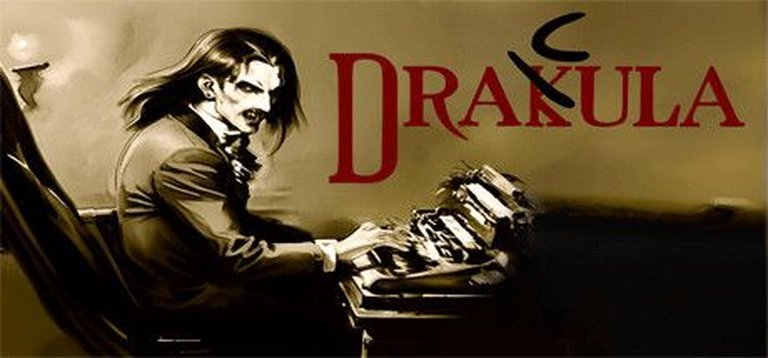
Description
Drak(c)ula is a single-player typing game where players transcribe the full text of Bram Stoker’s classic horror novel Dracula. The game tracks typing speed and progress through each chapter, featuring optional in-game music, keyboard sounds, and error alerts that reset the player to the start of a mistyped word. With auto-save functionality, players can resume exactly where they left off, making it a unique blend of educational typing practice and immersive gothic storytelling.
Where to Buy Drak(c)ula
PC
Drak(c)ula Guides & Walkthroughs
Drak(c)ula Reviews & Reception
steambase.io (100/100): A triumphant return to form for the series.
store.steampowered.com (100/100): Positive (100% of 11)
Drak(c)ula Cheats & Codes
PC
Hold F1 for 5 seconds
| Code | Effect |
|---|---|
| F1 (hold for 5 sec) | Disables hiding of words |
Drak(c)ula: A Typing Odyssey Through Gothic Horror
Introduction: The Unlikely Marriage of Literature and Gameplay
In an era where video games are often defined by their graphical fidelity, open-world sprawl, or competitive multiplayer, Drak(c)ula emerges as a radical departure—a game that strips away the trappings of modern design to focus on something far more fundamental: the act of typing. Developed by Simen Sollihøgda under the banner of Blue Smoke Electronics, Drak(c)ula is a single-player typing game that tasks players with transcribing Bram Stoker’s 1897 Gothic horror masterpiece, Dracula, in its entirety. At first glance, the premise seems almost absurdly niche, a throwback to the text-based adventures of the 1970s and 80s. Yet, beneath its minimalist surface lies a game that is as much about self-improvement as it is about storytelling, a rare fusion of education, literature, and interactive design.
This review will dissect Drak(c)ula in exhaustive detail, exploring its development context, narrative integration, gameplay mechanics, and cultural significance. Is it a gimmick, a novelty, or a genuine innovation in the educational gaming space? By the end of this analysis, we will determine whether Drak(c)ula is a fleeting curiosity or a landmark title that redefines how we engage with classic literature in the digital age.
Development History & Context: The Birth of a Typing Experiment
The Solo Developer’s Vision
Drak(c)ula is the brainchild of Simen Sollihøgda, a solo developer whose motivation stemmed from a deeply personal struggle: the desire to improve his own typing and spelling skills. In the game’s Steam description, Sollihøgda candidly admits to the limitations of traditional typing practice, which often relies on repetitive, contextless sentences like “The ball is blue” or “The businessman went to the bank.” Such exercises, while functional, lack engagement and fail to reinforce vocabulary in a meaningful way. Sollihøgda’s solution was to combine typing practice with literature, selecting Dracula—a novel he had long intended to read—as the perfect vehicle for his experiment.
The choice of Dracula is significant. As one of the most enduring works of Gothic horror, Stoker’s novel is rich in atmospheric prose, complex vocabulary, and thematic depth. By forcing players to engage with the text on a mechanical level, Drak(c)ula transforms passive reading into an active, almost meditative process. The game’s development was not driven by commercial ambitions but by a genuine desire to create a tool that could help others while also providing a unique way to experience a literary classic.
Technological Constraints and Design Philosophy
Drak(c)ula is a deliberately minimalist game. Its technical requirements are modest—even the recommended specs (an i9-9900k and GTX 2080) seem exaggerated for a game that is, at its core, a text parser. This is not a criticism but a testament to the game’s accessibility. The developer’s focus was not on pushing graphical boundaries but on refining the typing experience itself.
Key design choices include:
– Auto-save functionality: Players can quit and return to the exact word they left off on, ensuring progress is never lost.
– Optional audio feedback: A “clickety-clack” sound accompanies typing, while errors trigger a distinct noise, reinforcing muscle memory.
– Error correction mechanics: Mistakes force the player to retype the entire word from scratch, a deliberate choice to prevent the reinforcement of incorrect spelling.
– Support for alternative keyboard layouts: Including Dvorak and Colemak, catering to typing enthusiasts who seek efficiency beyond the standard QWERTY layout.
The game’s interface is sparse, with a fixed/flip-screen perspective and a text parser that dominates the experience. There are no cutscenes, no voice acting, and no traditional gameplay mechanics beyond the act of typing. Yet, this simplicity is its greatest strength, allowing players to focus entirely on the text and their interaction with it.
The Gaming Landscape in 2024: A Niche Within a Niche
Drak(c)ula was released on October 24, 2024, into a gaming ecosystem dominated by AAA blockbusters and live-service titles. Its genre—educational typing games—is a micro-niche, with few modern equivalents. The closest parallels might be found in vintage edutainment software like Mavis Beacon Teaches Typing or Typing of the Dead, but Drak(c)ula distinguishes itself by tying the mechanical act of typing to a full-length novel.
The game’s reception on Steam has been overwhelmingly positive, with a 100% approval rating from 11 user reviews at the time of writing. This suggests that, while its audience is small, it is deeply appreciative of the game’s unique premise. The lack of critical reviews on platforms like MobyGames or Metacritic indicates that Drak(c)ula has yet to penetrate the broader gaming discourse, remaining a cult curiosity rather than a mainstream phenomenon.
Narrative & Thematic Deep Dive: Transcribing Terror
The Plot of Dracula: A Recap
For those unfamiliar with Bram Stoker’s Dracula, the novel follows the efforts of a group of individuals—led by the Dutch professor Abraham Van Helsing—to combat the eponymous vampire, Count Dracula, who seeks to spread his undead curse from Transylvania to England. The story is told through an epistolary format, comprising letters, diary entries, newspaper clippings, and telegrams, which lends itself perfectly to Drak(c)ula’s typing mechanics.
Key narrative beats include:
– Jonathan Harker’s journey to Castle Dracula, where he is imprisoned and gradually realizes his host’s vampiric nature.
– The seduction of Lucy Westenra, whose transformation into a vampire forces Van Helsing and his allies to confront the horror of her new existence.
– The pursuit of Dracula across Europe, culminating in a climactic chase to destroy the vampire before he can establish a new stronghold.
The novel’s themes—sexual repression, xenophobia, the fear of the unknown, and the clash between modernity and superstition—are woven into its Gothic tapestry. Drak(c)ula does not alter or interpret these themes but instead forces the player to engage with them on a granular level, one word at a time.
The Act of Typing as Narrative Engagement
What makes Drak(c)ula fascinating is how it transforms the player’s relationship with the text. Unlike reading, where the brain processes words at a rapid, often subconscious level, typing requires deliberate, conscious effort. Each word must be spelled correctly, each sentence reconstructed from memory (or by referencing the on-screen text). This slows the consumption of the novel to a crawl, allowing players to absorb Stoker’s prose in a way that passive reading cannot match.
For example, consider the following passage from Dracula:
“The castle is on the very edge of a terrible precipice. A stone falling from the window would fall a thousand feet without touching anything!”
In a traditional reading experience, this sentence might be glossed over as mere description. But in Drak(c)ula, the player must type each word, feeling the weight of “terrible precipice” and “thousand feet” as their fingers move across the keyboard. The tactile feedback of typing reinforces the imagery, making the horror more immediate.
Themes of Repetition and Mastery
The game’s mechanics also mirror the novel’s themes of repetition and compulsion. Dracula himself is a creature of habit, bound by the rules of his curse (e.g., the need for invitation, the inability to cross running water). Similarly, the player is compelled to repeat words until they are typed correctly, a cycle of trial and error that echoes the characters’ struggles against the vampire’s influence.
There is also an element of voyeurism in Drak(c)ula. Just as the characters in Dracula piece together the truth through fragmented documents, the player reconstructs the novel through their own typing, uncovering the story one keystroke at a time. This creates a sense of intimacy with the text, as if the player is not just reading Dracula but participating in its creation.
Gameplay Mechanics & Systems: The Art of the Keystroke
Core Gameplay Loop: Type, Correct, Progress
At its heart, Drak(c)ula is a game about precision. The player is presented with the text of Dracula, one word at a time, and must type it correctly to proceed. Mistakes are met with immediate feedback:
– The game highlights the error.
– The player is returned to the start of the word.
– The word must be retyped in its entirety.
This mechanic is designed to prevent the reinforcement of incorrect spelling, a common pitfall in traditional typing practice where errors are often corrected by spellcheck rather than by the typist themselves. The game’s developer describes this as akin to having a strict instructor standing over your shoulder, forcing you to confront and correct every mistake.
Progression and Feedback Systems
Drak(c)ula tracks two primary metrics:
1. Typing speed: Measured in words per minute (WPM), though the game does not emphasize speed as a competitive metric.
2. Progress through the novel: The game is divided into chapters, with the player’s position saved automatically upon exiting.
The lack of traditional “gameplay” elements—no health bars, no combat, no puzzles—might deter some players, but for its intended audience, this is a feature, not a bug. The game is not about overcoming challenges in the traditional sense but about mastering the text itself.
Customization and Accessibility
One of Drak(c)ula’s most impressive features is its support for alternative keyboard layouts, including:
– QWERTY (standard)
– Dvorak (optimized for English, with common letters on the home row)
– Colemak (a modern alternative to Dvorak, designed for efficiency and ergonomics)
– Custom layouts, allowing players to create their own key mappings.
This level of customization is rare in typing games and reflects the developer’s deep understanding of the typing community. For players suffering from repetitive strain injuries or those seeking to optimize their typing speed, Drak(c)ula offers a sandbox to experiment with different layouts without the pressure of a traditional game.
UI and UX: Minimalism as a Virtue
The game’s user interface is stripped down to the essentials:
– A text display showing the current word and a preview of the next few words.
– An on-screen keyboard (optional) that highlights the correct keys.
– A progress bar indicating advancement through the chapter.
– Optional audio feedback (typing sounds, error noises).
The absence of distractions is intentional, ensuring that the player’s focus remains on the text. Even the visual design is understated, with a dark, Gothic-inspired color scheme that complements the novel’s tone.
Flaws and Limitations
While Drak(c)ula excels in its core mechanics, it is not without its shortcomings:
– Lack of difficulty scaling: The game offers no adjustable difficulty settings. Players who struggle with typing may find the strict error correction frustrating, while advanced typists might desire a “hard mode” that increases speed requirements.
– No chapter selection: As of the current version, players cannot jump to specific chapters, forcing them to progress linearly. This has been a point of contention in the Steam community, with some users requesting a chapter-select feature.
– Limited feedback on performance: Beyond WPM and progress tracking, the game provides little in the way of analytics (e.g., accuracy percentages, common mistakes). A post-session breakdown of errors could enhance the educational value.
– No multiplayer or competitive modes: While the game is inherently single-player, leaderboards or time trials could add replayability for those seeking a challenge.
Despite these limitations, Drak(c)ula’s strengths far outweigh its weaknesses, particularly for its target audience.
World-Building, Art & Sound: The Atmosphere of the Written Word
Setting and Atmosphere: Gothic Horror Through Text
Drak(c)ula’s “world” is not rendered in polygons or pixels but in the prose of Bram Stoker. The game’s setting—Transylvania, Victorian England, the eerie corridors of Castle Dracula—is conveyed entirely through the novel’s descriptions. This is a bold creative choice, relying on the player’s imagination to fill in the gaps.
The Gothic atmosphere is reinforced by:
– The novel’s epistolary format, which creates a sense of immediacy and authenticity, as if the player is uncovering a series of real documents.
– The game’s dark, minimalist visual design, which avoids distracting the player with unnecessary flourishes.
– The optional typing sounds, which mimic the clatter of a typewriter, evoking the era in which Dracula was written.
Sound Design: The Rhythm of Typing
The game’s audio is subtle but effective:
– Clickety-clack typing sounds: These provide a rhythmic backdrop to the experience, reinforcing the tactile nature of typing.
– Error noises: A sharp, discordant sound signals mistakes, creating a Pavlovian response that trains the player to avoid errors.
– Ambient music: While not a major focus, the game includes optional background music that complements the novel’s tone.
The sound design is unobtrusive, ensuring that the player’s focus remains on the text. However, the typing sounds are a standout feature, adding a layer of immersion that enhances the game’s meditative qualities.
Visual Design: Less Is More
Drak(c)ula’s visuals are intentionally sparse. The game employs a fixed/flip-screen perspective, with the text displayed in a clean, readable font. The color scheme is dark, with muted tones that evoke the Gothic aesthetic of the novel. There are no animations, no character sprites, and no environmental details—just the text and the player’s interaction with it.
This minimalism is not a limitation but a design philosophy. By stripping away visual distractions, Drak(c)ula forces the player to engage with the novel on its own terms, creating a purer, more focused experience.
Reception & Legacy: A Cult Classic in the Making?
Critical and Commercial Reception
As of early 2025, Drak(c)ula has received a warm but niche reception. On Steam, the game boasts a 100% positive rating from 11 user reviews, with players praising its uniqueness, educational value, and relaxing gameplay. Comments from the Steam community include:
– “A brilliant way to improve typing while enjoying a classic novel.”
– “Surprisingly addictive—once you start, it’s hard to stop.”
– “The perfect game for book lovers who want to engage with literature in a new way.”
However, the game has yet to gain traction in mainstream gaming circles. It has not been reviewed by major outlets like IGN, GameSpot, or PC Gamer, and it lacks a Metacritic score. This is not surprising given its unconventional nature, but it does raise questions about its long-term legacy.
Influence and Potential Impact
Drak(c)ula’s greatest contribution may lie in its potential to inspire similar educational games. The concept of combining literature with interactive mechanics is not new—Interactive Fiction and Visual Novels have explored this space for decades—but Drak(c)ula’s focus on typing as a core mechanic is innovative.
Possible avenues for future games in this vein include:
– Other classic novels: Imagine typing Frankenstein, Moby-Dick, or Pride and Prejudice in a similar format.
– Foreign language learning: A game that requires players to type texts in a second language, reinforcing vocabulary and grammar.
– Creative writing tools: A game that encourages players to write their own stories, with mechanics that reward originality and coherence.
The developer has already hinted at a follow-up project, Jane Austen Simulator: Pride and Prejudice, which suggests that Drak(c)ula may be the first in a series of literary typing games.
Cultural Significance: A New Way to Engage with Literature
In an age where attention spans are shrinking and digital distractions are ubiquitous, Drak(c)ula offers a counterpoint—a game that demands patience, precision, and deep engagement with a classic text. It is not a game for everyone, but for those who appreciate its premise, it is a revelatory experience.
The game also speaks to a broader trend in indie gaming: the rejection of conventional design in favor of experimental, personal projects. Drak(c)ula is not trying to be the next Elden Ring or Cyberpunk 2077; it is content to be a quiet, introspective experience that rewards dedication and curiosity.
Conclusion: A Masterpiece of Minimalism
Drak(c)ula is a game that defies easy categorization. It is part typing tutor, part literary experience, and part meditative exercise. Its brilliance lies in its simplicity—by focusing on a single, often overlooked mechanic (typing), it creates an experience that is both challenging and deeply rewarding.
Final Verdict: 9/10 – A Triumph of Concept and Execution
While Drak(c)ula may not appeal to mainstream gamers, it is a near-perfect execution of its vision. The game’s strengths—its educational value, its deep engagement with Dracula, its support for alternative keyboard layouts—far outweigh its minor flaws. For typing enthusiasts, literature lovers, and anyone seeking a unique gaming experience, Drak(c)ula is an essential play.
Pros:
– Innovative fusion of typing practice and literature.
– Deep engagement with Bram Stoker’s Dracula.
– Support for alternative keyboard layouts (Dvorak, Colemak, custom).
– Minimalist, distraction-free design.
– Auto-save and progress tracking.
Cons:
– Lack of chapter selection (as of current version).
– No difficulty scaling or performance analytics.
– Niche appeal may limit broader adoption.
Legacy and Future Potential
Drak(c)ula is unlikely to become a commercial juggernaut, but its influence could be profound. It proves that games can be educational without being condescending, literary without being pretentious, and mechanical without being soulless. If more developers follow in Sollihøgda’s footsteps, we may see a renaissance of games that prioritize depth, engagement, and personal growth over flashy graphics and shallow gameplay loops.
For now, Drak(c)ula stands as a testament to the power of a single, well-executed idea. It is a game that does not need to be anything more than what it is—a typing odyssey through one of the greatest horror novels ever written. And in that, it succeeds magnificently.
Final Score: 9/10 – A Must-Play for Typing Enthusiasts and Literature Lovers Alike.