
- Release Year: 2012
- Platforms: Windows
- Publisher: Hi-Rez Studios, Inc.
- Developer: Hi-Rez Studios, Inc.
- Genre: Action
- Perspective: 1st-person
- Game Mode: Online PVP
- Gameplay: Base building, Class-based, Jetpack, Shooter, Skiing, Vehicle combat
- Setting: Futuristic, Sci-fi
- Average Score: 83/100
Description
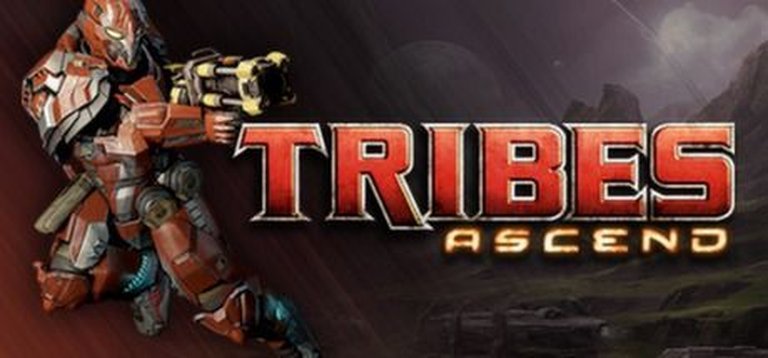
Tribes: Ascend is a free-to-play, fast-paced multiplayer shooter set in a sci-fi universe, where two factions, Blood Eagle and Diamond Sword, battle across various game modes. Players choose from nine distinct classes, each with unique weapons and abilities, and utilize jetpacks and skiing mechanics for high-speed movement. The game features four primary modes—Team Deathmatch, Capture the Flag, Arena, and Capture and Hold—each with distinct objectives and victory conditions. Players earn in-game credits to deploy vehicles, turrets, and tactical strikes, while XP can be used to upgrade gear, blending strategic depth with frenetic action.
Gameplay Videos
Tribes: Ascend Cracks & Fixes
Tribes: Ascend Patches & Updates
Tribes: Ascend Mods
Tribes: Ascend Guides & Walkthroughs
Tribes: Ascend Reviews & Reception
metacritic.com (86/100): Tribes: Ascend is the most pure representation of the Tribes experience since Tribes 2 perfected it back in 2001.
ign.com : Tribes: Ascend might make it the most satisfying. Not because it sounds awesome, or because the guns make you feel powerful (though they do), but because scoring a hit takes a unique set of skills.
eurogamer.net : Tribes Ascend is not like other first-person shooters. It’s much, much faster.
steambase.io (81/100): Tribes: Ascend has earned a Player Score of 81 / 100.
Tribes: Ascend Cheats & Codes
PC
Enter codes in the Extras menu.
| Code | Effect |
|---|---|
| GOTTAGOFAST | Turns your ‘KM/H’ into ‘SANICS’ (a play on a Sonic Internet meme). |
Tribes: Ascend: A Masterclass in Speed, Strategy, and Squandered Potential
Introduction: The Legacy of a Forgotten Titan
In the pantheon of competitive first-person shooters, few titles have captured the exhilaration of high-velocity combat quite like Tribes: Ascend. Released in 2012 by Hi-Rez Studios, this free-to-play revival of the classic Tribes series was a bold attempt to modernize a franchise that had long been dormant. With its signature jetpacks, skiing mechanics, and sprawling multiplayer battles, Tribes: Ascend promised to deliver an experience unlike any other shooter on the market. Yet, despite its critical acclaim and passionate fanbase, the game’s journey was marred by missteps, monetization controversies, and ultimately, abandonment by its developers. This review seeks to dissect Tribes: Ascend in its entirety—its brilliance, its flaws, and its tragic legacy—as a cautionary tale of what happens when a studio fails to nurture a game with boundless potential.
Development History & Context: A Phoenix Rising from the Ashes
The Tribes Legacy and Hi-Rez’s Vision
The Tribes series, born in 1998 with Starsiege: Tribes, was a pioneer in team-based, objective-driven shooters. Its blend of jetpack-assisted mobility, large-scale battles, and tactical depth set it apart from contemporaries like Quake and Unreal Tournament. By the time Tribes: Ascend was announced in 2011, the franchise had been dormant for nearly a decade, with Tribes: Vengeance (2004) serving as its last major release. Hi-Rez Studios, fresh off the heels of Global Agenda, saw an opportunity to revive the series with a free-to-play model, leveraging the Unreal Engine 3 to modernize its mechanics while preserving its core identity.
The Free-to-Play Gamble
Tribes: Ascend entered open beta in February 2012, offering players a taste of its high-speed gameplay. The decision to adopt a free-to-play model was both innovative and risky. At the time, the gaming landscape was dominated by premium titles, and free-to-play shooters were often dismissed as inferior or pay-to-win. Hi-Rez’s approach was to monetize through cosmetic items, experience boosters, and unlockable classes and weapons, while ensuring that all content could eventually be earned through gameplay. This balance was crucial to the game’s initial success, as it allowed new players to compete without feeling compelled to spend money.
The Technological Backbone
Built on the Unreal Engine 3, Tribes: Ascend benefited from robust visuals and physics systems that enhanced its signature mobility mechanics. The engine’s flexibility allowed for the creation of vast, open maps like Katabatic and Raindance, which were designed to accommodate the game’s emphasis on skiing and jetpack maneuvering. However, the engine’s limitations also became apparent in later updates, particularly in the handling of large-scale battles and server stability.
The Competitive Landscape
In 2012, the shooter genre was dominated by franchises like Call of Duty, Battlefield, and Halo, which prioritized realism and tactical gameplay. Tribes: Ascend stood in stark contrast, offering a return to the fast-paced, arcade-style action of classic arena shooters. Its release was met with enthusiasm from veterans of the Tribes series and newcomers alike, who were drawn to its unique blend of speed, strategy, and teamwork.
Narrative & Thematic Deep Dive: A World Without Story
The Absence of a Campaign
Unlike its predecessors, Tribes: Ascend eschewed a single-player campaign entirely, focusing solely on multiplayer gameplay. This decision was a double-edged sword. On one hand, it allowed Hi-Rez to allocate all resources toward refining the multiplayer experience. On the other, it left the game without a narrative anchor, making it difficult for players to connect with the world beyond its mechanics.
The Factions: Blood Eagle and Diamond Sword
The game’s lore is loosely tied to the broader Tribes universe, which revolves around the conflict between the Blood Eagle and Diamond Sword factions. These factions, introduced in Starsiege: Tribes, represent the remnants of a once-great empire torn apart by civil war. However, Tribes: Ascend does little to expand on this backstory, instead using the factions as a superficial framework for its multiplayer modes. The lack of narrative depth is a missed opportunity, as a richer lore could have enhanced the game’s immersive qualities.
Thematic Undertones: Speed and Strategy
While Tribes: Ascend lacks a traditional narrative, its gameplay mechanics convey a strong thematic message: the fusion of speed and strategy. The game’s emphasis on mobility—through skiing, jetpacks, and vehicle combat—creates a sense of freedom and fluidity rarely seen in modern shooters. This thematic focus is reinforced by the game’s class system, which encourages players to adopt specific roles and work together to achieve objectives. Whether it’s a Pathfinder darting across the map to capture a flag or a Doombringer holding the line with a forcefield, every class contributes to the game’s overarching theme of teamwork and tactical execution.
Gameplay Mechanics & Systems: The Heart of the Experience
The Core Gameplay Loop
At its core, Tribes: Ascend is a game about movement and momentum. The skiing mechanic, which allows players to gain speed by traversing downhill slopes, is the foundation of the game’s unique gameplay. Combined with the jetpack, which provides vertical mobility, players can achieve staggering speeds, often exceeding 200 km/h. This emphasis on movement transforms traditional shooter combat into a dynamic, three-dimensional ballet of projectiles and evasion.
Class-Based Loadouts
The game features nine distinct classes, each with its own strengths, weaknesses, and playstyles. These classes are divided into three weight categories: light, medium, and heavy. Light classes, such as the Pathfinder and Infiltrator, prioritize speed and agility, making them ideal for flag-capping and reconnaissance. Medium classes, like the Soldier and Raider, offer a balance of mobility and firepower, excelling in mid-range combat. Heavy classes, such as the Juggernaut and Doombringer, are slower but boast superior health and defensive capabilities, making them formidable frontline warriors.
Weaponry and Equipment
Each class is equipped with a primary weapon, a secondary weapon, and a set of belt items (e.g., grenades, mines). The game’s arsenal is diverse, ranging from the iconic Spinfusor—a disc-launching weapon that explodes on impact—to the Fusion Mortar, which fires slow-moving but devastating projectiles. The variety of weapons ensures that players can tailor their loadouts to suit their preferred playstyle, whether it’s long-range sniping, close-quarters combat, or area denial.
In-Match Progression and Credits
During matches, players earn credits for performing actions such as killing enemies, repairing structures, and capturing objectives. These credits can be spent on deployables like turrets, vehicles, and orbital strikes, adding a layer of strategic depth to the gameplay. This system encourages players to contribute to their team’s success beyond mere frag counts, fostering a sense of collaboration and shared responsibility.
Game Modes: Capture the Flag and Beyond
Tribes: Ascend offers five primary game modes:
1. Capture the Flag (CTF): The game’s flagship mode, where teams compete to steal the enemy’s flag and return it to their base.
2. Team Deathmatch (TDM): A straightforward mode where teams vie for the highest kill count.
3. Arena: A smaller-scale TDM variant with limited respawns, emphasizing tactical play.
4. Capture and Hold: Teams compete to control strategic points on the map, earning points over time.
5. Rabbit: A unique mode where one player (the “rabbit”) holds a flag and earns points over time, while others attempt to kill them and take the flag.
While all modes are enjoyable, CTF is the undisputed star of the show. Its blend of high-speed flag runs, defensive fortification, and team coordination makes it one of the most exhilarating multiplayer experiences in gaming history.
The Monetization Model: A Double-Edged Sword
Tribes: Ascend’s free-to-play model was both its greatest strength and its most controversial aspect. Players could unlock classes, weapons, and perks through in-game experience points (XP), but the grind was notoriously slow. Alternatively, players could purchase these items with real money, which led to accusations of pay-to-win mechanics. While Hi-Rez maintained that all content was unlockable through gameplay, the disparity between free and paying players was palpable, particularly in the early stages of the game.
The “Out of the Blue” update in December 2015 attempted to address these concerns by simplifying the class system and removing monetization features. However, by this point, much of the player base had already moved on, and the damage was done.
World-Building, Art & Sound: Crafting a Futuristic Battleground
Visual Design: A Study in Minimalism
Tribes: Ascend’s art direction is a masterclass in minimalism. The game’s maps are vast, open landscapes dotted with ruins, craters, and futuristic structures. The lack of clutter is intentional, as it allows players to focus on the game’s core mechanics: movement and combat. The color palette is muted, with blues, grays, and browns dominating the scenery, creating a stark, almost desolate atmosphere that reinforces the game’s post-apocalyptic setting.
Character and Weapon Design
The game’s character models are functional rather than flashy, with each class sporting a distinct silhouette that makes them easily identifiable in the heat of battle. The weapon designs, while not particularly innovative, are effective in conveying their respective roles. The Spinfusor, for example, is instantly recognizable as a high-impact, long-range weapon, while the Fusion Mortar’s bulky frame suggests its role as a heavy-hitting area denial tool.
Sound Design: The Symphony of Chaos
The audio design in Tribes: Ascend is understated but effective. The hum of jetpacks, the thud of explosions, and the crackle of gunfire create a immersive soundscape that enhances the game’s frenetic pace. The voice acting, while minimal, is clear and concise, ensuring that players can quickly identify enemy positions and objectives.
Music: A Missed Opportunity
One of the game’s few weaknesses is its lack of a memorable soundtrack. While the ambient tracks are serviceable, they fail to leave a lasting impression, which is a shame given the game’s high-octane gameplay. A more dynamic, adrenaline-pumping score could have elevated the experience further.
Reception & Legacy: A Game Ahead of Its Time
Critical Acclaim and Player Praise
Upon release, Tribes: Ascend was met with widespread critical acclaim. Publications like IGN, Eurogamer, and PC Gamer praised its innovative gameplay, strategic depth, and faithful recreation of the Tribes experience. The game’s Metacritic score of 86 reflects its status as one of the best shooters of its era.
Players, too, were initially enamored with the game. Its free-to-play model made it accessible to a broad audience, and its emphasis on skill-based gameplay attracted a dedicated competitive scene. However, as time went on, frustrations with the monetization system and perceived imbalance began to mount.
The Decline and Fall
Despite its strong start, Tribes: Ascend’s player base began to dwindle within a year of its release. Hi-Rez’s decision to shift focus to Smite, their more financially successful MOBA, left Tribes: Ascend in a state of limbo. Updates became infrequent, and the community grew increasingly disillusioned. The final nail in the coffin came in 2016, when Hi-Rez announced that the game would no longer receive updates, effectively abandoning it to the annals of gaming history.
The Community’s Resilience
Despite Hi-Rez’s abandonment, the Tribes: Ascend community refused to let the game die. Fan-led initiatives, such as custom servers and modding tools, kept the game alive long after official support had ceased. Today, Tribes: Ascend remains playable through community-driven efforts, a testament to the passion of its fanbase.
Influence on the Genre
Tribes: Ascend’s legacy extends beyond its own lifespan. Its emphasis on mobility and verticality has influenced subsequent shooters, such as Titanfall and Apex Legends, which have adopted similar mechanics. The game’s class-based system and objective-driven gameplay have also left their mark on the genre, inspiring titles like Overwatch and Paladins.
Conclusion: A Flawed Masterpiece
Tribes: Ascend is a game of contradictions. It is a masterpiece of gameplay design, offering a unique and exhilarating experience that few shooters can match. Yet, it is also a cautionary tale of how poor monetization decisions and lack of developer support can squander even the most promising of titles.
At its best, Tribes: Ascend is a symphony of speed, strategy, and teamwork—a game that rewards skill, coordination, and quick thinking. Its skiing and jetpack mechanics remain unparalleled, and its Capture the Flag mode is one of the most thrilling multiplayer experiences ever created. However, its free-to-play model, while innovative, ultimately alienated a portion of its player base, and Hi-Rez’s decision to abandon the game in favor of more lucrative projects left a bitter taste in the mouths of its most devoted fans.
In the grand tapestry of gaming history, Tribes: Ascend occupies a unique and somewhat tragic position. It is a game that could have been a legend, had it been given the care and attention it deserved. Instead, it stands as a reminder of what might have been—a brilliant, fleeting moment in the evolution of the shooter genre.
Final Verdict: 9/10 – A Flawed but Unforgettable Classic