
- Release Year: 2011
- Platforms: Android, iPad, iPhone, Linux, Macintosh, Nintendo Switch, PlayStation 5, tvOS, Windows, Xbox One, Xbox Series
- Publisher: Freebird Games, Lace Mamba Global Ltd., Serenity Forge LLC, X.D. Network Inc.
- Developer: Freebird Games
- Genre: Adventure
- Perspective: Diagonal-down
- Game Mode: Single-player
- Gameplay: Action sequences, Graphic adventure, Hidden Objects, Horseback riding, Mini-games, Puzzle elements, Visual novel
- Setting: Contemporary, Fantasy
- Average Score: 83/100
Description
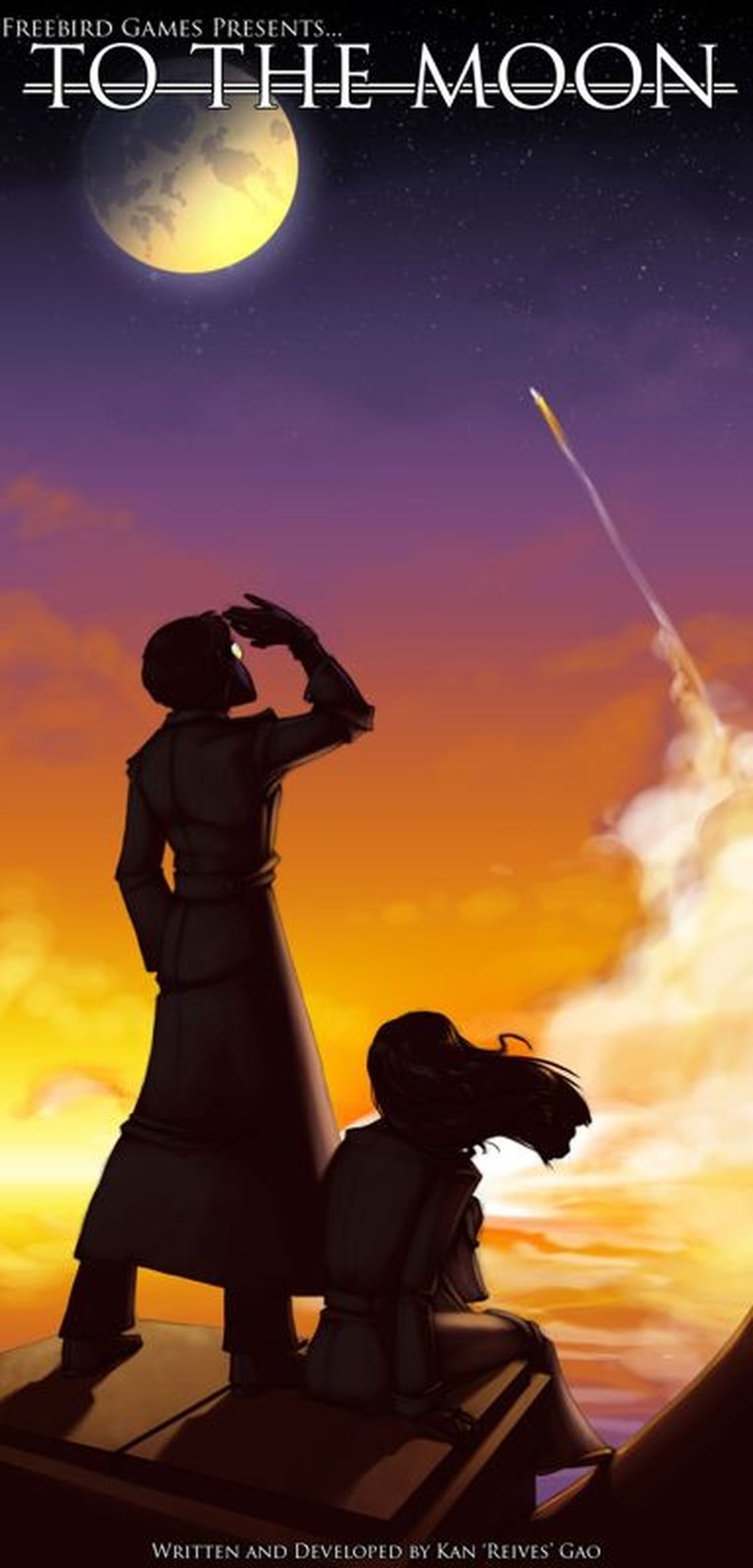
To the Moon is a narrative-driven adventure game about two scientists, Dr. Eva Rosalene and Dr. Neil Watts, who use experimental technology to alter the memories of a dying man named Johnny. Their goal is to fulfill his lifelong dream of going to the moon by rewriting his past, uncovering the emotional and mysterious layers of his life in reverse chronological order. Blending elements of a visual novel with light puzzle-solving, the game explores themes of love, loss, and regret through a deeply moving story, all set within a contemporary yet fantastical framework.
Gameplay Videos
Where to Buy To the Moon
To the Moon Guides & Walkthroughs
To the Moon Reviews & Reception
metacritic.com (81/100): To The Moon is one of those games you instantly fall in love with.
opencritic.com (86/100): To the Moon is incredibly story-focused. Fortunately, that tale is powerful and heartfelt.
To the Moon: A Masterclass in Narrative-Driven Gaming
Introduction
To the Moon is not just a game; it is an emotional odyssey that transcends the boundaries of traditional gaming. Released in 2011 by Freebird Games, this indie masterpiece has left an indelible mark on the gaming landscape. With its poignant storytelling, evocative soundtrack, and innovative narrative structure, To the Moon has garnered critical acclaim and a dedicated fanbase. This review delves deep into the game’s development history, narrative depth, gameplay mechanics, artistic design, and its lasting legacy.
Development History & Context
The Birth of Freebird Games
Freebird Games, the brainchild of Canadian designer Kan Gao, emerged as a beacon of indie game development. Gao’s journey into game creation was deeply personal, sparked by his grandfather’s life-threatening condition in 2010. This event led Gao to contemplate mortality and the regrets that accompany the end of life, ultimately inspiring the narrative core of To the Moon.
Technological Constraints and Innovations
Developed using the RPG Maker XP engine, To the Moon leveraged the toolkit’s capabilities to create a 16-bit 2D world reminiscent of classic RPGs like Suikoden and Final Fantasy. However, Gao’s vision extended beyond traditional RPG mechanics. The game eschewed conventional battle systems, inventory management, and party dynamics, focusing instead on a story-driven experience. This innovative approach allowed Gao to craft a deeply emotional narrative without the distractions of typical RPG elements.
The Gaming Landscape in 2011
The gaming industry in 2011 was dominated by high-budget AAA titles and established franchises. Indie games were beginning to gain traction, but the market was still saturated with games that prioritized graphics and gameplay mechanics over storytelling. To the Moon stood out as a bold departure from this trend, offering a narrative experience that resonated with players on an emotional level. Its release on platforms like Steam and GOG.com marked a significant moment in indie game history, proving that a compelling story could captivate audiences without the need for cutting-edge graphics or complex gameplay.
Narrative & Thematic Deep Dive
Plot Overview
To the Moon follows the journey of Dr. Eva Rosalene and Dr. Neil Watts, two scientists employed by Sigmund Corp. Their mission is to fulfill the dying wish of Johnny Wyles, a man who wants to go to the moon but cannot explain why. Using advanced technology, the doctors traverse Johnny’s memories in reverse chronological order, uncovering the deeply emotional and tragic events that shaped his life.
Character Analysis
- Johnny Wyles: The protagonist whose memories the players explore. Johnny’s life is marked by tragedy, love, and an inexplicable desire to go to the moon. His character is a poignant exploration of memory, loss, and the human condition.
- River Wyles: Johnny’s wife, whose complex personality and actions are central to the story. River’s character is a study in resilience and the enduring power of love, despite the challenges she faces.
- Dr. Eva Rosalene and Dr. Neil Watts: The scientists who guide the players through Johnny’s memories. Their dynamic and interactions provide a grounding element to the narrative, offering moments of humor and humanity amidst the emotional weight of Johnny’s story.
Themes and Motifs
- Memory and Identity: The game explores the fragile nature of memory and its role in shaping identity. Johnny’s memories are not just a record of his past but a reflection of his innermost desires and regrets.
- Love and Loss: The relationship between Johnny and River is a central theme, highlighting the complexities of love, the pain of loss, and the enduring power of connection.
- Regret and Redemption: Johnny’s dying wish to go to the moon is a metaphor for his desire to find redemption and fulfillment in his life. The game delves into the universal human experience of regret and the search for meaning.
Dialogue and Storytelling
The dialogue in To the Moon is a masterclass in storytelling. Gao’s writing is both poignant and humorous, balancing the emotional weight of the narrative with moments of levity. The reverse chronological structure of the story adds a layer of complexity, revealing the causes of Johnny’s desires and actions in a way that keeps players engaged and invested in the narrative.
Gameplay Mechanics & Systems
Core Gameplay Loop
To the Moon is primarily a narrative-driven experience, with gameplay mechanics that support the storytelling rather than detract from it. The core gameplay loop involves exploring Johnny’s memories, collecting significant objects, and solving puzzles to progress through the story.
Puzzle Elements
The puzzles in To the Moon are designed to be intuitive and accessible, ensuring that the focus remains on the narrative. Players must find and connect objects that exist across different memories, allowing them to manipulate Johnny’s past and fulfill his dying wish.
Character Progression and UI
The game features a straightforward UI that provides players with access to notes, items, and character information. The progression system is linear, with players moving through Johnny’s memories in reverse order, uncovering the events that shaped his life.
Innovative and Flawed Systems
While To the Moon excels in its narrative and emotional depth, its gameplay mechanics are relatively simple and lack the complexity of traditional RPGs. The puzzles, while engaging, are not particularly challenging, and the lack of traditional RPG elements may disappoint players seeking a more interactive experience. However, these simplifications allow the game to focus on its strengths: storytelling and emotional resonance.
World-Building, Art & Sound
Setting and Atmosphere
To the Moon is set in a contemporary world with elements of fantasy, blending the mundane with the extraordinary. The game’s atmosphere is deeply emotional, with a sense of melancholy and nostalgia that permeates every scene.
Visual Direction
The game’s visual style is a homage to classic 16-bit RPGs, with pixel art that evokes a sense of nostalgia while maintaining a unique aesthetic. The art direction is simple yet effective, using color and composition to convey emotion and atmosphere.
Sound Design and Music
The soundtrack of To the Moon is a standout feature, composed by Kan Gao with a theme song by Laura Shigihara. The music is evocative and emotional, perfectly complementing the narrative and enhancing the player’s emotional connection to the story. The soundtrack has been praised for its ability to evoke a wide range of emotions, from joy and wonder to sadness and longing.
Reception & Legacy
Critical and Commercial Reception
To the Moon received widespread critical acclaim upon its release, with praise for its narrative, music, and emotional depth. The game holds an average rating of 81 out of 100 on Metacritic and has been nominated for numerous awards, including GameSpot’s “Best Story” award in 2011.
Influence on Subsequent Games
The success of To the Moon has had a significant impact on the indie game scene, inspiring other developers to focus on narrative-driven experiences. The game’s innovative approach to storytelling and its emotional resonance have set a new standard for indie games, proving that a compelling story can captivate audiences without the need for complex gameplay mechanics.
Evolution of Reputation
Over the years, To the Moon has gained a reputation as a modern classic, with a dedicated fanbase and a lasting legacy in the gaming community. The game’s emotional depth and narrative complexity have ensured its place in the pantheon of great video games, and its influence can be seen in subsequent titles that prioritize storytelling and emotional resonance.
Conclusion
To the Moon is a masterclass in narrative-driven gaming, offering a deeply emotional and thought-provoking experience that transcends the boundaries of traditional gaming. With its poignant storytelling, evocative soundtrack, and innovative narrative structure, the game has left an indelible mark on the gaming landscape. While its gameplay mechanics may be simple, the emotional depth and narrative complexity of To the Moon make it a standout title in the indie game scene. For players seeking a deeply moving and thought-provoking experience, To the Moon is an essential play.