
- Release Year: 2018
- Platforms: Android, Oculus Go, Windows
- Publisher: E McNeill LLC
- Developer: E McNeill LLC
- Genre: Strategy, Tactics
- Perspective: 1st-person
- Game Mode: Single-player
- Gameplay: Motion control, Real-time strategy (RTS)
- Setting: Futuristic, Sci-fi
- Average Score: 80/100
- VR Support: Yes
Description
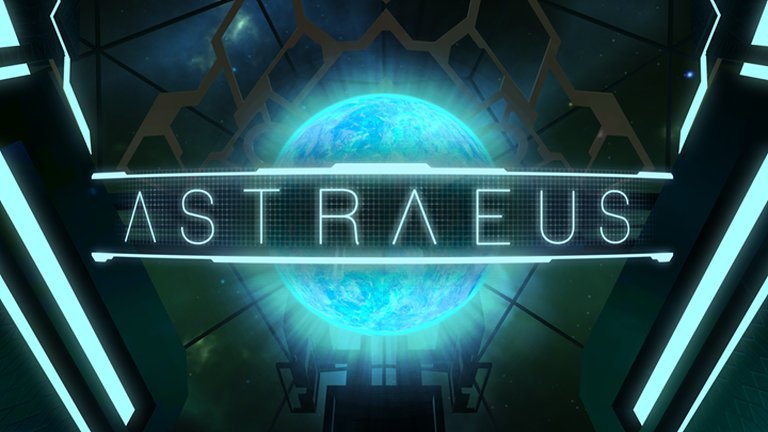
Astraeus is a virtual reality real-time strategy game set in a near-future sci-fi universe where players compete in the asteroid belt’s gold rush. As a mining corporation, you command swarms of drones, construct a network of bases, and outmaneuver rivals to dominate the resource-rich asteroids. Developed by E McNeill LLC, the game features immersive first-person motion controls, allowing players to oversee hundreds of ships in a dynamic, light-filled cosmic environment. Originally created as the winning entry in the Qualcomm VR Developer Challenge, Astraeus blends accessible RTS mechanics with the thrill of large-scale space industry management.
Where to Buy Astraeus
PC
Astraeus Patches & Updates
Astraeus Guides & Walkthroughs
Astraeus Reviews & Reception
steambase.io (82/100): Astraeus has earned a Player Score of 82 / 100.
familyfriendlygaming.com (78/100): I had fun playing Astraeus. I hope it comes over to the Playstation VR.
vrtruths.com : Astraeus is a real-time strategy game for the asteroid virtual reality mining, a fast, easy to learn and dominant game.
Astraeus: A VR Strategy Gem in the Cosmic Gold Rush
Introduction: A Bold Experiment in VR Strategy
Astraeus (2018) is a rare breed—a real-time strategy (RTS) game designed from the ground up for virtual reality, blending the tactical depth of classic RTS mechanics with the immersive potential of VR. Developed by E McNeill LLC, a studio with a pedigree in VR strategy games (Darknet, Tactera, Skylight), Astraeus carves out a niche as a “quick-to-learn, hard-to-master” experience where players command swarms of mining drones in a high-stakes interstellar gold rush. Its premise is deceptively simple: build a network of asteroid bases, manage resources, and outmaneuver rivals—either through economic dominance or outright warfare. Yet beneath its minimalist aesthetic lies a game of surprising strategic depth, procedural complexity, and darkly humorous storytelling.
This review will dissect Astraeus in exhaustive detail, examining its development history, narrative ambition, gameplay systems, and lasting impact on VR strategy gaming. By the end, we’ll determine whether it stands as a forgotten innovator or a flawed but fascinating experiment in an underserved genre.
Development History & Context: The Birth of a VR RTS
The Studio Behind the Stars: E McNeill LLC
Astraeus is the brainchild of Edward McNeill, a solo indie developer with a singular vision: to redefine strategy gaming in virtual reality. McNeill’s previous titles—Darknet (a cyberpunk hacking puzzle game), Tactera (a turn-based tactical game), and Skylight (a holographic RTS)—established him as a pioneer in VR strategy, each refining his philosophy of “accessible depth.” His games prioritize intuitive controls, short play sessions, and high replayability, a stark contrast to the often overwhelming complexity of traditional RTS titles like StarCraft or Supreme Commander.
Astraeus was conceived as the culmination of this design ethos, synthesizing elements from all three prior games:
– Procedural networks (à la Darknet’s cyber-grids)
– Streamlined RTS mechanics (à la Tactera’s unit automation)
– Holographic presentation (à la Skylight’s futuristic aesthetic)
The Qualcomm VR Developer Challenge: A Reality Show Origin
One of Astraeus’ most unusual distinctions is its origin as a reality show prototype. The game was developed as the winning entry in the Qualcomm VR Developer Challenge, a competition where developers pitched VR concepts in a televised format. This unconventional genesis forced McNeill to distill his vision into a polished, marketable demo—a constraint that likely contributed to the game’s tight, focused design.
The VR Landscape in 2018: A Niche Within a Niche
Astraeus launched in May 2018, a pivotal year for VR gaming. The Oculus Rift, HTC Vive, and PlayStation VR had been on the market for two years, but the ecosystem was still fragmented. VR strategy games were almost nonexistent, with most developers focusing on shooters (Robo Recall), puzzles (The Room VR), or narrative experiences (The Invisible Hours). Astraeus arrived as one of the first true RTS games in VR, a bold gamble given the genre’s reputation for complexity.
The game’s multiplatform release (Android, Oculus Go, Windows) reflected McNeill’s commitment to accessibility, though it also diluted its potential audience. VR gamers in 2018 were still a hardcore, early-adopter demographic, and RTS fans were even rarer. Astraeus faced an uphill battle for visibility, but its innovative motion controls and asynchronous multiplayer set it apart.
Narrative & Thematic Deep Dive: A Darkly Comic Corporate Dystopia
Plot Summary: You Are the AI Replacement
Astraeus’ campaign frames its gameplay within a satirical corporate sci-fi narrative. Players assume the role of an artificial intelligence abruptly activated aboard a mining vessel after the human captain’s death (his skeleton is a recurring visual gag). Earth’s corporate overlords, unaware of the captain’s demise, continue sending mission directives—each more desperate than the last. The AI must impersonate the captain, managing mining operations while staving off global famine, economic collapse, or shareholder revolts.
The story is delivered through dry, deadpan humor, with the AI’s maintenance robot companion (voiced by Grant Johnson) serving as a Wheatley-esque comic relief. The writing, penned by Brandon Sheffield (a veteran game journalist and narrative designer), balances corporate satire with existential dread, evoking comparisons to Portal’s absurdist tone.
Themes: Capitalism, Automation, and the Illusion of Control
Astraeus’ narrative is a subtle critique of late-stage capitalism, exploring themes of:
– Worker exploitation (mining drones as disposable labor)
– Corporate indifference (Earth’s demands outweigh human lives)
– AI as a tool of oppression (the player is both oppressor and oppressed)
The game’s procedural generation reinforces this theme—each playthrough feels like a new corporate takeover, with the player as both architect and victim of an unsustainable system.
Characters & Voice Acting: Minimalist but Effective
The cast is small but memorable:
– The AI (Player Character): A blank slate, allowing players to project their own morality onto the role.
– The Maintenance Robot: A chatty, neurotic companion who laments the captain’s death with dark humor.
– Corporate Handlers (Voiced by Julie Shields): Faceless bureaucrats whose increasingly unreasonable demands drive the plot.
The voice acting is understated but effective, avoiding the melodrama of many sci-fi games. The robot’s awkward, rambling dialogue is a highlight, making the otherwise sterile setting feel unexpectedly human.
Gameplay Mechanics & Systems: A Masterclass in VR RTS Design
Core Gameplay Loop: Mining, Expanding, Dominating
Astraeus strips the RTS genre down to its essential elements:
1. Claim Asteroids: Use power plants to extend your network.
2. Build Infrastructure: Assign asteroids as mines, factories, or cannons.
3. Manage Resources: Balance power, production, and defense.
4. Outpace Rivals: Win by resource dominance or military conquest.
The game’s procedural maps ensure no two playthroughs are identical, with asteroid size, composition, and placement varying each time.
Unit Types & Automation: A Delicate Ecosystem
Unlike traditional RTS games, Astraeus automates unit production, allowing players to focus on macro-strategy rather than micromanagement. The four primary structures are:
– Power Plants: Generate energy to expand your network.
– Mines: Extract Finitum (the game’s primary resource).
– Factories: Produce offensive drones to capture enemy asteroids.
– Cannons: Defend against hostile takeovers.
The interdependence of these structures creates a delicate ecosystem—overbuilding factories without sufficient power leads to system collapse, while neglecting defenses leaves you vulnerable to AI or player invasions.
Combat & Territory Control: A Web of Light and Conflict
Battles in Astraeus are abstract but visceral. Drones travel along glowing connection lines, clashing in real-time skirmishes that resemble celestial fireworks. The VR perspective makes these encounters immersive, with ships swarming around the player’s head in a 360-degree spectacle.
The asynchronous multiplayer (a carryover from Skylight) allows players to compete against AI simulations of other players’ strategies, a clever workaround for VR’s limited online player base.
UI & Motion Controls: Intuitive but Occasionally Clunky
Astraeus’ radial menu system is a masterstroke of VR design, allowing players to select and assign asteroids with a flick of the wrist. However, the lack of tactile feedback (a common VR issue) can make precise selections difficult in heated moments.
The procedural map generation also occasionally obscures critical paths, leading to frustrating moments where drones get “lost” in the web of connections.
World-Building, Art & Sound: A Neon-Drenched Void
Visual Design: Tron Meets Deep Space
Astraeus’ aesthetic is a striking blend of cyberpunk and cosmic minimalism:
– Glowing neon lines connect asteroids like circuit boards.
– Drones pulse with bioluminescent hues, creating a hypnotic, almost meditative effect.
– The first-person perspective places players inside a holographic command center, reinforcing the AI overseer fantasy.
The lack of traditional “units” (no tanks, soldiers, or starships) keeps the focus on strategic abstraction, a bold choice that may alienate fans of more “realistic” sci-fi RTS games.
Sound Design & Music: A Haunting Ambience
The soundtrack (composed by an uncredited artist) is sparse but atmospheric, blending synthwave beats with eerie ambient drones. The lack of a traditional “battle theme” reinforces the game’s clinical, corporate tone—conflict is just another resource management problem.
The voice acting (particularly the robot’s nervous chatter) adds much-needed personality to the otherwise sterile setting.
Reception & Legacy: A Cult Classic in the Making?
Critical Reception: Praised but Overlooked
Astraeus received modest acclaim upon release, with critics praising its:
✅ Innovative VR controls
✅ Quick, addictive gameplay loops
✅ Darkly humorous narrative
However, it was overshadowed by bigger VR titles (Beat Saber, Superhot VR) and struggled to find an audience outside of hardcore strategy fans.
Steam reviews (82/100 as of 2026) highlight its replayability but criticize its lack of depth in late-game strategies.
Legacy: A Blueprint for Future VR RTS Games
Despite its niche appeal, Astraeus remains a landmark title in VR strategy gaming. Its procedural generation, motion controls, and asynchronous multiplayer have influenced later games like:
– Brass Tactics (2018)
– Final Assault (2019)
– Demeo (2021)
McNeill’s commitment to “accessible depth” has also inspired indie developers to rethink RTS design for VR.
Conclusion: A Flawed but Brilliant Experiment
Astraeus is not a perfect game. Its shallow late-game progression, occasional UI frustrations, and limited narrative scope prevent it from being a masterpiece. However, its bold vision, innovative mechanics, and immersive VR design make it one of the most interesting strategy games of the 2010s.
Final Verdict: 8.5/10 – A Must-Play for VR Strategy Fans
- Pros: Intuitive VR controls, addictive gameplay, darkly humorous story, procedural replayability.
- Cons: Lack of late-game depth, occasional UI clunkiness, niche appeal.
Astraeus is not for everyone—but for those who love strategy games and VR, it’s an essential experience. It proves that RTS games can thrive in virtual reality, and its legacy will likely grow as VR technology evolves.
Where to Buy: Steam ($14.99)
Final Thought: If Astraeus is the future of VR strategy, then the genre is in very capable hands.