
- Release Year: 2024
- Platforms: Windows
- Publisher: Duonix Studios
- Developer: Duonix Studios
- Genre: Action, Horror, Survival horror
- Perspective: 3rd-person
- Game Mode: Single-player
- Gameplay: Puzzle elements, Survival horror
- Setting: Horror
- Average Score: 75/100
Description
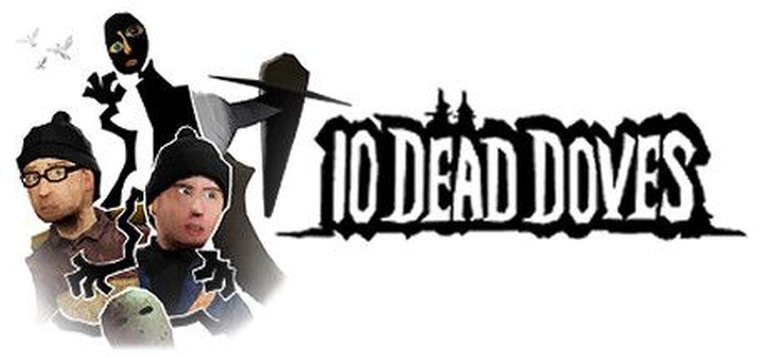
10 Dead Doves is a psychological survival horror game set in the eerie Appalachian mountains, where players unravel a centuries-old secret project involving interdimensional forces and mind-altering experiments. With a cinematic third-person perspective, the game blends puzzle-solving, survival mechanics, and a deeply personal, emotionally charged narrative that grows increasingly compelling as the story unfolds. Despite its intentionally janky, retro-inspired controls and slow-burn pacing, the game delivers a uniquely unsettling and thought-provoking experience rooted in cosmic horror and existential themes.
Gameplay Videos
Where to Buy 10 Dead Doves
PC
10 Dead Doves Free Download
10 Dead Doves Guides & Walkthroughs
10 Dead Doves Reviews & Reception
gameluster.com : 10 Dead Doves is an incredibly personal game with natural dialogue and emotional moments performed tremendously well.
metacritic.com (75/100): 10 Dead Doves is a fascinating horror adventure with janky PSX-era controls that takes too long to start unfolding, but once you start diving down the rabbit hole you’ll find a wonderfully weird journey that gets more and more compelling the longer you play.
store.steampowered.com : 10 Dead Doves makes a strong statement with its staggeringly strong production value, intriguing mystery, and polished gameplay.
adventuregamehotspot.com : 10 Dead Doves is a very uneven adventure that will try your patience as much as the characters in-game, but as you stick with it you will unearth an incredible story of friendship and psychological weirdness that feels largely unique.
thumbculture.co.uk : 10 Dead Doves is a wonderful and weird experience, that constantly keeps you on your toes.
10 Dead Doves: A Surreal Descent into Appalachian Horror
Introduction
10 Dead Doves is a game that defies easy categorization—a surreal, deeply personal horror adventure that blends the nostalgia of PS1-era survival horror with a modern indie sensibility. Developed by Duonix Studios, a two-person team consisting of Mark Byram II and Sean-Michael Millard, the game is a labor of love that wears its influences proudly while carving out its own niche in the horror genre. At its core, 10 Dead Doves is a story about regret, redemption, and the haunting power of urban legends, wrapped in a layer of psychological horror that lingers long after the credits roll.
The game’s premise is deceptively simple: two friends, Mark and Sean, embark on a hiking trip through the Appalachian Trail in search of the Ant Farm, a mythical place rumored to grant wishes. What begins as a nostalgic adventure quickly spirals into a nightmarish odyssey, as Mark—our protagonist and self-proclaimed “Most Pathetic Man on Earth”—finds himself plagued by narcoleptic episodes, cryptic messages from a bird-like entity known as The Wren, and a series of increasingly bizarre and unsettling events. The game’s title itself is a clue to its themes: the recurring motif of dead doves, which fall from the sky at pivotal moments, serves as both a literal and metaphorical harbinger of the horrors to come.
10 Dead Doves is a game that thrives on ambiguity. Its narrative is fragmented, its themes are layered, and its horror is as much psychological as it is supernatural. It’s a game that rewards patience, as its slow-burn approach to storytelling means that its true depths only reveal themselves in the latter half of its six-to-eight-hour runtime. For those willing to stick with it, however, the payoff is immense—a haunting, deeply emotional experience that blends horror, comedy, and surrealism in a way that feels fresh and original.
Development History & Context
The Studio and Creators’ Vision
Duonix Studios is a small, independent development team consisting of just two people: Mark Byram II and Sean-Michael Millard. Both creators wear multiple hats, with Mark serving as the game’s director, writer, and designer, while Sean handles the art direction, 3D modeling, and additional writing. The game’s composer, Daniel Millard, rounds out the core team, contributing a haunting and atmospheric soundtrack that perfectly complements the game’s eerie tone.
The duo’s background is rooted in a deep love for classic horror games and films, particularly those from the late ’90s and early 2000s. Mark’s previous work includes HAT.EXE, a satirical take on Slender: The Eight Pages, which showcased his knack for blending horror with humor. Sean, on the other hand, grew up playing retro games on an old-school computer and GameCube, which explains the game’s deliberate throwback aesthetic. Their shared passion for the era’s horror games—titles like Silent Hill, Resident Evil, and Sanitarium—is evident in every aspect of 10 Dead Doves, from its fixed camera angles to its tank controls.
The game’s development was funded through a successful Kickstarter campaign in 2023, which allowed the team to expand their vision and refine the game’s mechanics and narrative. The Kickstarter trailer, which has been praised for its excellent editing and tone, set the stage for what would become one of the most unique indie horror experiences of 2024.
Technological Constraints and Aesthetic Choices
10 Dead Doves is a deliberate throwback to the PS1 era of survival horror, and its technical limitations are part of its charm. The game employs a fixed-camera perspective, tank controls, and low-polygon character models, all of which evoke the aesthetic of classic titles like Resident Evil and Silent Hill. However, rather than being a mere nostalgia trip, the game uses these constraints to its advantage, crafting an atmosphere that feels both familiar and fresh.
The game’s visual style is a mix of photo-sourced textures, pixelated assets, and traditional 3D models, creating a cohesive yet unsettling aesthetic. Sean spent weeks converting early photo shoots into facial expression sheets for the characters, a process that was as tedious as it was essential to the game’s unique look. The result is a world that feels lived-in and real, even as it descends into surrealism.
The fixed camera angles, while occasionally frustrating, are used to great effect in building tension and directing the player’s attention. The game’s cinematography is carefully crafted, with each camera angle serving a purpose—whether it’s to hide a lurking horror just out of frame or to frame a particularly striking set piece.
The Gaming Landscape at Release
10 Dead Doves arrived at a time when the horror genre was dominated by two extremes: AAA action-horror titles focused on spectacle and jump scares, and indie games that often relied on cheap thrills and YouTube-friendly moments. The game’s release in December 2024 was a breath of fresh air, offering a more thoughtful, character-driven approach to horror that harkened back to the genre’s golden age.
The game’s Kickstarter success and subsequent critical acclaim are a testament to the growing appetite for horror experiences that prioritize storytelling and atmosphere over mere scares. In many ways, 10 Dead Doves is a spiritual successor to games like Sanitarium and Eternal Darkness, titles that blended psychological horror with deep narrative complexity.
Narrative & Thematic Deep Dive
Plot Summary
10 Dead Doves follows Mark Stetson, a former backpacker whose glory days are long behind him. Suffering from narcolepsy and haunted by a failing marriage and a strained relationship with his daughter, Mark teams up with his old friend Sean for one last adventure: a hike through the Appalachian Trail in search of the Ant Farm, a mythical place said to grant wishes.
From the outset, it’s clear that something is amiss. Birds fall dead from the sky, phones stop working, and the gas lines are cut. As Mark and Sean venture deeper into the wilderness, they encounter a series of increasingly bizarre phenomena, including a graffitied monolith that transports Mark to a surreal dreamscape where he meets The Wren, a bird-like entity who seems to be orchestrating the events unfolding around him.
The game’s narrative is fragmented, with much of the story unfolding through Mark’s dreams and visions. These sequences are often abstract, filled with symbolism and metaphor, and they serve as a window into Mark’s psyche. As the game progresses, it becomes clear that Mark’s journey is as much about confronting his past mistakes as it is about uncovering the secrets of the Ant Farm.
Characters and Dialogue
The relationship between Mark and Sean is the emotional core of 10 Dead Doves. Their banter is natural and often humorous, providing much-needed levity in an otherwise bleak story. Mark is a deeply flawed protagonist—selfish, self-centered, and prone to self-pity—but his journey is one of redemption, as he comes to terms with his failures as a husband and father.
Sean, on the other hand, is the game’s comic relief, a lovable goofball whose optimism and humor contrast sharply with Mark’s cynicism. Their dynamic is one of the game’s greatest strengths, and their voice acting—while occasionally amateurish—adds a layer of authenticity to their characters. The game’s dialogue is often witty and self-aware, with the characters frequently breaking the fourth wall or making meta-commentary on the horror genre.
The Wren, the game’s primary antagonist, is a fascinating and enigmatic figure. Part narrator, part tormentor, The Wren seems to exist outside of time and space, guiding Mark through his journey while also subjecting him to a series of psychological trials. The Wren’s true nature is left ambiguous, but it’s clear that he (or it) is deeply connected to the Ant Farm and the secrets it holds.
Themes and Symbolism
10 Dead Doves is a game that thrives on ambiguity, and its themes are as layered as its narrative. At its core, the game is an exploration of regret, redemption, and the power of storytelling. Mark’s journey is a metaphor for the creative process, with The Wren serving as both muse and tormentor, pushing Mark to confront his past and create something meaningful from his suffering.
The game’s title is a key part of its symbolism. The dead doves that fall from the sky represent Mark’s failures and regrets, as well as the inescapable nature of his past. The birds are also tied to Mark’s narcolepsy, which is both a literal condition and a metaphor for his inability to face reality.
The Ant Farm itself is a symbol of the unattainable—the idea that there’s some magical place or solution that can fix all of life’s problems. The game’s multiple endings explore different interpretations of this idea, with one ending suggesting that the Ant Farm is a place of penance and redemption, while the other implies that it’s a Faustian bargain that comes at a terrible cost.
The Endings and Player Choice
10 Dead Doves features two distinct endings, determined by a late-game choice that reflects Mark’s moral compass. The “ladder” ending sees Mark choosing to atone for his past mistakes, cutting off his tongue (a symbol of his selfishness) and reconnecting with his daughter over the phone. The “stairs” ending, on the other hand, sees Mark making a deal with The Wren to see his daughter again, only to be trapped in a nightmarish, cyclical hellscape where his ex-wife laughs at him and his daughter is strung up on a tree.
The endings are a reflection of the game’s central themes: the ladder ending represents redemption and self-sacrifice, while the stairs ending represents the dangers of selfishness and the inability to let go of the past. The game’s Dream Scale system, which tracks the player’s choices throughout the game, determines which ending is available, adding a layer of replayability for those who want to explore both outcomes.
Gameplay Mechanics & Systems
Core Gameplay Loop
10 Dead Doves is a narrative-driven horror game with a strong emphasis on exploration, puzzle-solving, and survival. The game’s core gameplay loop involves traversing the Appalachian Trail, uncovering clues, and solving puzzles to progress the story. Combat is notably absent, with the game instead focusing on evasion and stealth during its rare chase sequences.
The game’s fixed-camera perspective and tank controls are a deliberate throwback to classic survival horror titles, but they can be frustrating at times. The camera angles, while effective in building tension, occasionally obscure important objects or make navigation difficult. The tank controls, while authentic to the era, can feel clunky, especially during the game’s chase sequences.
Puzzle Design and Exploration
The game’s puzzles are generally well-designed, with a mix of environmental challenges and inventory-based solutions. Early in the game, for example, players must collect planks to repair a broken bridge, a task that requires careful exploration of the surrounding forest. Later puzzles involve deciphering cryptic messages, manipulating objects in the environment, and navigating surreal dreamscapes.
The game’s exploration is aided by a map system, though the map can be difficult to read at times, especially in the game’s more open areas. The lack of a quick-equip option for items can also be frustrating, as players must manually navigate the inventory menu to use objects.
Chase Sequences and Stealth
The game’s chase sequences are some of its weakest moments. While the fixed camera and tank controls work well for exploration and puzzle-solving, they make evasion and stealth unnecessarily difficult. The camera often switches angles abruptly, making it hard to determine the direction of pursuit, and the controls can feel unresponsive during high-pressure moments.
The game attempts to mitigate these issues with glow sticks that mark previously explored areas, but these are of limited use, especially when revisiting locations. The chase sequences, while tense, often feel more frustrating than frightening, and they drag on longer than necessary, especially in the game’s third act.
Inventory and Visions
The game’s inventory system is one of its most unique features. Every item collected has a detailed description, often humorous or cryptic, that adds to the game’s world-building. The “Visions” menu allows players to “inhabit” certain items, transporting them to a surreal dreamscape where they can listen to audio diaries from other characters.
The inventory system is also home to the game’s collectibles, including the “missing person posters” that serve as the game’s primary collectible. These posters, scattered throughout the game’s environments, provide additional lore and backstory, rewarding players who take the time to explore thoroughly.
The Dream Scale and Player Agency
The game’s Dream Scale system is a subtle but effective way of tracking the player’s choices and determining which ending they’ll receive. The system is tied to the game’s themes of morality and redemption, with “white-weighted” choices leading to the ladder ending and “black-weighted” choices leading to the stairs ending.
The Dream Scale is not overtly explained, and players may not even realize it’s at work until they reach the game’s final choice. This ambiguity adds to the game’s replayability, as players may want to experiment with different choices to see how they affect the outcome.
World-Building, Art & Sound
Setting and Atmosphere
10 Dead Doves is set in the Appalachian wilderness, a location steeped in folklore and mystery. The game’s environments are meticulously crafted, with a mix of realistic locations (abandoned trailer parks, overgrown forests) and surreal dreamscapes (the white void, the Ant Farm). The game’s art style, a blend of low-poly models and photo-sourced textures, creates a world that feels both familiar and alien.
The game’s atmosphere is one of its greatest strengths. The fixed camera angles, combined with the game’s sound design, create a sense of unease that permeates every moment. The Appalachian setting is used to great effect, with the game’s lore drawing on the region’s rich history of urban legends and supernatural phenomena.
Visual Direction
The game’s visual style is a deliberate throwback to the PS1 era, but it’s far from a mere nostalgia trip. The mix of low-poly models, pixelated textures, and photo-sourced assets creates a unique aesthetic that feels both retro and modern. The character models, while stiff and uncanny at times, are expressive and full of personality, thanks to the game’s detailed facial animations.
The game’s surreal sequences are where its visual direction truly shines. The white void, with its abstract geometry and eerie lighting, is a standout, as are the game’s later dreamscapes, which feature a mix of different art styles and perspectives. The game’s creature designs are equally impressive, with The Wren and other entities standing out as some of the most memorable horror creations in recent years.
Sound Design and Music
The game’s sound design is a masterclass in building tension. The ambient noise, from the rustling of leaves to the distant calls of unseen creatures, creates a constant sense of unease. The game’s soundtrack, composed by Daniel Millard, is sparse but effective, with haunting piano melodies and discordant strings adding to the atmosphere.
The game’s voice acting, while occasionally amateurish, is a highlight. Mark and Sean’s banter feels natural and authentic, and their emotional moments are delivered with genuine pathos. The Wren’s voice, with its eerie, otherworldly tone, is particularly effective, adding to the character’s enigmatic presence.
Reception & Legacy
Critical Reception
10 Dead Doves received generally positive reviews upon release, with critics praising its unique narrative, atmospheric world-building, and emotional depth. The game’s slow start and clunky controls were frequent points of criticism, but most reviewers agreed that the game’s strengths far outweighed its weaknesses.
Adventure Game Hotspot gave the game a 75/100, calling it “a fascinating horror adventure with janky PSX-era controls that takes too long to start unfolding, but once you begin diving down the rabbit hole you’ll find a wonderfully weird journey that gets more and more compelling the longer you play.” GameLuster awarded the game a 7/10, praising its “creative, emotional, and deeply personal storyline” while criticizing its “repetitive, elongated gameplay and clunky controls.”
The game’s reception on Steam has been overwhelmingly positive, with a “Very Positive” rating based on over 170 user reviews. Players have praised the game’s story, atmosphere, and humor, with many noting that its flaws are outweighed by its unique charm.
Commercial Performance
10 Dead Doves was a commercial success, thanks in part to its successful Kickstarter campaign and strong word-of-mouth marketing. The game’s release during the Steam Scream Fest 2024 helped boost its visibility, and its inclusion in various indie horror showcases further solidified its reputation as a standout title in the genre.
Influence and Legacy
While it’s too early to determine 10 Dead Doves’ long-term legacy, the game has already made an impact on the indie horror scene. Its blend of retro aesthetics, modern storytelling, and psychological depth has resonated with players and critics alike, and it’s likely to inspire future indie developers to take risks with their own projects.
The game’s success has also opened doors for Duonix Studios, with the team already hinting at future projects. In a post-release interview, Mark Byram II expressed interest in exploring the world of 10 Dead Doves further, suggesting that a sequel or spin-off could be in the works.
Conclusion
10 Dead Doves is a game that defies easy categorization—a surreal, deeply personal horror adventure that blends the nostalgia of PS1-era survival horror with a modern indie sensibility. Its slow start and clunky controls may frustrate some players, but those who stick with it will be rewarded with one of the most unique and emotionally resonant horror experiences in recent years.
The game’s strengths lie in its narrative depth, atmospheric world-building, and memorable characters. Mark and Sean’s journey is as much about confronting their past mistakes as it is about uncovering the secrets of the Ant Farm, and the game’s multiple endings offer a satisfying payoff for those who engage with its themes.
While 10 Dead Doves may not be a perfect game, it’s a bold and ambitious one, and its flaws are outweighed by its unique charm. For fans of psychological horror, surreal storytelling, and retro aesthetics, it’s a must-play—a haunting, deeply emotional experience that lingers long after the credits roll.
Final Verdict: 8/10 – A flawed but fascinating descent into Appalachian horror, 10 Dead Doves is a testament to the power of indie storytelling.