
- Release Year: 2022
- Platforms: Nintendo Switch, PlayStation 4, Windows, Xbox One, Xbox Series
- Publisher: Just For Games SAS, Pixel Heart SAS
- Developer: Storybird SARL
- Genre: Action
- Perspective: Side view
- Game Mode: Single-player
- Gameplay: Platform, Shooter
- Setting: Classical, Fantasy, Japan (Ancient, Medieval)
- Average Score: 63/100
Description
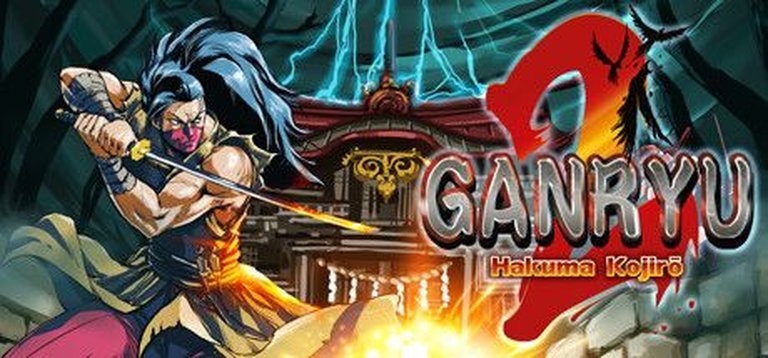
Ganryu 2: Hakuma Kojirō is a 2D side-scrolling action-platformer set in feudal Japan, blending fast-paced combat with classic shooter elements. Players take on the role of a skilled warrior navigating treacherous levels filled with enemies, traps, and boss battles, all while mastering precise movements and rhythmic gameplay. With its retro-inspired visuals and challenging gameplay, the game pays homage to old-school arcade titles while offering a fresh, addictive experience for modern players.
Gameplay Videos
Ganryu 2: Hakuma Kojirō Free Download
Nintendo Switch
Ganryu 2: Hakuma Kojirō Patches & Updates
Ganryu 2: Hakuma Kojirō Mods
Ganryu 2: Hakuma Kojirō Guides & Walkthroughs
Ganryu 2: Hakuma Kojirō Reviews & Reception
metacritic.com (85/100): A triumphant return to form for the series.
nintendolife.com (40/100): A tragedy coded in Unity.
opencritic.com (66/100): Ganryu 2: Hakuma Kojiro gives us one of the most mystifying pieces of software to hit the public domain in recent times.
waytoomany.games : Ganryu 2: Hakuma Kojiro is the kind of game that would have been a lot more enjoyable if it actually had one.
seafoamgaming.com : Stages in Ganryu 2 are split up into multiple sections: there aren’t that many stages, but those you do have are fairly lengthy, with each section containing a good amount of enemies and hazards to jump, throw, and slash around as you work your way across Japan.
Ganryu 2: Hakuma Kojirō: A Flawed but Fascinating Revival of a Neo Geo Classic
Introduction
In the pantheon of retro-inspired action platformers, Ganryu 2: Hakuma Kojirō stands as a curious artifact—a sequel to a 1999 Neo Geo arcade game that few remember, yet one that boldly attempts to revive the spirit of classic titles like Shinobi and Strider. Developed by Storybird Studio and published by Just For Games and PixelHeart, Ganryu 2 is a love letter to the golden age of arcade action, wrapped in modern pixel-art aesthetics and a punishing difficulty curve. But does it succeed in capturing the magic of its predecessors, or does it stumble under the weight of its own ambition?
Development History & Context
The original Ganryu, released in 1999 by Visco Corporation, was a side-scrolling hack-and-slash platformer that drew inspiration from the legendary duel between Miyamoto Musashi and Sasaki Kojirō. While it was a competent arcade title, it never achieved the same level of acclaim as contemporaries like Shinobi III or Strider. Fast forward to 2022, and Ganryu 2 emerges as an unexpected sequel, developed by Storybird Studio—a team with experience in retro-inspired titles like Andro Dunos II—and published by Just For Games and PixelHeart.
The game’s development is rooted in a deep appreciation for the Neo Geo’s aesthetic and gameplay sensibilities. Using the Unity engine, Storybird Studio aimed to recreate the look and feel of a 16-bit arcade classic while incorporating modern refinements. However, the choice of Unity—a versatile but often criticized engine for its performance quirks—would prove to be a double-edged sword, particularly on the Nintendo Switch.
Narrative & Thematic Deep Dive
Ganryu 2 continues the story of Miyamoto Musashi, the legendary swordsman who defeated Sasaki Kojirō in their iconic duel. After his victory, Musashi retreats to Hokkaido to meditate and pursue art, only to be haunted by the vengeful spirit of Kojirō. The game’s narrative is simple but effective, drawing from Japanese folklore and the historical rivalry between the two warriors. The story unfolds through brief cutscenes and dialogue, which, while not groundbreaking, serve to frame the action and give context to Musashi’s journey across feudal Japan.
Thematically, Ganryu 2 explores themes of honor, vengeance, and the relentless pursuit of mastery. Musashi’s journey is not just a physical one but a spiritual one, as he must confront the lingering specter of his past and prove his worth as a warrior. The game’s setting—a fantastical version of 17th-century Japan—is rich with detail, from cherry blossom-laden landscapes to eerie, demon-infested fortresses. The seasonal transitions (spring, summer, fall, winter) add a layer of visual and atmospheric variety, reinforcing the game’s connection to nature and the passage of time.
Gameplay Mechanics & Systems
At its core, Ganryu 2 is a fast-paced, action-platformer that emphasizes precision, timing, and mastery of its combat systems. Players control Musashi, who is equipped with a katana, kunai (throwing knives), and a variety of special abilities known as “Kamis.” The gameplay loop revolves around slashing through waves of enemies, navigating treacherous platforming sections, and battling towering bosses.
Combat and Movement
- Swordplay: Musashi’s katana is his primary weapon, capable of rapid slashes and charged attacks. The combat is fluid and responsive, with a satisfying weight to each strike.
- Kunai: These throwing knives serve as a secondary weapon, useful for taking out distant enemies or bosses from a safe distance.
- Kamis: Special abilities that can be unlocked and upgraded, adding depth to the combat. These range from screen-clearing attacks to defensive maneuvers.
- Movement: Musashi can dash, double-jump, and wall-jump, allowing for a high degree of mobility. The dash, in particular, is a crucial tool for both offense and defense, as it can be used to quickly close gaps or evade attacks.
Progression and Difficulty
Ganryu 2 is unapologetically difficult, adhering to the “git gud” philosophy of classic arcade games. Players start with three lives, and losing them all results in a game over, forcing a restart from the beginning of the stage. The game’s difficulty is compounded by its lack of a continue system or difficulty settings, which can be frustrating for casual players. However, for those who embrace the challenge, the game offers a rewarding sense of progression as they master its mechanics and overcome its punishing obstacles.
Level Design and Secrets
The game’s levels are meticulously designed, with hidden paths, secret rooms, and collectibles (such as Hanafuda cards) scattered throughout. Exploration is encouraged, as discovering these secrets can yield valuable power-ups, extra lives, or score bonuses. The level design is varied, with each stage offering unique challenges, from minecart chases to vertical climbing sections.
World-Building, Art & Sound
Ganryu 2 excels in its presentation, particularly in its visual and auditory design. The game’s pixel-art style is a standout feature, evoking the aesthetic of classic Neo Geo titles while incorporating modern details and animations. The character sprites are intricately designed, and the backgrounds are rich with detail, from lush forests to ominous castles.
The game’s soundtrack is another highlight, blending traditional Japanese instrumentation with modern sensibilities. The music is atmospheric and dynamic, shifting to match the intensity of the action. Sound effects are equally well-crafted, with the clashing of swords and the cries of enemies adding to the game’s immersive quality.
However, the game’s technical performance—particularly on the Nintendo Switch—has been a point of contention. Reports of frame rate drops and stuttering have marred the experience for some players, though patches have addressed some of these issues. On other platforms, such as PC and Xbox, the game runs more smoothly, allowing its visual and auditory strengths to shine.
Reception & Legacy
Ganryu 2 received mixed reviews upon release, with critics praising its faithful recreation of classic arcade gameplay and its stunning presentation, while criticizing its punishing difficulty and technical issues. The game’s reception has been polarized, with some players embracing its old-school challenge and others finding it overly frustrating.
Despite its flaws, Ganryu 2 has carved out a niche for itself among fans of retro-inspired action platformers. Its legacy is one of a game that dared to revive a forgotten classic, offering a modern take on a beloved genre. While it may not have achieved the same level of acclaim as its inspirations, it stands as a testament to the enduring appeal of arcade-style action.
Conclusion
Ganryu 2: Hakuma Kojirō is a game of contradictions—a beautiful yet flawed revival of a Neo Geo classic. Its stunning pixel-art visuals, dynamic soundtrack, and fluid combat make it a standout title in the retro-inspired action platformer genre. However, its punishing difficulty, lack of modern conveniences (such as difficulty settings or a continue system), and technical issues on certain platforms hold it back from true greatness.
For fans of classic arcade action, Ganryu 2 is a worthy challenge, offering a rewarding experience for those willing to master its mechanics. For casual players, its steep learning curve and lack of accessibility options may prove to be insurmountable barriers. Ultimately, Ganryu 2 is a game that demands respect for its ambition and craftsmanship, even as it stumbles under the weight of its own retro sensibilities.
Final Verdict: A flawed but fascinating revival of a Neo Geo classic, Ganryu 2: Hakuma Kojirō is a game that will test your mettle and reward your perseverance. While it may not be perfect, it is a testament to the enduring appeal of arcade-style action and a worthy addition to the pantheon of retro-inspired platformers.