
- Release Year: 2009
- Platforms: Windows
- Publisher: Unknown
- Developer: Unknown
- Genre: Adventure
- Perspective: Side view
- Game Mode: Single-player
- Gameplay: Graphic adventure, Inventory-based, Point-and-click, Puzzle elements
Description
Danny Dread is on Call is a freeware point-and-click adventure game where players take on the role of Danny Dread, a reluctant employee summoned by his egomaniacal, mad scientist boss on his day off. The game features classic inventory-based gameplay with a side-view perspective, allowing players to interact with the environment using actions like Walk, Look, Use, Talk, Take, and Kick. Set in a humorous and lighthearted tone, the game tasks Danny with assisting his boss in a bizarre experiment, blending puzzle-solving with comedic storytelling.
Danny Dread is on Call Free Download
Danny Dread is on Call Reviews & Reception
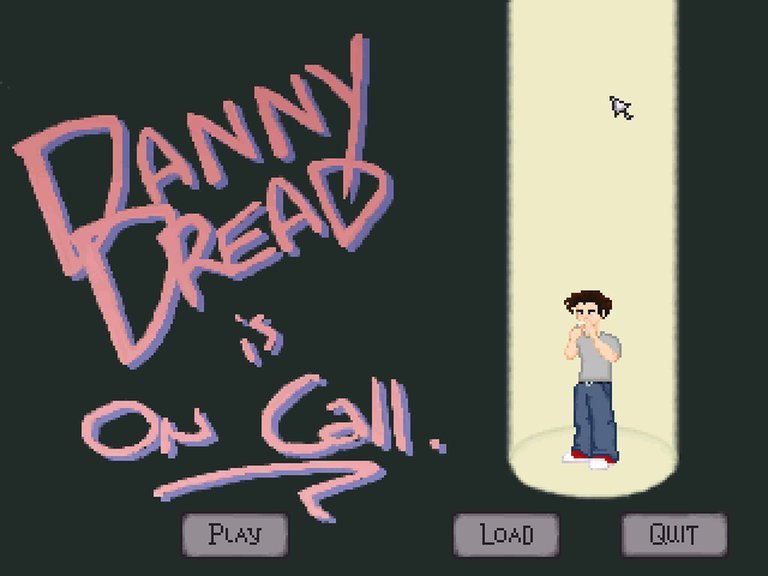
jd-adventuregamereviews.blogspot.com : A really nice touch is the way the story actually begins on the main menu screen.
adventuregamestudio.co.uk : It’s just typical isn’t it. You’re planing on having a relaxing day, maybe going to the movies or having a quiet drink at home with friends and what happens? You get called up by your boss and next thing you know you’re expected at work within the next 20 minutes.
Danny Dread is on Call: A Love Letter to LucasArts in the Freeware Era
Introduction: The Unsung Hero of AGS Comedy
In the vast, often overlooked landscape of freeware adventure games, Danny Dread is on Call (2009) stands as a shining example of how passion, humor, and a deep reverence for classic point-and-click mechanics can coalesce into something truly special. Developed by Green Boy using the Adventure Game Studio (AGS) engine, this short but unforgettable title is a love letter to the golden age of LucasArts, wrapped in a modern, self-aware package. While it may not have the name recognition of Monkey Island or Day of the Tentacle, Danny Dread is a game that deserves to be remembered—not just as a nostalgic throwback, but as a clever, well-crafted adventure in its own right.
At its core, Danny Dread is a game about the mundane absurdity of modern life, filtered through the lens of a madcap, cartoonish world. You play as the eponymous Danny, a hapless everyman whose day off is rudely interrupted by his egomaniacal, mad scientist boss. What follows is a whirlwind of inventory-based puzzles, witty dialogue, and a surprising amount of heart—all packed into a game that can be completed in under 30 minutes. But don’t let its brevity fool you; Danny Dread is a masterclass in economical game design, where every pixel, every line of dialogue, and every puzzle serves a purpose.
This review will delve deep into the game’s development history, its narrative and thematic underpinnings, its gameplay mechanics, and its lasting legacy. We’ll explore why, despite its short length and freeware status, Danny Dread is on Call remains a standout title in the adventure game genre, and why it continues to resonate with players over a decade after its release.
Development History & Context: The Rise of AGS and the Freeware Revolution
The Adventure Game Studio Phenomenon
To understand Danny Dread is on Call, one must first understand the ecosystem in which it was created: the Adventure Game Studio (AGS) community. AGS, first released in 1997 by Chris Jones, was a game engine designed to democratize the creation of point-and-click adventure games. It allowed aspiring developers to craft games in the style of LucasArts’ SCUMM engine, without needing extensive programming knowledge. By the late 2000s, AGS had fostered a thriving community of indie developers, many of whom were creating games as labors of love, often for free.
Danny Dread was developed by Green Boy, a pseudonymous creator who was active in the AGS forums. Green Boy was part of a wave of developers who saw AGS not just as a tool, but as a means to revive a genre that had largely fallen out of favor with mainstream publishers. The late 2000s were a peculiar time for adventure games: while commercial releases were few and far between, the freeware scene was booming. Games like Ben There, Dan That! (2008) and Time Gentlemen, Please! (2009) had proven that there was still an audience for classic-style adventures, provided they were witty, well-designed, and—crucially—free.
Technological Constraints and Creative Ingenuity
Danny Dread was released on December 2, 2009, at a time when the indie game scene was on the cusp of a renaissance. The game was built using AGS 3.0, which, while powerful for its time, had its limitations. The engine was primarily designed for 2D, side-view adventures, and Danny Dread adheres closely to this format. The game runs at a resolution of 320×240 with 16-bit color, a deliberate choice to evoke the aesthetic of early ’90s adventure games. This low resolution, while limiting in terms of visual fidelity, forced Green Boy to focus on strong art direction and animation to convey the game’s humor and charm.
One of the most impressive aspects of Danny Dread’s development is how it leverages these constraints to its advantage. The game’s visuals are intentionally stylized, with exaggerated character designs and fluid animations that recall the heyday of LucasArts. The limited color palette is used to create a cohesive, almost storybook-like atmosphere, while the side-view perspective allows for a clear, uncluttered presentation of the game’s puzzles and interactions.
The Gaming Landscape in 2009
The late 2000s were a transitional period for the gaming industry. The adventure genre, which had dominated the early ’90s, had largely been eclipsed by the rise of first-person shooters, open-world games, and MMORPGs. Commercial adventure games were rare, and those that did exist—such as Telltale Games’ Tales of Monkey Island (2009)—often struggled to find a mainstream audience.
Yet, beneath the surface, a quiet revolution was taking place. The freeware adventure scene was thriving, driven by communities like AGS and forums dedicated to preserving and innovating within the genre. Games like Danny Dread were part of a larger movement to prove that adventure games weren’t dead—they had simply gone underground. These games were often short, experimental, and deeply personal, created by developers who were more interested in paying homage to the classics than in chasing commercial success.
Danny Dread is on Call fits squarely within this tradition. It’s a game that wears its influences on its sleeve, but it’s also a game that understands what made those influences so enduring. Green Boy wasn’t just copying LucasArts; he was distilling the essence of what made those games great—clever writing, intuitive puzzles, and a strong sense of personality—and adapting it for a new generation of players.
Narrative & Thematic Deep Dive: The Mundane Meets the Absurd
Plot Overview: A Day in the Life of Danny Dread
The premise of Danny Dread is on Call is deceptively simple: Danny, a seemingly ordinary man, is enjoying a day off when his boss—a mad scientist with a god complex—calls him into work. Danny’s girlfriend is less than thrilled, but duty calls, and soon Danny finds himself embroiled in a series of increasingly absurd tasks, all in the name of science.
The game’s narrative is divided into a few key acts:
-
The Call to Adventure: The game begins on the main menu screen, where Danny’s phone rings, setting the stage for the adventure to come. This is a clever narrative device, as it immediately immerses the player in the game’s world before they’ve even started playing.
-
The Reluctant Hero: Danny arrives at his workplace, a nondescript lab filled with eccentric characters. His boss tasks him with finding an animal sample for the “splice-o-matic,” a device that, as the name suggests, is capable of some rather dubious genetic experimentation.
-
The Quest for the Sample: What follows is a series of puzzles that take Danny across three distinct locations: the lab, a nearby park, and a convenience store. Each location is filled with quirky characters and absurd situations, all of which serve to escalate the game’s humor and charm.
-
The Twist: Just when it seems like the game is wrapping up, Danny Dread throws a curveball. The story takes an unexpected turn, introducing new challenges and a final, climactic puzzle that ties everything together.
While the plot is straightforward, it’s the execution that makes Danny Dread so memorable. The game’s writing is sharp, self-aware, and consistently funny, with a tone that oscillates between dry wit and outright slapstick. The dialogue is snappy, and the characters—though few in number—are vividly realized, each with their own distinct personalities and quirks.
Themes: Work, Love, and the Absurdity of Modern Life
Beneath its comedic surface, Danny Dread is on Call explores a few key themes that give the game a surprising amount of depth.
-
The Tyranny of Work: At its heart, Danny Dread is a game about the modern workforce. Danny’s boss is a caricature of the demanding, narcissistic employer, and Danny himself is the everyman caught in the grind. The game’s humor often stems from the absurdity of corporate culture, where employees are expected to drop everything at a moment’s notice, no matter how unreasonable the request.
-
The Struggle for Work-Life Balance: Danny’s girlfriend serves as a reminder of what he’s missing out on by going to work. Their relationship is playful and affectionate, but it’s also clear that Danny’s job is a constant source of tension. The game doesn’t dwell on this theme, but it’s there, lurking beneath the surface, adding a layer of relatability to Danny’s plight.
-
The Absurdity of Authority: The game’s mad scientist boss is a perfect embodiment of unchecked authority. He’s egotistical, demanding, and utterly oblivious to the inconvenience he causes. Yet, despite his flaws, he’s also a source of much of the game’s humor. His over-the-top personality and ridiculous demands make him a memorable antagonist, even if he’s not particularly menacing.
-
The Power of Perseverance: Despite the absurdity of his situation, Danny soldiers on, completing each task with a mix of reluctance and determination. This theme of perseverance in the face of adversity is a subtle but important part of the game’s narrative. Danny may complain, but he ultimately rises to the challenge, proving that even the most mundane tasks can be made bearable with a little humor and ingenuity.
Characters: A Cast of Eccentrics
Danny Dread features a small but memorable cast of characters, each of whom plays a crucial role in the game’s narrative and puzzles.
-
Danny Dread: The protagonist and player character. Danny is an everyman, caught between the demands of his job and his desire for a normal life. His dry, sarcastic sense of humor makes him an engaging protagonist, and his reactions to the absurd situations he finds himself in are a constant source of laughs.
-
The Boss: Danny’s egomaniacal, mad scientist employer. The Boss is a classic caricature of the eccentric scientist, complete with wild hair, a lab coat, and a complete disregard for the well-being of his employees. His over-the-top personality and ridiculous demands drive much of the game’s humor.
-
Danny’s Girlfriend: Though she only appears briefly, Danny’s girlfriend is an important presence in the game. She represents the life Danny could be living if he weren’t constantly at the beck and call of his boss. Her playful, affectionate interactions with Danny add a touch of warmth to the game’s otherwise absurd tone.
-
The Park Kid: A young boy playing in the park, the Park Kid is one of the game’s most memorable NPCs. His dialogue is filled with the kind of random, nonsensical logic that only a child could come up with, and his interactions with Danny are some of the game’s funniest moments.
-
The Convenience Store Clerk: A classic “seen-it-all” character, the clerk is unfazed by the absurdity of Danny’s requests. His deadpan delivery and world-weary attitude make him a standout character, and his puzzles are some of the game’s most clever.
Dialogue and Writing: The Heart of the Game
The writing in Danny Dread is on Call is where the game truly shines. The dialogue is sharp, witty, and consistently funny, with a tone that oscillates between dry sarcasm and outright slapstick. The game’s humor is reminiscent of classic LucasArts titles, but it’s also distinctly modern, with a self-aware edge that keeps it from feeling like a mere pastiche.
One of the most impressive aspects of the game’s writing is how it uses dialogue to flesh out its characters. Even minor NPCs feel distinct and memorable, thanks to their unique voices and quirks. The Park Kid, for example, speaks in a stream-of-consciousness style that’s both hilarious and oddly endearing, while the Convenience Store Clerk’s deadpan delivery is the perfect foil to Danny’s increasingly exasperated reactions.
The game also makes excellent use of environmental storytelling. The lab, park, and convenience store are all filled with small details that add depth to the world and provide hints for the game’s puzzles. From the absurd contraptions in the lab to the graffiti in the park, every element of the game’s world feels carefully considered and purposeful.
Gameplay Mechanics & Systems: A Masterclass in Puzzle Design
Core Gameplay Loop: The SCUMM Legacy
Danny Dread is on Call is, at its core, a classic point-and-click adventure game. The gameplay revolves around exploring environments, interacting with objects and characters, and solving inventory-based puzzles. The game’s interface is heavily inspired by LucasArts’ SCUMM system, with a verb-based interaction model that allows players to Walk, Look, Use, Talk, Take, and—uniquely—Kick.
The game’s controls are intuitive and well-implemented. Players can select verbs from the bottom-left corner of the screen or cycle through them using the right mouse button. This dual-control scheme is a nice touch, as it allows players to choose the method that feels most comfortable to them. The inventory system is similarly well-designed, with a clear, uncluttered interface that makes it easy to manage items.
Puzzle Design: The Goldilocks Zone
One of the most impressive aspects of Danny Dread is its puzzle design. Adventure games live and die by their puzzles, and Danny Dread strikes a near-perfect balance between accessibility and challenge. The puzzles are neither too easy nor too obscure, and they’re always logically consistent within the game’s absurd world.
The game’s puzzles can be broadly divided into a few categories:
-
Inventory Puzzles: The bread and butter of Danny Dread’s gameplay. These puzzles require players to collect items and use them in creative ways to progress. For example, early in the game, Danny needs to find a way to distract a guard dog. The solution involves combining a few seemingly unrelated items in a way that’s both logical and humorous.
-
Dialogue Puzzles: Some of the game’s most clever puzzles involve talking to characters in the right way or at the right time. The Park Kid, for example, won’t give Danny what he needs until Danny engages in a bit of playful banter with him. These puzzles are a great way to flesh out the game’s characters while also providing a fun challenge.
-
Environmental Puzzles: These puzzles require players to interact with the environment in specific ways. For example, one puzzle involves manipulating a vending machine to get a desired item. These puzzles are often the most satisfying, as they require players to think outside the box and pay close attention to their surroundings.
-
The “Kick” Mechanic: One of the game’s most unique features is the “Kick” verb, which allows Danny to, well, kick things. This mechanic is used sparingly but effectively, often as a last resort when other methods fail. It’s a great example of how Danny Dread takes a classic formula and adds its own twist.
Character Progression and Exploration
While Danny Dread doesn’t feature traditional character progression in the RPG sense, Danny does grow as a character over the course of the game. His interactions with other characters become more confident, and his reactions to the absurdity around him become more exaggerated. This subtle character arc is a nice touch, as it gives the player a sense of progression even in a game that’s relatively short.
The game’s exploration is similarly well-handled. The three main locations—the lab, the park, and the convenience store—are all distinct and filled with interesting details. Each location is small enough to be easily navigable but large enough to feel like a living, breathing space. The game also does a great job of gating progression, ensuring that players can’t get stuck for too long without making some kind of progress.
UI and Accessibility
The user interface in Danny Dread is clean, intuitive, and well-designed. The verb selection system is a highlight, offering players two different ways to interact with the game world. The inventory system is similarly well-implemented, with a clear, uncluttered layout that makes it easy to manage items.
One of the game’s few shortcomings is its lack of full-screen support, at least in some versions. This is a minor issue, but it does detract slightly from the immersion. That said, the game’s windowed mode is large enough to be playable, and the art style is so strong that it’s easy to overlook this limitation.
Innovations and Flaws
Danny Dread doesn’t reinvent the wheel when it comes to adventure game mechanics, but it does refine and polish the classic formula to near-perfection. The game’s biggest innovation is its tone—it’s a game that’s unapologetically silly, but it’s also a game that respects the player’s intelligence. The puzzles are fair, the writing is sharp, and the world is filled with enough detail to reward exploration.
That said, the game isn’t without its flaws. The most obvious is its length—Danny Dread can be completed in under 30 minutes, which may leave some players wanting more. Additionally, while the game’s humor is consistently funny, it doesn’t always reach the heights of laugh-out-loud hilarity that some players might expect. Finally, the game’s lack of full-screen support is a minor but noticeable oversight.
World-Building, Art & Sound: Crafting a Memorable Atmosphere
Setting and Atmosphere: A World of Absurdity
Danny Dread is on Call takes place in a contemporary, urban setting, but it’s a world that’s just slightly off-kilter. The lab where Danny works is filled with bizarre contraptions, the park is home to a kid with a wild imagination, and the convenience store is staffed by a clerk who’s seen it all. This slightly surreal atmosphere is one of the game’s greatest strengths, as it allows the game to blend the mundane with the absurd in a way that feels both familiar and fresh.
The game’s world is small but densely packed with detail. Each location is filled with interactive objects, environmental storytelling, and hidden jokes. The lab, for example, is filled with absurd scientific equipment, while the park is littered with graffiti and playground equipment that hints at the Park Kid’s wild imagination. These details may seem minor, but they’re crucial to the game’s immersive atmosphere.
Visual Direction: A Love Letter to the ‘90s
The visual style of Danny Dread is a deliberate throwback to the adventure games of the early ‘90s. The game runs at a resolution of 320×240 with 16-bit color, a choice that gives it a retro aesthetic while also forcing the art team to focus on strong design and animation. The character sprites are large and expressive, with exaggerated features that recall the cartoony style of LucasArts’ classic titles.
The game’s color palette is muted but effective, with a focus on earth tones and pastels. This gives the game a cohesive, almost storybook-like look, which is further enhanced by the fluid animations. The characters move with a sense of weight and personality, and their expressions are exaggerated in a way that’s both humorous and endearing.
One of the most impressive aspects of the game’s visuals is how it uses its limited resolution to its advantage. The side-view perspective allows for clear, uncluttered presentation of the game’s puzzles and interactions, while the large character sprites ensure that Danny and the other characters are always the focal point of the action.
Sound Design: A Symphony of Nostalgia
The sound design in Danny Dread is another area where the game excels. The soundtrack, composed by Mark “Mods” Lovegrove, is a clever blend of original music and classic LucasArts sound clips. The original music is catchy and atmospheric, with a light, playful tone that perfectly complements the game’s humor. The LucasArts sound clips, meanwhile, are used sparingly but effectively, often as a nod to the game’s influences.
The game’s sound effects are similarly well-done. From the clinking of inventory items to the exaggerated “thud” of Danny kicking something, every sound effect is designed to enhance the game’s comedic tone. The voice acting, while limited, is also strong, with each character’s lines delivered with the perfect mix of sincerity and absurdity.
The Role of Music and Sound in Immersion
The music and sound design in Danny Dread play a crucial role in immersing the player in the game’s world. The light, playful soundtrack sets the tone for the game’s humor, while the sound effects add a layer of tactile feedback that makes the world feel alive. The LucasArts sound clips, meanwhile, serve as a constant reminder of the game’s influences, reinforcing the sense that Danny Dread is both a homage and a modern take on the classic adventure formula.
Reception & Legacy: A Cult Classic in the Making
Critical Reception: A Hidden Gem
Danny Dread is on Call was released to a warm reception from the AGS community and adventure game enthusiasts. While it didn’t receive widespread mainstream attention, it was praised for its sharp writing, clever puzzles, and strong visual design. Reviewers noted that the game was short but packed with personality, and many singled out its humor as a standout feature.
JD of JD’s Freeware Adventure Game Reviews called the game “a great example of how and when LucasArts style inventory puzzles should be used,” praising its balance of challenge and accessibility. He also highlighted the game’s audio design, noting that the use of LucasArts sound clips was “brilliantly timed.”
On the Adventure Game Studio website, the game received a four-cup rating (out of five) from players, with many praising its humor, puzzles, and overall polish. One reviewer, ddq, called it “one of the best examples of a fun AGS game,” while another, Ascovel, praised its “good jokes and puzzles.”
Commercial Reception: Freeware Success
As a freeware title, Danny Dread is on Call didn’t have a commercial release, but it was widely downloaded and played within the AGS community. According to the Adventure Game Studio website, the game has been downloaded over 4,600 times, a respectable number for a freeware title. It also received an Italian translation, further expanding its reach.
The game’s success within the AGS community helped to cement Green Boy’s reputation as a talented developer. While Green Boy hasn’t released any major titles since Danny Dread, the game remains a testament to his skill and creativity.
Evolution of Reputation: From Obscurity to Cult Status
In the years since its release, Danny Dread is on Call has developed a cult following among adventure game enthusiasts. It’s often cited as one of the best freeware adventure games of the late 2000s, and it’s frequently recommended to fans of classic LucasArts titles.
The game’s reputation has been bolstered by its inclusion in various freeware game collections and its availability on platforms like the Internet Archive. It’s also been the subject of retrospective reviews and discussions, with many players noting that it holds up surprisingly well over a decade after its release.
Influence on Subsequent Games
While Danny Dread is on Call may not have directly influenced any major commercial titles, its success within the AGS community helped to inspire a wave of similar freeware adventures. Games like Ben There, Dan That! and Time Gentlemen, Please!—both of which were released around the same time—share Danny Dread’s emphasis on humor, clever puzzles, and strong writing.
The game also serves as a reminder of the importance of the freeware scene in preserving and innovating within the adventure genre. At a time when commercial adventure games were rare, titles like Danny Dread proved that there was still an audience for the genre, provided the games were well-crafted and accessible.
Conclusion: A Small Game with a Big Heart
Danny Dread is on Call is a game that punches far above its weight. It’s short, it’s freeware, and it’s built using a decade-old game engine, but none of that stops it from being one of the most charming, funny, and well-designed adventure games of its era. It’s a game that understands what made the classics great—clever writing, intuitive puzzles, and a strong sense of personality—and it adapts those elements for a modern audience.
The game’s greatest strength is its humor. From the absurdity of Danny’s boss to the random musings of the Park Kid, Danny Dread is a game that’s constantly making the player smile. But it’s not just funny for the sake of being funny; the humor is always in service of the game’s themes and characters, giving the world a sense of depth and personality that’s rare in games of this scope.
The puzzles, too, are a highlight. They’re neither too easy nor too obscure, and they’re always logically consistent within the game’s absurd world. The game’s interface is intuitive and well-designed, and the visuals and sound design are top-notch, especially considering the game’s freeware status.
If Danny Dread has a flaw, it’s its length. The game can be completed in under 30 minutes, which may leave some players wanting more. But in many ways, the game’s brevity is also its strength. It’s a tight, focused experience that never overstays its welcome, and it’s all the better for it.
In the end, Danny Dread is on Call is a game that deserves to be remembered. It’s a love letter to the adventure games of the past, but it’s also a game that stands on its own merits. It’s funny, it’s clever, and it’s packed with personality. And in a genre that’s often defined by its classics, Danny Dread proves that there’s still room for new voices and fresh ideas.
Final Verdict: 8.5/10 – A must-play for adventure game fans, and a shining example of what the freeware scene can achieve.
Danny Dread is on Call may not have the name recognition of Monkey Island or Day of the Tentacle, but it’s a game that’s every bit as deserving of praise. It’s a small game with a big heart, and it’s a testament to the power of passion, creativity, and a deep love for the adventure genre. If you’re a fan of classic point-and-click adventures, do yourself a favor and give Danny Dread a try. You won’t be disappointed.