
- Release Year: 2007
- Platforms: PlayStation 2, Windows
- Publisher: Agetec, Inc., Ivolgamus UAB
- Developer: Ivolgamus UAB
- Genre: Role-playing (RPG)
- Perspective: 3rd-person
- Game Mode: Single-player
- Gameplay: Mini-games, Outfit customization, Pet training, Turn-based combat
- Setting: Fantasy
- Average Score: 50/100
Description
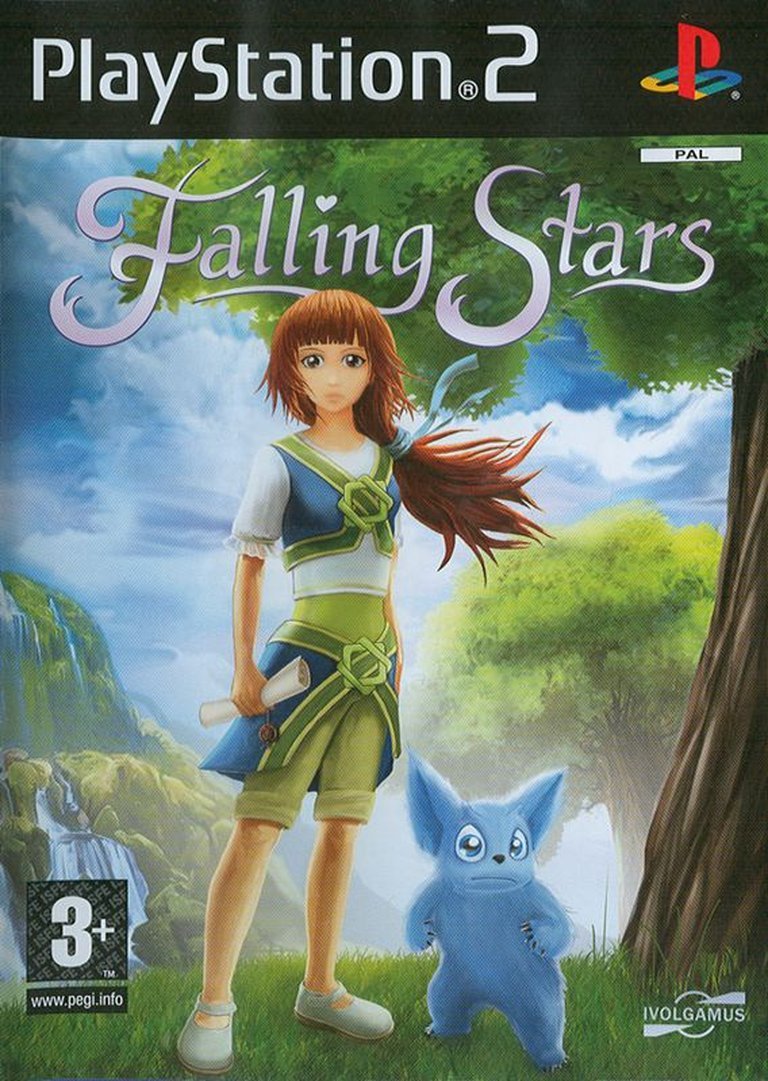
Falling Stars is a child-friendly role-playing game set in the magical world of Dazzleon, where an ancient spirit detects a dark power awakening. The player takes on the role of Luna, a young girl tasked with restoring peace by completing quests, training a pet, and battling monsters unleashed by her wicked uncle. The game features seven unique mini-games, customizable outfits for Luna, and a mix of adventure and strategy to engage younger players while introducing them to RPG mechanics.
Gameplay Videos
Where to Buy Falling Stars
PC
Falling Stars Cracks & Fixes
Falling Stars Patches & Updates
Falling Stars Reviews & Reception
mobygames.com (45/100): A role-playing game designed for children with a mix of mini-games and pet training.
gamepressure.com (73/100): A not very demanding RPG where you play as a ghost in the form of a young girl on a journey to drive out evil.
metacritic.com (32/100): Generally unfavorable reviews, with critics citing flat characters and limited battle options.
Falling Stars: A Well-Intentioned but Flawed Gateway to RPGs
Introduction
In the vast landscape of role-playing games (RPGs), Falling Stars (2007) stands as a curious artifact—a title explicitly designed for children, aiming to serve as a gentle introduction to the genre. Developed by Lithuanian studio Ivolgamus and published by Agetec in North America, the game follows Luna, a young girl possessed by an ancient spirit, as she battles monsters, trains her pet Komi, and unravels the mysteries of the world of Dazzleon. While its ambitions are commendable, Falling Stars ultimately stumbles under the weight of its own limitations, offering a mixed bag of innovative ideas and frustrating execution.
This review will dissect Falling Stars in exhaustive detail, examining its development history, narrative depth, gameplay mechanics, artistic direction, and lasting legacy. Was it a pioneering attempt to bridge the gap between children’s games and traditional RPGs, or a misguided experiment that failed to resonate with its intended audience?
Development History & Context
The Studio Behind the Game
Ivolgamus, a Lithuanian developer, was not a household name in the gaming industry. Their portfolio included titles like Barbie as the Island Princess and Shrek’s Carnival Craze Party Games, suggesting a focus on licensed children’s games. Falling Stars was an original IP, however, and represented an attempt to craft a more substantial experience for younger players.
The game’s development was led by Victoria Trofimova (Director), with Kestutis Tauckela serving as Producer and Game Designer. The team consisted of 25 people, a modest size for a project of this scope. Notably, the game was released in six languages, indicating an effort to reach a broad international audience.
Technological Constraints and Design Philosophy
Falling Stars launched in 2007, a time when the PlayStation 2 was nearing the end of its lifecycle, and the Xbox 360 and PlayStation 3 were already on the market. The game’s technical limitations were evident—frequent loading screens, slow character movement, and clunky combat—all of which were criticized in reviews.
The developers’ vision was clear: create an RPG that young children (particularly girls) could enjoy without the complexity of traditional titles. Features like automatic dialogue triggers, simplified combat, and a “dress-up” system were designed to appeal to a younger demographic. However, the execution often felt overly simplistic, even for its target audience.
The Gaming Landscape of 2007
At the time of Falling Stars’ release, the RPG genre was dominated by titles like Final Fantasy XII, The Elder Scrolls IV: Oblivion, and Mass Effect. Children’s RPGs were rare, with most kid-friendly games leaning toward platformers or action-adventure titles. Falling Stars attempted to fill this gap but struggled to compete with the polish and depth of mainstream RPGs.
Narrative & Thematic Deep Dive
Plot Summary
The story begins when an ancient spirit detects a dark power awakening in the peaceful world of Dazzleon. The spirit possesses the body of Luna, a young girl, to investigate the threat. Luna’s uncle, Matt, has been corrupted by a mysterious mine, turning his pets into monsters. Luna must train her pet Komi, complete quests, and battle monsters to restore peace.
The narrative is linear and straightforward, with little room for player agency. The ending reveals that the spirit was protecting Luna from seeking ultimate power, a twist that feels underdeveloped given the game’s short runtime.
Characters and Dialogue
- Luna (Lilou in Russian): A kind-hearted orphan raised by her uncle. Her character is underwritten, with little personality beyond her role as the protagonist.
- Matt (Shikoracks): A scientist corrupted by dark forces. His transformation into a villain is abrupt and lacking depth.
- Supporting Cast: Characters like Bobo the dwarf, Isla the potion-maker, and Thomash the retired soldier populate Dazzleon, but their interactions are shallow and forgettable.
The dialogue is functional but uninspired, with conversations triggering automatically upon approaching NPCs. While this simplifies gameplay for children, it removes any sense of immersion.
Themes
- Good vs. Evil: A classic RPG trope, but executed without nuance.
- Responsibility and Growth: Luna’s journey involves maturing into a hero, though this theme is barely explored.
- The Corruption of Power: Matt’s descent into madness is the game’s central conflict, but his motivations remain vague.
Gameplay Mechanics & Systems
Core Gameplay Loop
Falling Stars blends questing, mini-games, and turn-based combat. Players explore Dazzleon, complete fetch quests, and engage in battles with Komi, their pet.
- Questing: Mostly fetch-and-deliver tasks, lacking creativity.
- Mini-Games: Seven unique challenges, including puzzle-solving and skill-based tests. These are the game’s highest-rated feature, offering variety.
- Combat: Turn-based battles where players time attacks and defenses based on enemy patterns. While innovative in theory, the execution is slow and repetitive.
Combat System
- Komi’s Time Bar: Fills to allow attacks or defenses.
- Enemy Patterns: Monsters follow predictable sequences (e.g., Red Dog’s attack order).
- Healing: Luna can use magic or potions, but the system is clunky and unbalanced.
Critics panned the combat for its sterile, unengaging design, with IGN calling it “one of the worst battle systems I’ve ever seen.”
Progression and Customization
- Komi’s Stats: Upgraded via accessories and experience points.
- Outfit System: Luna’s clothing affects NPC reactions, a rare and interesting mechanic for a children’s RPG.
- No “Game Over”: A kid-friendly feature, but removes tension.
World-Building, Art & Sound
Setting and Atmosphere
Dazzleon is a colorful, cartoonish world, but its design lacks depth and immersion. The environments are bright and cheerful, but the frequent loading screens disrupt the experience.
Visual Direction
- Character Models: Simple and child-friendly, but stiff animations.
- Outfits: A highlight, with multiple costume options for Luna.
Sound Design
- Music: Composed by Sergej Trofimov, the soundtrack is pleasant but forgettable.
- Voice Acting: Nonexistent, relying on text dialogue.
Reception & Legacy
Critical Reception
Falling Stars received overwhelmingly negative reviews, with a Metacritic score of 32% and a MobyGames score of 5.4/10.
- Positive Notes:
- DarkZero (80%): Praised its accessibility for children.
- TGSN (75%): Called it a “full-featured, well-designed game” for kids.
- Negative Notes:
- IGN (19%): Criticized the “sterile combat” and “pitiful mini-games.”
- PSX Extreme (25%): Labeled it “a waste of time.”
Commercial Performance
The game was budget-priced, but its poor reception likely limited sales. It remains a niche title, remembered mostly by collectors.
Influence on Later Games
Falling Stars’ legacy is minimal, though its dress-up mechanic and mini-game focus may have inspired later children’s RPGs. However, its flaws overshadowed its innovations.
Conclusion: A Flawed but Ambitious Experiment
Falling Stars is a well-intentioned but deeply flawed attempt to create a children’s RPG. Its simplified mechanics, colorful world, and unique outfit system show promise, but clunky combat, shallow storytelling, and technical issues drag it down.
Final Verdict: 5/10 – A noble failure.
While it may have introduced some young players to RPGs, its lack of polish and depth make it a hard sell for anyone beyond its target demographic. It remains a curiosity in gaming history, a reminder of the challenges in designing accessible yet engaging RPGs for children.
For those interested in its historical significance, Falling Stars is worth a look—but for most, it’s a falling star that never quite shines.