
- Release Year: 2021
- Platforms: Nintendo Switch, PlayStation 4, PlayStation 5, Stadia, Windows Apps, Windows, Xbox Cloud Gaming, Xbox One, Xbox Series
- Publisher: Modus Games, LLC
- Developer: Dreams Uncorporated, LLC, SYCK S.A.S.
- Genre: Japanese-style RPG (JRPG), Puzzle, Role-playing (RPG)
- Perspective: 3rd-person
- Game Mode: Single-player
- Gameplay: Puzzle elements, Time manipulation, Turn-based combat
- Setting: Fantasy, Sci-fi
- Average Score: 74/100
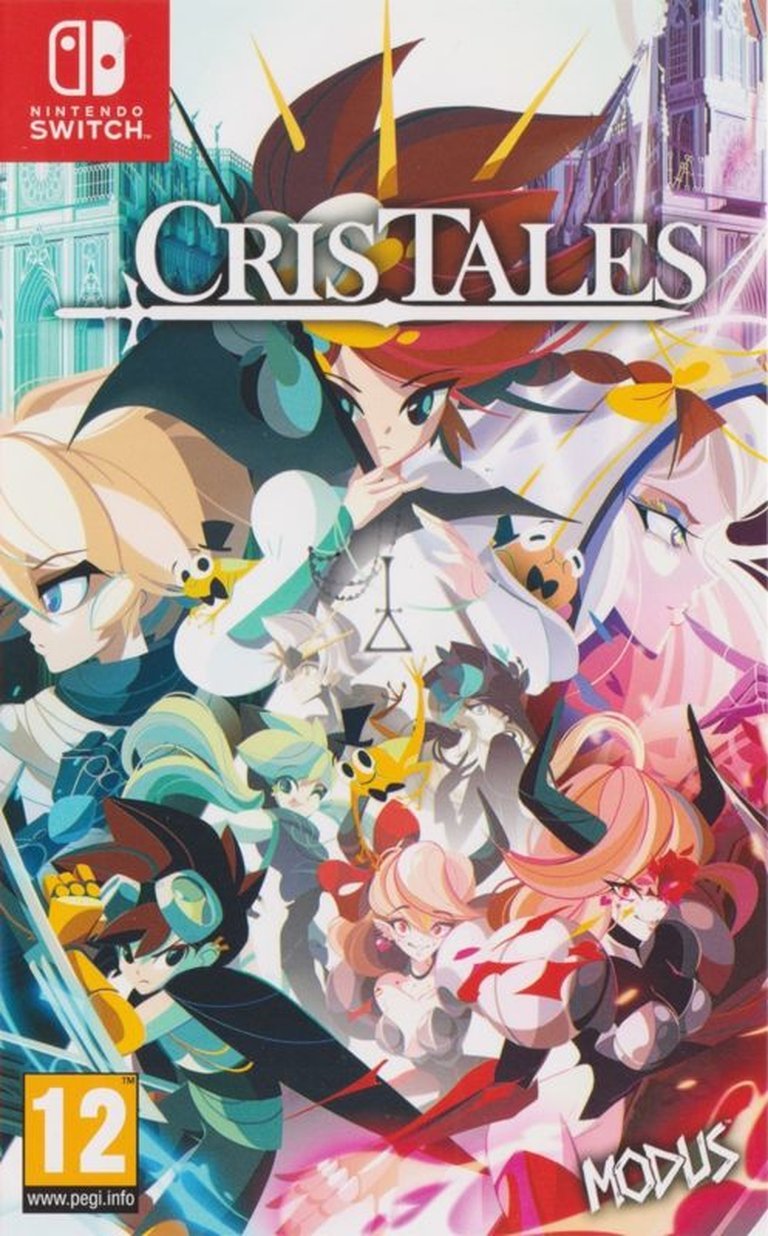
Description
Cris Tales is a visually stunning, turn-based JRPG that blends fantasy and sci-fi elements in a unique 2D scrolling world. Players follow the journey of Crisbell, a young girl who discovers her ability to manipulate time, allowing her to witness the past, present, and future simultaneously. Set in a vibrant, hand-drawn universe, the game combines strategic combat, puzzle-solving, and a rich narrative as Crisbell navigates a world on the brink of destruction, seeking to alter fate itself.
Gameplay Videos
Where to Buy Cris Tales
Cris Tales Free Download
Cris Tales Cracks & Fixes
Cris Tales Mods
Cris Tales Guides & Walkthroughs
Cris Tales Reviews & Reception
metacritic.com (74/100): An impressive first title from a young indie studio.
opencritic.com (74/100): Cris Tales is a clever time-traveling JRPG that’s held back by monotonous combat.
rockpapershotgun.com : Consider this a standing ovation for an enchanting show, then, albeit one that’s sometimes a little light on meaningful audience participation.
thegamer.com : Cris Tales is a Colombian JRPG, which I suppose makes it a CRPG, except that’s already a thing.
Cris Tales: A Time-Bending Love Letter to Classic JRPGs
Introduction
Cris Tales is a visually stunning, mechanically ambitious indie RPG that wears its influences on its sleeve while attempting to carve out its own identity. Developed by Colombian studios Dreams Uncorporated and SYCK, and published by Modus Games, it is a love letter to classic JRPGs like Chrono Trigger, Final Fantasy VI, and Persona 5, but with a fresh twist: a time-manipulation mechanic that allows players to see and alter the past, present, and future simultaneously. Released in July 2021, Cris Tales garnered mixed but generally favorable reviews, praised for its artistry and innovation but criticized for its repetitive combat and pacing issues.
This review will dissect Cris Tales in exhaustive detail, examining its development history, narrative depth, gameplay mechanics, world-building, and legacy. By the end, we’ll determine whether it stands as a modern classic or a flawed but ambitious homage to the golden age of JRPGs.
Development History & Context
The Birth of a Colombian Dream
Cris Tales began as a passion project by Colombian developer Carlos Andrés Rocha Silva, founder of Dreams Uncorporated. Inspired by the emotional depth and narrative richness of classic JRPGs, Rocha Silva sought to create a game that paid homage to these influences while incorporating Latin American cultural elements. The project was officially announced at E3 2019, where it immediately drew attention for its striking hand-drawn art style and innovative time-manipulation mechanics.
Influences and Artistic Vision
The game’s aesthetic is a fusion of:
– Classic JRPG inspirations (Chrono Trigger, Final Fantasy VI, Persona 5)
– Colombian architecture and folklore (e.g., the Las Lajas Shrine, Caño Cristales river)
– Western animation influences (Genndy Tartakovsky’s Samurai Jack, The Secret of Kells)
The art direction, led by Sebastian Villarreal, employs a hand-drawn 2D style with vibrant colors and intricate animations, evoking the charm of a living storybook.
Technological and Production Challenges
Developing Cris Tales was no small feat. The game’s split-screen time mechanic—where the past, present, and future are rendered simultaneously—posed significant technical hurdles. The Unity engine had to be optimized to handle three concurrent timelines without performance drops, particularly on consoles like the Nintendo Switch.
The COVID-19 pandemic further complicated development, leading to delays. Originally slated for a November 2020 release, the game was pushed to July 20, 2021, to allow for additional polish.
The Gaming Landscape at Launch
Cris Tales entered a market dominated by both AAA RPGs (Final Fantasy VII Remake, Tales of Arise) and indie darlings (Octopath Traveler, Sea of Stars). Its nostalgic yet innovative approach positioned it as a unique offering, though it faced stiff competition.
Narrative & Thematic Deep Dive
Plot Overview: A Heroine’s Journey Through Time
Cris Tales follows Crisbell, an orphan girl who discovers she is a Time Mage—a being capable of seeing and manipulating the past, present, and future. Guided by Matias, a talking frog with a mysterious past, Crisbell embarks on a quest to stop the Time Empress, a tyrannical figure seeking to reshape reality.
The story unfolds across four kingdoms, each with its own struggles:
1. Narim – A peaceful village under threat.
2. St. Clarity – A coastal town plagued by corruption.
3. Neva Tulira – A frozen city with political intrigue.
4. Cinder – An industrial wasteland on the brink of collapse.
Themes: Choice, Consequence, and Environmentalism
Cris Tales explores several profound themes:
– The Weight of Choice – Players’ decisions directly alter the future, with some NPCs facing life-or-death consequences.
– Environmental Decay – The game critiques industrialization, showing how unchecked progress leads to ruin (e.g., Cinder’s polluted factories).
– Found Family – Crisbell’s companions, each with their own traumas, form a bond that drives the narrative.
Character Analysis
- Crisbell – A determined but initially naive protagonist whose growth is tied to her mastery of time.
- Matias – A enigmatic frog with a hidden identity (later revealed to be Ardo, a scientist from a lost civilization).
- Cristopher – A hot-headed mage with a tragic backstory.
- Willhelm – A cursed child mage who serves as Crisbell’s mentor.
- Zas & Kari Hudo – A gambler and a summoner, respectively, whose fates are intertwined.
Multiple Endings & Player Agency
The game features three possible endings, determined by:
– Side quest completion (e.g., saving NPCs like Noah from wolves).
– Key narrative choices (e.g., whether to destroy or preserve the Rena ruins).
– Final battle outcomes (defeating or sparing the Time Empress).
The “True Ending” requires completing all major side quests, reinforcing the game’s emphasis on consequence-driven storytelling.
Gameplay Mechanics & Systems
Core Gameplay Loop
Cris Tales is a turn-based JRPG with a twist: time manipulation. The screen is divided into three panels:
– Left (Past) – Shows how things were.
– Center (Present) – The current state.
– Right (Future) – How things could be.
Players can interact with all three timelines, solving puzzles and altering combat outcomes.
Combat: Strategic Time-Bending
Battles are turn-based but dynamic, with:
– Time Crystals – Allow Crisbell to send enemies to the past (weakening them) or future (aging them).
– Synchro Attacks – Combining abilities for devastating effects (e.g., poisoning an enemy in the past, then fast-forwarding to the future to maximize damage).
– Timed Button Presses – Precision inputs for critical hits or defensive parries.
Strengths:
✅ Innovative mechanics that reward creativity.
✅ Deep strategic depth in boss fights.
Weaknesses:
❌ Repetitive random encounters with little variation.
❌ Underwhelming enemy variety (many battles feel samey).
Progression & Customization
- Linear leveling (no skill trees).
- Equipment upgrades via shops and quests.
- No crafting system, limiting depth.
Exploration & Puzzles
- Time-based puzzles (e.g., growing a vine in the past to cross a gap in the present).
- Backtracking is required but can feel tedious without a map.
World-Building, Art & Sound
A Living, Breathing World
Cris Tales’ world is a dark fairy tale, blending:
– Whimsical fantasy (talking animals, magical crystals).
– Grim realism (oppressed workers, ecological collapse).
Art Direction: A Visual Masterpiece
- Hand-drawn 2D animation with a storybook aesthetic.
- Vibrant colors that shift between timelines (e.g., a lush forest in the past vs. a wasteland in the future).
- Inspired by Colombian landmarks (e.g., the Las Lajas Shrine).
Soundtrack & Voice Acting
- Orchestral score by Tyson Wernli, evoking Chrono Trigger’s emotional depth.
- English voice acting is exceptional, with standout performances from Kira Buckland (Crisbell) and Zeno Robinson (Cristopher).
Reception & Legacy
Critical Reception: A Mixed but Positive Response
Cris Tales received a Metacritic score of 74/100, with praise for its:
✔ Gorgeous art style (often compared to Persona 5).
✔ Innovative time mechanics.
✔ Emotional storytelling.
But critics noted:
❌ Repetitive combat.
❌ Pacing issues (some sections drag).
❌ Technical flaws (long load times on Switch).
Commercial Performance & Community Impact
- Modest sales (~6,000–16,000 copies on Steam).
- Strong fan engagement (active Reddit community, fan art).
- Post-launch support (December 2021 update added a new character, dungeon, and ending).
Influence on the Genre
Cris Tales proved that indie RPGs could innovate within classic frameworks, inspiring future titles like Sea of Stars and Prisma (Dreams Uncorporated’s next project).
Conclusion: A Flawed but Beautiful Homage
Cris Tales is a bold, ambitious RPG that succeeds in its artistic vision but stumbles in execution. Its time-manipulation mechanics are brilliant, its world is immersive, and its story is emotionally resonant. However, repetitive combat and pacing issues prevent it from reaching true greatness.
Final Verdict: 8/10 – A Must-Play for JRPG Fans
While not perfect, Cris Tales is a love letter to classic RPGs that deserves recognition for its creativity and heart. If you cherish games like Chrono Trigger and Final Fantasy VI, this is a must-play—just be prepared for some rough edges.
For: Fans of classic JRPGs, time-travel narratives, and stunning art.
Against: Those seeking deep combat customization or flawless pacing.
Cris Tales may not be a timeless masterpiece, but it’s a gem worth experiencing—one that proves indie developers can still innovate in a genre dominated by giants.