
- Release Year: 2020
- Platforms: Windows Apps, Windows
- Publisher: Microsoft Corporation
- Developer: 343 Industries, Inc., Saber Interactive, Inc.
- Genre: Action
- Perspective: 1st-person
- Game Mode: Online PVP, Single-player
- Gameplay: Shooter
- Setting: Futuristic, Sci-fi
- Average Score: 90/100
Description
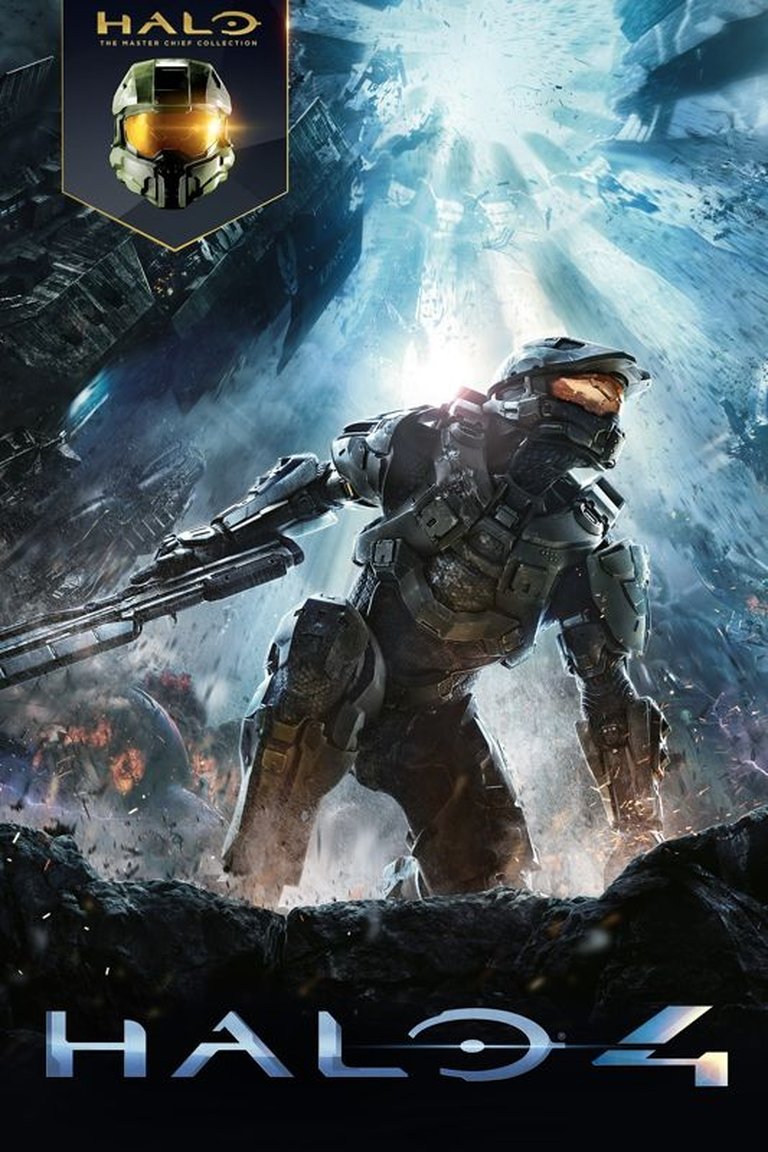
Halo 4 is a remastered first-person shooter set in a sci-fi universe, where players assume the role of Master Chief as he battles against a new alien threat while grappling with the emotional bond between him and his AI companion, Cortana. The game features a gripping single-player campaign, competitive multiplayer with 25 maps, and cooperative Spartan Ops missions, all enhanced with modern PC features like 4K resolution, 60+ FPS, and customizable controls.
Gameplay Videos
Where to Buy Halo 4
PC
Halo 4 Patches & Updates
Halo 4 Mods
Halo 4 Guides & Walkthroughs
Halo 4 Reviews & Reception
metacritic.com (90/100): If this is your first time playing Halo 4, prepare for a treat. Gameplay remains identical to previous installments, but with some additions enhancing the experience.
ign.com (98/100): Halo is in new hands, but guess what? 343’s debut effort out-Bungies Bungie. Halo 4 is a triumph.
mobygames.com (84/100): Halo 4 is a remastered version of the 2012 game Halo 4, available on the Windows platform for the first time through this release.
Halo 4: A Masterful Evolution of a Legendary Franchise
Introduction: The Dawn of a New Era
When Halo 4 launched in 2012, it carried the weight of an entire franchise on its shoulders. The first Halo game not developed by Bungie, the studio that birthed the series, Halo 4 was the debut effort of 343 Industries—a team tasked with proving they could honor the legacy of Halo while pushing it into bold, uncharted territory. The result was a game that defied expectations, blending emotional storytelling, refined gameplay, and breathtaking visuals into an experience that felt both familiar and revolutionary.
At its core, Halo 4 is a story about legacy—both its own and that of its protagonists. Master Chief and Cortana, gaming’s most iconic duo, face their most personal and harrowing challenge yet. The game’s narrative is a masterclass in character-driven sci-fi, exploring themes of mortality, duty, and the burden of leadership. Meanwhile, its gameplay evolves the classic Halo formula with new enemies, weapons, and mechanics that keep the combat fresh without sacrificing the series’ signature feel.
This review will dissect Halo 4 in exhaustive detail, examining its development, narrative depth, gameplay innovations, artistic achievements, and lasting impact on the industry. By the end, it will be clear why Halo 4 is not just a worthy successor to Bungie’s trilogy, but a landmark title in its own right.
Development History & Context: The Birth of a New Guardian
The Passing of the Torch
The development of Halo 4 began in 2009, following Microsoft’s formation of 343 Industries—a studio dedicated to shepherding the Halo franchise after Bungie’s departure. The stakes were impossibly high. Halo was (and remains) one of gaming’s most valuable IPs, a cultural phenomenon that defined the Xbox brand. 343 Industries had to prove they could carry the mantle forward.
The team, led by creative director Josh Holmes and franchise development director Frank O’Connor, faced immense pressure. They were tasked with creating a game that honored Halo’s past while forging a new identity. To achieve this, 343 Industries embarked on an ambitious journey, assembling a team of over 350 developers from more than 25 different studios. This diverse talent pool brought fresh perspectives, but it also created challenges in cohesion and vision.
A New Vision for Halo
From the outset, 343 Industries wanted Halo 4 to be more than just another sequel. They aimed to expand the lore of the Halo universe, particularly the mysterious Forerunners—a race of god-like beings whose technology and history had only been hinted at in previous games. This focus on the Forerunners led to the creation of the Prometheans, a new faction of mechanical warriors that would serve as the game’s primary antagonists.
The decision to explore the Forerunners was not just a narrative choice; it was a creative one. The art team, led by Kenneth Scott, sought to redefine the visual identity of Halo, moving away from the industrial, war-torn aesthetic of the Covenant and toward something more alien and grand. The result was Requiem, a Forerunner shield world that served as the game’s primary setting—a sprawling, gravity-defying landscape filled with intricate architecture and otherworldly technology.
Technological Constraints and Innovations
Halo 4 was developed for the Xbox 360, a console nearing the end of its lifecycle. Despite the hardware’s limitations, 343 Industries pushed the boundaries of what the system could achieve. The game ran natively in 720p, a first for the series, and featured enhanced lighting, textures, and animations. Motion capture was used extensively for cutscenes, lending a cinematic quality to the game’s storytelling.
One of the most significant technical challenges was the creation of the Prometheans. Unlike the Covenant, who were organic beings with recognizable anatomy, the Prometheans were digital constructs—beings of hard light and energy. Their design required innovative solutions to ensure they felt like a credible threat. The Promethean Knights, for example, could teleport, phase in and out of reality, and even resurrect fallen allies, creating a dynamic and unpredictable combat experience.
The Gaming Landscape in 2012
Halo 4 arrived at a pivotal moment in gaming history. The first-person shooter genre was dominated by Call of Duty and Battlefield, both of which emphasized hyper-realistic military combat. Halo, with its sci-fi setting and emphasis on tactical, arena-style gameplay, offered a distinct alternative. However, the series had faced criticism for stagnation, particularly with Halo: Reach, which some fans felt strayed too far from the core Halo experience.
343 Industries sought to address these concerns by returning to the roots of Halo while introducing meaningful innovations. The result was a game that felt both nostalgic and fresh, a delicate balance that resonated with longtime fans and newcomers alike.
Narrative & Thematic Deep Dive: The Heart of Halo 4
A Story of Mortality and Legacy
At its core, Halo 4 is a story about the inevitability of change and the struggle to preserve what we hold dear. The game’s narrative revolves around two central characters: Master Chief, the stoic, nearly invincible supersoldier, and Cortana, his artificial intelligence companion. Their relationship is the emotional backbone of the game, and it is explored with a depth and nuance rarely seen in first-person shooters.
Cortana, who has been by Master Chief’s side since the original Halo: Combat Evolved, is nearing the end of her operational lifespan. AI constructs in the Halo universe suffer from a condition known as “rampancy,” a form of digital dementia that sets in after seven years of service. As Cortana’s rampancy progresses, she becomes increasingly unstable, experiencing hallucinations, memory loss, and emotional outbursts. Her struggle is heartbreaking, and it forces Master Chief to confront his own mortality. For the first time, we see the Chief not as an unstoppable force, but as a man grappling with loss and vulnerability.
The Didact and the Mantle of Responsibility
The game’s primary antagonist, the Didact, is a Forerunner warrior who believes humanity is unworthy of inheriting the Mantle of Responsibility—a philosophical and political doctrine that dictates the Forerunners’ role as protectors of the galaxy. The Didact’s motivations are complex; he is not a one-dimensional villain but a tragic figure who believes his actions are justified. His plan to use the Composer, a device capable of digitizing organic life, to enslave humanity is driven by a twisted sense of duty.
The Didact’s presence adds a layer of moral ambiguity to Halo 4. Unlike the Covenant, who were driven by religious fanaticism, the Didact is a rational, calculating figure whose actions are rooted in a deeply held belief system. This makes him one of the most compelling villains in the Halo series, and his confrontations with Master Chief are some of the game’s most memorable moments.
Themes of Sacrifice and Redemption
Halo 4 is a game about sacrifice. Cortana’s eventual fate is one of the most emotionally resonant moments in the series, and it underscores the game’s central theme: that true heroism is not about invincibility, but about the willingness to give everything for what you believe in. Cortana’s final act—saving Master Chief from the Didact’s ship—is a powerful culmination of her character arc, and it leaves a lasting impact on the player.
The game also explores the idea of redemption, particularly through the character of Thomas Lasky, a young UNSC officer who plays a key role in the story. Lasky’s journey, which is expanded upon in the Halo 4: Forward Unto Dawn live-action series, is one of self-discovery and growth. His interactions with Master Chief highlight the generational shift taking place in the Halo universe, as the old guard makes way for a new era.
World-Building and Lore
Halo 4 is a treasure trove of lore, expanding the Halo universe in ways that previous games had only hinted at. The Forerunners, who had been largely mysterious figures in earlier titles, take center stage here. Through the game’s terminals and environmental storytelling, players learn about the Forerunners’ history, their war with humanity, and their eventual downfall at the hands of the Flood.
The game also introduces new factions, such as Jul ‘Mdama’s Covenant, a splinter group of former Covenant loyalists who now serve the Didact. This faction adds a layer of complexity to the game’s conflict, as players must contend with both the remnants of the Covenant and the new threat posed by the Prometheans.
Gameplay Mechanics & Systems: Evolution Without Compromise
The Core Halo Experience, Refined
Halo 4 builds upon the foundation laid by its predecessors, refining the series’ signature gameplay while introducing new mechanics that keep the experience fresh. At its heart, Halo 4 is still a game about tactical, arena-style combat, where players must carefully manage their shields, weapons, and positioning to survive.
One of the most significant changes in Halo 4 is the introduction of the Prometheans, who offer a stark contrast to the Covenant. Unlike the Covenant, who rely on brute force and overwhelming numbers, the Prometheans are highly adaptive, using teleportation, shielding, and resurrection to keep players on their toes. The Promethean Knights, in particular, are formidable foes, capable of phasing in and out of reality to avoid damage and flank the player.
New Weapons and Equipment
Halo 4 introduces a host of new weapons and equipment, each designed to complement the game’s evolved combat. The Promethean weapons, such as the Boltshot and the Scattershot, offer unique gameplay mechanics that set them apart from traditional Covenant and UNSC armaments. The Boltshot, for example, is a close-range weapon that fires a burst of energy bolts, while the Scattershot is a shotgun-like weapon that excels in tight quarters.
The game also introduces new armor abilities, such as the Hardlight Shield, which allows players to deploy a protective barrier, and the Promethean Vision, which highlights enemies through walls. These abilities add a layer of strategic depth to the combat, giving players more tools to adapt to different situations.
Multiplayer: War Games and Spartan Ops
Halo 4’s multiplayer component, known as War Games, is a significant evolution of the series’ competitive gameplay. War Games introduces a new progression system, allowing players to customize their Spartan-IV soldiers with different armor permutations, weapons, and abilities. The game also features a new matchmaking system, which ensures that players are matched with opponents of similar skill levels.
One of the most innovative additions to Halo 4’s multiplayer is Spartan Ops, a cooperative mode that replaces the Firefight mode from previous games. Spartan Ops is an episodic campaign that expands on the events of the main story, offering players a chance to explore new locations, characters, and gameplay scenarios. Each episode of Spartan Ops features a cinematic introduction, followed by five objective-based missions. The mode was designed to be replayable, with new content added regularly after the game’s launch.
Forge and Customization
Halo 4 also includes Forge, a powerful map-editing tool that allows players to create and share their own custom maps and game modes. Forge has been a staple of the Halo series since Halo 3, and Halo 4 builds upon this foundation with new features, such as the ability to magnetically snap objects together and a more intuitive interface.
The game’s customization options extend beyond Forge, with players able to customize their Spartan-IV soldiers with a wide range of armor permutations, visor colors, and emblems. This level of customization adds a personal touch to the multiplayer experience, allowing players to express their individuality.
World-Building, Art & Sound: A Feast for the Senses
The Visual Splendor of Requiem
Halo 4 is a visually stunning game, with a level of detail and polish that sets it apart from its predecessors. The game’s art direction, led by Kenneth Scott, is a masterclass in world-building, blending alien architecture with organic landscapes to create a sense of wonder and discovery.
Requiem, the game’s primary setting, is a Forerunner shield world—a massive, artificial structure designed to house an entire ecosystem. The world is filled with towering spires, floating islands, and intricate machinery, all rendered with a level of detail that makes it feel alive. The game’s lighting and texture work are particularly impressive, with dynamic shadows and reflections that add depth to the environment.
The Sound of Halo 4
The audio design in Halo 4 is equally impressive, with a soundtrack that blends orchestral grandeur with electronic beats. The game’s score, composed by Neil Davidge of Massive Attack fame, is a departure from the series’ traditional sound, offering a more modern and cinematic approach. The result is a soundtrack that enhances the game’s emotional beats, from the haunting melodies of Cortana’s rampancy to the epic battle themes of the Promethean encounters.
The game’s sound effects are equally well-crafted, with weapons, explosions, and environmental sounds that feel visceral and impactful. The voice acting is also top-notch, with Steve Downes and Jen Taylor reprising their roles as Master Chief and Cortana, respectively. Their performances are some of the best in the series, particularly in the game’s more emotional moments.
Reception & Legacy: A Game That Defined a Generation
Critical and Commercial Success
Halo 4 was met with widespread acclaim upon its release, with critics praising its storytelling, gameplay, and visuals. The game holds an 87/100 on Metacritic, making it one of the highest-rated games of 2012. It was also a commercial success, grossing $220 million on its launch day and $300 million in its opening week—a record for the franchise.
The game’s multiplayer component was particularly well-received, with critics praising its depth, customization options, and replayability. Spartan Ops, in particular, was highlighted as a standout feature, offering a fresh and engaging cooperative experience.
A Lasting Impact on the Industry
Halo 4’s influence extends beyond its critical and commercial success. The game’s narrative depth and emotional storytelling set a new standard for first-person shooters, proving that the genre could be more than just mindless action. Its focus on character development and thematic complexity has inspired other games to explore similar territory, from Titanfall 2 to Doom Eternal.
The game’s multiplayer innovations, such as the progression system and Spartan Ops, have also had a lasting impact on the industry. Many modern shooters, from Call of Duty to Destiny, have adopted similar features, demonstrating Halo 4’s influence on the evolution of competitive and cooperative gameplay.
The Master Chief Collection and Beyond
Halo 4’s legacy continues to this day, with the game being included in Halo: The Master Chief Collection, a compilation of the series’ mainline titles. The collection, which was released on Xbox One and PC, has introduced Halo 4 to a new generation of players, ensuring that its impact will be felt for years to come.
Conclusion: A Masterpiece of Modern Gaming
Halo 4 is more than just a game—it is a testament to the power of storytelling, innovation, and artistic vision. It is a game that honors the legacy of its predecessors while forging a new path forward, a delicate balance that few sequels achieve. From its emotional narrative to its refined gameplay, Halo 4 is a masterpiece of modern gaming, and it deserves to be remembered as one of the greatest titles in the Halo series.
For fans of the franchise, Halo 4 is a must-play experience, offering a deeper understanding of the Halo universe and its characters. For newcomers, it is a perfect entry point, a game that captures the essence of what makes Halo great while offering something fresh and exciting. Whether you’re a longtime fan or a first-time player, Halo 4 is a game that will leave a lasting impression, a true landmark in the history of video games.
Final Verdict: 9.5/10 – A Triumphant Evolution of a Legendary Franchise