
- Release Year: 2017
- Platforms: Windows
- Publisher: RunServer
- Developer: MysteryTag
- Genre: Puzzle
- Perspective: 1st-person
- Game Mode: Single-player
- Gameplay: Hidden object
- Setting: Fantasy
- Average Score: 78/100
Description
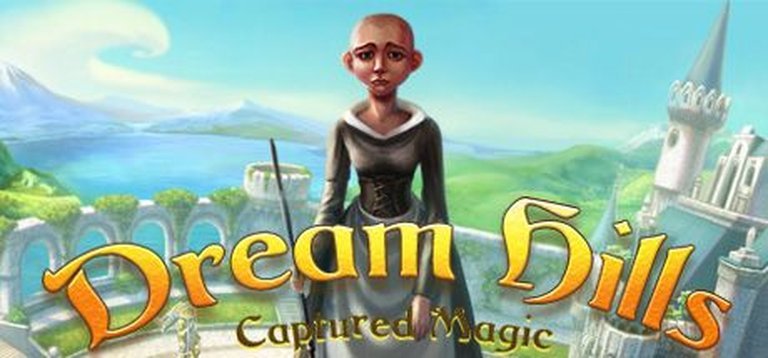
In ‘Dream Hills: Captured Magic,’ players step into a once-vibrant fairy tale kingdom now shrouded in darkness after an evil witch poisoned the Fairy Godmother. As the Fairy Godmother awakens from her long slumber, she must reclaim her magic wand, break the curse, and restore happiness to Dream Hills. The game blends hidden object challenges, puzzle-solving, and exploration across 35 enchanting locations, where players aid beloved fairy tale characters and collect magical artifacts to thwart the witch’s reign of despair.
Gameplay Videos
Where to Buy Dream Hills: Captured Magic
PC
Dream Hills: Captured Magic Patches & Updates
Dream Hills: Captured Magic Guides & Walkthroughs
Dream Hills: Captured Magic Reviews & Reception
steambase.io (79/100): A triumphant return to form for the series.
store.steampowered.com (78/100): Mostly Positive reviews highlight the game’s charm and engaging gameplay.
niklasnotes.com (78/100): Overall, ‘Dream Hills: Captured Magic’ is well-received for its charming storyline, beautiful artwork, and relaxing gameplay.
Dream Hills: Captured Magic: A Whimsical Journey Through Fairy Tale Redemption
Introduction: The Allure of a Forgotten Fairy Tale
In the vast, often oversaturated landscape of hidden object games, Dream Hills: Captured Magic (2017) emerges as a charming, if flawed, gem—a love letter to classic fairy tales wrapped in the mechanics of a casual adventure. Developed by the obscure studio MysteryTag and published by RunServer, this title invites players into a world where the lines between nostalgia and interactivity blur, offering a brief but memorable escape into a kingdom cursed by darkness. At its core, Dream Hills is a game about restoration: not just of a magical realm, but of the player’s own childhood wonder.
Yet, beneath its vibrant, storybook aesthetic lies a game that struggles to transcend the limitations of its genre. While it succeeds in crafting a cozy, engaging atmosphere, it stumbles in execution, plagued by technical hiccups and design choices that occasionally frustrate rather than delight. This review seeks to unpack Dream Hills: Captured Magic in its entirety—its narrative ambitions, its mechanical intricacies, its artistic achievements, and its place in the broader tapestry of hidden object games. Is it a forgotten masterpiece, or a well-intentioned but flawed curiosity? Let’s embark on this journey through the cursed kingdom of Dream Hills.
Development History & Context: The Birth of a Fairy Tale
The Studio Behind the Curtain: MysteryTag’s Obscure Legacy
Dream Hills: Captured Magic is the brainchild of MysteryTag, a developer with a shadowy presence in the gaming industry. Little is known about the studio beyond its small portfolio, which includes a handful of casual and hidden object titles. This obscurity is telling—Dream Hills is not the product of a AAA powerhouse or even a well-funded indie collective, but rather a modest team working within the constraints of the casual gaming market. The game’s development likely operated on a tight budget and an even tighter schedule, which explains both its ambitions and its shortcomings.
The publisher, RunServer, is similarly enigmatic, specializing in distributing niche, often overlooked titles across digital platforms. Their involvement suggests a game designed not for critical acclaim or commercial dominance, but for a specific audience: players seeking a brief, affordable diversion steeped in fantasy.
The Gaming Landscape of 2017: A Crowded Kingdom
2017 was a banner year for gaming, dominated by titans like The Legend of Zelda: Breath of the Wild, Horizon Zero Dawn, and PlayerUnknown’s Battlegrounds. In this environment, a small hidden object game like Dream Hills was never going to make waves. Yet, the casual gaming sector was—and remains—a thriving ecosystem, particularly on platforms like Steam, where budget-friendly, low-risk titles find their audience.
Hidden object games (HOGs) have long been a staple of casual gaming, evolving from the Mystery Case Files series of the mid-2000s into a genre that blends puzzle-solving, narrative, and exploration. By 2017, the market was saturated with titles ranging from the meticulously crafted (The Room series) to the hastily assembled (countless asset-flipped HOGs on mobile platforms). Dream Hills carves out its niche by leaning heavily into its fairy tale theme, a refreshing contrast to the darker, more mature narratives that had begun to dominate the genre.
Technological Constraints: A Game of Modest Means
Dream Hills is a game of humble technical requirements. Its minimum specs (Windows XP, 2 GHz processor, 1 GB RAM) reveal a title designed to run on virtually any machine, a necessity for a game targeting the casual market. The fixed/flip-screen perspective and first-person viewpoint are reminiscent of classic adventure games, evoking the spirit of Myst or The 7th Guest, albeit with far less complexity.
The decision to use a direct control interface (mouse-only) aligns with the game’s accessibility goals, ensuring that players of all skill levels can navigate its world without the steep learning curve of more intricate control schemes. However, this simplicity comes at a cost: Dream Hills lacks the depth of interaction and environmental immersion found in more ambitious titles.
Narrative & Thematic Deep Dive: The Fairy Godmother’s Redemption
Plot Summary: A Kingdom Cursed
The story of Dream Hills is a classic fairy tale archetype, reminiscent of Sleeping Beauty or The Wizard of Oz. The kingdom of Dream Hills was once a utopia where “good always triumphed over evil,” a place where fairy tale characters lived in harmony under the protection of the Fairy Godmother. This idyllic existence is shattered when an evil witch poisons the Fairy Godmother during the Festival of Great Balance, casting the kingdom into darkness and erasing the Godmother’s memories.
Years later, the Fairy Godmother awakens, her magic weakened and her past forgotten. The player assumes the role of her guide, tasked with helping her recover her magic wand, defeat the witch, and restore Dream Hills to its former glory. Along the way, players encounter familiar fairy tale characters—though the game is coy about specifics, the Steam community discussions hint at cameos from figures like Cinderella, Red Riding Hood, and others, all reimagined in a whimsical, slightly satirical light.
Themes: Nostalgia, Redemption, and the Power of Memory
At its heart, Dream Hills is a story about restoration and memory. The Fairy Godmother’s amnesia is not just a plot device but a metaphor for the erosion of childhood wonder. The game’s narrative arc—recovering lost magic, reuniting with forgotten friends, and confronting the darkness that has taken root—mirrors the player’s own journey through nostalgia. It’s a game that asks: What happens when the stories we loved as children are stripped of their magic?
The witch’s curse serves as a stand-in for cynicism or the passage of time, a force that dulls the vibrancy of Dream Hills. The player’s role is that of a custodian of stories, piecing together fragments of the past to rebuild something beautiful. This theme is reinforced by the game’s hidden object mechanics, which require players to scour environments for clues and artifacts, literally and figuratively unearthing the lost magic of the kingdom.
Characters: Familiar Faces in a New Light
While Dream Hills does not boast the depth of character development found in narrative-driven RPGs, its cast is imbued with a playful, satirical charm. The Fairy Godmother is a sympathetic protagonist, her confusion and determination making her relatable. The witch, meanwhile, is a delightfully over-the-top villain, embodying the pantomime evil of classic fairy tales.
The supporting cast—comprising reimagined fairy tale characters—adds levity and warmth to the story. These characters are not mere cameos but active participants in the narrative, each with their own small quests and dilemmas. Their inclusion serves a dual purpose:
1. Nostalgia Bait: For players familiar with these tales, encountering them in Dream Hills evokes a sense of comfort and recognition.
2. Subversion: The game occasionally tweaks these characters’ traditional roles, adding a layer of humor and unpredictability.
Dialogue and Writing: Whimsy with a Dash of Wit
The writing in Dream Hills is lighthearted and self-aware, striking a balance between sincerity and satire. The dialogue avoids the pitfalls of being overly saccharine, instead opting for a witty, occasionally meta tone. For example, the Steam community discussions reveal that some players were amused by the game’s playful jabs at fairy tale tropes, such as a grumpy dwarf complaining about “yet another hero” or a princess who’d rather not be rescued.
However, the writing is not without its flaws. The localization (available in nine languages) is serviceable but occasionally clunky, with some phrases feeling stiff or unnatural. Additionally, the lack of voice acting—while understandable given the game’s budget—means that the dialogue’s charm relies entirely on the player’s imagination.
Gameplay Mechanics & Systems: The Hidden Object Experience
Core Gameplay Loop: Seek, Solve, Restore
Dream Hills: Captured Magic is, at its core, a hidden object adventure game with light puzzle elements. The gameplay revolves around three primary activities:
1. Exploring Locations: Players navigate through 35 distinct environments, each rendered in a vibrant, storybook style.
2. Hidden Object Scenes: Across 21 dedicated scenes, players must find items from a list, often obscured within cluttered, detailed backgrounds.
3. Puzzle-Solving: The game features 32 puzzles, ranging from simple slider challenges to more complex logic-based conundrums.
The structure is linear but flexible, with players progressing through the story while occasionally backtracking to previous areas to retrieve missed items or solve new puzzles. The hint system is generous, offering guidance when players are stuck, though some reviews criticize it for being too vague at times.
Hidden Object Mechanics: The Good and the Frustrating
The hidden object scenes are the backbone of Dream Hills, and they are a mixed bag. On the positive side:
– Diverse Environments: Each scene is thematically distinct, from enchanted forests to cursed castles, ensuring visual variety.
– Interactive Elements: Some objects require manipulation (e.g., opening a drawer to reveal a hidden item), adding a layer of engagement beyond simple pixel-hunting.
However, the mechanics are not without their frustrations:
– Pixel Hunting: Some items are poorly contrasted against their backgrounds, leading to tedious searches. This is a common critique in Steam reviews, with players noting that certain objects blend in too well.
– Repetition: While the scenes are visually distinct, the core mechanic—finding items from a list—can grow repetitive over the game’s ~4.7-hour runtime.
Puzzle Design: A Highlight Amidst the Searching
The 32 puzzles scattered throughout Dream Hills are a standout feature, offering a welcome break from the hidden object grind. These puzzles vary in complexity and type, including:
– Logic Puzzles: Such as arranging symbols in the correct order or solving riddles.
– Memory Challenges: Matching games or sequence reproduction.
– Physics-Based Puzzles: Simple tasks like balancing scales or navigating mazes.
The puzzles are well-integrated into the narrative, often tied to the environment or the characters’ plights. For example, solving a musical puzzle might restore a character’s voice, while a lock-and-key challenge could unlock a new area. The ability to skip puzzles after a certain amount of time ensures that players are never permanently stuck, though some may find this option too lenient.
Character Progression: A Shallow but Satisfying Arc
Progression in Dream Hills is narrative-driven rather than mechanical. The Fairy Godmother’s magic wand serves as both a story goal and a gameplay tool, unlocking new abilities as the player advances. These abilities are minimal—mostly limited to interacting with previously inaccessible objects—but they provide a sense of growth.
The artifact collection system is similarly lightweight. Players gather magical items throughout their journey, which are used to break the witch’s curse. While these artifacts have no gameplay impact beyond advancing the story, their visual design and the lore snippets attached to them add depth to the world.
UI and Accessibility: Functional but Unremarkable
The user interface in Dream Hills is clean and functional, if somewhat uninspired. Key features include:
– Inventory System: A straightforward grid where collected items are stored. The inventory is unlimited, removing any pressure to manage space.
– Hint System: Activated via a button, the hint system highlights one item in the current scene. While useful, some players report that hints can be unhelpful if the highlighted item is still difficult to spot.
– Task Log: A journal tracks current objectives, ensuring players never forget their next goal.
The lack of a map is a notable omission, especially given the game’s backtracking-heavy design. Players must rely on memory or trial-and-error to navigate between locations, which can be tedious in the later stages.
Innovations and Flaws: A Game of Small Ambitions
Dream Hills does not reinvent the hidden object genre, but it does introduce a few subtle twists:
– Narrative Integration: Unlike many HOGs, where the story is an afterthought, Dream Hills weaves its gameplay mechanics directly into the plot. Finding a hidden object isn’t just a task—it’s an act of restoring magic to the world.
– Satirical Tone: The game’s humorous take on fairy tale tropes sets it apart from more earnest entries in the genre.
However, the game’s flaws are equally apparent:
– Technical Issues: Steam reviews frequently mention bugs, including freezing, saving errors, and audio glitches. These issues, while not game-breaking, detract from the overall experience.
– Lack of Depth: The absence of achievements, side quests, or replayable content makes Dream Hills a one-and-done experience. Once the story is complete, there’s little incentive to return.
– Short Runtime: At ~4.7 hours, the game is brief, even by casual standards. Some players feel the experience ends just as it’s hitting its stride.
World-Building, Art & Sound: A Fairy Tale Brought to Life
Setting and Atmosphere: A Kingdom of Whimsy
Dream Hills is a vibrant, storybook kingdom, a pastiche of classic fairy tale locales. The game’s 35 locations include:
– Enchanted Forests: Towering trees with glowing leaves, home to talking animals and hidden glades.
– Cursed Castles: Dark, gothic structures where the witch’s influence is strongest.
– Quaint Villages: Cobblestone streets lined with thatched-roof cottages, bustling with fairy tale denizens.
The world is cohesive and immersive, with each area reflecting the dualism of light and darkness. Early locations are bright and cheerful, but as the player progresses, the environments grow darker and more oppressive, mirroring the Fairy Godmother’s struggle.
Visual Direction: A Painted Storybook
The art style of Dream Hills is its strongest asset. The game employs a hand-painted, semi-realistic aesthetic, evoking the feel of a living storybook. Key visual elements include:
– Rich Colors: The palette is warm and inviting, with golden hues dominating the early game and cooler, more somber tones emerging as the curse’s influence grows.
– Detailed Environments: Each location is densely packed with interactive elements, from glowing mushrooms to animated critters. The hidden object scenes, in particular, are visually sumptuous, though this density can sometimes obscure important items.
– Character Designs: The fairy tale characters are exaggerated and expressive, with the Fairy Godmother’s flowing robes and the witch’s jagged silhouette standing out as highlights.
The fixed/flip-screen perspective enhances the diorama-like quality of the environments, making each scene feel like a meticulously crafted miniature.
Sound Design: A Mixed Chorus
The audio design in Dream Hills is competent but unremarkable. The soundtrack is a whimsical, orchestral affair, blending celestial choirs, harps, and soft percussion to evoke a magical atmosphere. However, the music suffers from repetition—a common critique in Steam reviews. The same few tracks loop throughout the game, and their lack of dynamic variation can make the experience feel monotonous over time.
The sound effects are similarly functional:
– Ambient Noises: Rustling leaves, distant bird calls, and the creaking of old wood add immersion to the environments.
– Interaction Cues: A soft chime accompanies successful item discoveries, while a dissonant tone signals failed attempts.
The absence of voice acting is a missed opportunity. While the text-based dialogue is charming, hearing the characters’ voices—particularly the Fairy Godmother’s—would have deepened the emotional connection to the story.
Reception & Legacy: A Modest Success with Lasting Charm
Critical and Commercial Reception: A Niche Hit
Dream Hills: Captured Magic launched on October 20, 2017, to little fanfare. As a budget title in a crowded genre, it did not garner significant attention from major gaming outlets. However, its Steam reception has been overwhelmingly positive, with a 78% approval rating based on 69 user reviews.
Positive Aspects Highlighted by Players:
– Charming Storyline: The fairy tale narrative and humorous twists resonated with players, who praised the game’s whimsical tone.
– Beautiful Artwork: The hand-painted visuals and detailed environments were frequently cited as standout features.
– Relaxing Gameplay: Many players described Dream Hills as a soothing, low-stress experience, ideal for unwinding.
Common Criticisms:
– Frustrating Hidden Object Mechanics: The pixel-hunting and poorly contrasted items were a frequent source of frustration.
– Technical Issues: Reports of freezing, saving errors, and audio bugs marred the experience for some.
– Short Length: The ~4.7-hour runtime left some players wanting more, especially given the lack of replayable content.
Evolution of Reputation: A Cult Classic in the Making?
In the years since its release, Dream Hills has faded into obscurity, overshadowed by bigger titles and more polished HOGs. However, it has cultivated a small but dedicated fanbase, particularly among players who appreciate its nostalgic charm and satirical edge.
The game’s legacy is one of modest influence. While it did not spawn sequels or imitators, its successful blending of narrative and gameplay in a casual format has likely inspired other developers to prioritize story in their hidden object designs.
Influence on the Genre: A Step Toward Narrative Depth
Dream Hills stands as a testament to the power of thematic cohesion in casual games. By tying its mechanics directly to its narrative, it demonstrates that even simple gameplay loops can feel meaningful when framed within a compelling story. This approach has since been adopted by other titles, such as The House of Da Vinci and TSIOQUE, which similarly weave puzzles into their worlds’ lore.
However, the game’s technical shortcomings serve as a cautionary tale. In an era where even casual games are expected to be polished and bug-free, Dream Hills’s glitches and design oversights highlight the importance of quality assurance, even in budget titles.
Conclusion: A Flawed but Enchanting Fairy Tale
Dream Hills: Captured Magic is a game of contradictions. It is visually stunning yet technically flawed, narratively rich yet mechanically repetitive, charming yet frustrating. It does not aspire to greatness, nor does it pretend to be more than what it is: a brief, whimsical journey through a cursed fairy tale kingdom.
For players seeking a relaxing, nostalgic escape, Dream Hills delivers in spades. Its storybook aesthetic, playful writing, and clever puzzles make it a standout in the hidden object genre. However, those expecting depth, replayability, or technical polish may find themselves disappointed.
Final Verdict: 7.5/10 – A Hidden Gem with Rough Edges
Dream Hills: Captured Magic is not a masterpiece, but it is a delightful curiosity—a game that succeeds more often than it stumbles. Its heart and charm elevate it above the sea of forgettable HOGs, even if its execution occasionally falters.
Recommended for:
– Fans of fairy tales and whimsical narratives.
– Players who enjoy hidden object games with a strong story.
– Those seeking a short, relaxing gaming experience.
Not recommended for:
– Players who loathe pixel-hunting or repetitive mechanics.
– Those expecting deep gameplay systems or replayable content.
– Gamers who prioritize technical polish over charm.
In the grand tapestry of video game history, Dream Hills: Captured Magic may not be a thread that defines the whole, but it is a vibrant, shimmering strand—one that reminds us of the magic of stories and the joy of rediscovery. For that alone, it deserves to be remembered.