
- Release Year: 2019
- Platforms: Windows
- Publisher: Wildlogicgames Ltd
- Developer: Wildlogicgames Ltd
- Genre: Action
- Perspective: Side view
- Game Mode: Single-player
- Gameplay: Platform
- Setting: Fantasy
- Average Score: 50/100
Description
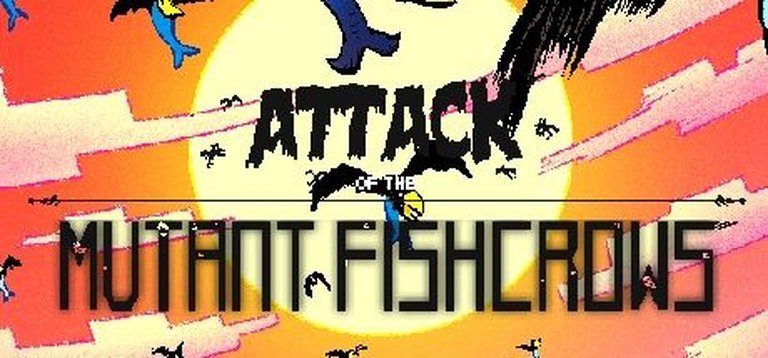
Attack of the Mutant Fishcrows is a fast-paced, side-view action-platformer set in a whimsical fantasy world where players battle bizarre hybrid creatures—flying fish that are also mutated crows. Developed by Wildlogicgames Ltd, this 2D scrolling game blends comedy with chaotic gameplay, challenging players to survive waves of these nightmarish half-breeds. Released in Early Access in 2019, the game features direct control mechanics, Steam achievements, and a quirky narrative that leans into its absurd premise.
Gameplay Videos
Where to Buy Attack of the Mutant Fishcrows
PC
Attack of the Mutant Fishcrows Guides & Walkthroughs
Attack of the Mutant Fishcrows Reviews & Reception
steambase.io (50/100): Attack of the Mutant Fishcrows has earned a Player Score of 50 / 100.
Attack of the Mutant Fishcrows: A Deep Dive into a Forgotten Indie Gem
Introduction: The Curious Case of a Cult Classic in the Making
Attack of the Mutant Fishcrows (2019) is one of those rare games that defies easy categorization—a bizarre, charming, and deeply flawed labor of love that emerged from the indie development scene like a fever dream. At first glance, it’s a retro-inspired action-platformer with a premise so absurd it borders on surreal: a world overrun by mutant fishcrows, hybrid creatures that are equal parts fish, crow, and nightmare fuel. Yet beneath its quirky exterior lies a game that is both a tribute to classic 16-bit platformers and a bold experiment in modern indie design.
Developed by Ricky Wild under the banner of Wildlogicgames Ltd, Attack of the Mutant Fishcrows is a one-man passion project that began as a learning exercise in 2015 and evolved into a full-fledged Early Access title. Released on May 18, 2019, it arrived at a time when the indie market was saturated with retro-inspired platformers, yet it managed to carve out a niche for itself through sheer weirdness and ambition. However, its journey was far from smooth. Despite its unique premise and clear labor of love, the game received mixed reviews on Steam, with a 50/100 player score based on just 12 reviews—six positive, six negative.
This review aims to dissect Attack of the Mutant Fishcrows in exhaustive detail, exploring its development history, narrative quirks, gameplay mechanics, artistic vision, and legacy. Was it an overlooked gem, a noble failure, or something in between? Let’s dive in.
Development History & Context: The Birth of a Mutant
The One-Man Army Behind the Game
Attack of the Mutant Fishcrows is the brainchild of Ricky Wild, a solo developer who embarked on this project in late 2015 as a learning exercise. Built using the Unity engine, the game was a part-time hobby that gradually grew into a full-fledged passion project. Wild’s journey is a testament to the indie spirit—working alone, iterating based on feedback, and slowly refining the game over years.
The game entered Steam Early Access on May 18, 2019, with Wild openly acknowledging its rough edges while expressing hope that community feedback would shape its final form. In the Steam Early Access FAQ, he wrote:
“WILDLOGICGAMES is a one man team. I’d like to leverage the feedback that Early Access can provide me, as brutal as it could be. The title has already gone through a lot testing and iteration in past testing & feedback. I feel as if it’s time to hit the hard hitting feedback.”
This honesty is refreshing, but it also set expectations: Attack of the Mutant Fishcrows was never going to be a polished AAA experience. Instead, it was a work-in-progress, a game that wore its developmental scars proudly.
The Indie Landscape in 2019
The year 2019 was a golden age for indie platformers, with titles like Celeste, Hollow Knight, and Dead Cells dominating the conversation. These games set a high bar for precision platforming, tight controls, and deep mechanics—standards that Attack of the Mutant Fishcrows struggled to meet.
Yet, the game’s retro aesthetic and absurdist tone aligned it more closely with cult classics like Attack of the Mutant Camels (1983) or Goosebumps: Attack of the Mutant (1997). It was a game that embraced B-movie horror-comedy, blending dark fantasy with whimsical humor in a way that felt both nostalgic and fresh.
Technological Constraints & Design Philosophy
Given that Attack of the Mutant Fishcrows was developed by a single person, it’s impressive how much content Wild managed to pack in:
– 11 enemy types with unique AI behaviors.
– 9 levels (in Early Access) with an overworld map.
– A deep combat system with melee weapons, crossbows, bombs, and consumables.
– Environmental interactions like climbing ropes, swimming, and destructible walls.
– Dynamic weather and day/night cycles.
However, the game’s technical limitations are evident. The Unity engine, while versatile, wasn’t always optimized for the pixel-perfect precision required in classic platformers. Some players reported bugs, such as infinite falling glitches when entering houses or unobtainable achievements due to missing containers.
Wild’s design philosophy was ambitious—he wanted a game that was fast-paced, challenging, and immersive, with procedural elements (random NPCs, weather, and loot) to enhance replayability. But the execution was uneven, leading to a game that felt both innovative and unfinished.
Narrative & Thematic Deep Dive: A World Gone Mad
The Premise: Fishcrows and the Apocalypse
The game’s story is deliberately vague, delivered through fully voiced narration (by Ross Wild) in a darkly comedic tone. The world has been overrun by mutant fishcrows—hybrid creatures that are part fish, part crow, and entirely terrifying. These abominations have turned the once-peaceful land into a hostile wasteland, forcing survivors to fight for their lives.
The player takes on the role of a customizable hero (with color options for attire, though no head customization in Early Access) who must traverse the overworld, battle fishcrows, and uncover the mystery behind their mutation. The narrative is minimalist, relying more on atmosphere and environmental storytelling than traditional cutscenes.
Themes: Survival, Chaos, and the Absurd
Attack of the Mutant Fishcrows explores several key themes:
1. Survival in a Hostile World – The game’s difficulty scaling (enemies grow stronger with each in-game day) reinforces the idea that time is against you. The longer you take, the harder the game becomes.
2. The Absurdity of Horror – The fishcrows are ridiculous yet unsettling, embodying the game’s B-movie horror-comedy tone. Their designs range from common fishcrows to brute fishcrows and frog fishcrows, each more bizarre than the last.
3. Isolation and Desperation – The world feels empty and lonely, with random NPCs who can be saved or killed. The owl companion (who only gives tips) adds to the sense of solitude.
Dialogue & Voice Acting
The game’s narration is fully voiced, which is a rare treat for an indie title. Ross Wild’s delivery is dramatic and engaging, though some players might find it over-the-top. The writing leans into campy horror, with lines like:
“Chaos spreads and with each passing day the mutant fishcrow grow stronger.”
It’s cheesy, self-aware, and charming—perfect for a game that doesn’t take itself too seriously.
The Missing Story
One of the game’s biggest unfulfilled promises was its lack of a complete narrative. In Early Access, the story was barebones, with Wild hinting at boss fights and an endgame that never materialized. The Steam page mentions:
“I do plan to add many more items and weapons, more enemy types, boss fights, end boss fight, sfx, music, many more levels, more challenge, more fun!”
Sadly, the last update was over six years ago, leaving the game in a permanent state of limbo.
Gameplay Mechanics & Systems: A Flurry of Features
Core Gameplay Loop
Attack of the Mutant Fishcrows is a fast-paced action-platformer with Metroidvania-lite elements. The core loop involves:
1. Exploring the overworld (a map with multiple stop points).
2. Entering levels (9 in Early Access) filled with enemies, puzzles, and loot.
3. Battling fishcrows using melee weapons, ranged attacks, and dodges.
4. Managing inventory (health potions, bombs, keys) in real-time.
5. Surviving waves of enemies in horde attacks.
6. Progressing while the world grows deadlier (difficulty scales with in-game days).
Combat: Deep but Clunky
The combat system is surprisingly robust for an indie title:
– Melee Weapons: Sword, axe, frypan, broom (each with different attack patterns).
– Ranged Combat: Crossbow with auto-lock and manual aiming.
– Dodging: Sprint dodge, air dodge, and stamina management.
– Bombs: Used for destructible walls and crowd control.
However, the controls can feel stiff, especially in platforming sections. The wall-jumping and rope-swinging mechanics are functional but not as tight as in games like Celeste or Dead Cells.
Progression & Inventory
The game features a lightweight inventory system that pauses time when opened—a smart design choice that prevents frustration. Players can carry:
– Weapons (swappable on the fly).
– Consumables (health potions, stamina potions, antidotes).
– Keys and bolts (for doors and crossbows).
– Gold (used for merchant interactions).
The scorescreen at the end of each level tallies enemies killed and NPCs saved, rewarding players with gold and items. However, the grading system (U = Ungraded) feels underdeveloped.
Exploration & Puzzles
The game’s overworld is mostly linear, but levels contain light puzzle elements, such as:
– Breakable bridges that force players to find alternate paths.
– Moving platforms and crush traps.
– Keys and locked doors.
– Hidden containers (vases, chests) with loot.
The randomized buildings and NPCs add replayability, but the procedural elements are minimal compared to roguelikes.
Difficulty & Scaling
One of the game’s most innovative (and punishing) mechanics is its dynamic difficulty scaling:
– Enemies grow stronger as in-game days pass.
– New enemy variants (poisonous, hardy, black) appear.
– Horde attacks become more frequent.
This creates a sense of urgency—dawdling is dangerous. However, the lack of checkpoints in some areas makes the game frustratingly difficult at times.
Bugs & Technical Issues
The game’s Early Access nature means it’s not without flaws:
– Infinite falling glitches when entering houses.
– Unobtainable achievements (e.g., looting 33 containers when fewer exist).
– Occasional AI pathfinding issues (enemies getting stuck).
– Performance hiccups on lower-end PCs.
These issues hindered its reception, with some players abandoning it due to game-breaking bugs.
World-Building, Art & Sound: A Retro Nightmare
Visual Design: 16-Bit Aesthetic with a Twist
The game’s pixel art is colorful yet eerie, evoking classic SNES platformers while adding a dark fantasy twist. The fishcrows are grotesque yet cartoonish, with exaggerated animations that make them feel alive.
The environments are detailed and atmospheric:
– Swaying trees, falling leaves, and mist create a living world.
– Dynamic lighting enhances the moody tone.
– Weather effects (rain, wind) add immersion.
However, the character animations can feel stiff, and some sprites lack polish.
Sound Design: Chiptune Horror
The game’s soundtrack is a 16-bit chiptune masterpiece, blending upbeat platforming tunes with eerie, dissonant melodies. The day/night music cycles add depth, with softer tracks at night and more intense battle themes during horde attacks.
The sound effects are crisp and satisfying:
– Sword slashes, crossbow twangs, and bomb explosions feel weighty.
– Environmental sounds (rain, wind, creaking doors) enhance immersion.
– Voice acting (while campy) adds personality.
Atmosphere: A World on the Brink
The game’s strongest asset is its atmosphere. The combination of retro visuals, chiptune music, and absurd horror creates a unique tone—whimsical yet unsettling.
The overworld feels vast and mysterious, with hidden secrets and danger around every corner. The fishcrows’ designs (especially the brute and blaster variants) are creepy yet funny, reinforcing the game’s B-movie charm.
Reception & Legacy: The Forgotten Mutant
Critical & Commercial Reception
Attack of the Mutant Fishcrows flew under the radar upon release. With no major reviews from gaming outlets and only 12 Steam reviews, it failed to gain traction.
The mixed reception (50/100 on Steambase) highlights its polarizing nature:
– Positive reviews praised its unique premise, retro aesthetic, and deep combat.
– Negative reviews criticized its bugs, stiff controls, and lack of polish.
The Indie Development Struggle
The game’s abandoned Early Access state is a cautionary tale about the challenges of solo development. Ricky Wild’s ambition outpaced his resources, leaving a game that was full of potential but incomplete.
Influence & Cultural Impact
While Attack of the Mutant Fishcrows didn’t spawn imitators, it stands as a testament to indie creativity. Its absurd premise, handcrafted levels, and dynamic difficulty make it a cult curiosity—a game that deserves more attention than it received.
Conclusion: A Flawed but Fascinating Experiment
Attack of the Mutant Fishcrows is not a masterpiece, but it’s far from a failure. It’s a passionate, weird, and deeply personal indie game that punches above its weight in ambition.
Final Verdict: 7/10 – A Cult Classic in the Making
– Strengths: Unique premise, deep combat, atmospheric world, chiptune soundtrack.
– Weaknesses: Buggy, stiff controls, unfinished narrative, abandoned development.
Who Should Play It?
– Retro platformer fans who enjoy B-movie horror-comedy.
– Indie enthusiasts who appreciate one-man passion projects.
– Patients gamers willing to overlook rough edges for creativity.
Who Should Avoid It?
– Perfectionists who demand polished, bug-free experiences.
– Casual players who dislike punishing difficulty.
– Those expecting a complete narrative (it’s unfinished).
Attack of the Mutant Fishcrows is a game that could have been great—if it had received more time, resources, and community support. As it stands, it’s a fascinating relic of indie development, a mutant hybrid of retro charm and modern ambition.
Final Thought:
In a world where indie games often chase trends, Attack of the Mutant Fishcrows dares to be different. It’s messy, ambitious, and unforgettable—just like the creatures it’s named after.
Would you brave the fishcrow apocalypse? Or is this one mutant best left in the shadows?