
- Release Year: 2013
- Platforms: Stadia, Wii U, Windows, Xbox 360, Xbox One
- Publisher: ak tronic Software & Services GmbH, Ubisoft Entertainment SA
- Developer: Ubisoft Entertainment Inc.
- Genre: Action
- Perspective: Behind view
- Game Mode: Online PVP, Single-player
- Gameplay: Body dragging, Drowning, Fishing, House ownership, Hunting, Naval, Open World, Pettable animals, Quick Time Events (QTEs), Stealth, watercraft
- Setting: Caribbean, City – Havana
- Average Score: 86/100
Description
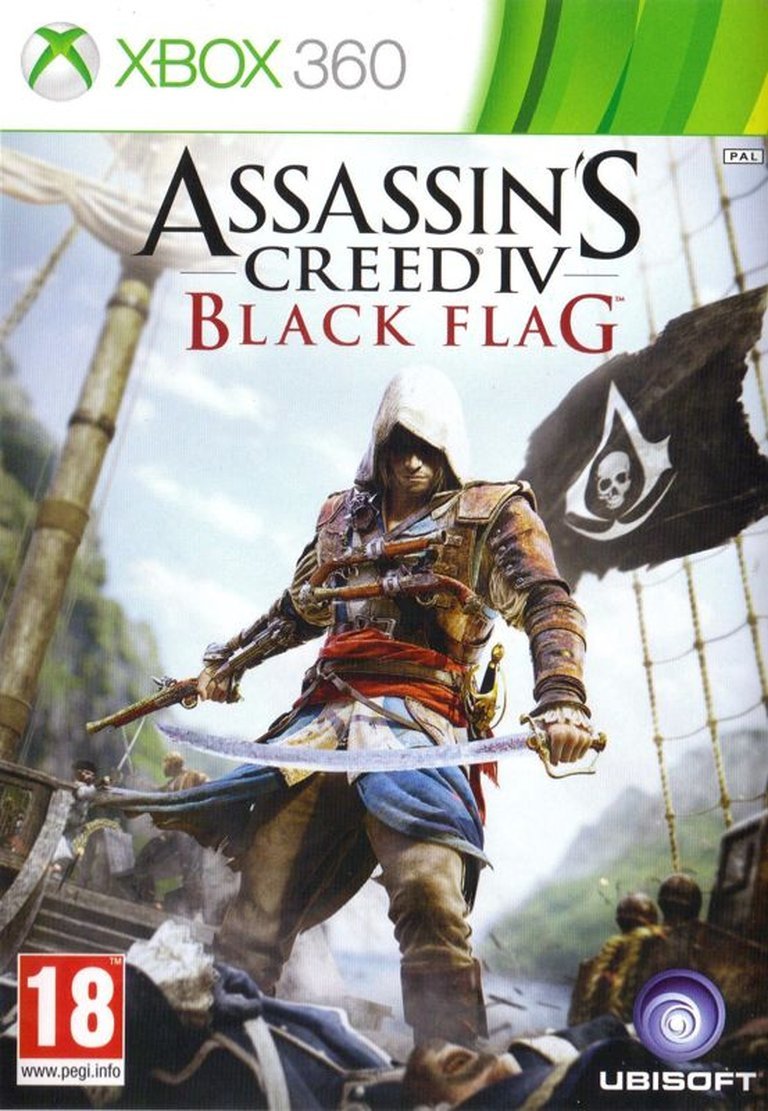
Assassin’s Creed IV: Black Flag is an action-adventure game set in the 18th-century Caribbean, where players assume the role of Edward Kenway, a Welsh privateer turned pirate. The game blends naval exploration, ship combat, and traditional Assassin’s Creed stealth and parkour mechanics, as Edward navigates the conflict between the Assassins and Templars while seeking fortune and uncovering the secrets of the First Civilization. The open-world design allows seamless exploration of cities like Havana and Nassau, as well as uninhabited islands, with activities like hunting, fishing, and treasure hunting enhancing the immersive pirate experience.
Gameplay Videos
Where to Buy Assassin’s Creed IV: Black Flag
PC
Assassin’s Creed IV: Black Flag Free Download
Assassin’s Creed IV: Black Flag Patches & Updates
Assassin’s Creed IV: Black Flag Mods
Assassin’s Creed IV: Black Flag Guides & Walkthroughs
Assassin’s Creed IV: Black Flag Reviews & Reception
ign.com : Assassin’s Creed IV: Black Flag is a smart, sprawling sequel that wisely places an emphasis on freedom and fun while trimming most of the fat that bogged down Assassin’s Creed III’s ambitious but uneven adventure.
opencritic.com (85/100): A gorgeous, relentlessly entertaining open-world piracy simulator packed with interesting 18th century rogues.
metacritic.com (88/100): While Black Flag feels very much like an Assassin’s Creed game, its gameplay reminds me more of Sid Meier’s Pirates! wrought in glorious 3D.
trustedreviews.com : A great setting and a likeable hero, strong naval combat and seaborne exploration, vast range of activities, superb graphics.
gamesradar.com : Assassin’s Creed 4: Black Flag is an incredible pirate adventure. No other game in memory–the mighty Sid Meier’s Pirates included–slides you so snugly into the boots of a brash buccaneer and demands that you collect booty with as much stylish aggression.
Assassin’s Creed IV: Black Flag Cheats & Codes
PlayStation 4
Complete the indicated Abstergo Challenges to unlock the corresponding cheat under the ‘Cheats’ option at the ‘Abstergo Challenges’ menu. Note: Enabling a cheat will prevent the game from being saved.
| Code | Effect |
|---|---|
| Celestial Navigation | Locks the day-and-night cycle to a single setting |
| Arrr Matey! | Edward will speak in pirate catchphrases |
| No Quarter | Hardcore mode, preventing health regeneration |
| Scourge of the Seven Seas | Fills Edward’s wanted level to max |
| Loaded to the Gunwhale | Edward is constantly drunk |
| Poseidon’s Will | Locks the intensity of the ocean’s waves |
| Dead Men Tell No Tales | God mode, preventing damage |
| Shiver Me Timbers | Turns all enemies into bunny-headed scarecrows |
| Armed to the Teeth | Unlimited ammo |
| Deceased Crew | Jackdaw’s crew become skeletons |
Xbox One
Complete the indicated Abstergo Challenges to unlock the corresponding cheat under the ‘Cheats’ option at the ‘Abstergo Challenges’ menu. Note: Enabling a cheat will prevent the game from being saved.
| Code | Effect |
|---|---|
| Celestial Navigation | Locks the day-and-night cycle to a single setting |
| Arrr Matey! | Edward will speak in pirate catchphrases |
| No Quarter | Hardcore mode, preventing health regeneration |
| Scourge of the Seven Seas | Fills Edward’s wanted level to max |
| Loaded to the Gunwhale | Edward is constantly drunk |
| Poseidon’s Will | Locks the intensity of the ocean’s waves |
| Dead Men Tell No Tales | God mode, preventing damage |
| Shiver Me Timbers | Turns all enemies into bunny-headed scarecrows |
| Armed to the Teeth | Unlimited ammo |
| Deceased Crew | Jackdaw’s crew become skeletons |
Assassin’s Creed IV: Black Flag: A Masterpiece of Pirate Fantasy and Open-World Design
Introduction
Few games in the Assassin’s Creed franchise have left as indelible a mark as Assassin’s Creed IV: Black Flag. Released in 2013, it arrived at a pivotal moment for the series—following the divisive Assassin’s Creed III—and not only revitalized the franchise but redefined what an open-world action-adventure game could be. With its sprawling Caribbean setting, deep naval combat, and a protagonist who embodied the roguish charm of the Golden Age of Piracy, Black Flag transcended its predecessors to become one of the most beloved entries in the series.
This review will dissect Black Flag in exhaustive detail, examining its development, narrative depth, gameplay innovations, world-building, critical reception, and lasting legacy. We will argue that Black Flag is not merely a great Assassin’s Creed game, but a landmark title in open-world design—a game that seamlessly blended historical fiction, naval warfare, and pirate fantasy into an experience that remains unmatched over a decade later.
Development History & Context
A Franchise at a Crossroads
By 2013, the Assassin’s Creed series was in a state of flux. Assassin’s Creed III (2012), despite its ambitious setting and expanded gameplay, had been met with mixed reactions. Critics praised its world and mechanics but criticized its protagonist, Connor Kenway, for being uncharismatic, and its narrative for being overly convoluted. The game’s lengthy tutorial sequences and technical issues further dampened its reception. Ubisoft needed a course correction—and fast.
Enter Assassin’s Creed IV: Black Flag, developed primarily by Ubisoft Montreal, with significant contributions from Ubisoft studios in Annecy, Bucharest, Kyiv, Milan, Montpellier, Singapore, and Sofia. The game was announced in February 2013, with a cinematic trailer debuting in March, and it was positioned as a direct sequel to Assassin’s Creed III, continuing its modern-day narrative while introducing a new historical protagonist: Edward Kenway, the grandfather of ACIII’s Connor and father of Haytham Kenway.
The Vision: Pirates, Freedom, and a Living World
The development team, led by Creative Director Jean Guesdon and Game Director Ashraf Ismail, sought to address the criticisms of ACIII while pushing the franchise in a bold new direction. Their vision was clear: Black Flag would be a pirate game first and an Assassin’s Creed game second.
In an interview with IGN, Lead Content Manager Carsten Myhill emphasized that Black Flag was not a spin-off but a full-fledged mainline entry, stating, “The whole feeling of the game is completely fresh and new. It will feel very different from Assassin’s Creed III. I think it completely warrants the Assassin’s Creed IV moniker, not only with the new name and setting but the attitude and the tone of the experience.”
This attitude was reflected in the game’s design philosophy. Director Ashraf Ismail cited Super Mario 64’s hub-world structure as an inspiration for Black Flag’s open-world design, aiming to create a seamless, interconnected Caribbean where players could freely transition between land, sea, and ship without loading screens. The goal was to make the world feel alive, dynamic, and reactive to the player’s actions.
Technological Innovations and Constraints
Black Flag was developed using Ubisoft’s proprietary AnvilNext engine, which had debuted with Assassin’s Creed III. The engine was designed with next-gen capabilities in mind, allowing the team to create a vast, detailed open world that could run on both seventh-generation consoles (PS3, Xbox 360, Wii U) and the newly launched eighth-generation platforms (PS4, Xbox One).
Key technological achievements included:
- Seamless Open World: The Caribbean was rendered as a single, continuous space, with no loading screens between sailing, swimming, and land exploration. This was a significant leap forward from ACIII, which had segmented its world into distinct zones.
- Enhanced Naval Combat: Building on the naval missions introduced in ACIII, Black Flag expanded ship-to-ship combat into a fully realized system, complete with boarding mechanics, ship customization, and dynamic weather effects.
- Dynamic AI and World Systems: NPCs had daily routines, ships followed trade routes, and wildlife behaved realistically. The world felt alive, with pirates, merchants, and naval fleets all operating independently of the player.
- Improved Animation and Physics: The game utilized Havok and PhysX for realistic physics, and the parkour system was refined to feel more fluid and responsive.
Despite these advancements, the team faced challenges. The PS3 and Xbox 360 versions were the “master” builds, meaning the next-gen versions were adapted from them rather than built from the ground up. This led to some visual and performance limitations on older hardware, though the differences were relatively minor.
The Gaming Landscape in 2013
Black Flag launched in a crowded field. The year 2013 was a transitional period for the industry, with the PS4 and Xbox One releasing in November. Major competitors included Grand Theft Auto V (September), Battlefield 4 (October), and Call of Duty: Ghosts (November). Black Flag had to carve out its own niche—and it did so by offering something none of its competitors could: a fully realized pirate fantasy with deep historical roots and a vast, explorable world.
The game’s release was strategically timed to coincide with the launch of the new consoles, with the PS4 and Xbox One versions arriving alongside the hardware in November. This dual-release strategy helped Black Flag reach a broad audience, from players still on last-gen systems to early adopters of the new consoles.
Narrative & Thematic Deep Dive
A Tale of Two Stories: Edward Kenway and the Modern-Day Protagonist
Black Flag’s narrative is split between two timelines: the historical story of Edward Kenway in the early 18th century and the modern-day plot involving an unnamed protagonist working for Abstergo Entertainment.
The Historical Story: Edward Kenway’s Journey
Edward Kenway, voiced by Matt Ryan, is a Welsh privateer turned pirate who stumbles into the centuries-old conflict between the Assassins and Templars. Unlike previous Assassin’s Creed protagonists, Edward is not initially aligned with either faction. He is a self-serving rogue, motivated by greed and personal ambition rather than ideology. This makes him one of the most compelling protagonists in the series—a flawed, relatable figure whose arc is one of redemption and self-discovery.
The story begins with Edward shipwrecked in the Caribbean, where he impersonates an Assassin named Duncan Walpole to infiltrate a Templar meeting in Havana. This sets off a chain of events that sees Edward entangled in the hunt for the Observatory, a First Civilization artifact that can monitor anyone in the world through their blood. Along the way, he crosses paths with legendary pirates like Blackbeard, Charles Vane, and Anne Bonny, as well as historical figures such as Woodes Rogers and Laureano Torres.
Edward’s journey is one of transformation. Initially driven by selfish desires, he gradually develops a sense of honor and purpose, culminating in his decision to join the Assassin Brotherhood. His relationships with figures like Blackbeard and Mary Read add emotional depth to the story, and his eventual reconciliation with his past—including the revelation of his daughter, Jennifer Scott—provides a satisfying conclusion.
The Modern-Day Story: Abstergo and the Instruments of the First Will
The modern-day narrative is more subdued but no less intriguing. The player takes on the role of an unnamed employee of Abstergo Entertainment, a subsidiary of Abstergo Industries (the modern-day Templars). The protagonist is tasked with exploring Edward Kenway’s memories to gather material for an interactive film, but in reality, Abstergo is searching for the Observatory.
The modern-day segments are played from a first-person perspective and focus on stealth and hacking rather than combat. The player is aided by John Standish, the IT manager, who is later revealed to be a Sage—a reincarnation of Juno’s husband, Aita. John’s true allegiance is to the Instruments of the First Will, a secretive cult that worships the First Civilization and seeks to revive Juno.
The modern-day story culminates in a dramatic confrontation where Juno attempts to possess the player but fails, leading to John’s death at the hands of Abstergo security. The player is then contacted by the Assassins, setting the stage for future conflicts.
Themes: Freedom, Redemption, and the Cost of Ambition
Black Flag explores several profound themes, chief among them the idea of freedom. The Caribbean setting is a perfect backdrop for this theme, as it was a lawless frontier where pirates, privateers, and outcasts sought to live beyond the reach of empires. Edward’s journey mirrors this quest for freedom—both from external control and from his own selfish nature.
The game also delves into the cost of ambition. Edward’s initial greed leads to the downfall of the pirate republic in Nassau, as well as the deaths of several of his allies. His redemption arc is about learning that true freedom comes not from wealth or power, but from purpose and connection.
Another key theme is the blurred line between hero and villain. Edward is neither a traditional hero nor a villain; he is a morally ambiguous figure who evolves over the course of the story. Similarly, the pirates he associates with are not romanticized heroes but flawed, often brutal individuals. This nuance makes the narrative more compelling and grounded.
Characters: A Rogue’s Gallery
Black Flag features one of the most memorable casts in the Assassin’s Creed series. Edward Kenway is a standout protagonist, thanks in large part to Matt Ryan’s charismatic performance. His wit, charm, and moral complexity make him far more engaging than ACIII’s Connor.
The supporting cast is equally impressive:
- Blackbeard (Edward Thatch): A larger-than-life figure whose friendship with Edward is central to the story. His eventual downfall is one of the game’s most emotional moments.
- Mary Read and Anne Bonny: Two of history’s most famous female pirates, portrayed as fierce, independent women who defy the expectations of their time.
- Charles Vane: A ruthless pirate whose descent into madness is a cautionary tale about the cost of unchecked ambition.
- Woodes Rogers: The Templar Grand Master of the Caribbean, whose ideological conflict with Edward drives much of the plot.
- Ah Tabai: The Assassin Mentor who becomes Edward’s guide and mentor, representing the moral compass Edward initially lacks.
The dialogue in Black Flag is sharp and often humorous, with Edward’s banter with his crew and allies adding levity to the darker moments. The writing avoids the overly serious tone of ACIII, instead embracing the swashbuckling spirit of pirate lore.
The Pirate Utopia and the Failure of Nassau
One of the most fascinating aspects of Black Flag’s narrative is its exploration of the pirate republic in Nassau. The game depicts the real-life attempt by pirates to establish a free society in the Bahamas, away from the control of the British and Spanish empires. This utopia, however, is short-lived, as infighting, disease, and external pressures lead to its collapse.
This subplot serves as a microcosm of the game’s themes. The pirates’ dream of freedom is noble, but their inability to govern themselves effectively leads to their downfall. Edward’s role in this story—first as an enabler of the republic and later as a witness to its collapse—highlights the tension between individual freedom and collective responsibility.
Gameplay Mechanics & Systems
A Perfect Blend of Assassination and Piracy
Black Flag retains the core gameplay pillars of the Assassin’s Creed series—parkour, stealth, and combat—but expands them with a robust naval system that elevates the experience to new heights.
Naval Combat: The Heart of the Game
The naval combat in Black Flag is a masterclass in open-world design. Players take on the role of captain of the Jackdaw, a brig that can be customized and upgraded throughout the game. Naval combat is a mix of strategy and action, requiring players to manage their ship’s position, angle, and weapons while fending off enemy broadsides and boarding parties.
Key features of the naval system include:
- Ship Customization: The Jackdaw can be outfitted with different types of cannons, mortars, and swivel guns, as well as upgraded hulls, sails, and crew quarters. Players can also recruit crew members, who improve the ship’s performance in battle.
- Dynamic Weather and Sea Conditions: Storms, fog, and changing winds affect naval combat, adding an extra layer of challenge and realism.
- Boarding Mechanics: Players can board enemy ships, engaging in hand-to-hand combat with the crew. Successful boarding allows players to loot the ship and add it to their fleet.
- Naval Contracts and Fort Assaults: Side missions involve hunting down specific ships or assaulting coastal forts, which can be captured and used as fast-travel points.
The naval combat is so well-executed that it often overshadows the land-based gameplay. Many players found themselves spending hours simply sailing the Caribbean, engaging in random naval battles, and exploring uncharted islands.
Land-Based Gameplay: Refined but Familiar
While the naval combat is the standout feature, the land-based gameplay in Black Flag is also excellent. The parkour system is fluid and responsive, allowing players to scale buildings, leap between rooftops, and traverse dense jungles with ease. The combat system, while similar to previous entries, is more dynamic, with a greater emphasis on counterattacks and weapon variety.
Key land-based mechanics include:
- Stealth and Assassination: Players can use tall grass, bushes, and crowds to remain hidden, and the game encourages stealthy takedowns over brute-force combat.
- Weapon Variety: Edward can wield swords, pistols, blowpipes, and even rope darts, each with unique properties and uses.
- Hunting and Crafting: Players can hunt animals on land and fish in the sea, with resources used to craft upgrades for weapons and gear.
- Treasure Hunting: The game features a robust treasure-hunting system, with maps leading to hidden chests, shipwrecks, and Mayan ruins.
The Open World: A Living, Breathing Caribbean
The world of Black Flag is one of the most impressive open-world environments in gaming. The Caribbean is rendered in stunning detail, with three major cities (Havana, Kingston, and Nassau) and over 50 smaller locations, including islands, forts, and shipwrecks. The world is seamlessly connected, with no loading screens between land and sea.
Key aspects of the open world include:
- Dynamic NPCs: The world is populated with merchants, pirates, soldiers, and civilians, all of whom follow daily routines and react to the player’s actions.
- Day-Night Cycle: The passage of time affects gameplay, with certain missions and activities only available at specific times of day.
- Underwater Exploration: Players can dive to explore shipwrecks, underwater caves, and hidden treasures.
- Random Encounters: The world is filled with dynamic events, such as naval battles, pirate ambushes, and animal attacks.
Side Content: A Wealth of Activities
Black Flag is packed with side content, much of which is more engaging than the main story missions. Highlights include:
- Assassination Contracts: Players can take on contracts to assassinate specific targets, often requiring stealth and planning.
- Naval Contracts: These missions task players with hunting down specific ships or fleets.
- Treasure Maps: Collecting maps leads to hidden treasures, often located in remote or dangerous areas.
- Mayan Steles and Animus Fragments: These collectibles provide lore and unlock new abilities.
- Multiplayer: The game features a competitive multiplayer mode, though it is entirely land-based and lacks the naval combat of the single-player campaign.
UI and Progression Systems
The UI in Black Flag is clean and intuitive, with a minimap that provides essential information without cluttering the screen. The progression system is well-balanced, with players earning experience points for completing missions, assassinations, and naval battles. These points can be used to unlock new abilities, such as improved combat skills, stealth techniques, and naval maneuvers.
The economy system is also well-implemented, with players earning money from looting, trading, and completing contracts. This money can be used to upgrade the Jackdaw, purchase weapons and gear, and unlock new locations.
Innovations and Flaws
Black Flag introduced several innovations to the Assassin’s Creed formula, most notably its naval combat and open-world design. However, it also retained some of the series’ long-standing flaws, such as repetitive mission structures and occasional technical issues.
Strengths:
- Naval Combat: The ship-based gameplay is a triumph, offering a level of depth and excitement that few open-world games have matched.
- Open World: The Caribbean is a joy to explore, with a level of detail and dynamism that makes it feel alive.
- Character and Story: Edward Kenway is one of the best protagonists in the series, and the pirate-themed narrative is engaging and well-paced.
- Side Content: The wealth of side activities ensures that players always have something to do, and many of these activities are more fun than the main story.
Weaknesses:
- Repetitive Missions: Some of the main story missions, particularly the tailing and eavesdropping sequences, feel dated and repetitive.
- Underwhelming Modern-Day Story: While the historical narrative is strong, the modern-day segments are less compelling and feel tacked on.
- Technical Issues: The game suffered from occasional bugs and glitches, particularly on last-gen consoles.
- Combat AI: Enemy AI can be inconsistent, with guards sometimes behaving unpredictably during stealth sequences.
Despite these flaws, Black Flag’s strengths far outweigh its weaknesses, making it one of the most complete and satisfying entries in the Assassin’s Creed series.
World-Building, Art & Sound
A Caribbean Paradise: Setting and Atmosphere
Black Flag’s Caribbean setting is one of its greatest achievements. The game captures the beauty, danger, and lawlessness of the Golden Age of Piracy, with a level of detail that immerses players in the world.
The three major cities—Havana, Kingston, and Nassau—each have distinct personalities:
- Havana: A Spanish colonial city with grand architecture, bustling markets, and a strong military presence.
- Kingston: A British-controlled port city with a mix of wealth and poverty, reflecting the colonial hierarchy.
- Nassau: The pirate republic, a chaotic and vibrant hub of outlaws, merchants, and adventurers.
Beyond the cities, the game’s islands and open seas are equally impressive. Players can explore dense jungles, sandy beaches, Mayan ruins, and underwater shipwrecks, each with its own unique atmosphere. The world is filled with wildlife, from parrots and monkeys to sharks and whales, adding to the sense of immersion.
Visual Design: A Feast for the Eyes
Black Flag is a visually stunning game, with a vibrant color palette and meticulous attention to detail. The Caribbean is rendered in lush greens, deep blues, and golden sands, creating a sense of tropical paradise. The game’s art direction is exceptional, with a mix of historical accuracy and artistic license that brings the world to life.
Key visual highlights include:
- Ship Design: The Jackdaw and other ships are beautifully detailed, with realistic rigging, weathered wood, and dynamic damage effects.
- Weather and Lighting: The game’s dynamic weather system creates breathtaking visuals, from sun-drenched afternoons to stormy nights.
- Character Models: The characters are well-designed, with Edward Kenway’s animations and facial expressions conveying his charm and complexity.
- Underwater Environments: The underwater sections are particularly impressive, with realistic lighting and particle effects that create a sense of depth and mystery.
Sound Design: The Sounds of the Sea
The sound design in Black Flag is equally impressive, with a mix of ambient sounds, voice acting, and music that enhances the immersion.
- Ambient Sounds: The game’s soundscapes are rich and detailed, with the sounds of waves, wind, wildlife, and distant ship cannons creating a living world.
- Voice Acting: The voice performances are excellent, with Matt Ryan’s portrayal of Edward Kenway being a standout. The supporting cast, including Mark Bonnar as Blackbeard and Olivia Morgan as Mary Read, deliver equally strong performances.
- Music: The game’s soundtrack, composed by Brian Tyler, is a mix of orchestral scores and sea shanties that perfectly capture the pirate theme. The main theme is particularly memorable, evoking the adventure and danger of the high seas.
The Power of Immersion
What sets Black Flag apart from other open-world games is its ability to immerse players in its world. The combination of visual design, sound, and gameplay creates a sense of place that is rare in gaming. Whether sailing into a storm, exploring a hidden cave, or engaging in a naval battle, players feel like they are truly part of the Caribbean’s golden age.
This immersion is further enhanced by the game’s attention to historical detail. While Black Flag takes liberties with history for the sake of gameplay, it grounds its world in real-world locations, events, and figures. The inclusion of historical pirates like Blackbeard and Anne Bonny adds authenticity, while the game’s depiction of colonial politics and naval warfare provides context for the story.
Reception & Legacy
Critical Acclaim and Commercial Success
Assassin’s Creed IV: Black Flag was met with widespread critical acclaim upon its release. Reviewers praised its open-world design, naval combat, and pirate-themed narrative, with many calling it a return to form for the franchise.
On Metacritic, the game holds scores of 88/100 (PS3), 86/100 (Xbox 360 and Wii U), 83/100 (PS4), and 84/100 (PC), indicating “generally favorable” reviews. Critics highlighted the game’s strengths while acknowledging its flaws, particularly the repetitive mission structure and underwhelming modern-day story.
Key praise from critics included:
- Open World and Exploration: Reviewers lauded the game’s vast, detailed world, with Edge calling it “a surprising breath of fresh sea air” and Eurogamer praising its “gorgeous” visuals.
- Naval Combat: The ship-based gameplay was universally acclaimed, with IGN calling it “one of the best-looking games of 2013” and GameSpot noting that it “builds on ACIII’s naval side missions to create an experience every bit as important as running around on dry land.”
- Story and Characters: Edward Kenway was widely praised as a compelling protagonist, with Official Xbox Magazine calling him “far more interesting, more likable, and more varied” than previous AC leads.
- Side Content: The game’s side activities were highlighted as a major strength, with Game Informer noting that they were “more fun than the main story.”
Commercially, Black Flag was a massive success, selling over 11 million copies by 2014 and becoming the best-selling game in the Assassin’s Creed franchise, with 15 million copies sold as of 2025. Its success helped revitalize the series and set the stage for future entries.
Awards and Accolades
Black Flag received numerous awards and nominations, including:
- Spike VGX 2013: Best Action Adventure Game (Winner)
- GameSpot’s Game of the Year Awards 2013: PS4 Game of the Year and Xbox One Game of the Year (Winner)
- Hardcore Gamer’s Game of the Year Awards 2013: Best Adventure Game and The Sequel of Sequels (Winner)
- Golden Joystick Awards 2014: Best Visual Design and Studio of the Year (Ubisoft Montreal) (Winner)
The game’s critical and commercial success cemented its place as one of the best entries in the Assassin’s Creed series and a landmark title in open-world gaming.
Influence on Subsequent Games and the Industry
Black Flag’s impact on the Assassin’s Creed franchise and the broader gaming industry cannot be overstated. Its naval combat and open-world design set a new standard for the series, influencing later entries such as Assassin’s Creed Rogue (2014) and Assassin’s Creed Valhalla (2020).
The game’s success also demonstrated the appeal of pirate-themed games, leading to the development of Skull and Bones (2024), a standalone naval combat game set in the same universe. While Skull and Bones had a troubled development, its existence is a testament to the enduring popularity of Black Flag’s naval gameplay.
Beyond the Assassin’s Creed series, Black Flag influenced other open-world games, particularly those with a focus on exploration and dynamic world systems. Its seamless transitions between land and sea, as well as its emphasis on player freedom, set a benchmark for future titles.
The Evolution of Its Reputation
Over the years, Black Flag’s reputation has only grown. Initially praised as a return to form, it is now widely regarded as one of the best games in the Assassin’s Creed series and a classic of the open-world genre. Its blend of pirate fantasy, historical fiction, and deep gameplay mechanics has ensured its lasting appeal.
The game’s legacy is also evident in its continued popularity. Even a decade after its release, Black Flag remains a favorite among fans, with many citing it as their favorite entry in the series. Its influence can be seen in modern games that prioritize exploration, player agency, and immersive world-building.
Conclusion: A Timeless Masterpiece
Assassin’s Creed IV: Black Flag is more than just a great Assassin’s Creed game—it is a masterpiece of open-world design, a triumph of pirate fantasy, and a testament to the power of immersive storytelling. Its seamless blend of naval combat, exploration, and historical narrative creates an experience that is as engaging today as it was in 2013.
The game’s strengths—its vast, living world, its deep naval mechanics, its charismatic protagonist, and its rich side content—far outweigh its minor flaws. While the main story missions can be repetitive and the modern-day segments underwhelming, these issues are overshadowed by the sheer joy of sailing the Caribbean, engaging in naval battles, and uncovering the secrets of the Golden Age of Piracy.
Black Flag’s legacy is secure. It revitalized the Assassin’s Creed franchise, set new standards for open-world games, and remains a benchmark for pirate-themed adventures. Its influence can be seen in countless games that followed, and its reputation as one of the best entries in the series is well-deserved.
For players seeking a game that offers freedom, adventure, and a sense of discovery, Assassin’s Creed IV: Black Flag is an essential experience. It is a game that invites players to lose themselves in its world, to embrace the life of a pirate, and to forge their own legend on the high seas.
In the pantheon of open-world games, Black Flag stands tall—a timeless masterpiece that continues to captivate and inspire.