
- Release Year: 2017
- Platforms: Linux, Macintosh, Windows
- Publisher: JetDogs Studios Oy
- Developer: JetDogs Studios Oy, Whalebox Studio
- Genre: Action
- Perspective: Diagonal-down
- Game Mode: Single-player
- Gameplay: Time management
- Average Score: 77/100
Description
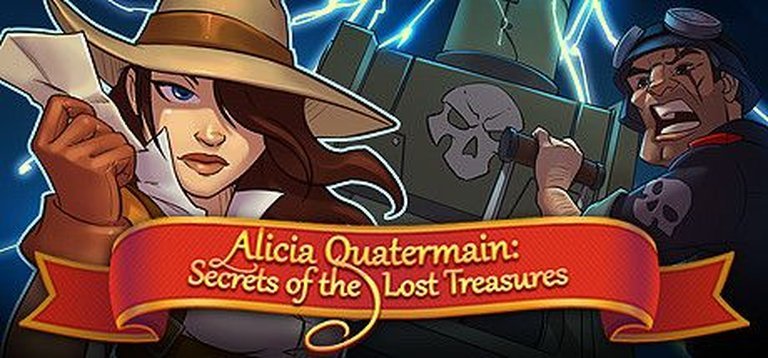
Alicia Quatermain: Secrets Of The Lost Treasures is a time management game where players must strategically gather resources and allocate them efficiently across 50 levels. Set in a world of adventure and exploration, the game challenges players to manage workers and reserves while navigating various mechanics and interactive objects. With a mix of rearranged and reskinned level designs, the game offers a satisfying sense of productivity and strategy, though it could benefit from more diverse level goals.
Gameplay Videos
Where to Buy Alicia Quatermain: Secrets Of The Lost Treasures
PC
Alicia Quatermain: Secrets Of The Lost Treasures Free Download
Alicia Quatermain: Secrets Of The Lost Treasures Guides & Walkthroughs
Alicia Quatermain: Secrets Of The Lost Treasures Reviews & Reception
store.steampowered.com (88/100): A triumphant return to form for the series.
wildtangent.com (72/100): A fun time management adventure with a compelling plot.
mobygames.com (71/100): A solid time management game with a fascinating plot.
Alicia Quatermain: Secrets Of The Lost Treasures: A Comprehensive Review
Introduction
Alicia Quatermain: Secrets Of The Lost Treasures is a hidden gem in the time management genre, blending adventure, strategy, and resource management into a cohesive and engaging experience. Released in 2017 by JetDogs Studios and Whalebox Studio, the game follows the granddaughter of the legendary explorer Allan Quatermain as she embarks on a global quest to uncover her family’s mysterious past and thwart a villainous conspiracy. This review will delve into the game’s development history, narrative depth, gameplay mechanics, artistic design, and its lasting impact on the genre.
Development History & Context
The Studios Behind the Game
Alicia Quatermain: Secrets Of The Lost Treasures was developed by JetDogs Studios Oy and Whalebox Studio, two studios with a strong portfolio in casual and time management games. JetDogs Studios, in particular, is known for its 12 Labours of Hercules series, which shares many gameplay mechanics with Alicia Quatermain. The collaboration between these studios brought together a team of 12 developers, including artists, programmers, and designers, who had previously worked on titles like Kids of Hellas: Back to Olympus and other time management games.
Technological Constraints and Design Choices
The game was released in 2017, a time when the casual gaming market was flourishing, particularly on platforms like Steam, Big Fish Games, and WildTangent. The developers opted for a diagonal-down perspective with fixed/flip-screen visuals, a choice that allowed for clear and colorful environments while maintaining simplicity in navigation. The game’s point-and-select interface and mouse-only controls made it accessible to a broad audience, including players who preferred casual or family-friendly experiences.
The technical requirements were modest, reflecting the game’s casual nature:
– Windows XP or later (though Steam later dropped support for older OS versions).
– 1.6 GHz processor and 512 MB RAM, ensuring it could run on low-end systems.
– 700 MB of storage, a small footprint compared to modern games.
These choices aligned with the game’s target audience: players who enjoyed time management and resource management games without the need for high-end hardware.
The Gaming Landscape in 2017
In 2017, the time management genre was well-established, with series like Roads of Rome, Delicious, and Weather Lord dominating the market. Alicia Quatermain entered this space with a fresh narrative twist—tying its gameplay to the legacy of Allan Quatermain, a literary figure from H. Rider Haggard’s adventure novels. This connection to classic adventure fiction gave the game a unique identity, appealing to both casual gamers and fans of pulp adventure stories.
Narrative & Thematic Deep Dive
Plot Summary
The game’s story revolves around Alicia Quatermain, the granddaughter of the famed explorer Allan Quatermain. Her father has disappeared under mysterious circumstances, and the only way to uncover the truth is to retrace her grandfather’s steps and find his lost treasure. Along the way, Alicia encounters a villainous organization led by a character known only as “Boss,” who seeks the treasure for nefarious purposes—presumably to conquer the world.
The narrative unfolds across 50 levels, each set in a different global location, from the jungles of China to frozen tundras and ancient temples. The story is straightforward but effective, blending adventure, mystery, and light-hearted humor. The dialogue, while occasionally awkward due to translation issues, maintains a charming tone that fits the game’s casual aesthetic.
Characters and Their Roles
- Alicia Quatermain: The protagonist, a resourceful and determined young woman who must balance exploration with leadership. She is the only character who can perform certain critical tasks, such as finding hidden treasures or activating mechanisms.
- Workers: A team of NPCs that Alicia recruits to help with tasks like gathering resources, clearing paths, and maintaining buildings. These workers are essential for progressing through levels but are largely interchangeable in function.
- Boss: The primary antagonist, a shadowy figure whose motives are tied to world domination. Her presence is felt through sabotage and traps, adding urgency to Alicia’s quest.
- Supporting Characters: Throughout the journey, Alicia meets various allies, such as a smuggler in China, a bigfoot in icy regions, and an islander who can fend off crocodiles. While these characters add flavor to the story, their roles are often limited to specific mechanical functions (e.g., clearing obstacles).
Themes
- Legacy and Discovery: The game explores the idea of inherited adventure, with Alicia following in her grandfather’s footsteps. The lost treasure symbolizes not just wealth but also the unresolved mysteries of her family’s past.
- Teamwork and Leadership: Alicia’s success depends on her ability to manage her team effectively, emphasizing the importance of delegation and resource allocation.
- Perseverance Against Adversity: The villainous Boss and her minions constantly hinder Alicia’s progress, reinforcing the theme of overcoming obstacles through clever planning and resilience.
Dialogue and Localization
The game’s dialogue is functional but suffers from occasional grammatical errors and awkward phrasing, likely due to translation from its original language (presumably Russian, given the developers’ backgrounds). However, these quirks do not detract significantly from the overall experience, as the story remains easy to follow.
Gameplay Mechanics & Systems
Core Gameplay Loop
Alicia Quatermain is, at its heart, a time management game with strong resource management elements. The core loop involves:
1. Gathering Resources: Players must collect food, materials, and gold to fund tasks.
2. Assigning Tasks: Workers are directed to clear paths, build structures, or gather resources.
3. Completing Objectives: Each level has primary goals (e.g., finding a treasure, opening a gate) that require strategic use of resources and workers.
4. Progressing Through Levels: Success unlocks new locations and introduces new mechanics.
Resource Management
Resources are the lifeblood of the game:
– Food: Used to sustain workers and complete certain tasks.
– Materials: Needed for construction and clearing obstacles.
– Gold: A versatile resource for upgrades and special abilities.
Players must balance these resources carefully, as running out of any one type can stall progress. The game provides visual and auditory cues to indicate when resources are ready for collection or when tasks can be initiated.
Worker Management
Workers are the backbone of Alicia’s operations. Key mechanics include:
– Task Queuing: Players can assign multiple tasks to a worker, allowing for efficient use of their time.
– Special Abilities: Some characters (e.g., the bigfoot) have unique abilities that unlock new interactions, such as breaking ice or soothing animals.
– Upgrades: Players can spend resources to hire additional workers or upgrade existing ones, increasing their speed or efficiency.
Difficulty Modes
The game offers three difficulty settings:
1. Easy/Relaxed: No time limits, ideal for players who want to enjoy the story without pressure.
2. Normal: A balanced experience with moderate time constraints.
3. Difficult: Challenges players to optimize their strategies, with tighter deadlines and fewer resources.
Special Powers and Bonuses
A power meter fills as players complete tasks, allowing them to activate temporary boosts:
– Speed Boost: Workers move faster.
– Time Freeze: The timer pauses, giving players extra time to plan.
– Resource Boost: Passive resource generation increases.
These powers add a layer of strategy, as players must decide when to use them for maximum effect.
Level Design and Progression
The game’s 50 levels are spread across five distinct regions, each with its own aesthetic and challenges. While the core mechanics remain consistent, later levels introduce:
– Enemies: Soldiers who place dynamite or block paths, requiring Alicia to intervene.
– Environmental Hazards: Such as crocodiles, icicles, or collapsing bridges.
– Hidden Puzzle Pieces: Collecting these unlocks bonus levels, adding replay value.
However, the game’s level design has been criticized for reusing mechanics rather than introducing truly novel challenges. Many levels feel like reskins of earlier ones, with only minor variations in layout or objectives.
Achievements and Replayability
The game includes Steam Achievements, encouraging players to revisit levels to earn higher scores or find hidden puzzle pieces. The three-star rating system (based on time remaining, resources collected, and puzzle pieces found) adds incentive for perfectionists.
World-Building, Art & Sound
Visual Design
Alicia Quatermain features stunning full HD graphics that are bright, colorful, and detailed. The art style is cartoonish and vibrant, making it appealing to a casual audience. Each of the five regions has a distinct visual identity:
– China: Lush jungles and ancient temples.
– Tropical Islands: Sandy beaches and palm trees.
– Tundra: Snowy landscapes and icy caves.
– Desert: Arid dunes and ruined cities.
– Mountains: Towering peaks and hidden valleys.
The diagonal-down perspective allows for clear visibility of all interactive elements, ensuring players can easily identify tasks and obstacles.
Sound Design and Music
The game’s soundtrack is upbeat and adventurous, complementing the globetrotting theme. Sound effects are functional, with clear cues for resource collection, task completion, and enemy actions. However, the audio design is not particularly memorable, serving more as background ambiance than a standout feature.
Atmosphere and Immersion
The game’s world is charming but shallow. While the visuals are appealing, the lack of deeper lore or character development prevents the setting from feeling truly immersive. The story serves as a backdrop for the gameplay rather than a driving force, which may disappoint players seeking a richer narrative experience.
Reception & Legacy
Critical Reception
The game received a 71% critic score from The Game Hoard, which praised its satisfying time management mechanics but noted its repetitive level design and awkward English localization. User reviews on Steam are overwhelmingly positive, with an 88% approval rating from over 100 reviews. Players appreciated the game’s accessibility, charming visuals, and relaxing gameplay, though some criticized the lack of innovation in later levels.
Commercial Performance
Alicia Quatermain was released on Steam, WildTangent, and Big Fish Games, targeting the casual gaming market. While exact sales figures are unavailable, its inclusion in bundles like the Amazing Time Management Games: Labors of Hercules 10 Pack suggests it found a niche audience. The game’s low price point ($2.99 on Steam) and family-friendly appeal likely contributed to its commercial success.
Influence and Sequels
The game spawned three sequels:
1. Alicia Quatermain 2: The Stone of Fate (2018)
2. Alicia Quatermain 3: The Mystery of the Flaming Gold (2018)
3. Alicia Quatermain 4: Da Vinci and the Time Machine (2019)
These sequels expanded on the original’s mechanics, introducing new settings and characters while retaining the core time management gameplay. The series has become a staple in the genre, appealing to fans of casual strategy and adventure games.
Legacy in the Time Management Genre
Alicia Quatermain is a solid but unremarkable entry in the time management genre. It does not redefine the formula but executes it well, making it a great introductory title for newcomers. Its legacy lies in its accessibility, charming presentation, and successful blending of adventure and strategy.
Conclusion
Alicia Quatermain: Secrets Of The Lost Treasures is a well-crafted time management game that delivers a satisfying blend of resource management, adventure, and light strategy. While it does not break new ground, its polished mechanics, vibrant visuals, and engaging premise make it a worthwhile experience for fans of the genre. The game’s repetitive level design and shallow narrative prevent it from achieving greatness, but its accessibility and charm ensure it remains a enjoyable casual title.
Final Verdict: 7.5/10 – A solid and engaging time management adventure that excels in execution, even if it lacks innovation.
For players seeking a relaxing yet strategic experience with a touch of pulp adventure, Alicia Quatermain is a hidden treasure worth uncovering.