
- Release Year: 2014
- Platforms: Windows
- Publisher: S.A.D. Software Vertriebs- und Produktions GmbH
- Developer: Puzzle Lab
- Genre: Adventure
- Perspective: 1st-person
- Game Mode: Single-player
- Gameplay: Hidden object, Mini-games, Point and select, Puzzle elements
- Setting: Detective, Mystery
- Average Score: 68/100
Description
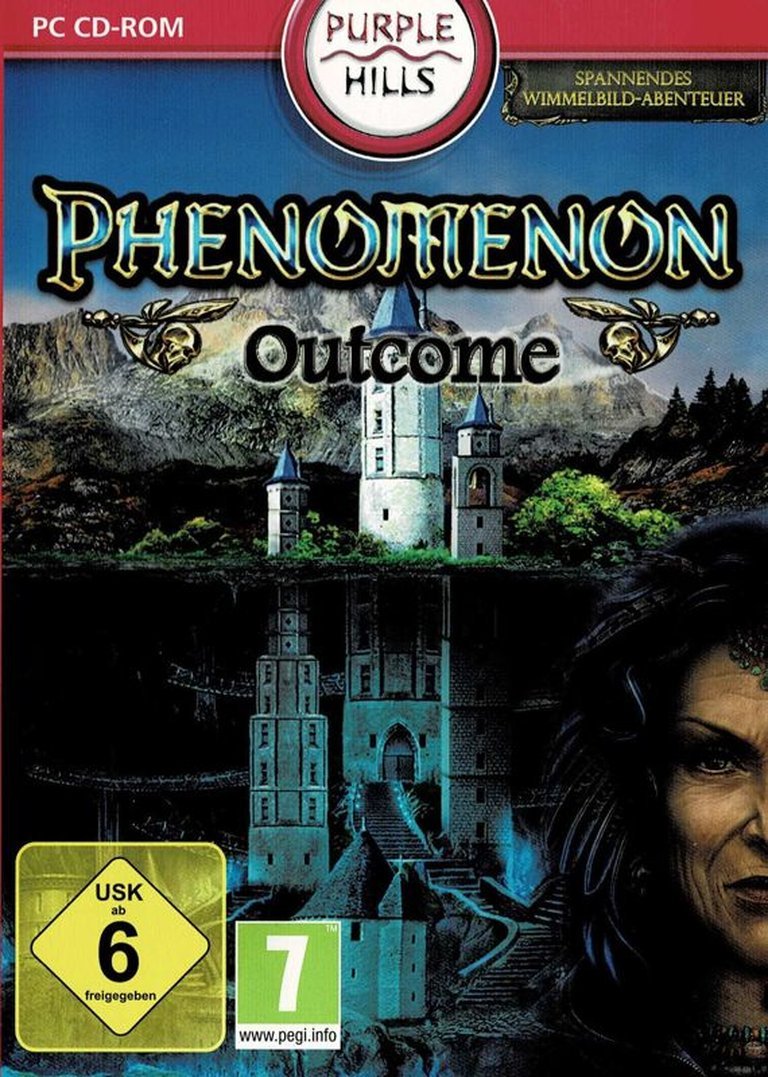
Phenomenon: Outcome is a first-person adventure game set in South America, where players investigate a deadly cosmic force and uncover the secrets of a missing research team. The game features hidden object puzzles, mini-games, and puzzle elements, all wrapped in a detective/mystery narrative. Players explore various locations, solve intricate puzzles, and interact with objects to progress through the story, which involves time travel and ancient artifacts.
Phenomenon: Outcome Guides & Walkthroughs
Phenomenon: Outcome Reviews & Reception
allaboutcasualgame.blogspot.com (68/100): Phenomenon: Outcome is not as phenomenal as the first two games; the sights are disappointing, story is confusing and the gameplay is a little too tedious for our tastes.
Phenomenon: Outcome – A Hidden Object Adventure Lost in Time
Introduction: The Enigma of a Forgotten Sequel
Phenomenon: Outcome (2014) is a game that exists in the liminal space between obscurity and cult fascination. As the third entry in Puzzle Lab’s Phenomenon series, it arrived at a time when the hidden object adventure (HOA) genre was both flourishing and fragmenting—caught between the rise of mobile gaming, the decline of traditional PC casual titles, and the growing demand for more immersive, narrative-driven experiences. Outcome attempted to blend the series’ signature sci-fi mysticism with deeper puzzle mechanics, yet it remains one of the most polarizing and least-discussed entries in the franchise.
This review seeks to dissect Phenomenon: Outcome with surgical precision, examining its development, narrative ambitions, gameplay innovations, and the reasons behind its muted reception. Was it a bold evolution of the series, or a misstep that diluted its identity? By analyzing its mechanics, storytelling, and legacy, we can determine whether Outcome deserves rediscovery—or if it’s better left as a relic of its time.
Development History & Context: The Rise and Stagnation of a Genre
The Studio Behind the Phenomenon
Puzzle Lab, the developer behind Phenomenon: Outcome, was a studio that specialized in hidden object and adventure games, primarily for the PC casual market. Their work was often distributed through platforms like Big Fish Games, a hub for HOA titles in the 2010s. The Phenomenon series began with Phenomenon: City of Cyan (2012), followed by Phenomenon: Meteorite (2013), and culminated with Outcome in 2014.
The studio’s approach was formulaic yet ambitious: each game in the series explored a sci-fi or supernatural mystery, blending hidden object scenes with light adventure mechanics. However, by 2014, the HOA genre was facing an identity crisis. Mobile games like Candy Crush Saga and Clash of Clans were siphoning attention away from traditional PC casual titles, while indie darlings like Gone Home and The Stanley Parable were redefining what narrative-driven games could be. Phenomenon: Outcome arrived in this transitional period, attempting to cater to an audience that was increasingly difficult to please.
Technological Constraints and Design Philosophy
Outcome was built using a fixed/flip-screen perspective, a holdover from earlier adventure games. This design choice, while nostalgic, felt increasingly archaic in an era where even casual games were experimenting with 3D environments and dynamic cameras. The game’s visuals were described by critics as “dull” and “grainy,” a far cry from the vibrant, hand-painted aesthetics of contemporaries like The Raven: Legacy of a Master Thief or The Wolf Among Us.
The development team’s vision for Outcome was to create a more puzzle-heavy experience than its predecessors. While City of Cyan and Meteorite leaned heavily on hidden object scenes, Outcome introduced “Super Puzzles”—multi-step challenges that required players to follow instructions to activate mechanisms. This was an attempt to appeal to players who craved deeper interaction, but it also alienated those who preferred the simplicity of traditional HOAs.
The Gaming Landscape in 2014
2014 was a pivotal year for gaming. Dark Souls II, Dragon Age: Inquisition, and Middle-earth: Shadow of Mordor dominated the AAA space, while indie hits like Shovel Knight and This War of Mine proved that smaller studios could deliver profound experiences. Meanwhile, the casual gaming market was being overshadowed by free-to-play mobile titles, which offered bite-sized entertainment without the need for a $20 PC download.
Phenomenon: Outcome was released into this crowded ecosystem, competing not just with other HOAs but with an entirely different paradigm of gaming. Its Collector’s Edition, which included bonus chapters, wallpapers, and concept art, felt like a relic of an earlier era—one where casual gamers were willing to pay a premium for extra content. By 2014, such offerings were becoming increasingly difficult to market.
Narrative & Thematic Deep Dive: A Story Lost in Translation
Plot Summary: The Cyan Plasma and the Orphan’s Quest
Phenomenon: Outcome follows Sasha, a young woman who has spent her life haunted by nightmares and the mysterious medallion left to her by her missing parents. When the medallion begins emitting strange energy, she traces its signal to a remote island overrun by the “Cyan Plasma,” a deadly, otherworldly substance that mutates everything it touches. Sasha’s journey leads her to a missing research team, ancient ruins, and a conspiracy that threatens the entire world.
On paper, the premise is compelling—a blend of Indiana Jones adventure and X-Files mystery. However, the execution is where Outcome stumbles. The game’s narrative is delivered through a series of disjointed cutscenes and cryptic dialogue, leaving players more confused than intrigued. The introduction provides little context for Sasha’s nightmares or the origins of the Cyan Plasma, and the story’s pacing is erratic, oscillating between slow exposition and sudden, unexplained revelations.
Characterization and Dialogue: A First-Person Paradox
One of the most baffling aspects of Outcome is its inconsistent perspective. The game is presented in first-person, yet Sasha is frequently shown speaking in cutscenes—a jarring contradiction that breaks immersion. The voice acting, while competent, does little to salvage the weak script. Characters often deliver exposition in a monotonous, detached manner, making it difficult for players to connect with their struggles.
The supporting cast is equally underdeveloped. The missing research team, who should serve as emotional anchors, are reduced to vague archetypes—a scientist here, a hermit there—with little personality or depth. The game’s villain, the Cyan Plasma itself, is an abstract force rather than a tangible antagonist, which further dilutes the narrative tension.
Themes: Isolation, Legacy, and the Burden of Knowledge
Beneath its convoluted plot, Phenomenon: Outcome grapples with themes of isolation and inherited trauma. Sasha’s journey is not just about stopping the Cyan Plasma but uncovering the truth about her parents’ disappearance. The game explores the idea of legacy—how the sins (or secrets) of the past shape the present—and the burden of knowledge. The research team’s experiments, meant to harness the Plasma’s power, instead unleashed a catastrophe, mirroring real-world anxieties about unchecked scientific ambition.
However, these themes are buried under layers of obtuse storytelling. The game’s reliance on environmental clues and cryptic notes means that players often miss the deeper narrative beats, reducing the experience to a series of fetch quests rather than a cohesive story.
Gameplay Mechanics & Systems: Innovation or Frustration?
Core Gameplay Loop: Hidden Objects and “Super Puzzles”
Phenomenon: Outcome is, at its heart, a hidden object adventure game. Players explore fixed-screen environments, collecting items to solve puzzles and progress through the story. The game’s inventory system is straightforward, though the sheer number of abstract objects (e.g., “Monster Bas-Relief,” “Stone Feather”) can be overwhelming. Unlike more modern HOAs, which often streamline item usage, Outcome expects players to brute-force solutions through trial and error.
The standout feature of Outcome is its “Super Puzzles,” multi-step challenges that require players to follow a sequence of instructions to activate a mechanism. For example, one puzzle involves placing crystals in a specific order, then using a lever to align mirrors and redirect light. These puzzles are ambitious, but their execution is flawed. The instructions are often vague, and the lack of feedback means players can spend minutes (or hours) stuck on a single step.
Hidden Object Scenes: A Double-Edged Sword
The hidden object scenes (HOPs) in Outcome are a point of contention. On one hand, they are meticulously detailed, with each scene containing a secondary HOP accessible by finding a “red item.” This layered approach is innovative, rewarding players who take the time to explore thoroughly. On the other hand, the scenes are cluttered and visually unappealing, with dull textures and repetitive object lists. The lack of variety in locations (many scenes take place in ruins or laboratories) exacerbates the monotony.
Navigation and UI: A Relic of the Past
The game’s interface is functional but outdated. The fixed/flip-screen perspective, while nostalgic, feels restrictive compared to the free-roaming cameras of modern adventure games. The map system is rudimentary, offering little guidance beyond basic waypoints. Players who prefer a more guided experience will find Outcome’s lack of direction frustrating, while those who enjoy exploration may appreciate the challenge.
Time Travel and the Neutralizer: A Gimmick or a Game-Changer?
One of Outcome’s most unique mechanics is the “Neutralizer,” a device that allows Sasha to temporarily dispel the Cyan Plasma and access hidden areas. This mechanic is tied to the game’s time-travel elements, where certain puzzles require players to shift between dimensions to retrieve items. While inventive on paper, the Neutralizer’s implementation is inconsistent. Its use is often arbitrary, and the time-travel segments feel tacked on rather than integrated into the core gameplay.
World-Building, Art & Sound: A Missed Opportunity
Setting and Atmosphere: A World Without Identity
Phenomenon: Outcome takes place across a variety of locations, from ancient ruins to steampunk laboratories. However, none of these environments feel distinct or memorable. The game’s visual design is described by critics as “dull” and “grainy,” with a color palette dominated by muted browns and grays. The Cyan Plasma, which should be a striking visual element, is rendered in a way that makes it blend into the background rather than stand out as a menacing force.
The lack of atmospheric cohesion is Outcome’s greatest visual failing. The game’s settings—whether a crumbling tower or a high-tech lab—lack the personality and detail that define great adventure games. Compare this to Myst, where every location tells a story, or The Longest Journey, where the art style reinforces the narrative themes. Outcome’s world feels like a series of disconnected puzzles rather than a living, breathing place.
Sound Design: A Rare Bright Spot
If there’s one area where Phenomenon: Outcome excels, it’s in its sound design. The ambient tracks are moody and immersive, with eerie melodies that enhance the game’s sci-fi horror atmosphere. The voice acting, while not exceptional, is serviceable, and the sound effects (e.g., the hum of the Neutralizer, the crackle of the Cyan Plasma) add depth to the gameplay.
However, the soundtrack is underutilized. Many of the game’s most tense moments are undermined by repetitive or generic music cues. A stronger audio direction could have elevated Outcome’s narrative, making its mysteries feel more urgent and its revelations more impactful.
Reception & Legacy: The Game That Time Forgot
Critical and Commercial Reception
Phenomenon: Outcome was met with lukewarm reviews upon release. Critics praised its puzzle complexity and sound design but criticized its confusing narrative, outdated visuals, and clunky interface. All About Casual Game gave it a mixed review, scoring it 3/5 stars and noting that it “lost the ‘indie’ feel” of its predecessors. Gamezebo was slightly more generous, awarding it an 80/100 and commending its “unique and richly detailed atmosphere” while acknowledging its “occasionally awkward writing.”
Commercially, Outcome performed adequately but failed to make a lasting impact. It was overshadowed by more polished HOAs like Dark Parables and Mystery Case Files, as well as the rising tide of mobile games. The Collector’s Edition, which included bonus content, did little to boost its profile.
Evolution of the Phenomenon Series
The Phenomenon series began with City of Cyan (2012), a game that introduced players to the Cyan Plasma and the mystery of Monica’s missing parents. Meteorite (2013) expanded on these ideas, adding more puzzle variety and a stronger narrative focus. Outcome, however, marked a departure from the series’ strengths. Its emphasis on complex puzzles and abstract storytelling alienated fans who enjoyed the simpler, more accessible gameplay of the earlier entries.
The series’ legacy is one of missed potential. While City of Cyan and Meteorite carved out a niche for themselves, Outcome arrived at a time when the HOA genre was evolving—and it failed to evolve with it.
Influence on Subsequent Games
Phenomenon: Outcome’s influence on the HOA genre is minimal. Its “Super Puzzles” were an interesting experiment, but few games adopted the mechanic. The time-travel elements, while unique, were not explored in depth by later titles. If anything, Outcome serves as a cautionary tale about the dangers of overcomplicating a genre that thrives on simplicity and accessibility.
Conclusion: A Flawed but Fascinating Relic
Phenomenon: Outcome is a game that defies easy classification. It is neither a complete failure nor a triumph—it is a curious artifact of a genre in transition. Its ambitious puzzles and layered hidden object scenes show glimpses of innovation, but its confusing narrative, outdated visuals, and clunky design hold it back from greatness.
For fans of the Phenomenon series, Outcome is a disappointing finale. For newcomers, it is a challenging but ultimately unrewarding experience. Yet, there is something fascinating about its flaws. The game’s willingness to experiment, even at the risk of alienating its audience, is commendable. In an era where many HOAs play it safe, Phenomenon: Outcome dared to be different—and for that, it deserves a measure of respect.
Final Verdict: 6/10 – A Bold Misstep
Phenomenon: Outcome is not a bad game, but it is a deeply flawed one. Its puzzles are inventive, its sound design is atmospheric, and its themes are intriguing. However, its narrative is incoherent, its visuals are uninspired, and its gameplay is often frustrating. It is a game that could have been great with more polish and a clearer vision. As it stands, it remains a forgotten footnote in the history of hidden object adventures—a phenomenon that never quite lived up to its name.
For those willing to endure its rough edges, Outcome offers a challenging and occasionally rewarding experience. But for most players, it will be remembered as the game that tried to evolve the Phenomenon series—and in doing so, lost sight of what made it special in the first place.