
- Release Year: 1998
- Platforms: Windows
- Publisher: ValuSoft, Inc.
- Developer: Oquirrh Productions, L.C.
- Genre: Action, Simulation
- Perspective: 1st-person
- Game Mode: Single-player
- Gameplay: Hunting, Shooter
- Average Score: 60/100
Description
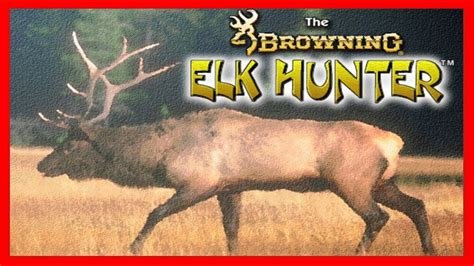
Browning Elk Hunter is a first-person hunting simulation game released in 1998 for Windows. Developed by Oquirrh Productions and published by ValuSoft, the game immerses players in the wilderness as they track and hunt elk using licensed Browning firearms. Set in realistic outdoor environments, the game combines action and simulation elements, offering a mix of strategy and shooting mechanics. Players must navigate varied terrains, account for factors like wind and distance, and employ stealth to successfully bag their prey.
Gameplay Videos
Browning Elk Hunter Free Download
Browning Elk Hunter Guides & Walkthroughs
Browning Elk Hunter Reviews & Reception
mobygames.com (60/100): Average score: 3.0 out of 5
Browning Elk Hunter Cheats & Codes
PC
Enter codes at the shop screen.
| Code | Effect |
|---|---|
| Ctrl + 4 | Get $100 |
Browning Elk Hunter: A Forgotten Relic of the Hunting Simulator Genre
Introduction: The Call of the Wild in the Late ’90s
In the late 1990s, the hunting simulator genre was still finding its footing, sandwiched between the arcade-style shooters of the early ’90s and the hyper-realistic simulations of the 2000s. Browning Elk Hunter (1998), developed by Oquirrh Productions and published by ValuSoft, emerged as a curious artifact of this transitional period—a game that attempted to blend the thrill of the hunt with the burgeoning possibilities of 3D graphics and simulation mechanics. While it never achieved the mainstream success of franchises like Cabela’s Big Game Hunter or Deer Hunter, Browning Elk Hunter remains a fascinating case study in licensed hunting games, offering a glimpse into the ambitions and limitations of late-’90s PC gaming.
This review will dissect Browning Elk Hunter in exhaustive detail, examining its development history, narrative (or lack thereof), gameplay mechanics, technical achievements, and cultural legacy. Was it a pioneering effort in hunting simulation, or a flawed experiment lost to time? Let’s take aim and find out.
Development History & Context: The Birth of a Licensed Hunter
The Studio Behind the Scope: Oquirrh Productions
Oquirrh Productions, L.C., the developer behind Browning Elk Hunter, was a relatively obscure studio based in Utah, specializing in outdoor and hunting simulations. The company’s portfolio included other Browning-licensed titles like The Browning Duck Hunter (2000) and Browning African Safari: Who’s Hunting Who? (1998), suggesting a niche focus on licensed hunting experiences. The Browning name—synonymous with firearms and outdoor gear—lent the game a veneer of authenticity, a marketing strategy that would become commonplace in later hunting sims.
The team behind Browning Elk Hunter was small but experienced in multimedia production. Key figures included:
– Dave Lindsley (Programmer), the technical backbone of the project.
– Chad T. Liddell and Bryan M. Tamietti, who handled 3D graphics and animation.
– John Hancock and Rich Dixon, composers who provided the game’s atmospheric soundtrack.
The game’s development coincided with a period of rapid evolution in PC gaming. 1998 saw the rise of 3D accelerators like the Voodoo2, and while Browning Elk Hunter wasn’t pushing the boundaries of graphical fidelity, it attempted to leverage the era’s technology to create an immersive hunting experience.
The Gaming Landscape: Hunting Sims in the Late ’90s
By the late 1990s, hunting games were still a niche genre, but they were gaining traction. Titles like Cabela’s Big Game Hunter (1998) and Deer Hunter (1997) had already established formulas that blended arcade-style shooting with rudimentary simulation elements. Browning Elk Hunter entered this space with a few key differentiators:
1. Licensed Authenticity: The Browning brand gave it credibility among hunting enthusiasts.
2. Economic Simulation: The game introduced a pseudo-economy where players earned “Browning Bucks” to purchase gear, a mechanic that would later become standard in the genre.
3. Regulatory Realism: Unlike many contemporaries, Browning Elk Hunter incorporated hunting laws, fines, and even jail time for violations—a bold attempt at realism.
However, the game also faced stiff competition. TNN Outdoors Pro Hunter (1998) and Melker: The Elk Hunt (2000) offered similar experiences, and without a major publisher’s backing, Browning Elk Hunter struggled to stand out.
Technological Constraints: The Limits of Late-’90s PC Gaming
Browning Elk Hunter was built for Windows 95/98, a time when 3D graphics were still in their infancy. The game used a mix of:
– Pre-rendered backgrounds (photographic landscapes) to create its environments.
– Basic 3D models for elk and other wildlife.
– DirectX-based rendering, which was still relatively new.
The result was a game that looked decent for its time but lacked the polish of later hunting sims. The elk models, while recognizable, were stiff and lacked fluid animations. The environments, though based on real photographs, suffered from repetitive textures and limited interactivity.
Narrative & Thematic Deep Dive: The Hunt as a System, Not a Story
The Absence of Plot: A Pure Simulation Experience
Browning Elk Hunter is not a game driven by narrative. There are no characters to meet, no overarching story to uncover, and no dialogue beyond the occasional tip from a fictional warden. Instead, the game presents itself as a pure hunting simulation, where the player’s goal is simple: hunt elk, earn money, upgrade gear, and hunt bigger elk.
This lack of narrative is both a strength and a weakness:
– Strength: The game avoids the often-awkward storytelling found in early hunting sims (e.g., Cabela’s attempts at cutscenes).
– Weakness: Without any framing device, the experience can feel hollow. There’s no sense of progression beyond statistical improvements.
Themes: Conservation, Ethics, and the Thrill of the Hunt
While Browning Elk Hunter lacks a traditional narrative, it does engage with a few underlying themes:
1. Realism vs. Fantasy: The game attempts to straddle the line between arcade-style shooting and realistic simulation. Players must track elk, use calls, and obey hunting regulations, but the actual shooting mechanics are simplified.
2. Ethical Hunting: The inclusion of fines and jail time for illegal hunting was ahead of its time. The game subtly encourages players to hunt responsibly, reinforcing the idea that hunting is a regulated activity, not a free-for-all.
3. The Economy of Hunting: The “Browning Bucks” system introduces a meta-layer where players must manage resources. This was an early example of progression systems in hunting games, something that would later be refined in titles like theHunter: Call of the Wild.
Characters & Dialogue: The Silent Wilderness
The game features a handful of NPCs, though their roles are minimal:
– Big John: A stereotypical gruff hunter who offers tips.
– Sheriff Jones: The law enforcement figure who fines players for violations.
– Wilma Warden: A game warden who provides occasional advice.
Dialogue is limited to text pop-ups, and interactions are purely functional. There’s no personality or depth to these characters—they exist solely to facilitate gameplay.
Gameplay Mechanics & Systems: The Hunt in Motion
Core Gameplay Loop: Track, Call, Shoot, Repeat
Browning Elk Hunter structures its gameplay around a four-phase loop:
1. Scouting: Players explore one of four maps (Maple Mountain, Quakie Slope, Bottom Bend, Mountain High) to locate elk.
2. Calling: Using elk calls (bugles, cow calls), players attempt to lure elk into range.
3. Shooting: Once an elk is in sight, players take aim and fire. The game offers three weapon types:
– Rifle (easiest, longest range)
– Muzzleloader (medium difficulty, shorter range)
– Bow (hardest, requires close range and precision)
4. Earning & Upgrading: Successful hunts reward players with “Browning Bucks,” which can be spent on better gear, ammunition, or access to premium hunting grounds.
Combat & Weapon Mechanics: Simplified but Effective
The shooting mechanics in Browning Elk Hunter are arcade-like rather than fully simulated:
– No ballistics: Bullets travel in straight lines with no drop or wind resistance.
– Hit detection: Elk react to being shot, but there’s no detailed wound system.
– Instant kills: A well-placed shot drops an elk immediately, with no tracking required.
This simplicity makes the game accessible but also lacks the depth of later hunting sims like Way of the Hunter or theHunter: Call of the Wild.
Progression & Economy: The Browning Bucks System
One of the game’s most innovative features was its economic system:
– Players start with limited funds and must earn money by hunting.
– Trophy elk (larger, rarer specimens) yield higher rewards.
– Fines for illegal hunting (shooting out of season, exceeding bag limits) deduct from the player’s funds.
– Gear upgrades (better rifles, binoculars, calls) improve hunting efficiency.
This system adds a light RPG element to the game, giving players a sense of progression beyond mere high scores.
UI & Controls: Functional but Clunky
The game’s interface is utilitarian but not particularly intuitive:
– First-person perspective with a crosshair reticle.
– Inventory management is basic, with no drag-and-drop functionality.
– Menus are text-heavy, relying on keyboard inputs rather than mouse-driven navigation.
The controls are direct but stiff:
– Movement is tank-like, with no strafe or free-look.
– Aiming is mouse-driven but lacks the precision of modern FPS controls.
Innovations & Flaws: A Mixed Bag
Innovations:
✅ Economic simulation (Browning Bucks) was ahead of its time.
✅ Regulatory mechanics (fines, jail time) added realism.
✅ Multiple weapon types gave players choice.
Flaws:
❌ Repetitive gameplay with little variety.
❌ Stiff animations and basic AI.
❌ Lack of depth in shooting mechanics.
World-Building, Art & Sound: The Illusion of the Wilderness
Setting & Atmosphere: The Great Outdoors, Digitized
Browning Elk Hunter attempts to recreate the American wilderness, specifically elk habitats in the Rocky Mountains. The game features four distinct maps:
1. Maple Mountain: A forested area with dense foliage.
2. Quakie Slope: Open terrain with scattered trees.
3. Bottom Bend: A valley with rivers and meadows.
4. Mountain High: Rugged, high-altitude terrain.
Each map is based on real photographs, giving them a grounded, authentic look. However, the environments are static and repetitive, with little dynamic weather or time-of-day effects.
Visual Design: A Photographic Approach
The game’s graphics are a mix of 2D and 3D:
– Backgrounds: Pre-rendered photographic landscapes.
– Elk & Wildlife: Low-poly 3D models with basic animations.
– UI: Functional but unattractive, with a focus on readability over style.
The result is a game that looks decent for 1998 but hasn’t aged well. The elk models, in particular, are stiff and robotic, lacking the fluidity of later hunting sims.
Sound Design: The Call of the Wild
The game’s audio is one of its stronger points:
– Elk calls (bugles, cow calls) are accurately represented.
– Ambient sounds (wind, rustling leaves, distant animal noises) enhance immersion.
– Gunshots have a satisfying crack, though they lack the bass of modern audio.
The music, composed by John Hancock and Rich Dixon, is subtle and atmospheric, avoiding the overbearing loops found in many ’90s games.
Reception & Legacy: A Forgotten Footnote in Hunting Sims
Critical & Commercial Reception: A Niche Product
Browning Elk Hunter received little critical attention upon release. The few player reviews that exist (such as the 3/5 average on MobyGames) suggest a mixed but generally positive reception among hunting enthusiasts. Critics of the time likely overlooked it due to:
– Lack of mainstream appeal (hunting sims were still niche).
– Limited marketing (ValuSoft was a budget publisher).
– Technical limitations (it wasn’t a graphical showpiece).
Commercially, the game was not a major success, but it found a small, dedicated audience among hunting fans.
Evolution of the Genre: How Browning Elk Hunter Influenced Later Games
While Browning Elk Hunter itself faded into obscurity, its mechanics and ideas lived on in later hunting sims:
– Economic systems (earning money for gear) became standard in games like Cabela’s and theHunter.
– Regulatory mechanics (fines, permits) were expanded in Hunting Simulator and Way of the Hunter.
– Multiple weapon types with distinct handling became a genre staple.
However, later games refined and deepened these systems, leaving Browning Elk Hunter as a primitive but important ancestor.
Cultural Impact: A Relic of Licensed Gaming
Browning Elk Hunter is a product of its time, reflecting:
– The rise of licensed games in the late ’90s (Browning, Cabela’s, etc.).
– The transition from arcade to simulation in hunting games.
– The limitations of early 3D gaming on PC.
Today, it’s mostly remembered by retro gaming enthusiasts and hunting sim historians. It’s not a must-play classic, but it’s a fascinating artifact of gaming’s evolution.
Conclusion: A Flawed but Fascinating Hunting Experiment
Browning Elk Hunter is not a great game by modern standards, but it’s an important one in the history of hunting simulators. It attempted to blend realism, progression, and licensed authenticity in a way that few games of its era did. While its stiff controls, repetitive gameplay, and basic graphics hold it back, its economic system and regulatory mechanics were ahead of their time.
Final Verdict: 6/10 – A Historical Curiosity
Pros:
✔ Innovative economic and progression systems.
✔ Attempts at realism (fines, permits, multiple weapons).
✔ Decent sound design and atmospheric settings.
Cons:
✖ Repetitive and shallow gameplay.
✖ Stiff animations and basic AI.
✖ Clunky UI and controls.
Who Should Play It?
– Hunting sim historians who want to see the genre’s roots.
– Retro gaming enthusiasts curious about late-’90s PC gaming.
– Patients hunters who can appreciate its primitive charm.
Who Should Avoid It?
– Modern gamers expecting deep mechanics or realism.
– Those seeking narrative depth (there is none).
– Anyone who dislikes repetitive gameplay loops.
Legacy Rating: 7/10 – An Unsung Pioneer
While Browning Elk Hunter didn’t leave a lasting mark on gaming culture, its ideas and mechanics influenced the hunting sims that followed. It’s a forgotten relic, but one that deserves recognition for its ambition and innovation in an era when hunting games were still finding their identity.
Final Thought:
“Browning Elk Hunter is like a rough draft of the hunting sims we know today—flawed, but full of potential. It’s not a masterpiece, but it’s a time capsule worth examining for anyone interested in the evolution of the genre.”
Would you take the shot? For historians and retro gamers, the answer is a cautious yes. For everyone else, it’s a curiosity best observed from a distance.