
- Release Year: 2009
- Platforms: Macintosh, Windows
- Publisher: Matrix Games, Ltd., Slitherine Ltd.
- Developer: NewRoSoft, Inc.
- Genre: Strategy, Tactics
- Perspective: Diagonal-down
- Game Mode: Hotseat, Online PVP, Single-player
- Gameplay: Hexagonal map, Scenario editor, Turn-based combat
- Setting: Ancient times, War
- Average Score: 81/100
Description
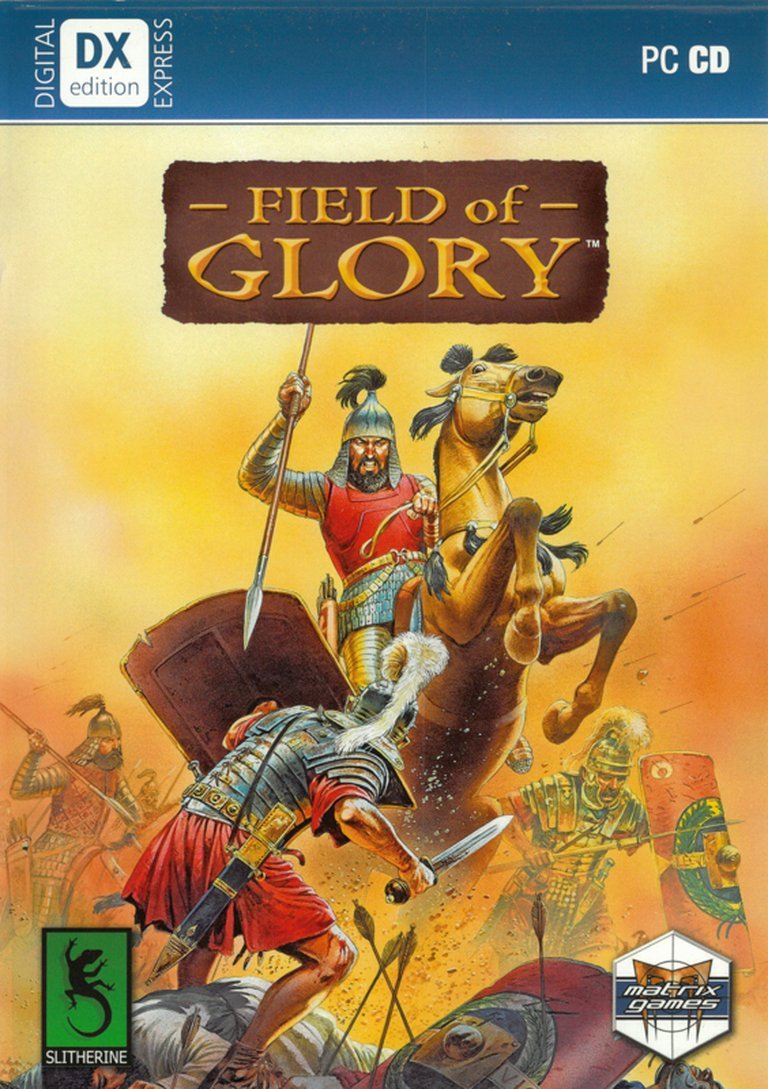
Field of Glory is a turn-based strategy game that adapts Slitherine’s tabletop wargaming system, focusing on ancient warfare. Players command nations like the Gauls, Romans, Carthaginians, or Spartacus’ slave army, each with unique tactics, leaders, and morale mechanics. The game offers both single-player and multiplayer modes (hot seat or online), along with a map and scenario editor for custom battles.
Gameplay Videos
Where to Buy Field of Glory
PC
Field of Glory Patches & Updates
Field of Glory Guides & Walkthroughs
Field of Glory Reviews & Reception
armchairgeneral.com (88/100): Overall, Field of Glory continues Slitherene’s tradition of fine-tuned, fast-playing games. FoG is easy to play and learn but more difficult to master.
mobygames.com (76/100): Field of Glory is an adaption of Slitherine’s tabletop wargaming system of the same name. In this turn-based game, warfare in ancient times is simulated.
digitallydownloaded.net (80/100): Field of Glory does a great, if no-frills job. It’s the kind of game that’s easy to pick up and play, but challenging enough for longer play sessions.
Field of Glory: A Comprehensive Retrospective
Introduction
In the pantheon of turn-based strategy games, Field of Glory (2009) stands as a monumental achievement—a digital adaptation of Slitherine Software’s acclaimed tabletop wargaming system. Released during a renaissance of historical strategy games, Field of Glory carved its niche by blending accessibility with depth, offering players a chance to command ancient armies with tactical precision. This review explores the game’s development, mechanics, reception, and enduring legacy, arguing that it remains a cornerstone of the genre, bridging the gap between tabletop wargaming and digital strategy.
Development History & Context
The Birth of a Digital Wargame
Field of Glory was developed by Hexwar and published by Slitherine Software and Matrix Games, releasing on November 30, 2009, for Windows, with a Mac port following in 2010. The game was a direct adaptation of the 2008 tabletop wargame of the same name, designed by Richard Bodley Scott, which itself was a refinement of earlier historical wargaming systems. The tabletop version was praised for its balance of simplicity and strategic depth, making it accessible to newcomers while retaining complexity for veterans.
The digital adaptation was spearheaded by a team including Keith Martin-Smith, Eric Skea, and Iain McNeil, who sought to translate the tabletop experience into a PC game without sacrificing the core mechanics. The challenge was to streamline the calculations and measurements inherent in tabletop wargaming while preserving the tactical nuance.
Technological Constraints and Design Philosophy
Released in the late 2000s, Field of Glory was constrained by the hardware limitations of its era. The game’s visuals were functional rather than flashy, with a diagonal-down perspective and hexagonal grid-based movement, a deliberate choice to emphasize clarity over aesthetic flair. The developers prioritized turn-based gameplay and asynchronous multiplayer, ensuring that the game could run on low-spec machines—a boon for strategy enthusiasts who valued substance over spectacle.
The gaming landscape in 2009 was dominated by real-time strategy (RTS) games like StarCraft II and Company of Heroes, but Field of Glory catered to a niche audience craving turn-based, historical wargaming. Its release coincided with a resurgence of interest in grand strategy games, thanks to titles like Europa Universalis III and Crusader Kings. However, Field of Glory distinguished itself by focusing on tactical battles rather than grand strategy, offering a more intimate, battle-centric experience.
Narrative & Thematic Deep Dive
Historical Authenticity and Scenario Design
Field of Glory is not a narrative-driven game in the traditional sense. Instead, it derives its storytelling from historical battles and the tactical decisions players make on the battlefield. The game includes 63 pre-designed scenarios, spanning conflicts from the Rise of Rome to the Spartacus Slave Revolt, each meticulously researched to reflect the armies, terrain, and strategies of the era.
Key playable factions include:
– Romans (Legionaries, Velites, Cavalry)
– Carthaginians (Elephants, Numidian Cavalry)
– Gauls and Germanic Tribes (Barbarian Swordsmen, Chariots)
– Greeks (Hoplites, Companion Cavalry)
– Spartacus’ Slave Army (Gladitorial Units)
Each faction has unique strengths and weaknesses, encouraging players to adapt their strategies. For example, Roman legions excel in disciplined formations and flanking maneuvers, while Gallic warriors rely on sheer ferocity and shock tactics.
Themes of Leadership and Morale
The game’s underlying themes revolve around leadership, morale, and the fog of war. Commanders play a pivotal role in battles, with their presence boosting unit morale and combat effectiveness. A well-placed leader can turn the tide of a battle, while the loss of a commander can trigger a cascade of routs.
Morale is a critical mechanic, with units becoming Disrupted or Fragmented under sustained pressure. A unit that routs can demoralize nearby allies, creating a domino effect that can decide the outcome of a battle. This system emphasizes the psychological aspect of ancient warfare, where discipline and cohesion were often as important as raw combat power.
The Absence of a Campaign Mode
One notable omission is the lack of a grand campaign mode. Unlike later entries in the series (e.g., Field of Glory: Empires), the original game focuses solely on standalone battles. While this limits long-term strategic depth, it allows for quick, replayable skirmishes—ideal for players who prefer tactical engagements over empire management.
Gameplay Mechanics & Systems
Core Gameplay Loop
Field of Glory is a turn-based, hexagonal wargame where players alternate moving and attacking units. The core loop involves:
1. Deployment: Positioning units on the battlefield before combat begins.
2. Movement: Maneuvering units to gain tactical advantages (flanking, high ground, etc.).
3. Combat: Engaging in melee or ranged attacks, with outcomes determined by unit stats, terrain, and morale.
4. Morale Management: Monitoring unit cohesion and preventing routs.
The game’s point-and-select interface is intuitive, allowing players to issue orders with minimal fuss. However, the lack of detailed combat feedback was a common criticism—players often struggled to understand why certain attacks dealt more damage than others, a vestige of the game’s tabletop roots where dice rolls were visible.
Unit Types and Combat Mechanics
Units are categorized into:
– Infantry (Legionaries, Hoplites, Barbarian Swordsmen)
– Cavalry (Heavy Cavalry, Light Cavalry, Chariots)
– Missile Units (Archers, Javelinmen, Slingers)
– Special Units (Elephants, War Wagons)
Combat is resolved through a modified dice-roll system, where factors like unit training, fatigue, terrain, and flanking bonuses influence outcomes. The game emphasizes flanking and rear attacks, which can devastate enemy formations. Ranged units are effective but vulnerable in melee, requiring careful positioning.
Multiplayer and Scenario Editor
The game’s multiplayer mode was a standout feature, allowing players to challenge opponents via hotseat, PBEM (Play-by-Email), or direct internet play. The asynchronous nature of turn-based play made it ideal for long-distance matches, a rarity in an era dominated by real-time multiplayer.
The scenario editor was another highlight, enabling players to design custom battles with unique terrain, unit compositions, and victory conditions. This tool extended the game’s longevity, fostering a community of modders and scenario designers.
AI and Difficulty
The AI opponent was competent but predictable, excelling in basic tactics like flanking and missile unit management. However, it lacked the adaptability of human opponents, making multiplayer the preferred mode for experienced players. The game offered handicap options to adjust difficulty, allowing players to tailor the challenge to their skill level.
World-Building, Art & Sound
Visual Design: Functional Over Flashy
Field of Glory’s visuals are utilitarian, prioritizing clarity over aesthetics. The hexagonal grid and top-down perspective ensure that unit positions and terrain effects are easily discernible. Unit sprites are simple but distinctive, with each faction’s troops visually differentiated by armor, weapons, and banners.
The terrain system includes 11 types (forests, hills, rivers, etc.), each affecting movement and combat. While the graphics are dated by modern standards, they serve their purpose effectively, avoiding the clutter that plagues more visually complex strategy games.
Sound Design: Minimalist but Effective
The game’s audio is understated, featuring ambient battlefield sounds (clashing weapons, marching troops, battle cries) and a subdued soundtrack that avoids intruding on the tactical experience. The lack of voice acting or elaborate sound effects reinforces the game’s focus on gameplay over immersion.
Atmosphere and Setting
Field of Glory excels in historical atmosphere, with each battle grounded in real-world conflicts. The game’s text-based descriptions of units and scenarios provide context, enhancing the sense of commanding a real army. However, the absence of cinematic cutscenes or narrative framing means the game relies on the player’s imagination to fill in the gaps.
Reception & Legacy
Critical Reception
Field of Glory received generally positive reviews, with critics praising its accessibility, depth, and multiplayer features. Key scores included:
– Armchair General: 88% – “Easy to play and learn but more difficult to master.”
– Digitally Downloaded: 80% – “A hugely entertaining game… perfect for strategy buffs.”
– Gamershall.de: 76% – “Easier to learn and more comfortable to play than competitors.”
– Eurogamer Italy: 60% – “An electronic board game… more enjoyable in multiplayer.”
Criticisms centered on the lackluster single-player AI and dated visuals, but the game’s multiplayer and scenario editor were universally lauded.
Commercial Performance and Community
While not a mainstream hit, Field of Glory cultivated a dedicated fanbase, particularly among tabletop wargamers and history enthusiasts. The game’s low system requirements and asynchronous multiplayer made it a favorite for strategy gamers seeking a quick, tactical fix.
The modding community thrived, with players creating custom scenarios, unit skins, and even total conversion mods. The game’s longevity was extended through numerous expansions, including:
– Rise of Rome (2010)
– Storm of Arrows (2010)
– Immortal Fire (2010)
– Legions Triumphant (2011)
Influence on the Genre
Field of Glory set a precedent for digital adaptations of tabletop wargames, proving that complex rule sets could be streamlined for PC without losing depth. Its success paved the way for sequels like Field of Glory II (2017) and spin-offs like Field of Glory: Empires (2019), which expanded the formula into grand strategy.
The game’s multiplayer system also influenced later titles, demonstrating the viability of asynchronous turn-based play in an era dominated by real-time competition.
Conclusion: A Timeless Tactical Masterpiece
Field of Glory (2009) is a landmark title in the turn-based strategy genre, offering a rare blend of accessibility and depth. While its visuals and single-player AI show their age, the game’s tactical richness, historical authenticity, and multiplayer prowess ensure its place in the pantheon of great wargames.
Final Verdict: 8.5/10 – A must-play for strategy enthusiasts, Field of Glory remains a definitive ancient warfare simulator, bridging the gap between tabletop and digital gaming. Its legacy endures in its sequels and the vibrant community that continues to celebrate its tactical brilliance.
For those seeking a challenging, historically grounded wargame, Field of Glory is an essential experience—one that rewards patience, strategy, and a love of ancient warfare. Draw your sword, take the field, and claim your glory.