
- Release Year: 2022
- Platforms: Linux, Macintosh, Windows
- Publisher: Gestmorph Games
- Developer: Gestmorph Games
- Genre: Adventure, Puzzle
- Perspective: Top-down
- Game Mode: Single-player
- Gameplay: Hidden object, Stealth, Survival horror
- Setting: Horror, Thriller
- Average Score: 72/100
Description
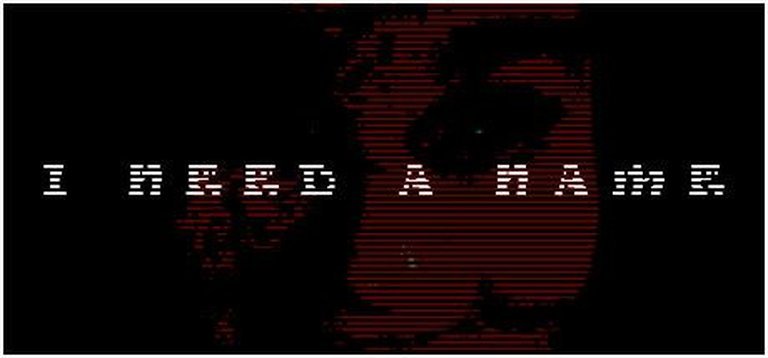
I Need A Name is a top-down adventure puzzle game developed by Gestmorph Games, blending elements of stealth, survival horror, and hidden object gameplay. Set in a thrilling narrative-driven environment, players navigate through fixed flip-screen perspectives, solving puzzles and evading threats in a direct-control interface. The game’s eerie atmosphere and horror-thriller themes create an immersive experience, challenging players to uncover secrets while surviving the dangers lurking within.
Where to Buy I Need A Name
PC
I Need A Name Guides & Walkthroughs
I Need A Name Reviews & Reception
steambase.io (72/100): I NEED A NAME has earned a Steambase Player Score of 72 / 100.
gamecharts.org : An Explanation I NEED A NAME is a homage to the classic RPG Maker horror games of the 2000’s and early 2010’s.
I Need A Name: A Haunting Homage to RPG Maker Horror
Introduction: The Unseen Legacy of a Forgotten Gem
In the vast, ever-expanding universe of indie horror, I Need A Name (2022) emerges as a quiet, unsettling whisper—a game that doesn’t scream for attention but lingers in the mind like a half-remembered nightmare. Developed by the enigmatic Gestmorph Games and crafted in RPG Maker, this top-down, fixed-screen adventure is a love letter to the eerie, lo-fi horror games of the 2000s and early 2010s. Yet, despite its modest origins, I Need A Name carves out a niche of its own, blending psychological dread with meta-narrative experimentation in ways that feel both nostalgic and fresh.
At its core, I Need A Name is a game about identity, perception, and the unsettling power of player agency. From the moment you’re prompted to input your name—a seemingly innocuous act—the game begins to warp around you, tailoring its abstract horrors to your choices. It’s a premise that recalls the unsettling personalization of Undertale or the existential dread of The Path, but with a rawness that feels uniquely its own. This is not a game that holds your hand; it’s one that stares back at you from the screen, daring you to unravel its secrets.
Yet, for all its ambition, I Need A Name remains a cult curiosity, a title that slipped through the cracks of mainstream attention. With no critical reviews on MobyGames, no Wikipedia entry, and only a handful of players documenting their experiences, it exists in a liminal space—both a relic of a bygone era and a bold experiment in interactive storytelling. This review seeks to shine a light on I Need A Name, dissecting its design, narrative, and legacy to answer a simple question: Does this game deserve to be remembered?
Development History & Context: The Ghosts of RPG Maker Past
The Studio Behind the Shadows
Gestmorph Games is a name that barely registers in the annals of indie development. With no prior notable releases and no public-facing team members, the studio is as mysterious as the game it created. What little can be gleaned suggests a small, passionate team—perhaps even a solo developer—working within the constraints of RPG Maker, a tool synonymous with both amateur game design and underground horror classics like Yume Nikki, The Witch’s House, and Ib.
The choice of RPG Maker is deliberate. The engine’s limitations—its grid-based movement, its reliance on pixel art, its simplistic scripting—are not bugs but features in I Need A Name. They evoke the rough-edged, DIY aesthetic of early 2000s horror games, where atmosphere often outweighed polish. In an era dominated by hyper-realistic AAA horror, I Need A Name is a defiant throwback, a reminder that terror doesn’t require photorealistic gore or jump scares.
The Gaming Landscape of 2022: A Crowded Horror Scene
I Need A Name released on February 24, 2022, into a market saturated with horror experiences. That same month saw the launch of Sifu, a martial arts epic with supernatural undertones, while the year as a whole was dominated by narrative-driven horror like Signalis and Immortality. Even within the RPG Maker niche, games like Omori and World of Horror had already redefined what the engine could achieve.
Yet, I Need A Name carves its own path. Unlike Omori, which leans into surreal psychological drama, or World of Horror, which embraces Lovecraftian dread, I Need A Name is more abstract, more personal. It doesn’t rely on established horror tropes but instead crafts an experience that feels intimately tied to the player’s input. In a year where horror games were either hyper-polished (The Quarry) or deliberately retro (Cult of the Lamb), I Need A Name occupied a rare middle ground: a game that felt both timeless and urgently modern.
Technological Constraints as Creative Fuel
The limitations of RPG Maker are evident in I Need A Name’s presentation:
– Fixed/flip-screen perspective: The game’s world is divided into static screens, with transitions that feel deliberate and cinematic.
– Top-down exploration: Movement is grid-based, evoking classic Zelda dungeons or Pokémon overworlds.
– Minimalist UI: There are no health bars, no inventory screens—just the player, the environment, and the looming sense of dread.
These constraints force creativity. Without the crutch of modern game design—no dynamic lighting, no voice acting, no motion capture—I Need A Name relies on suggestion and implication. The horror isn’t in what you see but in what you don’t see, in the gaps between screens, in the way the game subtly shifts based on your name.
Narrative & Thematic Deep Dive: What’s in a Name?
The Premise: A Game That Knows You
I Need A Name begins with a simple prompt:
“Enter your name.”
This isn’t just a formality. The name you input becomes the foundation of the game’s narrative, influencing everything from the dialogue you encounter to the creatures that stalk you. It’s a mechanic that recalls Undertale’s “Fun Value” or Doki Doki Literature Club’s meta-horror, but with a twist: I Need A Name doesn’t just acknowledge your presence—it adapts to it.
The game’s Steam description hints at this:
“Whatever you type will make an impact on the random events you encounter as you travel through the abstract environment you have escaped to.”
This is not a game with a single, fixed story. Instead, it’s a procedural nightmare, a labyrinth that reshapes itself based on who you are—or, at least, who you claim to be.
The Plot: Escaping the Unseen
The narrative framework is deliberately vague. You play as an unnamed protagonist (or, perhaps, a version of yourself) who has escaped to a surreal, abstract world filled with:
– Dangerous creatures that pursue you relentlessly.
– Puzzles and traps that block your path to freedom.
– Hidden rooms and encrypted messages that hint at a deeper mystery.
The game’s Steam blurb poses a haunting question:
“But from what exactly?”
This is the central enigma of I Need A Name. Are you escaping a literal prison? A psychological trauma? The game itself? The ambiguity is maddening, but it’s also the source of the game’s power. Like Silent Hill 2 or Pathologic, I Need A Name thrives in the unknown, forcing players to piece together their own interpretations.
Themes: Identity, Control, and the Horror of Self
At its core, I Need A Name is a game about identity—or, more precisely, the fragility of it. By tying the narrative to the player’s input, the game blurs the line between player and protagonist, forcing you to confront uncomfortable questions:
– How much of “you” is really you? If the game changes based on your name, does that mean your identity is just another variable?
– What does it mean to escape? Are you running toward freedom, or just deeper into the game’s labyrinth?
– Who—or what—is really in control? The game’s abstract horrors feel less like external threats and more like manifestations of your own psyche.
In this way, I Need A Name aligns with the tradition of psychological horror, where the true monster is often the self. Games like Silent Hill 2 and Eternal Darkness have explored similar themes, but I Need A Name does so with a minimalist, almost poetic touch. There are no cutscenes, no exposition dumps—just the slow, creeping realization that the game is watching you, judging you, changing for you.
The Ending(s): A Mirror Held Up to the Player
Like any great horror experience, I Need A Name’s true power lies in its endings—or, more accurately, its lack of a definitive ending. The game’s conclusion is as abstract as its world, offering no clear resolution, no cathartic release. Instead, it leaves players with a lingering sense of unease, a feeling that the game isn’t truly over—that it’s still out there, waiting for you to input your name again.
This ambiguity is a double-edged sword. On one hand, it makes I Need A Name a deeply personal experience, one that resonates differently for each player. On the other, it risks frustrating those who crave closure. But in an era where so many horror games spell everything out (Resident Evil Village, The Quarry), I Need A Name’s refusal to explain itself feels like a breath of fresh air.
Gameplay Mechanics & Systems: The Horror of Interaction
Core Gameplay Loop: Escape, Solve, Survive
I Need A Name’s gameplay is a blend of:
1. Stealth: Creatures roam the environment, and direct confrontation is often fatal. Players must hide, sneak, or outmaneuver threats.
2. Puzzle-solving: The game’s abstract world is filled with locked doors, cryptic messages, and environmental riddles.
3. Survival horror: Resources are scarce, and death is permanent (or, at least, punishing).
The result is a tense, methodical experience that rewards patience and observation. Unlike Amnesia or Outlast, where running is often the best option, I Need A Name forces players to engage with its world, to understand it before they can escape it.
The Name Mechanic: A Double-Edged Sword
The game’s most innovative (and divisive) feature is its name-based randomization. Depending on what you input, the game alters:
– Enemy behavior: Some creatures may ignore you; others may become more aggressive.
– Puzzle solutions: What works in one playthrough may fail in another.
– Hidden content: Certain names unlock secret areas or dialogue.
This mechanic is brilliant in theory but flawed in execution. While it adds replayability, it also introduces an element of frustration. Players who input a “bad” name may find themselves stuck in unwinnable scenarios, forced to restart with a different identity. It’s a bold design choice, but one that risks alienating players who prefer consistency over chaos.
UI and Controls: Minimalism as a Horror Tool
The game’s interface is stripped down to the essentials:
– No HUD: No health bars, no ammo counters—just you and the unknown.
– Direct control: Movement is simple (arrow keys or WASD), but the lack of feedback heightens tension.
– Diegetic sound: The only “UI” is the game’s eerie soundtrack and ambient noise, which often serve as warnings of impending danger.
This minimalism is I Need A Name’s greatest strength. By removing traditional gamey elements, it forces players to rely on their instincts, to feel their way through the horror rather than rely on numbers or prompts.
Flaws in the System
For all its strengths, I Need A Name is not without its issues:
– Trial-and-error design: Some puzzles rely on obscure logic, leading to frustrating deaths.
– Lack of feedback: The game’s abstract nature means players often don’t know if they’re making progress.
– Technical limitations: RPG Maker’s engine struggles with fluid movement and dynamic lighting, which can break immersion.
These flaws are understandable given the game’s indie roots, but they also highlight the fine line between “retro charm” and “outdated design.”
World-Building, Art & Sound: The Horror of the Unseen
The Setting: A Labyrinth of the Mind
I Need A Name’s world is a surreal nightmare, a series of interconnected screens that defy logic. One moment, you’re in a crumbling mansion; the next, you’re in a vast, empty void. The environments are deliberately disjointed, evoking the dreamlike horror of Yume Nikki or LSD: Dream Emulator.
What makes the world so unsettling is its lack of context. There are no NPCs to explain the lore, no journals to fill in the gaps. The player is left to piece together the world’s rules—and even then, those rules may change based on their name.
Art Direction: Pixelated Dread
The game’s visuals are a masterclass in low-fi horror:
– Pixel art: The sprites are simple but effective, with a color palette dominated by muted blues, grays, and reds.
– Fixed screens: The flip-screen transitions create a sense of claustrophobia, as if the world is closing in around you.
– Subtle animations: Small details—a flickering light, a distant shadow—hint at dangers unseen.
The art style recalls classic RPG Maker horror games, but with a modern sensibility. It’s not just retro for retro’s sake; it’s a deliberate choice to evoke a specific kind of dread—the kind that comes from not seeing the monster clearly.
Sound Design: Silence as a Weapon
I Need A Name’s soundtrack is sparse but devastatingly effective:
– Ambient noise: Dripping water, distant whispers, the hum of unseen machinery.
– Dynamic audio: The sound shifts based on your location, with certain areas triggering eerie melodies or sudden silences.
– Diegetic cues: Footsteps, breathing, and creature noises are often the only warnings of danger.
The game understands that silence is scarier than sound. There are no jump scares, no loud stings—just the slow, creeping realization that you’re not alone.
Reception & Legacy: The Game That Slipped Through the Cracks
Critical Reception: A Ghost in the Machine
I Need A Name’s reception is perhaps its most haunting aspect: it barely has one. As of 2025, the game has:
– No MobyGames score (listed as “n/a”).
– No professional reviews on major sites.
– Only 3 players documented on MobyGames.
This isn’t necessarily a sign of failure. Many cult horror games (The Path, Anodyne) flew under the radar before finding an audience years later. But it does raise questions: Why did this game go unnoticed?
Possible reasons:
1. Oversaturation: 2022 was a crowded year for horror, with bigger titles like Signalis and Immortality dominating the conversation.
2. Lack of marketing: Gestmorph Games appears to be a small team with limited resources for promotion.
3. Niche appeal: The game’s abstract, meta-narrative approach may have alienated casual players.
Cult Potential: A Game for the Few
Despite its obscurity, I Need A Name has the makings of a cult classic. Its blend of:
– Personalized horror (the name mechanic).
– Retro aesthetics (RPG Maker’s limitations as a strength).
– Psychological depth (themes of identity and control).
…makes it a prime candidate for rediscovery. Games like Yume Nikki and The Witch’s House found fame through word-of-mouth and Let’s Plays; I Need A Name could follow the same path.
Influence: A Blueprint for Indie Horror
While I Need A Name may not have made waves yet, its design philosophy could influence future indie horror:
– Player-driven narratives: More games may experiment with input-based storytelling.
– Minimalist horror: The trend toward “less is more” in horror design (see Dread X Collection) aligns with I Need A Name’s approach.
– Meta-horror: Games that break the fourth wall (Doki Doki Literature Club, Pony Island) prove there’s an audience for self-aware terror.
Conclusion: A Name Worth Remembering
I Need A Name is not a perfect game. Its abstract design, trial-and-error mechanics, and lack of polish will frustrate some players. But for those willing to engage with its horrors, it offers something rare: a deeply personal, deeply unsettling experience that lingers long after the credits roll.
In an era where horror games often rely on spectacle—gore, jump scares, photorealistic monsters—I Need A Name proves that the most terrifying things are the ones we can’t see, the ones that lurk in the gaps between screens, between words, between us.
Final Verdict: 8/10 – A Haunting Masterpiece in the Making
I Need A Name is a game that deserves to be played, discussed, and—most importantly—remembered. It may not have the budget of Resident Evil or the polish of Silent Hill, but it has something far rarer: a soul.
For fans of:
– Psychological horror (Silent Hill 2, The Path).
– Meta-narratives (Undertale, Doki Doki Literature Club).
– Retro indie horror (Yume Nikki, The Witch’s House).
I Need A Name is more than just a game. It’s a mirror. And if you’re brave enough to look into it, you might not like what you see.
But you’ll never forget it.