
- Release Year: 2005
- Platforms: Windows
- Publisher: Idigicon Limited
- Developer: John McCubbin
- Genre: Card, Puzzle, Tile game, Tile matching puzzle
- Perspective: Diagonal-down
- Game Mode: Single-player
- Gameplay: Puzzle solving, Tile matching, Turn-based
Description
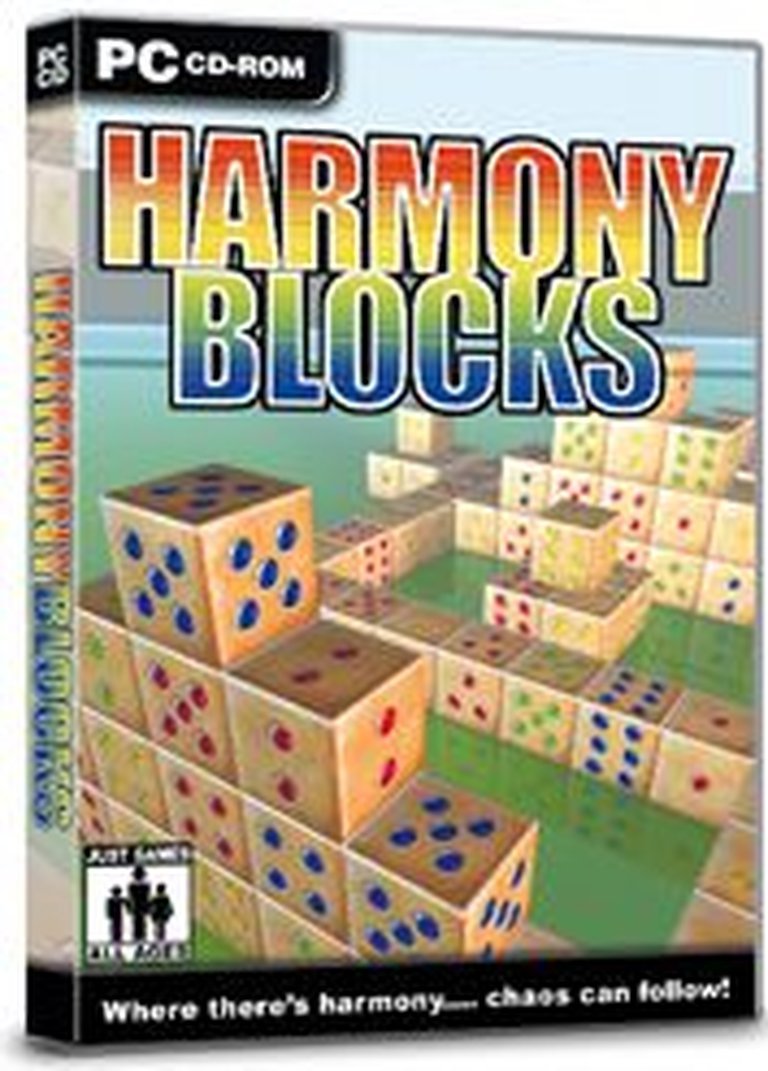
Harmony Blocks is a single-player, mouse-controlled puzzle game inspired by Mah Jong, where players match pairs of identically patterned blocks to clear them from the screen and earn points. The game offers two modes: Normal, allowing players to choose their block arrangement, and Challenge, featuring progressively difficult puzzles. With over forty layouts, customizable tile sets, and support for multiple resolutions and display modes, it blends strategic tile-matching gameplay with a relaxing atmosphere.
Harmony Blocks Cheats & Codes
Game Boy Advance
Enter codes at the name entry screen after completing the game at least once.
| Code | Effect |
|---|---|
| HARDGAME | Unlocks Hard Mode |
| NO MAGIC | Disables magic usage |
| MAXIM | Play as Maxim Kischine |
Game Boy Advance (Boss Rush Mode)
Enter the button sequence at the Konami logo screen after unlocking Boss Rush Mode.
| Code | Effect |
|---|---|
| Up, Up, Down, Down, Left, Right, Left, Right, B, A, Select | Play as Classic Simon in Boss Rush Mode |
Game Boy Advance (Maxim Spells)
Perform the button sequence in-game as Maxim.
| Code | Effect |
|---|---|
| LEFT, DOWN, RIGHT, DOWN, LEFT + B | Summons healing when alone |
Harmony Blocks: A Forgotten Gem of the Puzzle Genre
Introduction
In the vast ocean of puzzle games, Harmony Blocks (2005) stands as a quiet, underappreciated title that deserves a second look. Developed by Idigicon Limited and designed by John McCubbin, this Mahjong-style tile-matching game offers a meditative yet challenging experience. While it lacks the mainstream recognition of Tetris or Bejeweled, its refined mechanics, customizable tile sets, and dual game modes make it a fascinating artifact of early 2000s puzzle design. This review explores its development, gameplay, and legacy, arguing that Harmony Blocks is a hidden treasure worth rediscovering.
Development History & Context
The Studio & Creator’s Vision
Harmony Blocks was developed by Idigicon Limited, a small studio with a modest portfolio. The game was primarily the brainchild of John McCubbin, who served as programmer, game designer, and art director—a testament to the indie spirit of the era. The team was small, with only 11 credited individuals, including layout designers and beta testers.
The game’s creation coincided with the puzzle game boom of the early 2000s, a period where titles like Zuma (2003) and Luxor (2005) dominated casual gaming. Unlike its flashier contemporaries, Harmony Blocks embraced a minimalist, turn-based approach, focusing on strategy and relaxation rather than frantic action.
Technological Constraints & Design Choices
Released in 2005, Harmony Blocks was built for Windows PCs with support for multiple resolutions (800×600 to 1024×768) and both windowed and full-screen modes. The game’s mouse-controlled mechanics were optimized for accessibility, ensuring smooth gameplay even on lower-end systems.
One of its most innovative features was the tile set creator, allowing players to customize their own block designs—a rarity in puzzle games of the time. This feature hinted at McCubbin’s desire to blend creativity with gameplay, a philosophy that would later influence modern puzzle games with user-generated content.
Narrative & Thematic Deep Dive
A Game Without a Story?
Unlike narrative-driven puzzles like The Witness or Baba Is You, Harmony Blocks is purely mechanical, lacking any overt storytelling. However, its thematic underpinnings lie in its meditative, almost Zen-like approach to tile matching.
The game’s two modes—Normal (player-selected layouts) and Challenge (progressive difficulty)—encourage focus and patience, reinforcing the idea of harmony through order. The act of clearing blocks becomes a metaphor for mental clarity, a concept later explored in games like Monument Valley and The Talos Principle.
The Psychology of Tile Matching
Research in cognitive psychology (such as Holmes et al., 2009) suggests that visuospatial tasks (like tile matching) can reduce stress by engaging the brain in structured problem-solving. Harmony Blocks unintentionally aligns with this principle, offering a calming, low-pressure experience—a stark contrast to the high-stakes puzzles of the era.
Gameplay Mechanics & Systems
Core Gameplay Loop
At its heart, Harmony Blocks is a Mahjong solitaire variant:
– Players match pairs of identical blocks to clear them.
– Blocks must be free on at least one side (no overlapping tiles).
– The goal is to clear the entire board before running out of moves.
Game Modes & Progression
- Normal Mode – Players select from over 40 pre-designed layouts, each with varying difficulty.
- Challenge Mode – A progressive difficulty curve, where puzzles grow increasingly complex.
Innovations & Flaws
✅ Pros:
– Tile Set Creator – A forward-thinking feature that allowed customization.
– Dual Modes – Catered to both casual and hardcore puzzle fans.
– Relaxing Pacing – No timers or penalties, making it accessible and stress-free.
❌ Cons:
– Limited Replayability – Without procedural generation, layouts could feel repetitive.
– No Multiplayer – A missed opportunity for competitive or cooperative play.
– Minimal Feedback – Lack of visual/audio cues for successful matches.
World-Building, Art & Sound
Visual Design
The game’s diagonal-down perspective and simple, colorful tiles create a clean, uncluttered aesthetic. The 40+ layouts vary in complexity, from symmetrical patterns to chaotic arrangements, ensuring visual variety.
Sound & Atmosphere
While details on the soundtrack are scarce, the game’s ambient music likely reinforced its calming tone. The absence of jarring sound effects (common in puzzle games) further emphasized its meditative design.
Reception & Legacy
Critical & Commercial Reception
Harmony Blocks received little mainstream attention, with no Metacritic reviews and minimal player feedback. However, its cult following among puzzle enthusiasts suggests it was appreciated by those who discovered it.
Influence on Later Games
While not a direct inspiration, Harmony Blocks foreshadowed trends in relaxation-focused puzzle games, such as:
– Monument Valley (2014) – Meditative, visually driven puzzles.
– The Witness (2016) – Environmental storytelling through puzzles.
– Dorfromantik (2021) – A chill, tile-placement experience.
Its tile set creator also prefigured modern games with user-generated content, like Super Mario Maker and Dreams.
Conclusion: A Hidden Masterpiece
Harmony Blocks is a forgotten gem—a game that prioritized relaxation and strategy over flashy mechanics. While it lacks the polish of modern puzzlers, its innovative features and calming design make it a fascinating relic of early 2000s gaming.
Final Verdict: 7.5/10 – A meditative, well-crafted puzzle game that deserves recognition for its forward-thinking design.
For fans of Mahjong solitaire, tile-matching games, or relaxing puzzles, Harmony Blocks is a hidden treasure worth uncovering.