
- Release Year: 2018
- Platforms: Windows
- Publisher: Tantum Games
- Developer: Tantum Games
- Genre: Action
- Perspective: Diagonal-down
- Game Mode: Single-player
- Gameplay: Shooter
- Setting: Fantasy
- Average Score: 61/100
Description
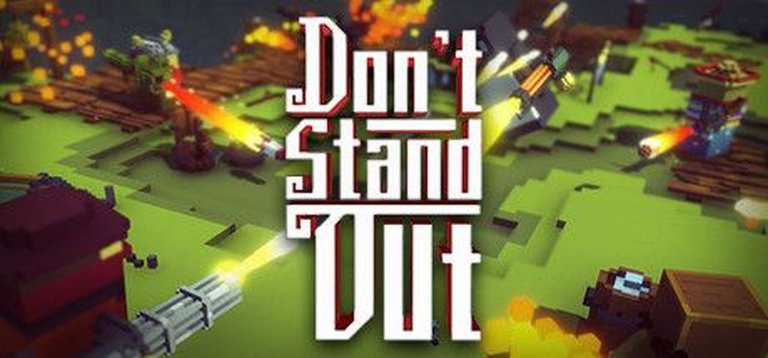
Don’t Stand Out is a fast-paced, top-down Battle Royale shooter that condenses the genre’s core mechanics into short, action-packed matches. Set in a vibrant voxel world, the game emphasizes quick combat over looting, offering players the choice between strategic ambushes or chaotic, run-and-gun gameplay. With a focus on fun and accessibility, it features colorful graphics, extensive character customization, and rapid-fire matches perfect for both quick breaks and longer gaming sessions.
Don’t Stand Out Guides & Walkthroughs
Don’t Stand Out Reviews & Reception
steambase.io (61/100): A mixed reception with a player score of 61/100.
Don’t Stand Out: A Vibrant, Fleeting Experiment in Battle Royale Minimalism
Introduction: The Battle Royale That Dared to Be Different
In the annals of gaming history, few genres have exploded with the ferocity of the battle royale. By 2018, the market was saturated with titans like Fortnite and PUBG, each vying for dominance with increasingly complex mechanics, sprawling maps, and layered progression systems. Into this fray stepped Don’t Stand Out, a game that dared to ask: What if we stripped the battle royale down to its purest, most chaotic essence? Developed by the obscure but ambitious Tantum Games, Don’t Stand Out was a bold, if flawed, experiment—a game that prioritized frenetic fun over loot simulations, vibrant voxel aesthetics over photorealism, and short, sharp bursts of action over marathon sessions.
This review seeks to dissect Don’t Stand Out not just as a game, but as a cultural artifact—a fleeting moment of defiance in an industry increasingly obsessed with scale and monetization. Through an exhaustive analysis of its development, design, reception, and legacy, we will explore how a small indie title attempted to redefine a genre, only to fade into obscurity. Was it a misunderstood gem, a noble failure, or simply a victim of timing? Let’s dive in.
Development History & Context: The Birth of a Rebel
The Studio: Tantum Games and the Indie Dream
Tantum Games, the one-studio force behind Don’t Stand Out, remains an enigma in the gaming landscape. Little is known about the team’s background, but their ambition was clear: to carve out a niche in the battle royale boom by doing the opposite of what everyone else was doing. Unlike AAA studios with hundreds of employees and lavish budgets, Tantum operated with the agility (and constraints) of a small indie team. Their weapon of choice? The Unity engine, a tool that democratized game development but also imposed technical limitations.
The studio’s ethos seemed to revolve around accessibility and immediacy. Don’t Stand Out was designed to be picked up and played in minutes, a stark contrast to the 30-minute+ commitments of its competitors. This philosophy extended to their business model: the game launched in Steam Early Access on May 31, 2018, priced modestly and marketed as a “fun-first” alternative to the genre’s heavyweights.
The Battle Royale Landscape in 2018: A Genre at Its Peak
To understand Don’t Stand Out, one must first grasp the battle royale zeitgeist of 2018. The genre, which had been simmering since H1Z1: King of the Kill and The Culling, had reached a boiling point with the meteoric rise of PlayerUnknown’s Battlegrounds (PUBG) in 2017 and Fortnite Battle Royale’s cultural takeover in late 2017. By mid-2018, the market was flooded with imitators, each attempting to iterate on the formula:
- PUBG: The tactical, realistic progenitor, with a focus on survival and tension.
- Fortnite: The cartoony, building-centric juggernaut that redefined accessibility and monetization.
- *Apex Legends (2019): The hero-shooter hybrid that would soon enter the fray.
- *Ring of Elysium, Cuisine Royale, Fear the Wolves: The also-rans, each offering minor twists.
Amid this chaos, Don’t Stand Out emerged with a radical proposition: What if the battle royale wasn’t about survival, but about pure, unadulterated combat? No looting for 10 minutes, no sprawling maps, no complex crafting—just guns, grenades, and a whole lot of jumping.
Technological Constraints and Design Philosophy
The game’s development was shaped by both creative vision and technical reality. Built in Unity, Don’t Stand Out leveraged the engine’s strengths (rapid prototyping, cross-platform potential) while grappling with its weaknesses (performance limitations, netcode challenges). The choice of voxel graphics was likely a pragmatic one—voxels allowed for destructive environments and a distinctive art style without the polygon counts of AAA titles.
Key design pillars included:
1. Speed: Matches lasted 5-10 minutes, not 30.
2. Simplicity: No inventory management; players could carry only one of each item type.
3. Mobility: A jump mechanic inspired by Quake, allowing for vertical, bunny-hopping combat.
4. Customization: A focus on cosmetic variety (costumes, colors) over gameplay-affecting upgrades.
The game’s Early Access status was both a blessing and a curse. It allowed Tantum to iterate based on player feedback, but also meant launching with performance issues, netcode lag, and a small player base—problems that would plague the game’s lifespan.
Narrative & Thematic Deep Dive: The Anti-Story Story
The Plot (or Lack Thereof)
Don’t Stand Out is, at its core, a narrative vacuum—and that’s by design. There is no lore, no characters, no campaign. You are a faceless voxel warrior dropped into an arena with one goal: be the last one standing. The game’s title itself is a meta-commentary: in a genre where standing out (via skins, emotes, or skill) is the norm, Don’t Stand Out ironically urges you to blend in—only to immediately contradict itself with its flamboyant customization options.
This absence of narrative is not a flaw, but a philosophical statement. The game rejects the increasingly cinematic aspirations of AAA battle royales (e.g., Apex Legends’ character-driven storytelling) in favor of pure gameplay. It’s a return to the arcade roots of shooters, where the only story is the one you create through emergent chaos.
Themes: Minimalism, Chaos, and the Illusion of Choice
While Don’t Stand Out lacks traditional storytelling, it is rich in thematic subtext:
1. Minimalism as Rebellion: In an era of battle passes and microtransactions, the game’s focus on short, free-form matches feels like a rejection of the “live-service grind.”
2. Controlled Chaos: The jump mechanics and fast-paced combat create a dance of destruction, where victory hinges on reflexes and adaptability, not RNG loot drops.
3. The Illusion of Customization: The game offers tons of costumes, yet none affect gameplay. This highlights the battle royale paradox: self-expression is encouraged, but ultimately meaningless in the face of the game’s core mechanics.
Dialogue and Tone: Playful Anarchy
The game’s tone is best described as playful anarchy. The Steam description’s phrase—“Or just don’t give a monkey’s, run guns blazing and wreak havoc!”—sets the stage. There are no voice lines, no NPCs, no cutscenes. The “dialogue” happens through gameplay itself: a well-timed grenade toss, a last-second backflip dodge, a desperate sprint for a health kit.
This silent chaos is the game’s greatest narrative strength. It doesn’t tell you how to feel; it lets you feel the adrenaline of a close call or the frustration of a laggy death.
Gameplay Mechanics & Systems: The Art of the Backflip
Core Gameplay Loop: Fight, Die, Repeat
Don’t Stand Out distills the battle royale loop to its essence:
1. Spawn: Drop into a small, voxel-based arena (no parachutes, no long descents).
2. Loot: Grab a weapon, armor, or health kit—no complex inventory.
3. Fight: Engage in fast-paced, top-down combat with jumping, shooting, and grenade-throwing.
4. Survive: Last player (or team) standing wins.
The match length is the game’s defining feature. While PUBG matches could drag on, Don’t Stand Out ensured action within seconds. This made it ideal for quick sessions, but also led to repetition fatigue—a problem exacerbated by the small player base.
Combat: The Bunny-Hop Battle Royale
The game’s combat is a hybrid of Quake and Hotline Miami:
– Movement: Jumping is essential. Players bunny-hop like rabbits, making fights a vertical, unpredictable dance.
– Weapons: Standard fare (machine guns, shotguns, snipers), but no attachments or upgrades.
– Grenades: A right-click throw mechanic allows for precise tosses—a rare touch of depth.
– Health & Armor: Simple pickups, no regenerating health.
The lack of depth is both a strength and a weakness. On one hand, it’s easy to learn; on the other, it lacks long-term engagement.
Progression and Customization: Style Over Substance
Don’t Stand Out offers no traditional progression. There are:
– No levels.
– No unlockable weapons.
– No battle pass.
Instead, the game focuses on cosmetic customization:
– Costumes: A plethora of outfits, from silly to stylish.
– Colors: Vibrant palettes to make your voxel warrior pop.
This was a bold choice in 2018, when battle passes were becoming the norm. It reinforced the game’s anti-grind philosophy, but also removed a key retention tool.
UI and Controls: Functional but Flawed
The UI is minimalist, bordering on too sparse. The HUD displays only essentials (health, ammo, grenades), but lacks feedback for hits or kills. The controls are non-rebindable, a baffling oversight that frustrated players.
The netcode was the game’s Achilles’ heel. Lag and desync issues plagued matches, turning what should have been precise gunfights into clunky messes.
World-Building, Art & Sound: A Voxel Party
Setting and Atmosphere: The Anti-Battlefield
Don’t Stand Out rejects the gritty, realistic aesthetics of PUBG or the cartoonish but detailed worlds of Fortnite. Instead, it embraces:
– Voxel graphics: Blocky, destructible environments that feel like a cross between Minecraft and Crossy Road.
– Bright, saturated colors: No “gray+brown” here—every map is a riot of hues.
– Small, arena-like maps: Designed for constant engagement, not exploration.
The atmosphere is one of controlled chaos. The maps are playgrounds, not battlefields—places where physics-based shenanigans (e.g., blowing up cover) are encouraged.
Sound Design: The Silent Killer
The game’s sound design is functional but unremarkable:
– Gunfire lacks punch.
– Explosions feel weak.
– Music is forgettable.
The absence of audio feedback for key actions (e.g., reloading, picking up items) makes the game feel less responsive than it should.
Visual Identity: Standing Out by Not Standing Out
The voxel art style is the game’s strongest asset. It’s:
– Distinctive: Immediately recognizable in a sea of battle royales.
– Flexible: Allows for destruction without complex physics.
– Charming: The blocky characters and environments have a toy-like appeal.
However, the lack of variety in maps and environments led to visual fatigue—a problem compounded by the small player base.
Reception & Legacy: The Rise and Fall of a Rebel
Critical Reception: Mixed Signals
Don’t Stand Out received little critical attention, but the few reviews that existed were mixed:
– Praised for: Its speed, simplicity, and visual style.
– Criticized for: Lag, repetition, and lack of depth.
Steam reviews (61/100, “Mixed”) reflect this divide:
– Positive reviews highlight the fun, arcade-like combat.
– Negative reviews cite performance issues and empty servers.
Commercial Performance: A Niche Within a Niche
The game struggled commercially due to:
1. Small player base: Early Access meant few concurrent players, making matchmaking difficult.
2. No marketing: Tantum Games lacked the resources to compete with AAA battle royales.
3. Timing: Released in 2018, the same year Fortnite and PUBG dominated headlines.
By 2020, the game was effectively abandoned. Servers went offline, updates ceased, and it was pulled from Steam.
Legacy: The Battle Royale That Could Have Been
Don’t Stand Out’s legacy is one of what-ifs:
– What if the netcode was better?
– What if it had a single-player/co-op mode?
– What if it launched in 2017, before battle royale fatigue set in?
It remains a cult curiosity—a game that dared to simplify in an era of complexity. Its influence can be seen in later arcade-style battle royales like Fall Guys (which also prioritized fun over realism) and Spellbreak (which embraced unique mechanics).
Conclusion: A Noble Experiment, Doomed by Circumstance
Don’t Stand Out was a flawed but fascinating experiment—a game that understood the soul of the battle royale but failed to execute on its vision. Its speed, simplicity, and style were revolutionary in theory, but lag, repetition, and obscurity doomed it in practice.
Final Verdict: 6.5/10 – A Fun, Fleeting Spark
Pros:
✅ Blazing-fast matches perfect for quick sessions.
✅ Vibrant, distinctive voxel art style.
✅ No looting, no grinding—just pure combat.
✅ Jump mechanics add a unique tactical layer.
Cons:
❌ Crippling netcode and performance issues.
❌ Repetitive gameplay with little depth.
❌ Tiny player base made matchmaking difficult.
❌ Lack of post-launch support.
Don’t Stand Out is not a lost classic, but it is a valuable artifact—a reminder that sometimes, the most interesting games are the ones that dare to be different, even if they don’t succeed. In a genre defined by scale and spectacle, Don’t Stand Out was a small, chaotic rebellion—one that, ironically, stood out precisely because it tried not to.
For historians and curious gamers, it’s worth a look. For everyone else, it’s a footnote in the battle royale revolution—a game that could have been great, if only the stars had aligned.
Final Thought: Don’t Stand Out didn’t stand out enough to survive, but in its brief, colorful existence, it proved that sometimes, the most radical ideas are the simplest ones.