
- Release Year: 2022
- Platforms: Windows
- Publisher: HotFoodGames
- Developer: HotFoodGames
- Genre: Puzzle
- Perspective: Diagonal-down
- Game Mode: Single-player
- Gameplay: Hidden object
- Average Score: 73/100
Description
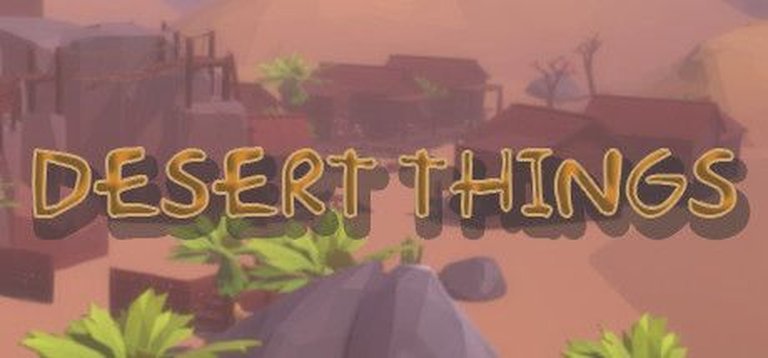
Desert Things is a puzzle game developed by HotFoodGames, released on June 15, 2022, for Windows. Set in a desert-themed environment, the game challenges players with hidden object gameplay from a diagonal-down perspective. Players navigate through intricate puzzles, searching for and interacting with objects to progress, all while immersed in a visually engaging and atmospheric setting. The game is part of a series that includes similar titles like Mysterious Things and Pirates Things, offering a unique blend of exploration and problem-solving.
Desert Things Guides & Walkthroughs
Desert Things Reviews & Reception
steambase.io (73/100): A Mostly Positive rating with a Player Score of 73 / 100.
Desert Things: A Hidden Gem in the Puzzle Genre
Introduction
In the vast expanse of indie puzzle games, Desert Things (2022) emerges as a quiet yet compelling entry—a 3D hidden-object adventure that blends relaxation with mild challenge. Developed by HotFoodGames, this title carves a niche for itself by offering a serene, time-bound scavenger hunt across a meticulously crafted desert landscape. While it may not redefine the genre, its charm lies in its simplicity, soothing aesthetics, and the subtle thrill of discovery. This review dissects Desert Things in its entirety, exploring its design, mechanics, and place within the broader puzzle-game ecosystem.
Development History & Context
The Studio Behind the Sands
HotFoodGames, the developer and publisher of Desert Things, is a relatively obscure studio with a portfolio of similar “Things” titles (Winter Things, Mysterious Things, City Things). These games share a common DNA: isometric hidden-object puzzles with a relaxed pace and minimalist storytelling. Desert Things is part of a larger series that began with Little Things (2009), a mobile and PC hit that popularized the “find-and-click” formula.
Technological Constraints & Design Philosophy
Built in Unity, Desert Things leverages the engine’s accessibility to create a visually pleasant but technically undemanding experience. The game’s scope is intentionally narrow—no complex physics, AI, or open-world systems—allowing the developers to focus on atmosphere and object placement. The diagonal-down perspective (a staple of the genre) ensures clarity while maintaining a sense of depth.
The Gaming Landscape in 2022
Released on June 15, 2022, Desert Things entered a market dominated by high-budget spectacle (Elden Ring, God of War Ragnarök) and indie darlings (Stray, Cult of the Lamb). Hidden-object games, once a mainstay of casual gaming, had largely migrated to mobile platforms. Desert Things’s PC release was a deliberate throwback, catering to players seeking low-stakes, meditative gameplay—a counterpoint to the adrenaline-heavy titles of the year.
Narrative & Thematic Deep Dive
Plot: Minimalism as a Virtue
Desert Things eschews traditional storytelling. There is no protagonist, no dialogue, and no overarching conflict. Instead, the game presents a wordless premise:
“Find hidden items in a desert within a time limit.”
This absence of narrative is not a flaw but a design choice. The game’s appeal lies in its environmental storytelling—the desert itself becomes the character, with its dunes, ruins, and scattered artifacts hinting at a forgotten civilization. The player’s role is that of an archaeologist of the mundane, piecing together the purpose of everyday objects left behind.
Themes: Solitude, Discovery, and the Joy of Small Victories
-
Solitude & Tranquility
- The desert setting evokes isolation, but the game’s relaxing soundtrack (soft ambient tunes with occasional wind chimes) transforms loneliness into peacefulness.
- Unlike survival games where deserts are hostile (Mad Max, Death Stranding), Desert Things treats the environment as a playground of curiosity.
-
The Psychology of Hidden-Object Games
- The genre taps into the human love of pattern recognition—a cognitive reward system where spotting a hidden item releases dopamine.
- The time limit adds mild pressure, but the game’s forgiving nature (no penalties for failure) ensures stress remains minimal.
-
Nostalgia & Childhood Wonder
- The act of searching for hidden objects mirrors childhood games like “I Spy” or Easter egg hunts.
- The isometric perspective recalls classic point-and-click adventures (Myst, The Secret of Monkey Island), albeit stripped of their complexity.
Gameplay Mechanics & Systems
Core Gameplay Loop: Find, Click, Repeat
Desert Things adheres to a simple but effective structure:
1. Objective Presentation: A list of items to find appears on-screen (e.g., a cactus, a lantern, a skull).
2. Exploration: The player scans the desert, clicking on objects to collect them.
3. Completion: Once all items are found, the level ends, and a new one begins.
Mechanics Breakdown
| Mechanic | Analysis |
|---|---|
| Time Limits | Adds urgency without punishment; failed attempts simply restart the level. |
| Object Placement | Items are logically hidden (e.g., a shovel near a dig site) but not unfairly obscured. |
| Camera Control | Fixed isometric angle; no rotation, which can occasionally obscure objects. |
| Progression | Linear; no unlockables or upgrades, reinforcing the pure puzzle experience. |
| UI/UX | Clean and intuitive, with a minimalist HUD that avoids clutter. |
Innovations & Flaws
✅ Strengths:
– Accessibility: No prior gaming knowledge required; ideal for casual players.
– Relaxing Pace: The soundtrack and visuals create a therapeutic experience.
– Replayability: Randomized item placements in some levels encourage repeat plays.
❌ Weaknesses:
– Repetition: The lack of mechanical depth may bore players seeking complexity.
– Limited Interactivity: No puzzles beyond “find and click”; no environmental interaction.
– Technical Simplicity: Some may criticize the game as “shallow” compared to narrative-driven puzzlers.
World-Building, Art & Sound
The Desert as a Character
The game’s aesthetic identity is its strongest asset. The desert is rendered with:
– Soft, warm colors (ochres, sandy beiges, muted blues).
– Detailed but not hyper-realistic textures—stylized enough to feel inviting rather than barren.
– Subtle animations (blowing sand, flickering lanterns) that enhance immersion.
Sound Design: The Unsung Hero
- Ambient Soundtrack: A loop of acoustic guitar, light percussion, and synth pads that avoids intrusiveness.
- Environmental Sounds: Distant howls, rustling winds, and the occasional creak of a hidden mechanism (when clicking interactable objects).
- Silence as a Tool: The absence of voice acting or loud cues reinforces the meditative tone.
Atmosphere Over Spectacle
Unlike AAA games that rely on cinematic set pieces, Desert Things thrives on subtlety. The desert feels lived-in, with objects placed as if abandoned by travelers long ago. The game’s charm lies in its ability to make the mundane feel magical—a rusted key or a half-buried chest becomes a treasure.
Reception & Legacy
Critical & Commercial Reception
Desert Things flew under the radar upon release, receiving no major critic reviews (per Metacritic) but garnering a Steam user score of 73/100 (“Mostly Positive”). Player feedback highlights:
– Praise: “Perfect for unwinding,” “Great for short breaks,” “Surprisingly addictive.”
– Criticism: “Too simple,” “Lacks depth,” “More of a toy than a game.”
Legacy: A Niche but Enduring Appeal
While Desert Things is unlikely to be remembered as a landmark title, it occupies a valuable niche:
1. Casual Gaming Renaissance: It proves there’s still an audience for low-pressure, visually soothing experiences.
2. Indie Puzzle Evolution: Games like Hidden Folks and The House of Da Vinci have elevated the genre, but Desert Things shows that simplicity still has merit.
3. Influence on “Cozy Games”: Titles like A Short Hike and Unpacking share its relaxed, exploratory ethos.
Comparisons to Similar Games
| Game | Similarities | Differences |
|---|---|---|
| Little Things (2009) | Same developer, hidden-object focus. | More varied settings (not just desert). |
| Hidden Folks (2017) | Hand-drawn art, interactive environments. | More humor and narrative. |
| The Witness (2016) | Puzzle-focused, serene atmosphere. | Far more complex, philosophical themes. |
Conclusion: A Small but Satisfying Oasis
Desert Things is not a revolutionary game, nor does it aspire to be. Instead, it excels as a comforting, bite-sized escape—a digital zen garden where the act of searching becomes its own reward. Its strengths lie in:
– Atmospheric world-building that turns a desert into a place of wonder.
– Accessible, stress-free gameplay ideal for short sessions.
– Aesthetic cohesion that soothes rather than overwhelms.
Final Verdict: 7.5/10 – “A Relaxing Puzzle Retreat”
For players seeking a palatable puzzle experience without frills, Desert Things delivers. It won’t challenge your intellect or tug at your heartstrings, but it will quiet your mind—and in an era of overly stimulating games, that’s a rare and welcome achievement.
Recommendation:
– Play it if you enjoy hidden-object games, need a low-stress gaming session, or appreciate minimalist art design.
– Skip it if you crave narrative depth, mechanical complexity, or high replay value.
In the grand tapestry of video game history, Desert Things is a small but meaningful thread—proof that sometimes, the simplest ideas are the most enduring.
Post-Script: As of 2026, HotFoodGames continues to iterate on the formula with Things Too Ugly (2025), suggesting that the “Things” series—like the deserts it depicts—will endure, shifting and evolving with time.