
- Release Year: 1998
- Platforms: Windows
- Publisher: Ripcord Games, Sold Out Sales & Marketing Ltd., Take-Two Interactive Software Europe Ltd.
- Developer: Zombie LLC
- Genre: Action, Strategy, Tactics
- Perspective: 1st-person
- Game Mode: Single-player
- Gameplay: Shooter, Tactical shooter
- Setting: Bosnia and Herzegovina, Historical conflict, Yugoslav Wars
- Average Score: 76/100
Description
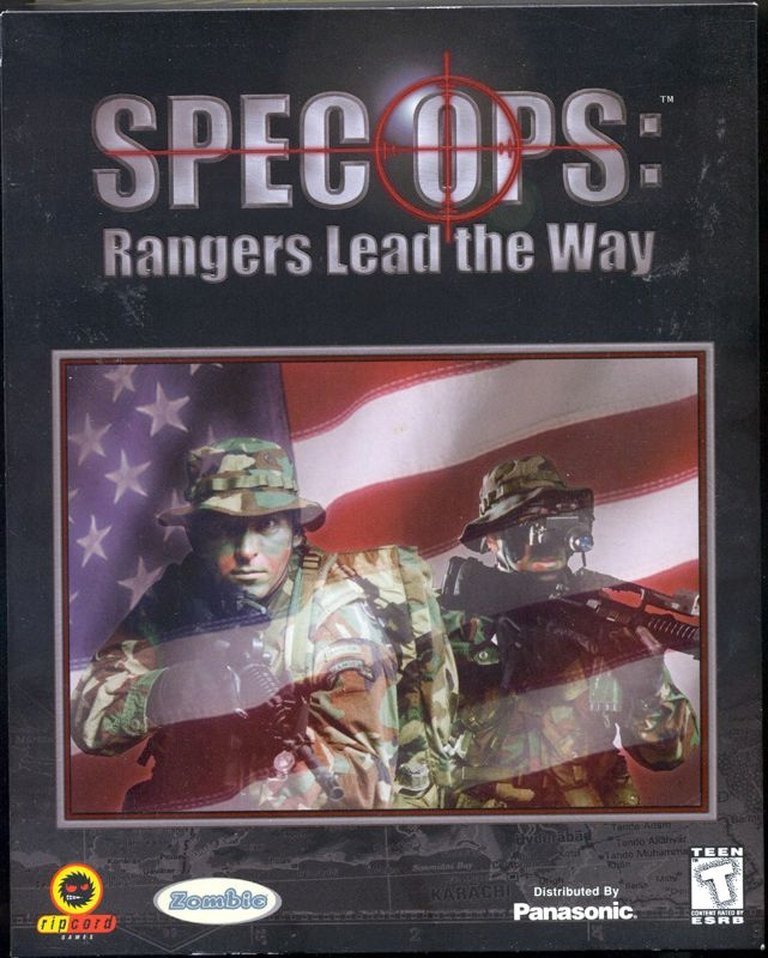
Spec Ops: Rangers Lead the Way is a realistic, action-oriented tactical shooter set in the Yugoslav Wars, focusing on the U.S. Army Rangers. Players lead a team of Rangers through missions in Bosnia and Herzegovina, balancing stealth and combat to eliminate targets and complete objectives under strict time limits. The game emphasizes realism and team-based tactics, though its early 3D technology and AI limitations were noted in reviews.
Gameplay Videos
Spec Ops: Rangers Lead the Way Free Download
Spec Ops: Rangers Lead the Way Cracks & Fixes
Spec Ops: Rangers Lead the Way Guides & Walkthroughs
Spec Ops: Rangers Lead the Way Reviews & Reception
en.wikipedia.org (77/100): The game received favorable reviews according to the review aggregation website GameRankings.
myabandonware.com (94/100): Spec Ops: Rangers Lead the Way (aka Spec Ops: Ranger Assault) is still a popular shooter title amongst retrogamers, with a whopping 4.7/5 rating.
gamepressure.com (57/100): A realistic game with a strong emphasis on tactical action in which the player takes control of an elite American Ranger squad.
mobygames.com (77/100): Most of the levels are very atmospheric, the wind gusts, trees creak as they sway in the breeze and distant weapons fire fills the air in the war-torn city.
Spec Ops: Rangers Lead the Way Cheats & Codes
PC
Enter codes during gameplay.
| Code | Effect |
|---|---|
| ALT+SHIFT+V | Invincibility and reset mission time (use Viewmaster in inventory) |
| T | Training mode (no timer) |
Spec Ops: Rangers Lead the Way: A Flawed but Foundational Tactical Shooter
Introduction
Spec Ops: Rangers Lead the Way (1998) is a game that occupies a fascinating, if somewhat awkward, place in the history of tactical shooters. Developed by Zombie Studios and published by Ripcord Games, it was one of the first titles to attempt a realistic, simulation-style portrayal of elite military operations, blending action with strategy in a way that few games had done before. While it was not without its flaws—some of them glaring—it laid the groundwork for a franchise that would evolve and influence the genre for years to come. This review will dissect the game’s development, narrative, gameplay, technical achievements, and legacy, offering a comprehensive analysis of its strengths, weaknesses, and historical significance.
Development History & Context
The Birth of a Franchise
Spec Ops: Rangers Lead the Way was conceived during a period when the gaming industry was beginning to explore more realistic and tactical approaches to military shooters. The late 1990s saw the rise of games like Rainbow Six (1998) and Delta Force (1998), which emphasized planning, teamwork, and realism over the run-and-gun mechanics of titles like Doom or Quake. Zombie Studios, a relatively young developer at the time, sought to carve out its own niche by focusing on the U.S. Army Rangers, a unit known for its high-risk missions and aggressive combat tactics.
The choice of the Rangers was deliberate. As noted in interviews and development documentation, the studio was drawn to the unit’s reputation for undertaking dangerous, high-stakes operations with a focus on speed and precision. The developers conducted extensive research to ensure authenticity, including consulting with former special forces instructors, attending live-fire drills at Fort Lewis, and using motion capture technology to animate the characters realistically. This commitment to realism was a defining feature of the game’s development philosophy.
Technological Constraints and Ambitions
The game was built using Zombie Studios’ proprietary Viper engine, a custom-built technology designed to handle real-time 3D environments with an emphasis on tactical gameplay. The engine was optimized for 3D accelerators, particularly the 3DFX Voodoo cards that were becoming popular at the time. This focus on hardware acceleration was both a strength and a weakness. While it allowed for impressive visual effects—such as dynamic lighting, detailed textures, and realistic animations—it also meant that the game’s software rendering mode was severely underdeveloped, leading to significant technical issues for players without 3D hardware.
Originally, Spec Ops was slated for release on both Windows and the PlayStation, with BMG Interactive signed on as the publisher. The PlayStation version was ambitious, promising features like streaming data to eliminate load times and advanced 3D clipping to reduce graphical tears. However, BMG Interactive’s North American operations shut down in mid-1997, leaving the game without a publisher. Ripcord Games eventually picked up the project but opted to release it exclusively for Windows, abandoning the PlayStation version entirely.
Another notable aspect of the game’s development was its initial lack of a musical score. BMG executive producer Mike Suarez famously remarked, “Why waste money on a CD-quality soundtrack? We’re focusing on what’s more critical to the gameplay and giving it a production value that more than makes up for the absence of music.” This decision was later reversed, and composers Roland Barker and Joseph Zajonc were brought in to create a score that complemented the game’s tense, military atmosphere.
The Gaming Landscape of 1998
Spec Ops: Rangers Lead the Way arrived at a pivotal moment in the evolution of the shooter genre. The late 1990s were marked by a shift from purely arcade-style shooters to more tactical, simulation-oriented experiences. Games like Rainbow Six and Ghost Recon were beginning to emphasize squad-based tactics, realistic ballistics, and mission planning, while titles like Half-Life (1998) were pushing the boundaries of narrative-driven first-person shooters.
In this context, Spec Ops positioned itself as a hybrid—a game that blended the action of a shooter with the strategic depth of a tactical simulation. It was not as hardcore as Rainbow Six, which required meticulous pre-mission planning, nor was it as fast-paced as Quake II. Instead, it offered a middle ground, allowing players to switch between stealth and all-out assault depending on their preferences. This approach was innovative but also risky, as it required balancing two very different playstyles within a single game.
Narrative & Thematic Deep Dive
Plot and Setting
Spec Ops: Rangers Lead the Way places players in the role of a U.S. Army Ranger leading a small squad through a series of covert operations in various global hotspots. The game’s missions are set in locations such as Bosnia, Colombia, and Afghanistan, reflecting the real-world deployments of the Rangers during the 1990s. The narrative is presented through a series of briefings, delivered in a style reminiscent of military debriefings, with a focus on realism and authenticity.
The game’s story is relatively straightforward, with each mission serving as a self-contained operation. There is no overarching narrative connecting the missions, which was a common approach in tactical shooters of the era. Instead, the game relies on its atmosphere and setting to immerse players in the world of elite military operations. The briefings are concise and to the point, often providing only the essential details needed to complete the mission. This minimalist approach to storytelling was intentional, as the developers wanted to emphasize the procedural, mission-focused nature of Ranger operations.
Characters and Dialogue
The game features a small cast of characters, primarily consisting of the player-controlled Ranger and their AI-controlled squadmate. The Rangers are portrayed as professional, disciplined soldiers, with dialogue that reflects their training and experience. However, the game’s character development is minimal, with little in the way of personal backstories or emotional depth. This was not uncommon for tactical shooters of the time, which often prioritized gameplay mechanics over narrative complexity.
The dialogue in Spec Ops is functional rather than immersive. The Rangers communicate using standard military radio chatter, with phrases like “Contact front!” and “Moving to cover.” While this adds to the game’s authenticity, it does little to flesh out the characters or create a sense of camaraderie between the player and their squad. The lack of voice acting—another cost-cutting measure—further limits the game’s ability to convey emotion or personality.
Themes
Spec Ops: Rangers Lead the Way explores several themes that are central to the military shooter genre:
-
The Fog of War: The game emphasizes the unpredictability and chaos of combat, with missions that often require quick thinking and adaptability. The lack of a map or detailed HUD forces players to rely on their surroundings and their squadmate’s observations, reinforcing the idea that warfare is inherently uncertain.
-
Teamwork and Leadership: As the squad leader, the player is responsible for issuing commands to their AI-controlled teammate. This dynamic highlights the importance of coordination and communication in military operations, even if the AI’s limitations often undermine this theme.
-
The Cost of War: While the game does not delve deeply into the moral or psychological consequences of combat, it does present warfare as a high-stakes, high-pressure environment. The time limits on missions, the relentless enemy AI, and the punishing difficulty all contribute to a sense of tension and urgency.
-
Realism vs. Gameplay: Spec Ops walks a fine line between realism and accessibility. The developers sought to create a game that felt authentic without being overly punishing or complex. This balance is evident in the game’s mechanics, which simplify some aspects of real-world military operations (such as squad commands) while maintaining a focus on tactical decision-making.
Gameplay Mechanics & Systems
Core Gameplay Loop
At its heart, Spec Ops: Rangers Lead the Way is a mission-based tactical shooter. Players control a two-person Ranger team, with the ability to switch between the two characters at any time. The game’s missions are structured around a series of objectives, which must be completed within a strict time limit. These objectives range from eliminating enemy forces to rescuing hostages or sabotaging enemy installations.
The gameplay loop revolves around navigating the environment, engaging enemy forces, and managing the player’s squadmate. The game offers a mix of stealth and direct combat, with players encouraged to use cover, suppress enemy fire, and flank opponents. The lack of a map or mini-map forces players to rely on environmental cues and their squadmate’s observations, adding to the game’s tactical depth.
Combat and Weapons
The game features a wide array of weapons, including assault rifles, sniper rifles, shotguns, and explosives. Each weapon has its own strengths and weaknesses, and players must choose their loadout carefully based on the mission’s requirements. For example, a sniper rifle is ideal for long-range engagements, while a shotgun is better suited for close-quarters combat.
The combat mechanics are a mixed bag. The game’s aiming system is notoriously clunky, with no crosshair or reticle to indicate where the player is aiming. Instead, players must rely on the position of their weapon and the direction of their character’s gaze, which can make precise shooting difficult. This issue is compounded by the game’s lack of a software rendering mode, which often results in graphical glitches and pop-in that can obscure enemies or environmental details.
The enemy AI is similarly inconsistent. While enemy soldiers are aggressive and will often flank the player, their pathfinding and decision-making can be erratic. They may become stuck on obstacles, fail to react to the player’s presence, or exhibit other unnatural behaviors. This inconsistency can make combat feel unpredictable, though not always in a good way.
Squad Mechanics and AI
One of the game’s most ambitious features is its squad mechanics. Players can issue commands to their AI-controlled teammate, directing them to move to specific locations, engage enemies, or provide covering fire. The squadmate can also be ordered to adopt different behavioral profiles, such as aggressive or cautious, which affects their combat style.
Unfortunately, the AI’s limitations often undermine these mechanics. The squadmate frequently gets stuck on obstacles, fails to follow commands, or exhibits poor aim. This can make squad-based tactics frustrating, as the player cannot always rely on their teammate to perform as expected. The lack of a map or detailed HUD further complicates squad management, as players must often guess at their teammate’s location or status.
Mission Design and Difficulty
The game’s missions are varied and often challenging, with a mix of urban, jungle, and desert environments. Each mission is designed to test different aspects of the player’s tactical skills, from stealthy infiltration to all-out assaults. The time limits on missions add a layer of tension, forcing players to balance speed with caution.
However, the mission design is not without its flaws. The lack of checkpoints or save points means that failure often requires restarting the entire mission, which can be frustrating given the game’s punishing difficulty. The time limits are also frequently unrealistic, with some missions requiring players to traverse large, enemy-filled environments in just a few minutes. This can make the game feel more like a trial-and-error exercise than a tactical challenge.
User Interface and Controls
The game’s user interface is sparse and functional, with a focus on immersing the player in the action. There is no map or mini-map, and the HUD is minimal, displaying only essential information such as ammunition count and health status. This design choice reinforces the game’s emphasis on realism and immersion but can also make navigation and squad management more difficult.
The controls are similarly straightforward, with keyboard and mouse support for movement, aiming, and issuing commands. However, the lack of a crosshair or reticle makes aiming imprecise, and the game’s reliance on 3D acceleration can lead to input lag or other technical issues.
World-Building, Art & Sound
Setting and Atmosphere
Spec Ops: Rangers Lead the Way excels in creating a tense, immersive atmosphere. The game’s environments are detailed and varied, with missions set in war-torn cities, dense jungles, and arid deserts. The use of dynamic lighting and weather effects—such as wind gusts and distant gunfire—adds to the game’s realism and immersion.
The game’s nighttime missions are particularly atmospheric, with the darkness adding a layer of tension and uncertainty. The lack of a map or mini-map forces players to rely on their surroundings, creating a sense of isolation and vulnerability. The sound design further enhances this atmosphere, with distant explosions, radio chatter, and the sound of enemy movements all contributing to the game’s immersive audio landscape.
Visual Design
The game’s visual design is a product of its time, with a focus on realism and detail. The character models are well-animated, with realistic movements and expressions. The environments are similarly detailed, with textures and lighting that reflect the game’s military setting. However, the game’s reliance on 3D acceleration means that players without a 3DFX card will experience significant graphical issues, including pop-in, clipping, and missing textures.
The game’s art direction is functional rather than artistic, with a focus on creating a believable military environment. The color palette is muted and realistic, with an emphasis on earth tones and military greens. The game’s use of motion capture technology ensures that the character animations are fluid and lifelike, though the lack of facial animations limits the game’s ability to convey emotion.
Sound Design and Music
The sound design in Spec Ops is one of its strongest features. The game’s audio landscape is rich and immersive, with a mix of ambient sounds, weapon effects, and voice acting. The sound of distant gunfire, the rustling of foliage, and the crack of enemy bullets all contribute to the game’s tense atmosphere.
The game’s musical score, composed by Roland Barker and Joseph Zajonc, is understated but effective. The music is used sparingly, often appearing during mission briefings or key moments in the gameplay. The score is primarily orchestral, with a mix of military marches and tense, atmospheric pieces that reflect the game’s military setting.
Reception & Legacy
Critical Reception
Spec Ops: Rangers Lead the Way received generally favorable reviews upon its release, with critics praising its innovative gameplay, immersive atmosphere, and realistic combat mechanics. The game’s aggregate score on GameRankings is 77%, reflecting a mix of positive and mixed reviews.
Critics highlighted the game’s atmospheric environments, tense gameplay, and attention to detail. PC Zone gave the game an 88% score, praising its “awesome” sound design and addictive gameplay, though it noted the lack of multiplayer support as a drawback. Game Revolution similarly praised the game’s realism and innovation, though it criticized the lack of replay value.
However, the game was not without its detractors. Computer Gaming World gave the game a 60% score, citing its “bad software engine,” “annoying timer,” and “mediocre AI” as significant flaws. GameSpot echoed these concerns, noting that the game’s technical issues and punishing difficulty could frustrate players.
Commercial Success
Despite its mixed reception, Spec Ops: Rangers Lead the Way was a commercial success, generating over $29 million in revenue by 2001. The game’s success helped establish the Spec Ops franchise, leading to several sequels and spin-offs, including Spec Ops II: Green Berets (1999) and Spec Ops: The Line (2012).
Legacy and Influence
Spec Ops: Rangers Lead the Way is often overlooked in discussions of influential tactical shooters, but its impact on the genre is undeniable. The game’s blend of action and strategy, its emphasis on realism, and its innovative squad mechanics laid the groundwork for future titles in the Spec Ops series and beyond.
The game’s most significant legacy is its role in establishing the Spec Ops franchise, which would go on to explore more complex themes and gameplay mechanics in later installments. Spec Ops: The Line (2012), in particular, is widely regarded as a masterpiece of narrative-driven gaming, with its exploration of the psychological toll of war and its critique of the military shooter genre.
However, Rangers Lead the Way itself is often remembered more for its flaws than its strengths. The game’s technical issues, punishing difficulty, and inconsistent AI have led many to view it as a flawed but ambitious experiment. Despite these shortcomings, the game remains an important milestone in the evolution of the tactical shooter genre, and its influence can be seen in numerous titles that followed.
Conclusion
Spec Ops: Rangers Lead the Way is a game of contradictions—a title that is both innovative and flawed, ambitious and uneven. It was one of the first games to attempt a realistic, simulation-style portrayal of elite military operations, blending action with strategy in a way that few games had done before. Its commitment to authenticity, its immersive atmosphere, and its innovative squad mechanics set it apart from its contemporaries, even as its technical limitations and punishing difficulty held it back.
In the grand scheme of video game history, Spec Ops: Rangers Lead the Way is not a classic in the traditional sense. It lacks the polish, the narrative depth, and the technical refinement of later tactical shooters. However, it is a game that deserves recognition for its ambition, its innovation, and its role in shaping the genre. It is a flawed but foundational title—a game that dared to push the boundaries of what a military shooter could be, even if it didn’t always succeed.
For modern players, Spec Ops: Rangers Lead the Way is a fascinating time capsule—a glimpse into the early days of the tactical shooter genre, when developers were still experimenting with the mechanics and conventions that would come to define the genre. It is a game that rewards patience, persistence, and a willingness to engage with its flaws. And while it may not be the best game in the Spec Ops series, it is undoubtedly one of the most important.
Final Verdict: 7.5/10 – A flawed but foundational tactical shooter that laid the groundwork for a genre.