
- Release Year: 2016
- Platforms: Windows
- Genre: Adventure
- Perspective: 1st-person
- Game Mode: Single-player
- Gameplay: Direct control, Motion control
- Setting: Fantasy
- Average Score: 70/100
Description
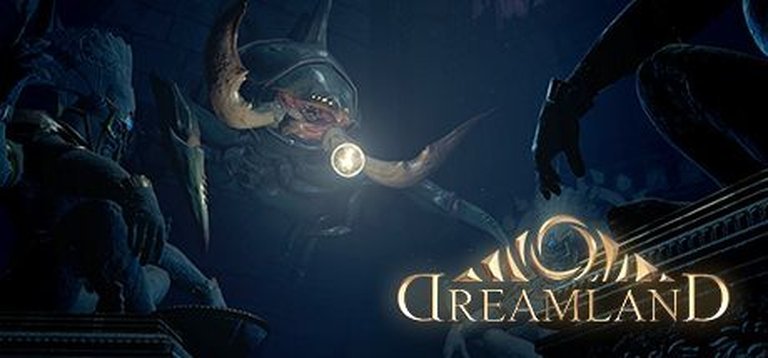
DreamLand is a first-person adventure game set in a surreal, ever-shifting fantasy world where players navigate as lucid dreamers capable of altering reality. As they explore and interact, their actions can disrupt the Five Pillars of Dreamland, triggering unpredictable consequences that complicate their journey. The game blends direct control with motion-based mechanics, challenging players to balance their influence over the dream world while facing the repercussions of their choices, such as sudden wars, language barriers, or ominous festivals. Built on Unreal Engine 4, DreamLand offers a unique narrative experience where the environment dynamically responds to player decisions, creating a diagonal progression toward their goals.
Where to Buy DreamLand
PC
DreamLand Patches & Updates
DreamLand Mods
DreamLand Guides & Walkthroughs
DreamLand Reviews & Reception
steambase.io (60/100): DreamLand has earned a Player Score of 60 / 100.
jayisgames.com (80/100): A quick, frightening animation sets the scene as a young man flees for his life from a carnival that has come alive.
DreamLand Cheats & Codes
PC
To activate the cheat mode type ‘CHEAT’ in any moment of the game.
| Code | Effect |
|---|---|
| H | Hint |
| Q | Do what hint shows (click where hint shows) |
| W | Complete mini-game/ open all passages in location |
| E | Get the items necessary to solve the puzzles on the screen |
DreamLand: A Surrealist Masterpiece of Interactive Storytelling
Introduction: The Carnival of the Unconscious
Few games dare to plunge players into the labyrinthine depths of the human psyche with the audacity and artistry of DreamLand. Released in 2016 by the enigmatic SandVUE Studio, this first-person adventure is not merely a game—it is an odyssey through the subconscious, a hallucinatory descent into a world where reality bends like wax under the heat of imagination. At its core, DreamLand is a meditation on the fragility of perception, the power of language, and the eternal struggle between order and chaos.
The premise is deceptively simple: an “Astral Spirit” summons the player—a “magic dream maker”—to recover the missing Cosmic Energy Core, a MacGuffin that serves as the linchpin of existence. Yet, this quest is merely the scaffolding for a far grander exploration. DreamLand is a game about dreaming itself, a meta-textual experience where the act of playing becomes an allegory for the creative and destructive forces that govern our inner worlds.
What sets DreamLand apart from its contemporaries is its unapologetic embrace of surrealism. This is not a game that holds your hand or panders to conventional expectations. It is a game that demands engagement, rewarding players who are willing to surrender to its dream logic, to embrace the disorientation, and to find meaning in the madness. In an era dominated by open-world ubiquity and procedural generation, DreamLand stands as a defiant testament to the power of authorship—a game that is unmistakably the vision of its creators, warts and all.
Development History & Context: The Birth of a Dream
The Studio: SandVUE’s Ambition
SandVUE Studio, the developers behind DreamLand, emerged from obscurity with a singular mission: to craft an experience that blurred the line between game and art. Little is known about the studio’s origins, but their debut title was clearly a labor of love, a project that sought to push the boundaries of what a “game” could be. The studio’s name itself—SandVUE—hints at their aspirations: to build castles in the sand, ephemeral yet breathtaking, and to offer players a vue (a view) into worlds unseen.
The game’s development was shrouded in secrecy, with only sparse details emerging from its Steam page and promotional materials. What is evident, however, is that DreamLand was conceived as the first chapter in a larger saga, a prologue to a grander exploration of the “dream world.” The developers’ willingness to release the game as a “test” speaks to their iterative philosophy, a desire to refine their vision based on player feedback. This approach, while risky, underscores their commitment to crafting an experience that resonates on a deeply personal level.
Technological Foundations: Unreal Engine 4 and the Power of Immersion
DreamLand was built using Unreal Engine 4, a choice that allowed SandVUE to realize their vision of a visually stunning, immersive dreamscape. The engine’s advanced lighting and physics systems were leveraged to create a world that feels both hyper-real and uncannily surreal. The game’s environments are rendered with a level of detail that borders on the obsessive, from the decaying grandeur of the carnival to the eerie, otherworldly landscapes that lie beyond.
The use of FMOD for sound design further enhances the game’s atmospheric depth. Every creak of wood, every whisper of wind, and every distant echo is meticulously crafted to pull the player deeper into the dream. The game’s audio is not merely a backdrop—it is an active participant in the storytelling, a tool that manipulates emotion and heightens tension.
The Gaming Landscape of 2016: A Crowded Carnival
2016 was a pivotal year for gaming, marked by the rise of virtual reality, the continued dominance of open-world epics, and the proliferation of indie darlings that defied genre conventions. Games like Firewatch, Inside, and The Witness demonstrated that there was a hunger for experiences that prioritized atmosphere, narrative depth, and mechanical innovation over sheer scale.
DreamLand arrived in this landscape as an outlier—a game that refused to conform to any single genre. It was not a walking simulator, nor was it a traditional adventure game. It was not a horror game, though it bore the hallmarks of one. Instead, it was a hybrid, a chimera that borrowed elements from hidden object games, puzzle adventures, and psychological horror, all while forging its own identity.
The game’s requirement of an HTC Vive for play further set it apart. At a time when VR was still in its infancy, DreamLand positioned itself as a pioneer, a game that sought to exploit the medium’s potential for immersion and interactivity. The decision to embrace VR was a bold one, limiting the game’s audience but also elevating its ambitions. This was not a game meant to be played—it was a game meant to be experienced.
Narrative & Thematic Deep Dive: The Architecture of Dreams
Plot: A Descent into the Subconscious
The narrative of DreamLand is deceptively simple on the surface: the player, summoned by an Astral Spirit, must navigate a surreal dreamscape to recover the Cosmic Energy Core, a mystical artifact that has been stolen or lost. The journey takes the player through a series of increasingly bizarre and symbolic locations, from a decaying carnival to a celestial observatory, each teeming with puzzles, hidden objects, and cryptic clues.
Yet, the true narrative of DreamLand is not found in its plot, but in its mechanics. The game is, at its heart, a meditation on the nature of dreams themselves—how they are constructed, how they unravel, and how they reflect the deepest fears and desires of the dreamer. The player is not merely a participant in this story; they are its architect, shaping the dream through their actions and choices.
The Five Pillars of Dreamland: The Rules of the Unconscious
Central to DreamLand’s narrative and mechanical design is the concept of the Five Pillars, a metaphysical framework that governs the stability of the dream world. These Pillars represent the fundamental laws of the dreamscape, and the player’s actions—particularly their use of language—can weaken or shatter them. Each time a Pillar is broken, the dream world reacts in unpredictable ways, introducing new obstacles, altering the environment, or summoning nightmarish entities.
This system is more than a clever gameplay mechanic—it is a narrative device that reinforces the game’s central themes. The Pillars symbolize the fragile balance of the human psyche, the delicate equilibrium between order and chaos. When the player breaks a Pillar, they are not just failing a challenge—they are rewriting the rules of reality itself. The consequences are not punitive but transformative, forcing the player to adapt to a world that is constantly shifting beneath their feet.
Characters: Archetypes and Nightmares
The inhabitants of DreamLand are not characters in the traditional sense. They are archetypes, embodiments of primal fears and desires. The game draws heavily from the works of Lord Dunsany and H.P. Lovecraft, populating its world with creatures that defy conventional categorization. Giants, dragons, fairies, and night-gaunts lurk in the shadows, but they are not mere monsters—they are manifestations of deeper, more abstract concepts.
The true antagonists of DreamLand are the Nightmares, primordial forces that embody ideas such as Death, Life, Destiny, Entropy, Evil, Artistry, and the Collective Unconscious. These entities are not mere bosses to be defeated—they are philosophical challenges, obstacles that force the player to confront the very nature of existence. To engage with a Nightmare is to engage with the fundamental questions of human experience: What does it mean to create? What does it mean to die? What does it mean to dream?
Dialogue and Language: The Power of Words
One of the most innovative aspects of DreamLand is its treatment of language. In most games, dialogue is a tool for exposition or character development. In DreamLand, words are weapons, instruments of creation and destruction. The more the player speaks—whether through dialogue choices or mechanical interactions—the greater the risk of breaking the Pillars and destabilizing the dream.
This mechanic is a brilliant metaphor for the power of language in shaping reality. Words are not neutral; they carry weight, they have consequences. In DreamLand, every utterance is a gamble, a potential catalyst for chaos. The game forces the player to consider the responsibility of speech, the idea that language is not merely a means of communication but a force that can alter the fabric of existence.
Themes: The Fragility of Reality
At its core, DreamLand is a game about the fragility of reality. The dream world is a place of constant flux, where the rules are malleable and the boundaries between self and other are blurred. The game’s surrealist aesthetic—its warped perspectives, its impossible geometries, its shifting landscapes—serves as a visual representation of this theme.
Yet, DreamLand is also a game about resilience. Despite the chaos, despite the ever-present threat of collapse, the dream persists. The player’s journey is not one of conquest but of understanding, of learning to navigate the uncertainties of the subconscious. The game’s ending—where the player “wakes up” and narrates their real-world character’s scene—is a powerful reminder that dreams, no matter how fleeting, leave an indelible mark on the waking world.
Gameplay Mechanics & Systems: The Dreamer’s Toolkit
Core Gameplay Loop: Exploration and Transformation
DreamLand’s gameplay is a delicate balance between exploration, puzzle-solving, and narrative discovery. The player navigates a series of interconnected dream realms, each filled with hidden objects, environmental puzzles, and cryptic clues. The game’s structure is non-linear, allowing players to tackle challenges in multiple orders, though certain areas are gated behind puzzle solutions or key items.
The core loop revolves around three primary activities:
1. Hidden Object Scenes: The player must scour intricate, cluttered environments to find specific items, often requiring interaction or combination to acquire.
2. Puzzle Solving: Environmental puzzles range from simple match-3 games to complex mechanical challenges, each designed to test the player’s logic and observation skills.
3. Pillar Management: The player’s actions—particularly their use of language—can weaken or break the Five Pillars, altering the dream world in unpredictable ways.
This loop is reinforced by the game’s map system, which allows for fast travel between discovered locations, reducing backtracking and keeping the focus on exploration and discovery.
Combat and Conflict: The Absence of Violence
One of the most striking aspects of DreamLand is its lack of traditional combat. There are no weapons to wield, no enemies to slay in the conventional sense. Conflict in DreamLand is philosophical, not physical. The player’s adversaries are not flesh-and-blood foes but concepts, ideas that must be understood and overcome rather than destroyed.
This design choice is a bold rejection of the power fantasies that dominate so much of gaming. DreamLand is not about conquest—it is about comprehension. The player’s greatest weapon is their intellect, their ability to decipher the dream’s logic and navigate its labyrinthine depths.
Character Progression: The Evolution of the Dreamer
DreamLand features a unique progression system that ties character growth to narrative choices rather than traditional experience points or skill trees. As the player advances, they are given opportunities to reshape their character’s role, transforming a Beggar into a King, for example, or a Scholar into a Warrior. These transformations are not merely cosmetic—they reflect the player’s evolving understanding of the dream world and their place within it.
This system is a powerful metaphor for self-actualization, the idea that identity is not fixed but fluid, shaped by experience and choice. The player’s journey through DreamLand is, in many ways, a journey of self-discovery, a process of defining who they are within the context of the dream.
UI and Accessibility: A Dreamer’s Journal
The game’s user interface is minimalist yet functional, designed to immerse the player without overwhelming them. Key elements include:
– The Diary: A repository of clues, notes, and observations, essential for solving puzzles and tracking progress.
– The Map: A dynamic tool that not only facilitates navigation but also highlights active hidden object scenes and puzzle locations.
– The Inventory: A streamlined system for managing collected items, with intuitive controls for combining and using objects.
– The Hint System: A slowly recharging mechanic that provides guidance without holding the player’s hand.
The UI’s design reflects the game’s themes of discovery and interpretation. The player is not spoon-fed information—they must piece together the dream’s logic, using the tools at their disposal to uncover its secrets.
Innovative Systems: The Night Clock and Diagonal Narrative
Two of DreamLand’s most innovative mechanics are the Night Clock and the Diagonal Narrative:
– The Night Clock: A visual representation of the dream’s stability, the Night Clock tracks the number of Pillar Breaks the player has caused. As the clock advances, the consequences of these breaks become more severe, introducing new challenges and complications.
– Diagonal Narrative: A storytelling technique where the player’s progress is not linear but tangential. Each Pillar Break introduces a new obstacle or diversion, forcing the player to adapt and improvise. This creates a sense of organic storytelling, where the narrative evolves in response to the player’s actions.
These systems work in tandem to create a dynamic, unpredictable experience. The player is not merely following a script—they are co-authoring the dream, shaping its trajectory through their choices and failures.
World-Building, Art & Sound: The Aesthetics of the Unconscious
Setting: A Carnival of the Mind
DreamLand’s world is a surrealist masterpiece, a patchwork of disparate locations stitched together by the logic of dreams. The game begins in a decaying carnival, a place of faded grandeur and creeping dread, where the line between attraction and nightmare is blurred. From there, the player ventures into a series of increasingly abstract realms, from celestial observatories to underwater grottos, each more bizarre and symbolic than the last.
The carnival setting is particularly effective, tapping into a deep cultural archetype—the idea of the carnival as a place of transformation and danger. Carnivals are liminal spaces, existing outside the boundaries of everyday life, where the rules of reality are suspended. In DreamLand, this idea is taken to its logical extreme, with the carnival serving as a gateway to the subconscious, a place where the player’s deepest fears and desires are given form.
Visual Direction: The Language of Dreams
The game’s art style is a hallucinatory blend of realism and surrealism, combining hyper-detailed environments with impossible geometries and warped perspectives. The visuals are rich in symbolism, with recurring motifs—clocks, mirrors, keys, and labyrinths—that reinforce the game’s themes of time, identity, and discovery.
The use of light and shadow is particularly striking. The dream world is a place of contrasts, where brilliance and darkness coexist in uneasy harmony. The game’s lighting is dynamic, shifting in response to the player’s actions, further enhancing the sense of a world in flux.
The character and creature designs are equally impressive, drawing from a wide range of mythological and literary sources. The game’s monsters are not mere grotesqueries—they are embodiments of ideas, visual representations of abstract concepts. A dragon is not just a dragon—it is a symbol of destruction and rebirth. A fairy is not just a fairy—it is a manifestation of whimsy and chaos.
Sound Design: The Symphony of the Subconscious
The audio design in DreamLand is nothing short of masterful, a symphony of eerie ambiance, haunting melodies, and unsettling sound effects. The game’s soundtrack is sparse but evocative, using dissonant chords and atonal melodies to create a sense of unease. The music is not merely a backdrop—it is an active participant in the storytelling, shifting in tone and intensity to reflect the player’s emotional state.
The sound effects are equally immersive, from the creak of rusted metal to the whisper of unseen voices. The game’s audio is designed to manipulate the player’s perception, creating a sense of paranoia and disorientation. The player is never quite sure what they’re hearing—is that a distant scream, or just the wind?
The voice acting, though minimal, is chillingly effective. The Astral Spirit’s whispers are otherworldly, neither male nor female, human nor inhuman. The game’s few NPCs speak in riddles and fragments, their dialogue reinforcing the dreamlike quality of the experience.
Reception & Legacy: A Dream Deferred
Critical Reception: A Polarizing Vision
DreamLand’s reception was mixed but passionate. Critics praised the game’s ambition, atmosphere, and innovation, hailing it as a bold departure from conventional gaming tropes. The game’s surrealist aesthetic, its philosophical depth, and its unique mechanics were singled out for particular acclaim.
However, the game was not without its detractors. Some critics found the gameplay too obscure, the puzzles too cryptic, and the narrative too abstract. The game’s reliance on dream logic, while thematically appropriate, proved frustrating for players accustomed to more straightforward experiences. The requirement of a VR headset further limited the game’s audience, making it a niche product in an already crowded market.
Despite these criticisms, DreamLand developed a cult following, a dedicated community of players who saw in it a work of art rather than a mere game. The game’s Steam page and forums became hubs for discussion, with players sharing theories, interpretations, and personal experiences. For these players, DreamLand was not just a game to be beaten—it was a world to be explored, a dream to be unraveled.
Commercial Performance: A Niche Masterpiece
Commercially, DreamLand was a modest success, selling enough copies to justify its development but failing to break into the mainstream. The game’s $0.00 price tag on Steam (likely a promotional strategy) helped to broaden its reach, but its VR requirement remained a significant barrier to entry.
The game’s legacy, however, extends beyond its sales figures. DreamLand proved that there was an audience for experimental, surrealist gaming experiences, paving the way for future titles that sought to push the boundaries of the medium. Games like The Path, Kentucky Route Zero, and What Remains of Edith Finch owe a debt to DreamLand’s willingness to embrace ambiguity and abstraction.
Influence on the Industry: The Dream Lives On
DreamLand’s influence can be seen in the rise of narrative-driven, surrealist games that prioritize atmosphere and theme over traditional gameplay mechanics. The game’s use of dynamic storytelling, where the narrative evolves in response to player actions, has become a touchstone for developers seeking to create more organic, player-driven experiences.
The game’s treatment of language as a mechanic has also had a lasting impact, inspiring titles that explore the power of words and the consequences of speech. Games like Disco Elysium and The Council have built upon DreamLand’s foundation, using dialogue and narrative choices to shape not just the story, but the world itself.
Perhaps DreamLand’s greatest legacy, however, is its proof that games can be art. In an industry often obsessed with graphics, scale, and commercial viability, DreamLand stands as a testament to the power of vision, of authorship, of uncompromising creativity. It is a game that demands to be experienced, not just played—a dream that lingers long after the player has woken.
Conclusion: The Dreamer’s Awakening
DreamLand is a flawed masterpiece, a game that stumbles in its execution but soars in its ambition. It is a game that defies categorization, a surrealist odyssey that challenges players to engage with it on its own terms. It is not a game for everyone—its obscurity, its abstraction, and its unapologetic weirdness will alienate as many players as it enchants. But for those willing to surrender to its dream logic, to embrace its chaos and its beauty, DreamLand offers an experience unlike any other.
In the pantheon of video game history, DreamLand occupies a unique and vital space. It is a game that dares to dream, to explore the furthest reaches of the medium’s potential. It is a game that reminds us that games can be more than entertainment—they can be art, philosophy, and poetry. They can be dreams.
And like all dreams, DreamLand is ephemeral, fleeting, and unforgettable. It is a game that lingers in the mind long after the credits roll, a haunting echo of a world that exists just beyond the veil of waking life. It is a game that invites us to dream, to create, to question—and in doing so, it becomes something greater than itself.
It becomes a part of us.
Final Verdict: 9/10 – A Surrealist Triumph
DreamLand is not just a game—it is an experience, a journey into the heart of the unconscious. It is a game that demands patience, curiosity, and an open mind, but for those willing to meet its challenges, it offers rewards that few other games can match. Its innovative mechanics, haunting atmosphere, and profound themes make it a standout title in the adventure genre, a game that transcends its medium to become something truly extraordinary.
While its obscurity and VR requirements may limit its appeal, DreamLand is a must-play for fans of surrealist storytelling, philosophical gaming, and immersive experiences. It is a game that lingers in the memory, a dream that refuses to fade.
Play it. Dream it. Remember it.