
- Release Year: 2011
- Platforms: Android, iPad, iPhone, Macintosh, Windows
- Publisher: Awem Studio, G5 Entertainment AB, Intenium GmbH, media Verlagsgesellschaft mbH
- Developer: Awem Studio
- Genre: Adventure
- Perspective: 1st-person
- Game Mode: Single-player
- Gameplay: Hidden object, Puzzle elements
- Average Score: 75/100
Description
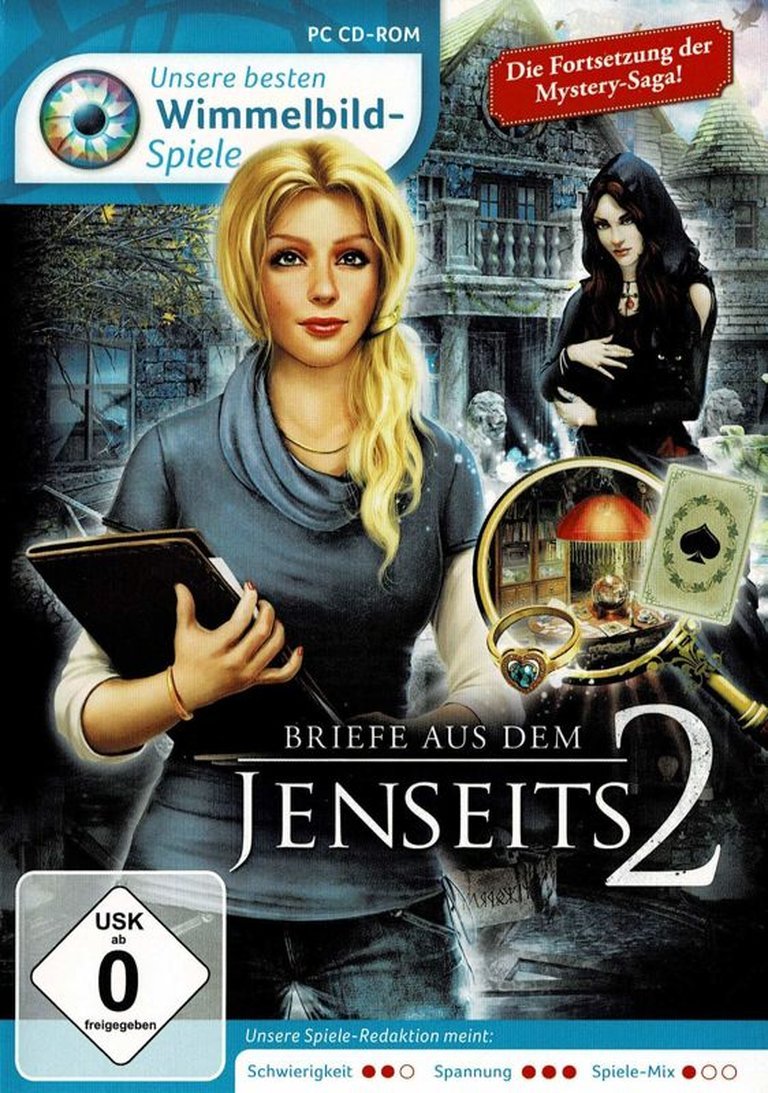
Letters from Nowhere 2 is a hidden object adventure game where Audrey continues her search for her missing husband, Patrick. Guided by a mysterious postman, she arrives in a new town and teams up with a magic shop owner who offers help in exchange for her assistance in uncovering the truth behind his father’s disappearance and a lost diary. The game features immersive hidden object scenes with bonus collectibles like black cats and stamps, mini-puzzles, and helpful tools like a thermometer for locating objects. Players can unlock additional modes, including an unlimited play mode and a puzzle-focused mode, by collecting stamps and finding hidden cats.
Gameplay Videos
Letters from Nowhere 2 Free Download
Letters from Nowhere 2 Cracks & Fixes
Letters from Nowhere 2 Guides & Walkthroughs
Letters from Nowhere 2 Reviews & Reception
gametop.com (75/100): Letters from Nowhere 2 offers an immersive hidden object experience with a gripping mystery and dark atmosphere.
killerbetties.com : The game is a good value. It’s not a perfect game, by any means of the word. But it’s solid and has a lot to offer for overachievers.
mobygames.com (76/100): Average score: 3.8 out of 5
Letters from Nowhere 2: A Hidden Object Masterpiece or a Forgotten Relic?
Introduction: The Search for Patrick Continues
In the vast landscape of hidden object games, Letters from Nowhere 2 (2011) stands as a sequel that attempts to deepen the mystery of its predecessor while refining the mechanics that made the first game a modest success. Developed by Awem Studio, this title continues the story of Audrey, a woman searching for her missing husband, Patrick, in a town shrouded in supernatural intrigue. The game’s premise is simple yet compelling: Audrey must uncover the secrets of a cursed family by collecting diary pages, solving puzzles, and navigating eerie, hand-drawn environments.
At its core, Letters from Nowhere 2 is a hidden object adventure with light puzzle elements, designed for casual players who enjoy atmospheric storytelling and methodical exploration. But does it succeed in elevating the genre, or does it merely reiterate the tropes of early 2010s casual gaming? This review will dissect the game’s narrative, gameplay, artistry, and legacy to determine its place in the annals of hidden object games.
Development History & Context: Awem Studio’s Hidden Object Legacy
The Studio Behind the Game
Awem Studio, founded in 2001, is a Belarusian developer specializing in casual and hidden object games. By the time Letters from Nowhere 2 was released in April 2011, the studio had already established a reputation for creating visually appealing, narrative-driven games with accessible mechanics. Their portfolio includes titles like Cradle of Rome and Golden Trails, but the Letters from Nowhere series remains one of their most recognizable franchises.
The original Letters from Nowhere (2010) introduced players to Audrey’s quest, blending hidden object gameplay with a supernatural mystery. The sequel was developed with the intent to expand on the first game’s strengths—namely, its atmospheric storytelling and varied puzzle design—while addressing some of its shortcomings, such as repetitive gameplay loops.
Technological Constraints & Design Philosophy
Letters from Nowhere 2 was built for the casual gaming market of the early 2010s, a time when hidden object games were proliferating on platforms like Big Fish Games and Steam. The game’s technical requirements were modest:
– Minimum System Requirements: Pentium 1 GHz, 1 GB RAM, DirectX 9.0c compatibility, Windows XP/Vista/7.
– Platforms: Initially released on Windows and Macintosh, with mobile ports (iOS, Android) following in 2012.
These specifications reflect the game’s target audience: players who sought lightweight, visually engaging experiences without the need for high-end hardware. The 2D hand-drawn art style, while not groundbreaking, was a deliberate choice to evoke a dark, storybook aesthetic that complemented the game’s supernatural themes.
The Casual Gaming Landscape in 2011
By 2011, the hidden object genre was in full swing, with titles like Mystery Case Files and Dark Parables dominating the market. Letters from Nowhere 2 entered this crowded space with a few key differentiators:
1. Narrative Continuity: Unlike many standalone hidden object games, Letters from Nowhere 2 was a direct sequel, offering a rare sense of continuity in a genre often criticized for its episodic, disposable nature.
2. Unlockable Modes: The inclusion of Unlimited Mode (unlocked by collecting stamps) and Puzzle Mode (unlocked by finding black cats) added replayability, a feature not always present in casual games of the era.
3. Trophy System: The game’s 37 trophies encouraged completionists to engage with the game beyond the main story, a nod to the rising popularity of achievement-driven gameplay.
However, the game also faced challenges. The hidden object genre was becoming increasingly saturated, and players were beginning to demand more innovation. Letters from Nowhere 2’s reliance on familiar mechanics—such as static hidden object scenes and simple mini-games—risked making it feel derivative, even as it refined those mechanics.
Narrative & Thematic Deep Dive: A Tale of Curses and Missing Husbands
Plot Summary & Structure
Letters from Nowhere 2 picks up where its predecessor left off. Audrey, having followed the cryptic letters from a mysterious postman, arrives in a new town where she meets the owner of a magic shop. This shopkeeper offers to help her find Patrick—but only if she assists him in uncovering the truth behind his own father’s disappearance decades earlier. The central MacGuffin of the game is a missing diary, whose pages are scattered across the town’s various locations. Each diary page Audrey collects reveals more about the town’s dark history and the curse plaguing Patrick’s family.
The game is divided into 11 episodes, each set in a different location (e.g., a gas station, a theatre, a cemetery) and culminating in a mini-game that rewards Audrey with an artifact. These artifacts are later used in a final “comic strip” sequence that ties the narrative together. The story is presented through:
– Voiceovers: Audrey’s internal monologues and interactions with other characters are voiced, adding a layer of immersion.
– Diary Entries: Each collected page provides exposition, often hinting at supernatural elements like curses and ghostly apparitions.
– Comic Strip Cutscenes: The game’s opening and closing sequences use a comic book style, blending text and illustrations to convey key plot points.
Themes: Love, Loss, and the Supernatural
At its heart, Letters from Nowhere 2 is a story about obsession and unresolved grief. Audrey’s search for Patrick is not just a physical journey but an emotional one, as she grapples with the possibility that he may be lost forever. The game’s supernatural elements—curses, ghostly postmen, and eerie diary entries—serve as metaphors for the unknown and the unknowable in human relationships.
Key themes include:
1. The Weight of the Past: The magic shop owner’s quest to find his father mirrors Audrey’s search for Patrick, suggesting that the past is inescapable. The diary pages act as fragments of history that must be pieced together to understand the present.
2. Isolation and Loneliness: The town of “Nowhere” is a liminal space, neither fully real nor entirely supernatural. Its emptiness reflects Audrey’s emotional state as she navigates a world where her husband’s absence looms large.
3. The Power of Objects: The game’s hidden object mechanics reinforce the idea that meaning can be found in the mundane. Every stamp, black cat, and artifact Audrey collects is a clue—not just to Patrick’s whereabouts, but to the larger mystery of the town’s curse.
Characterization & Dialogue
Audrey is the game’s sole protagonist, and her characterization is minimal but effective. She is determined, resourceful, and increasingly desperate as the story progresses. The magic shop owner serves as a foil, his own personal tragedy paralleling Audrey’s. However, the game’s supporting cast is underdeveloped, with most characters existing only to provide exposition or trigger mini-games.
The dialogue is functional but unremarkable, relying on standard mystery tropes:
– “The postman knows more than he’s letting on.”
– “This diary holds the key to breaking the curse.”
– “Patrick’s disappearance is connected to something darker than we imagined.”
While the writing doesn’t break new ground, it serves its purpose: maintaining the game’s eerie atmosphere and propelling the player forward.
Narrative Strengths & Weaknesses
Strengths:
– Atmospheric Storytelling: The game’s combination of voiceovers, diary entries, and comic strip cutscenes creates a cohesive, if predictable, narrative experience.
– Pacing: The episodic structure ensures that the story unfolds gradually, with each diary page adding a new layer to the mystery.
– Thematic Depth: The game’s exploration of grief and obsession elevates it above typical hidden object fare.
Weaknesses:
– Predictability: The supernatural twist is telegraphed early, and the curse storyline feels familiar to fans of the genre.
– Underdeveloped Characters: Outside of Audrey and the magic shop owner, the cast lacks depth.
– Minimal Player Agency: The story is linear, with no branching paths or meaningful choices. Audrey’s actions are dictated by the game’s structure rather than player input.
Gameplay Mechanics & Systems: The Hidden Object Formula Refined
Core Gameplay Loop
Letters from Nowhere 2 adheres closely to the hidden object genre’s standard formula:
1. Explore a Location: Each episode features multiple scenes (e.g., a dormitory, a theatre, a cemetery) where Audrey must find a list of 12 hidden objects.
2. Solve Puzzle Items: One or two objects per scene require combining items (e.g., placing a candle in a pumpkin to create a Jack O’ Lantern).
3. Collect Bonus Items: Optional black cats (32 total) and stamps (96 total) are hidden in each scene, rewarding bonus points and unlocking additional modes.
4. Complete Mini-Games: Each episode culminates in a mini-game (e.g., jigsaw puzzles, spot-the-difference, rotating puzzles) that rewards an artifact.
5. Progress the Story: Diary pages and artifacts advance the narrative, leading to the final comic strip sequence.
Hidden Object Mechanics
The hidden object scenes are the game’s bread and butter. Each location is a static, hand-drawn environment cluttered with objects. Players must find all 12 items on their list, with the following twists:
– Puzzle Items: Some objects require combining two parts (e.g., a brain hemisphere must be placed on its counterpart). The cursor changes to a gear when hovering over the first part and a hand when hovering over the second.
– Combo Bonuses: Finding objects in quick succession grants additional points, encouraging speed and efficiency.
– Unlimited Hints: Hints cost 2,500 points and highlight a random object, but they cannot be used to find black cats or stamps.
Bonus Items & Power-Ups
The game features four purchasable bonus items, adding a light RPG-like progression system:
1. Thermometer (10,000 points): Temporarily turns the cursor hot/cold to guide players toward hidden objects.
2. Jack-in-the-Box (20,000 points): Grants 15,000 bonus points when found.
3. Camera (55,000 points): Reveals six random objects in the scene.
4. Palette (65,000 points): Replaces text descriptions with pictures of the objects.
These power-ups are a clever way to add depth to the hidden object mechanics, though their effectiveness varies. The Palette is particularly useful for players who struggle with cryptic item descriptions (e.g., “Clew” for a ball of yarn), while the Thermometer is situational at best.
Mini-Games & Puzzle Variety
The mini-games in Letters from Nowhere 2 are a mixed bag. While they provide a welcome break from hidden object scenes, their quality is inconsistent:
– Spot-the-Difference: A classic but overused puzzle type.
– Jigsaw Puzzles: Simple and straightforward.
– Rotating Puzzles: Require arranging pieces to form a picture (e.g., the mirror puzzle in Episode 3).
– Logic Puzzles: The chalk puzzle (Episode 2) stands out as the most innovative, tasking players with rearranging items in a cabinet to retrieve a piece of chalk.
Strengths:
– Variety: The mini-games prevent the gameplay from becoming too repetitive.
– Skip Option: Players can bypass puzzles they find too difficult, ensuring the game remains accessible.
Weaknesses:
– Lack of Depth: Most puzzles are too easy for experienced players.
– Repetition: Some puzzle types (e.g., spot-the-difference) appear too frequently.
Unlockable Modes: Extending Replayability
Letters from Nowhere 2 includes two unlockable modes that add significant replay value:
1. Unlimited Mode (50 Stamps): A timed mode where players race to find all hidden objects in a scene. Scores can be posted to leaderboards, appealing to completionists.
2. Puzzle Mode (32 Black Cats): Allows players to replay any mini-game, useful for those who skipped puzzles during the main story.
These modes are a standout feature, offering incentives to revisit scenes and perfect strategies. The trophy system (37 trophies in total) further encourages replayability, rewarding players for achievements like finding all black cats or completing scenes under a certain time.
UI & Navigation
The game’s UI is functional but unremarkable:
– Episode Map: Shows available locations, collected artifacts, and purchased bonus items.
– Inventory: Displays collected objects and puzzle items.
– Trophy Room: Tracks progress toward unlocking all achievements.
The cursor changes (gear for puzzle items, hand for interactive objects) are intuitive, though the lack of a zoom function can make small objects difficult to spot.
Gameplay Innovations & Flaws
Innovations:
– Unlockable Modes: Rare for casual games of the era, these modes extend the game’s lifespan.
– Trophy System: Adds a meta-layer of progression.
– Bonus Items: The power-ups introduce a light economic system, forcing players to strategize about when to use them.
Flaws:
– Repetitive Core Loop: The hidden object scenes can feel tedious, especially for players who prefer more interactive gameplay.
– Inconsistent Difficulty: Some objects are poorly hidden or described, leading to frustration.
– Limited Interactivity: Outside of hidden object scenes and mini-games, there’s little to do. The game lacks the environmental interaction seen in later hidden object adventures like The Room series.
World-Building, Art & Sound: Crafting an Eerie Atmosphere
Setting & World-Building
Letters from Nowhere 2 takes place in a fictional town that feels suspended in time. The locations—ranging from a gas station to a bloody altar—are designed to evoke a sense of unease. The town’s name, “Nowhere,” is apt: it’s a place that exists outside of reality, a liminal space where the supernatural and the mundane collide.
The game’s world-building is subtle but effective. Each location tells a story:
– The magic shop hints at the town’s occult history.
– The cemetery and dungeon reinforce the curse narrative.
– The student bar and theatre provide contrast, suggesting that life in “Nowhere” isn’t entirely bleak.
However, the world lacks depth. There are no NPCs to interact with beyond the magic shop owner, and the town’s history is only hinted at through diary entries. The result is a setting that feels atmospheric but underdeveloped.
Visual Design: Hand-Drawn Elegance
The game’s 2D hand-drawn art style is its strongest visual asset. The environments are richly detailed, with a dark, storybook aesthetic that complements the supernatural themes. Key visual elements include:
– Lighting: Many scenes use dim lighting to create a sense of foreboding.
– Clutter: The hidden object scenes are deliberately cluttered, forcing players to scrutinize every corner.
– Symbolism: Recurring motifs like black cats and stamps add to the game’s mysterious tone.
Strengths:
– Atmospheric: The art direction successfully conveys the game’s eerie, melancholic mood.
– Consistent: The visual style is uniform across all locations, reinforcing the town’s cohesion.
Weaknesses:
– Static: The lack of animation (beyond cursor changes) makes the world feel lifeless.
– Repetitive: Some locations reuse assets, leading to visual fatigue.
Sound Design & Music
The game’s audio design is minimal but effective:
– Ambient Sounds: Creaking doors, distant whispers, and howling wind enhance the atmosphere.
– Music: The soundtrack is subdued, relying on slow, melancholic melodies to underscore the game’s themes of loss and mystery.
Strengths:
– Immersive: The sound design complements the visuals, creating a cohesive auditory experience.
– Subtle: The music never overpowers the gameplay, instead serving as a subtle backdrop.
Weaknesses:
– Lack of Variety: The soundtrack is limited, with only a few tracks repeating throughout the game.
– No Voice Acting for Supporting Characters: Audrey is the only voiced character, which can make interactions feel one-sided.
Reception & Legacy: A Cult Classic or a Forgotten Gem?
Critical & Commercial Reception
Letters from Nowhere 2 received mixed but generally positive reviews from players and critics. On MobyGames, it holds an average player score of 3.8/5 (based on 4 ratings), suggesting a modestly well-received title. However, the game lacks widespread critical coverage, with no Metacritic score or major reviews from gaming outlets.
Player Feedback Highlights:
– Praise:
– The atmospheric storytelling and hand-drawn visuals were frequently cited as strengths.
– The unlockable modes and trophy system were appreciated for adding replay value.
– The chalk puzzle and other mini-games were singled out as standout moments.
– Criticism:
– The hidden object scenes were criticized for being too repetitive.
– Some players found the bonus items underwhelming, particularly the Thermometer.
– The narrative was deemed predictable, with the supernatural twist feeling clichéd.
Legacy & Influence
Letters from Nowhere 2 did not spawn a major franchise, but it remains a notable entry in Awem Studio’s catalog. Its legacy can be seen in:
1. Hidden Object Game Design:
– The unlockable modes (Unlimited and Puzzle) became a staple in later hidden object games, offering players more ways to engage with content.
– The trophy system foreshadowed the achievement-driven design of modern casual games.
2. Narrative in Casual Games:
– The game’s episodic structure and comic strip cutscenes influenced how later hidden object games integrated storytelling.
3. Awem Studio’s Later Work:
– Titles like Dark Heritage: Guardians of Hope (2014) and The Lost City of Gold (2015) built on Letters from Nowhere 2’s blend of hidden object gameplay and supernatural narratives.
However, the game’s impact was limited by the saturated hidden object market of the early 2010s. As the genre evolved toward more interactive experiences (e.g., The Room, Grim Legends), Letters from Nowhere 2’s static scenes and simple puzzles began to feel dated.
Comparisons to Contemporary Titles
| Game | Release Year | Key Features | Comparison to Letters from Nowhere 2 |
|---|---|---|---|
| Mystery Case Files: Dire Grove | 2009 | Interactive hidden object scenes, stronger narrative | More immersive but less replayable |
| Dark Parables: The Red Riding Hood Sisters | 2010 | Fairy tale themes, more complex puzzles | Better puzzle variety but similar atmosphere |
| The Room | 2012 | 3D environments, tactile puzzles | More innovative but lacks hidden object mechanics |
Letters from Nowhere 2 holds up as a solid but unexceptional entry in the genre. It refined the hidden object formula without reinventing it, making it a comfortable choice for fans but not a groundbreaking experience.
Conclusion: A Hidden Object Game Worth Remembering
Letters from Nowhere 2 is a game of modest ambitions and quiet strengths. It doesn’t redefine the hidden object genre, but it executes its core mechanics with polish and wraps them in an atmospheric, if predictable, narrative. The game’s hand-drawn visuals, eerie soundtrack, and unlockable modes make it a standout title in Awem Studio’s catalog, even if it doesn’t reach the heights of more innovative contemporaries.
Final Verdict:
– For Hidden Object Fans: A must-play for its atmospheric storytelling and replayable modes.
– For Casual Gamers: A solid choice, though those seeking deeper interaction may find it lacking.
– For Narrative Enthusiasts: The story is engaging but derivative, offering little beyond standard supernatural tropes.
Score: 7.5/10 – A polished but safe sequel that delivers on its promises without taking risks.
Letters from Nowhere 2 may not be remembered as a classic, but it remains a well-crafted example of early 2010s hidden object design, offering a hauntingly beautiful journey through a town where the past refuses to stay buried. For players who enjoy methodical exploration and eerie mysteries, it’s a hidden gem worth uncovering.