
- Release Year: 2007
- Platforms: Windows
- Publisher: dtp entertainment AG, Techland Sp. z o.o., ValuSoft, Inc.
- Developer: Master Creating GmbH
- Genre: Action RPG, Role-playing (RPG)
- Perspective: Diagonal-down
- Game Mode: Single-player
- Gameplay: Character development, Cinematic Combat System, Grid inventory, n, Skill distribution
- Setting: Fantasy
- Average Score: 56/100
Description
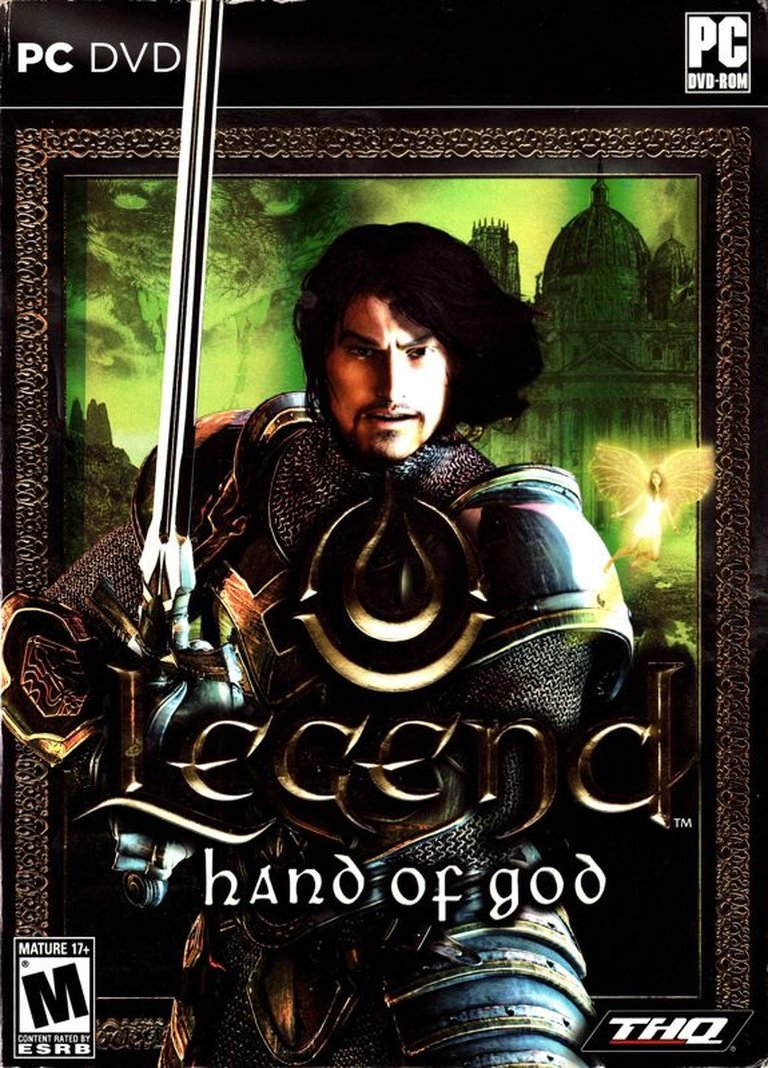
In the fantasy world of Aris, four races—elves, dwarves, orcs, and humans—coexist uneasily. When a reckless elf mage, Kaskaras, opens an ancient portal and unleashes demonic hordes, the races unite to drive them back, creating the Holy Flame to seal the evil away. Years later, the flame is extinguished, and as a young novice, you must embark on a quest to defeat Kaskaras and save the land. The game features a unique class system where players combine two ‘paths’ to create their character, such as a warrior or archmage, and explore a world filled with quests, monsters, and loot. With real-time combat and a whimsical fairy companion named Luna, the game blends classic action RPG elements with a dark fantasy narrative.
Gameplay Videos
Legend: Hand of God Free Download
Legend: Hand of God Cracks & Fixes
Legend: Hand of God Patches & Updates
Legend: Hand of God Guides & Walkthroughs
Legend: Hand of God Reviews & Reception
metacritic.com (57/100): Legend doesn’t offer many new things, but if you can’t be better than Diablo, you can at least try to create a good copy.
gamepressure.com (61/100): Overall, while “Legend: Hand of God” has its charm and merits, particularly in its graphics and storytelling, it faces significant technical challenges and gameplay repetitiveness that detract from the overall experience.
mobygames.com (65/100): The rest of the game is also faithful to established standards of the Hack ‘n’ Slay-RPG-Genre.
gamesradar.com (41/100): This Diablo clone is a source of pure boredom in its average-ness, then on top of that it gets incredibly difficult to the point of pure hatred.
Legend: Hand of God: A Comprehensive Retrospective
Introduction
Legend: Hand of God (2007) is a fascinating artifact of the late 2000s action-RPG landscape—a game that dared to challenge the dominance of Diablo II while struggling to escape its shadow. Released by German developer Master Creating GmbH and published by dtp entertainment AG, this title arrived in a crowded market alongside Titan Quest (2006) and Hellgate: London (2007), both of which sought to modernize the Diablo formula. Yet, Legend carved its own niche with two key innovations: the Cinematic Combat System (CCS), which dynamically adjusted attack animations based on enemy size and weapon type, and Luna, a sentient light elf who served as both a cursor and a companion.
This review will dissect Legend: Hand of God in its entirety—its development, narrative, mechanics, aesthetics, reception, and legacy—to determine whether it deserves its obscurity or if history has been unfair to this ambitious underdog.
Development History & Context
The Studio and Vision
Master Creating GmbH, a relatively obscure German studio, developed Legend: Hand of God with a clear mission: to create a Diablo-inspired action-RPG with a distinct identity. The team, led by project lead Jan Beuck and art director Andreas Adamek, sought to differentiate their game through two key innovations:
- The Cinematic Combat System (CCS) – A dynamic animation system where attacks varied based on enemy type (e.g., leaping to strike a giant’s head vs. hacking at a zombie’s limbs).
- Luna, the Light Elf – A sentient, voice-acted cursor that doubled as a light source and in-game companion, voiced by German actress Cosma Shiva Hagen.
The game’s engine utilized several middleware solutions, including Granny 3D for animation, SpeedTree for foliage, and PhysX for physics—an ambitious choice that later became a technical albatross due to the engine’s reliance on the now-defunct AGEIA PhysX hardware.
The Gaming Landscape of 2007
Legend: Hand of God arrived in a crowded market:
– Titan Quest (2006) had already refined the Diablo formula with its Greek mythology setting.
– Hellgate: London (2007) promised a modern, multiplayer-focused take on the genre (though it flopped spectacularly).
– Diablo III was still years away, leaving a gap for pretenders to the throne.
Yet, Legend faced an uphill battle. Its single-player focus and lack of multiplayer—a staple of the genre—immediately limited its appeal. Additionally, its PhysX dependency made it notoriously difficult to run on modern systems, a problem that persists to this day.
The Collector’s Edition: A Love Letter to Fans
The Collector’s Edition was a bold attempt to elevate Legend beyond a mere game. Packaged in a book-style box, it included:
– The base game.
– The Chronicles of Aris 1 audiobook.
– The official Dynamedion soundtrack (a standout feature, praised for its atmospheric compositions).
– Demonstorm, a prequel novel by Nikolas Wolff.
– A 46-page art book showcasing concept art and environment designs.
– A double-sided poster and a Hand of God tattoo.
This was a rare example of a mid-tier RPG receiving deluxe treatment, suggesting that dtp entertainment AG had high hopes for the title.
Narrative & Thematic Deep Dive
Plot Summary
Legend: Hand of God follows Targon, a young novice of the Order of the Holy Flame, on the night of his initiation. When a shadowy figure extinguishes the Eternal Flame—a magical barrier keeping demons at bay—Targon is thrust into a quest to recover the Hand of God, a legendary artifact capable of resealing the demonic portal.
The story is a classic chosen-one narrative, but with a twist: Targon is not a blank slate. His backstory is explored in Demonstorm, the prequel novel, which details the fall of the mage Kaskaras (the game’s primary antagonist) and the origins of the demonic invasion.
Themes and Motifs
- The Burden of Legacy – Targon is not just fighting demons; he’s living up to the legacy of his namesake, a legendary warrior who once entered the demonic portal to confront Kaskaras.
- Light vs. Darkness – The Eternal Flame and Hand of God symbolize hope, while the demons represent chaos and corruption.
- The Cost of Pride – Kaskaras’ downfall stems from his arrogance in believing he could control the portal’s power.
Characters and Dialogue
- Targon – A stoic protagonist with minimal personality, though his interactions with Luna (the light elf) provide occasional levity.
- Luna – A polarizing figure. Her sassy, fourth-wall-breaking commentary was intended to add charm but often came across as annoying due to repetitive voice lines.
- Kaskaras – A tragic villain whose backstory (detailed in Demonstorm) adds depth to the conflict.
Criticism: The dialogue is often stiff, with voice acting that ranges from wooden (Targon) to grating (Luna). The story, while serviceable, lacks the epic grandeur of its inspirations.
Gameplay Mechanics & Systems
Core Gameplay Loop
Legend: Hand of God is a real-time, isometric action-RPG with the following structure:
1. Exploration – Traverse dungeons, forests, and ruins, uncovering secrets and activating runestones (fast-travel points).
2. Combat – Engage in hack-and-slash battles with a variety of enemies, from orcs to undead.
3. Loot & Progression – Collect weapons, armor, and small runestones (one-time teleporters).
4. Quests – Complete main and side missions, though the latter are often repetitive (e.g., “kill X enemies”).
Combat and the Cinematic Combat System
The Cinematic Combat System is the game’s standout feature. Unlike traditional action-RPGs where attacks are generic, Legend adjusts animations based on:
– Enemy size (e.g., leaping to strike a giant’s head).
– Weapon type (e.g., dual-wielding vs. two-handed weapons).
– Special abilities (e.g., fireballs, healing spells).
Pros:
– Adds visual variety to combat.
– Makes encounters feel more dynamic.
Cons:
– Still repetitive over time.
– No multiplayer means no cooperative combat strategies.
Character Progression
Players choose two of five “paths” at level-up, creating hybrid classes:
– Warrior (melee)
– Villain (dual-wielding, critical hits)
– Magic (spellcasting)
– Wilderness (ranged combat)
– Faith (healing, support)
Skill Trees: Each path has its own tree, with one talent point per level for each path. This allows for hybrid builds (e.g., Battle Monk = Villain + Faith).
Criticism:
– Lack of depth – Skill trees are shallow compared to Diablo II or Path of Exile.
– No respec option – Poor early choices can ruin a playthrough.
UI and Quality-of-Life Issues
- No in-game graphics settings – Players must exit to adjust resolution.
- No minimap – Navigation is clunky.
- Repetitive side quests – Often boil down to “kill X enemies” with no meaningful rewards.
- PhysX dependency – Causes crashes and performance issues on modern systems.
World-Building, Art & Sound
Setting and Atmosphere
Legend: Hand of God takes place in Aris, a fantasy realm divided among humans, elves, dwarves, and orcs. The world is visually impressive, with:
– Dense forests bathed in golden light.
– Dark dungeons illuminated only by Luna’s glow.
– Ruined temples oozing with demonic corruption.
Strengths:
– Dynamic lighting – Luna’s light creates realistic shadows, enhancing immersion.
– Detailed environments – Textures and architecture are well-crafted for 2007 standards.
Weaknesses:
– Linear level design – Areas feel corridor-like, lacking the openness of Gothic or The Witcher.
– Repetitive enemy designs – Many foes are pallet swaps.
Art Direction
The art book included in the Collector’s Edition reveals a rich visual language:
– Gothic architecture with demonic motifs.
– Character designs that blend medieval realism with fantasy flair.
– Luna’s design – A glowing, ethereal sprite that stands out against the dark environments.
Sound Design and Music
- Dynamedion’s soundtrack – A standout feature, blending orchestral grandeur with eerie ambient tracks.
- Voice acting – Mixed quality; Luna’s high-pitched, sarcastic tone divides players.
- Sound effects – Satisfying (e.g., the crunch of bones when dismembering zombies).
Reception & Legacy
Critical Reception
Legend: Hand of God received mixed-to-negative reviews, with critics praising its ambition but criticizing its execution.
| Publication | Score | Verdict |
|---|---|---|
| GameStar | 79% | “A decent Diablo clone, but lacks innovation.” |
| PC Gamer | 41% | “A first-class ticket to the recycle bin.” |
| GameSpot | 45% | “Uninspired and repetitive.” |
| IGN | 6/10 | “Not awful, but not fun either.” |
| Metacritic | 57/100 | “Mixed or average.” |
Common Criticisms:
– Derivative gameplay – “Just another Diablo clone.”
– Technical issues – PhysX crashes, poor optimization.
– Repetitive quests – Lack of variety.
– Annoying companion – Luna’s voice acting.
Praise:
– Cinematic Combat System – “A nice touch.”
– Visuals – “Lush environments.”
– Soundtrack – “Atmospheric and well-composed.”
Commercial Performance
The game underperformed commercially, failing to make a significant impact in a market dominated by Titan Quest and anticipation for Diablo III. The Collector’s Edition, while impressive, was overshadowed by larger franchises.
Legacy and Influence
Legend: Hand of God is largely forgotten, but its Cinematic Combat System and light-based gameplay mechanics (via Luna) can be seen as precursors to later titles like:
– Dark Souls (dynamic enemy interactions).
– Hades (companion commentary).
– Torchlight (pet system, though more polished).
The game’s failure to launch also serves as a cautionary tale about:
– Over-reliance on middleware (PhysX).
– Lack of multiplayer in a genre that thrives on it.
– Marketing a “Diablo killer” without sufficient innovation.
The Browser Spin-Off: Tanoth
In 2008, Master Creating launched Legend as a browser-based MMO, later rebranded as Tanoth under Gameforge AG. It featured:
– Free-to-play model with microtransactions.
– Multilingual support (German, English, French, Spanish).
– Dungeon crawling and social features.
Despite initial popularity, Tanoth shut down in 2020, further cementing Legend’s status as a footnote in gaming history.
Conclusion: A Flawed Gem Worth Remembering?
Legend: Hand of God (Collector’s Edition) is a fascinating relic—a game that tried to be great but was held back by its era’s limitations and lack of polish. Its Cinematic Combat System and atmospheric world show glimpses of brilliance, but its repetitive gameplay, technical flaws, and derivative design prevent it from standing alongside the genre’s greats.
Final Verdict
- For Historians & Collectors – The Collector’s Edition is a treasure trove of physical media, making it a must-own for RPG enthusiasts.
- For Modern Players – Frustrating to run (thanks, PhysX) and outclassed by contemporary titles (Path of Exile, Grim Dawn).
- For Developers – A case study in how innovation in one area (combat animations) can’t compensate for weaknesses elsewhere (quest design, voice acting).
Score: 6.5/10 – A bold but flawed experiment that deserves recognition for its ambition, even if it ultimately falls short of greatness.
Legend: Hand of God may not have ascended to the pantheon of RPG legends, but its Collector’s Edition remains a testament to a time when games were more than just code—they were experiences. And for that, it earns its place in history.