
- Release Year: 2017
- Platforms: AirConsole, Android, iPad, iPhone, Macintosh, Nintendo Switch, PlayStation 4, Windows, Xbox Cloud Gaming, Xbox One, Xbox Series
- Publisher: CIRCLE Entertainment Ltd., SMG Studio Pty. Ltd.
- Developer: SMG Studio Pty. Ltd.
- Genre: Puzzle
- Perspective: Top-down
- Game Mode: Co-op, Single-player
- Gameplay: Cooperative gameplay, Puzzle-solving
- Average Score: 79/100
Description
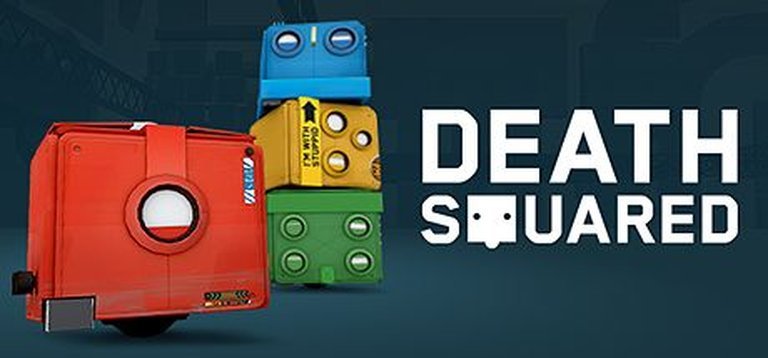
Death Squared is a cooperative puzzle game where players control two robots, navigating through a series of increasingly complex levels filled with traps, lasers, and other hazards. The game emphasizes teamwork and communication, as players must work together to solve puzzles and avoid the many dangers that threaten to destroy their robots. With a top-down perspective and a lighthearted, humorous tone, Death Squared offers a challenging yet entertaining experience for both solo and multiplayer modes.
Gameplay Videos
Where to Buy Death Squared
Death Squared Free Download
Death Squared Cracks & Fixes
Death Squared Patches & Updates
Death Squared Mods
Death Squared Guides & Walkthroughs
Death Squared Reviews & Reception
metacritic.com (85/100): Death Squared is an excellent addition to any puzzle fan’s library.
opencritic.com (74/100): Death Squared is an entertaining game that has been carefully refined until it can out from the crowds of other indie puzzle games.
monstervine.com : Death Squared is a charmingly pleasant puzzle game that combines fun but fair challenges with fantastic writing and voice acting.
provengamer.com : Death Squared is Lame Cubed.
Death Squared Cheats & Codes
Nintendo Switch
Select Story Mode, then on the ‘Select Level’ screen, enter the button sequence.
| Code | Effect |
|---|---|
| Up, Up, Down, Down, Right, Left, Right, Left, Down | Unlocks all levels |
Death Squared: A Masterclass in Cooperative Puzzle Design
Introduction
In the vast landscape of indie puzzle games, Death Squared stands out as a brilliant, if underappreciated, gem. Developed by SMG Studio, this 2017 release is a deceptively simple yet fiendishly clever cooperative puzzle experience that challenges players to think critically, communicate effectively, and embrace the inevitable explosions of their robotic avatars. While it may not have achieved the same level of mainstream recognition as titles like Portal or Keep Talking and Nobody Explodes, Death Squared carves its own niche with a unique blend of humor, accessibility, and relentless trial-and-error gameplay. This review will explore the game’s development, narrative, mechanics, and legacy, arguing that it is a must-play for fans of cooperative puzzles and a testament to the power of iterative design.
Development History & Context
The Birth of a Puzzle Phenomenon
Death Squared emerged from the creative crucible of the Global Game Jam 2015, where developers were tasked with creating a game around the theme “What do we do next?” SMG Studio, an Australian indie developer known for titles like Thumb Drift and Moving Out, took this prompt and crafted a prototype that would eventually evolve into Death Squared. The game’s core mechanics—guiding color-coded robots to their respective goals while navigating deadly traps—were refined over two years, culminating in its March 2017 release on Windows, macOS, PlayStation 4, and Xbox One, followed by a Nintendo Switch launch in July 2017 and mobile ports in 2018.
The game’s development was spearheaded by Patrick Cook, whose vision emphasized accessibility, humor, and cooperation. The studio’s prior experience with multiplayer games like Moving Out informed Death Squared’s design, particularly its focus on local multiplayer and drop-in/drop-out gameplay. The choice to use the Unity engine allowed for cross-platform compatibility, while the FMOD sound engine ensured crisp audio design, crucial for the game’s comedic timing.
A Crowded but Ripe Market
2017 was a banner year for indie puzzle games, with titles like Snipperclips, Gorogoa, and The Sexy Brutale vying for attention. However, Death Squared distinguished itself by prioritizing cooperative play over solo puzzling, a design philosophy that aligned perfectly with the Nintendo Switch’s launch. The Switch’s Joy-Con controllers made it ideal for impromptu multiplayer sessions, and Death Squared capitalized on this by offering instantaneous local co-op without the need for complex setups.
The game’s $14.99 price point (often discounted) and family-friendly ESRB “E” rating further broadened its appeal, positioning it as a party game that could be enjoyed by gamers and non-gamers alike. Its release on Xbox Game Pass and PlayStation Plus in later years introduced it to even wider audiences, cementing its status as a sleeper hit.
Narrative & Thematic Deep Dive
A Story of Robots, AI, and Corporate Absurdity
Death Squared’s narrative is minimal but effective, serving as a lighthearted framing device for its puzzle challenges. The game is set in the near future, where OmniCorp, a shadowy tech conglomerate, conducts experiments on cubic robots to test their problem-solving abilities. Players assume the role of these robots, guided by the witty banter of two characters:
- David Valenzuela (voiced by Mick Lauer): A sarcastic, overworked technician who oversees the tests.
- IRIS (also voiced by Mick Lauer): A snarky, self-aware AI assistant who provides commentary on the robots’ repeated failures.
The dialogue between David and IRIS is sharp, humorous, and self-deprecating, often poking fun at the players’ inevitable deaths. Lines like “Wow, you really messed that up. Let’s try again!” or “Iris, remind me why we’re paying these robots?” add a layer of meta-humor that keeps the tone lighthearted, even as the puzzles grow increasingly sadistic.
Themes: Failure, Cooperation, and the Absurdity of Testing
At its core, Death Squared explores several key themes:
- The Beauty of Failure: The game celebrates mistakes by tracking the number of deaths in each level, turning failure into a badge of honor. This design choice encourages players to learn through experimentation rather than fearing punishment.
- Communication Under Pressure: The puzzles are designed to force players to talk to each other, whether to coordinate movements, warn of traps, or simply vent frustration. This makes Death Squared as much a social experience as a gaming one.
- Corporate Satire: The OmniCorp setting and David’s deadpan delivery subtly critique corporate culture, particularly the absurdity of subjecting workers (or robots) to relentless, often pointless tests.
- AI and Humanity: The dynamic between David and IRIS plays with AI tropes, with IRIS often outsmarting or mocking her human counterpart, blurring the line between helper and hindrance.
While the story is not the game’s main draw, it enhances the experience by giving context to the puzzles and providing comic relief during frustrating moments.
Gameplay Mechanics & Systems
Core Gameplay: Simple Controls, Complex Challenges
Death Squared’s gameplay is easy to learn but difficult to master. Players control one or more cube-shaped robots, each assigned a color (red, blue, green, or yellow). The goal is to navigate each robot to its corresponding colored goal pad while avoiding environmental hazards like:
- Spikes (instant death)
- Lasers (can be blocked by matching-colored robots)
- Moving platforms (require precise timing)
- Buttons and switches (trigger environmental changes)
- Teleporters (warp robots to different locations)
- Force fields (only permeable by matching-colored robots)
The controls are intuitionally simple:
– Analog sticks move the robots.
– Face buttons trigger optional taunts or sounds (purely for humor).
However, the devil is in the details. The game’s brilliance lies in how it layers mechanics to create increasingly complex puzzles. Early levels teach basic movement and hazard avoidance, while later stages introduce:
- Interdependent robot paths: One robot’s movement affects another’s goal location.
- Sequential button presses: Requires precise timing between players.
- Stacking robots: Using one robot as a platform for another.
- Hidden traps: Some levels feature unseen dangers that force players to memorize patterns through trial and error.
Game Modes: Something for Everyone
Death Squared offers three primary modes:
-
Story Mode (1-2 Players, 80 Levels)
- The main campaign, playable solo or cooperatively.
- Features narrative commentary from David and IRIS.
- Puzzles are designed for two players but can be tackled alone by switching between robots.
-
Party Mode (2-4 Players, 40 Levels)
- Chaotic, high-energy puzzles designed for larger groups.
- Introduces new mechanics like color-mixing and shared buttons.
- Often devolves into shouting matches, which is part of the fun.
-
Vault Mode (2-4 Players, 30+ Levels)
- Brutally difficult puzzles for hardcore players.
- Features free post-launch DLC levels, adding replay value.
- Requires near-perfect coordination and deep understanding of mechanics.
The Good, the Bad, and the Explosive
Strengths:
✅ Accessible yet deep: The game’s low skill floor makes it easy for newcomers to jump in, while its high skill ceiling keeps veterans engaged.
✅ Perfect for local multiplayer: The drop-in/drop-out co-op is seamless, making it ideal for game nights.
✅ Hilarious voice acting: Mick Lauer’s dual performance as David and IRIS is a standout, adding personality to an otherwise abstract game.
✅ Encourages teamwork: The puzzles force communication, making it a great social experience.
Weaknesses:
❌ Trial-and-error design: Some puzzles rely on unseen traps, leading to cheap deaths that can frustrate players.
❌ No online multiplayer: The lack of online co-op limits its appeal in a post-pandemic world.
❌ Repetitive visuals: The minimalist art style is functional but lacks variety, making some levels blend together.
❌ Controller issues: Some players report imprecise movement, particularly in solo play, where switching between robots can feel clunky.
World-Building, Art & Sound
Aesthetic: Minimalism with a Purpose
Death Squared’s visual design is clean, functional, and uncluttered, prioritizing readability over flashiness. The game adopts a top-down perspective with a grid-based layout, ensuring that players can quickly assess hazards and paths. The color-coding of robots and goals is intuitive, while environmental elements like lasers and spikes are easily distinguishable.
The robots themselves are simple cubes with expressive “faces” that react to deaths with comical explosions. Later levels introduce customization options, allowing players to paint patterns (like mustaches or camo) onto their robots, adding a touch of personalization.
Sound Design: Comedy Through Audio
The game’s audio design is a masterclass in comedic timing. Key elements include:
- Voice Acting: Mick Lauer’s dual performance is the star, delivering lines with perfect sarcasm and exasperation.
- Death Sounds: Each robot explosion is accompanied by a satisfying “boom” and a count increment, turning failure into a running joke.
- Ambient Music: The electronica soundtrack is unobtrusive, ensuring that the voice acting and sound effects take center stage.
- Robot Taunts: Optional button-activated sounds (like beeps or giggles) add humor during tense moments.
Atmosphere: A Lab of Controlled Chaos
The game’s setting—a corporate testing lab—is reinforced through subtle details:
– Clinical, sterile environments with gray floors and white walls.
– Flickering lights and malfunctioning machinery hint at OmniCorp’s negligence.
– David and IRIS’s commentary reinforces the absurdity of the tests, making players feel like guinea pigs in a dystopian experiment.
Reception & Legacy
Critical Acclaim and Player Divides
Death Squared received generally favorable reviews, with critics praising its cooperative gameplay, humor, and accessibility. However, player reactions were more mixed, highlighting the game’s polarizing design choices.
Critical Reception (Metacritic Scores):
– Nintendo Switch: 78/100 (Generally Favorable)
– Xbox One: 80/100 (Generally Favorable)
– PlayStation 4: 72/100 (Mixed or Average)
Notable Reviews:
– Gaming Nexus (9/10): “Deceptively smart puzzles, an endearingly smarmy sense of humor, and organic, instantaneous multiplayer make Death Squared a must-buy on Switch.”
– Nintendo Life (8/10): “Cooperative at its core but imminently playable as a solo experience… a rare experience.”
– Destructoid (Positive): “Much more fun to give the second controller to another player and shout advice at one another.”
– TrueAchievements (7/10): “A decent co-op puzzle game that works best when playing with friends in real life.”
Player Feedback (Steam/OpenCritic):
– Steam (Very Positive, 88%): Players praised the co-op experience but criticized controller issues and repetitive puzzles.
– OpenCritic (74%): Critics recommended it 63% of the time, with many noting its lack of innovation but strong execution.
Awards and Recognition
Despite its niche appeal, Death Squared earned industry recognition:
– Nominated for “Australian Developed Game of the Year” at the 2018 Australian Games Awards.
– Featured in Xbox Game Pass and PlayStation Plus, introducing it to millions of new players.
Influence and Legacy
While Death Squared didn’t spawn a direct sequel, its success influenced SMG Studio’s later projects, particularly Moving Out (2020), which expanded on the cooperative chaos with a physics-based moving simulator. The game’s accessible yet challenging design also inspired other local multiplayer puzzlers, such as:
– Keep Talking and Nobody Explodes (asymmetrical co-op)
– Overcooked (chaotic teamwork)
– Lovers in a Dangerous Spacetime (role-based cooperation)
Its humor and emphasis on failure can also be seen in games like Human: Fall Flat and Gang Beasts, where clumsy physics and comedic deaths are central to the experience.
Conclusion: A Puzzle Game That Deserves a Spot in Your Library
Death Squared is far from perfect, but its flaws are overshadowed by its strengths. It is a brilliant cooperative puzzle game that thrives on communication, humor, and iterative learning. While its trial-and-error design and lack of online play may frustrate some, its accessibility, charm, and replayability make it a standout title in the indie puzzle genre.
Final Verdict:
⭐⭐⭐⭐☆ (4/5) – Highly Recommended for Co-Op Fans
Who Should Play It?
– Groups looking for a fun, chaotic party game.
– Couples or friends who enjoy cooperative challenges.
– Puzzle enthusiasts who don’t mind trial and error.
– Families seeking an accessible yet engaging experience.
Who Should Avoid It?
– Solo players who dislike clunky controls.
– Those who prefer online multiplayer over local co-op.
– Gamers who hate repetitive or unfair puzzle design.
In the pantheon of cooperative puzzle games, Death Squared may not dethrone Portal 2, but it carves its own niche as a hilarious, challenging, and endlessly replayable experience. If you’ve ever wanted a game that turns failure into fun and friendship into fiery arguments, look no further.
Final Thought: “Death Squared isn’t just about solving puzzles—it’s about surviving them, together.”