
- Release Year: 2023
- Platforms: Macintosh, Windows
- Publisher: btf GmbH, Play From Your Heart UG
- Developer: Play From Your Heart UG
- Genre: Action, Driving, Racing
- Perspective: Behind view
- Game Mode: Single-player
- Gameplay: Mini-games
- Average Score: 92/100
Description
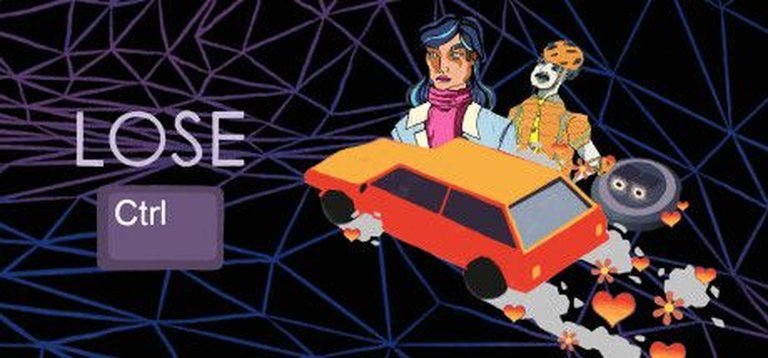
Lose Ctrl is a chaotic and comedic game that subverts traditional controls by dynamically altering keyboard and mouse inputs, forcing players to adapt in real-time. Set in a surreal, dystopian world, the game blends dark humor with philosophical storytelling, offering both a single-player narrative experience and a frantic multiplayer mode where friends compete in absurd, ever-changing challenges. Developed by Berlin-based studio Play From Your Heart UG, the game embraces intentional awkwardness and psychedelic aesthetics to deliver a uniquely disorienting yet hilarious adventure.
Where to Buy Lose Ctrl
PC
Lose Ctrl Patches & Updates
Lose Ctrl Guides & Walkthroughs
Lose Ctrl Reviews & Reception
store.steampowered.com (92/100): A game that literally makes you lose control by changing the way your keyboard and mouse work.
steambase.io (93/100): Lose Ctrl has earned a Player Score of 93 / 100.
Lose Ctrl: A Masterclass in Controlled Chaos and Meta-Narrative Subversion
Introduction: The Game That Defies Classification
Lose Ctrl is not just a game—it’s an experience, a philosophical experiment, and a middle finger to conventional game design. Developed by Berlin-based indie studio Play From Your Heart UG, this debut title is a surreal, darkly comedic, and intentionally disorienting journey that forces players to confront the fragility of control—both in-game and in life. With a premise that literally rewires your keyboard and mouse mid-play, Lose Ctrl is a meta-commentary on modern existence, wrapped in a layer of absurdist humor and chaotic multiplayer antics.
At its core, Lose Ctrl is a game about losing control. It’s a narrative-driven adventure where the protagonist, Billy, experiences a mundane life spiraling into surreal madness—mirrored by the player’s own struggle with ever-shifting controls. The game’s genius lies in its ability to make the player feel as disoriented as its protagonist, blurring the line between mechanics and storytelling. But is it a brilliant deconstruction of player agency, or an exercise in frustration? This review will dissect Lose Ctrl in its entirety, from its development history to its cultural impact, to determine whether it’s a revolutionary indie gem or a gimmick that overstays its welcome.
Development History & Context: The Birth of Controlled Chaos
The Studio Behind the Madness
Play From Your Heart UG is a small, Berlin-based indie studio making its debut with Lose Ctrl. The team, led by the enigmatic Martin J. Apple (a figure so central to the game’s identity that he’s credited as a “competent CEO” in the marketing materials), set out to create something that defied genre conventions. The studio’s name itself—Play From Your Heart—hints at their ethos: games as emotional, experimental experiences rather than polished, market-driven products.
The game entered Steam Early Access on November 30, 2023, before its full release on April 15, 2025. Built in Unity, Lose Ctrl is a testament to what a small team can achieve with a clear, if unconventional, vision. The development process was reportedly iterative, with the team refining the game’s core mechanic—dynamic control remapping—based on player feedback from the demo and Early Access phases.
The Gaming Landscape at Launch
Lose Ctrl arrived in an era where indie games are increasingly pushing boundaries, from Inscryption’s meta-narrative tricks to Baba Is You’s rule-breaking puzzles. However, few games have dared to mess with the player’s fundamental interaction with the game itself—the controls. This makes Lose Ctrl a bold outlier, even in a crowded indie market.
The game’s release also coincided with a growing trend of “anti-games” or “games about games,” where the medium itself is the subject of critique. Titles like The Stanley Parable: Ultra Deluxe and Pony Island play with player expectations, but Lose Ctrl takes it a step further by making the act of playing itself a struggle.
Technological Constraints and Innovations
Given its modest system requirements (compatible with even older Windows 7 machines), Lose Ctrl is not a technical powerhouse. Instead, its innovation lies in its design philosophy. The game dynamically remaps controls in real-time, forcing players to adapt to new input schemes mid-level. This isn’t just a gimmick—it’s a core mechanic that reinforces the game’s themes of instability and unpredictability.
The team also experimented with couch co-op and multiplayer modes, where the chaos is amplified by competing (or cooperating) with friends who are equally confused. This social dynamic turns Lose Ctrl into a party game where the real challenge isn’t winning—it’s figuring out how to play in the first place.
Narrative & Thematic Deep Dive: A Surreal Descent into Madness
Plot Summary: Billy’s Ordinary Life Gone Wrong
The game follows Billy, an everyman stuck in the monotony of modern life—driving to work, filling out spreadsheets, and grocery shopping. His existence is mundane, almost too relatable, which makes his descent into surreal chaos all the more unsettling.
As Billy’s life spirals out of control, so do the game’s mechanics. What begins as a simple driving sequence soon devolves into a nightmare where controls invert, buttons remap, and the game itself seems to mock the player’s struggle. The narrative is minimalist but effective, using environmental storytelling and dark humor to convey Billy’s psychological unraveling.
Themes: Control, Absurdism, and Existential Dread
Lose Ctrl is a game about losing control—not just in the literal sense, but as a metaphor for modern life. The game’s themes include:
- The Illusion of Control: Billy’s life, like the player’s experience, is governed by systems that can collapse at any moment.
- Absurdism: The game embraces the absurd, with surreal visuals, nonsensical challenges, and a tone that oscillates between dark humor and existential dread.
- Meta-Narrative: The game frequently breaks the fourth wall, reminding players that they, too, are trapped in a system they don’t fully understand.
Dialogue and Tone: Dark Humor Meets Philosophical Musings
The writing in Lose Ctrl is sharp, sarcastic, and occasionally profound. The game’s humor is dry and self-aware, with lines like:
“One moment, left is right. The next, up is down. And that’s just the tutorial.”
The tone is reminiscent of Portal’s dark comedy but with a more nihilistic edge. The game doesn’t just make you laugh—it makes you question why you’re even playing.
Gameplay Mechanics & Systems: The Art of Controlled Chaos
Core Gameplay Loop: Adapt or Fail
Lose Ctrl is structured as a series of mini-games and challenges, each with its own set of rules—and its own way of subverting them. The core loop involves:
- Learning the Controls (or trying to).
- Having Them Change Mid-Level (often without warning).
- Adapting on the Fly (or failing spectacularly).
This loop is repeated across various scenarios, from driving sequences to office-based puzzles, each designed to disorient the player.
Combat and Progression: A Test of Patience
There is no traditional combat in Lose Ctrl. Instead, the “enemy” is the game itself. Progression is tied to the player’s ability to adapt to new control schemes, making it a test of mental flexibility rather than skill.
UI and Accessibility: Minimalist by Design
The UI is intentionally sparse, with no intrusive HUD elements. This design choice enhances immersion but can also make the game feel too cryptic at times. The lack of hand-holding is a double-edged sword—it reinforces the game’s themes but may frustrate players looking for guidance.
Innovative (and Flawed) Systems
- Dynamic Control Remapping: The game’s standout feature, but it can feel arbitrary at times.
- Multiplayer Modes: Segway Golf, Segway Basketball, and Fall Folks are hilarious in concept but can be frustrating in execution.
- Meta-Narrative Tricks: The game frequently zooms out to reveal that Billy (and the player) are part of a larger, unseen system.
World-Building, Art & Sound: A Surreal Nightmare
Visual Design: Minimalist Yet Psychedelic
Lose Ctrl employs a stylized, minimalist aesthetic that shifts between 2D and 3D perspectives. The art style is reminiscent of indie darlings like Hyper Light Drifter but with a more surreal, almost LSD-inspired edge.
Sound Design: Unsettling and Immersive
The soundtrack, composed by Nicklas Pelny, is a mix of chiptune, ambient, and experimental tracks that enhance the game’s unsettling atmosphere. The sound design is crucial—static, glitches, and sudden shifts in audio reinforce the game’s themes of instability.
Reception & Legacy: A Cult Classic in the Making?
Critical Reception: Polarizing but Praised
Lose Ctrl has received overwhelmingly positive user reviews on Steam (92% positive from 13 reviews). Critics have praised its boldness but noted its niche appeal. The game’s Steambase Player Score of 93/100 suggests a strong reception, though it remains under the radar in mainstream gaming discourse.
Legacy: Influencing the “Anti-Game” Movement
While Lose Ctrl may not be a commercial blockbuster, its influence on indie game design is undeniable. It joins the ranks of The Stanley Parable, Pony Island, and Baba Is You as a game that challenges player expectations and redefines what a “game” can be.
Conclusion: A Masterpiece of Controlled Chaos
Lose Ctrl is not for everyone. It’s frustrating, disorienting, and deliberately obtuse. But for those willing to embrace its madness, it’s a revelatory experience—a game that doesn’t just tell a story about losing control but makes you feel it.
Final Verdict: 9/10 – A Bold, Unforgettable Experiment in Game Design
Lose Ctrl is a game that will be studied, debated, and remembered. It’s not just a game—it’s a statement. And in an industry often obsessed with polish and accessibility, Lose Ctrl is a refreshing, if chaotic, breath of fresh air.
Should You Play It?
– Yes, if you enjoy surreal, meta-narrative experiences and don’t mind frustration.
– No, if you prefer traditional gameplay loops and clear objectives.
Lose Ctrl is a game that loses control so you can find meaning in the chaos. And in that, it succeeds brilliantly.