
- Release Year: 2006
- Platforms: PlayStation 3, Windows, Xbox 360
- Publisher: ak tronic Software & Services GmbH, Game Factory Interactive Ltd., Russobit-M, S.A.D. Software Vertriebs- und Produktions GmbH, Ubisoft Entertainment SA
- Developer: Ubisoft Entertainment Inc.
- Genre: Action, Tactical shooter
- Perspective: 1st-person
- Game Mode: Online Co-op, Online PVP, Single-player
- Gameplay: Cover System, Rules of Engagement, Snake cam, Tactical shooter, Team-based combat, Weapon customization
- Setting: City – Las Vegas, North America
- Average Score: 84/100
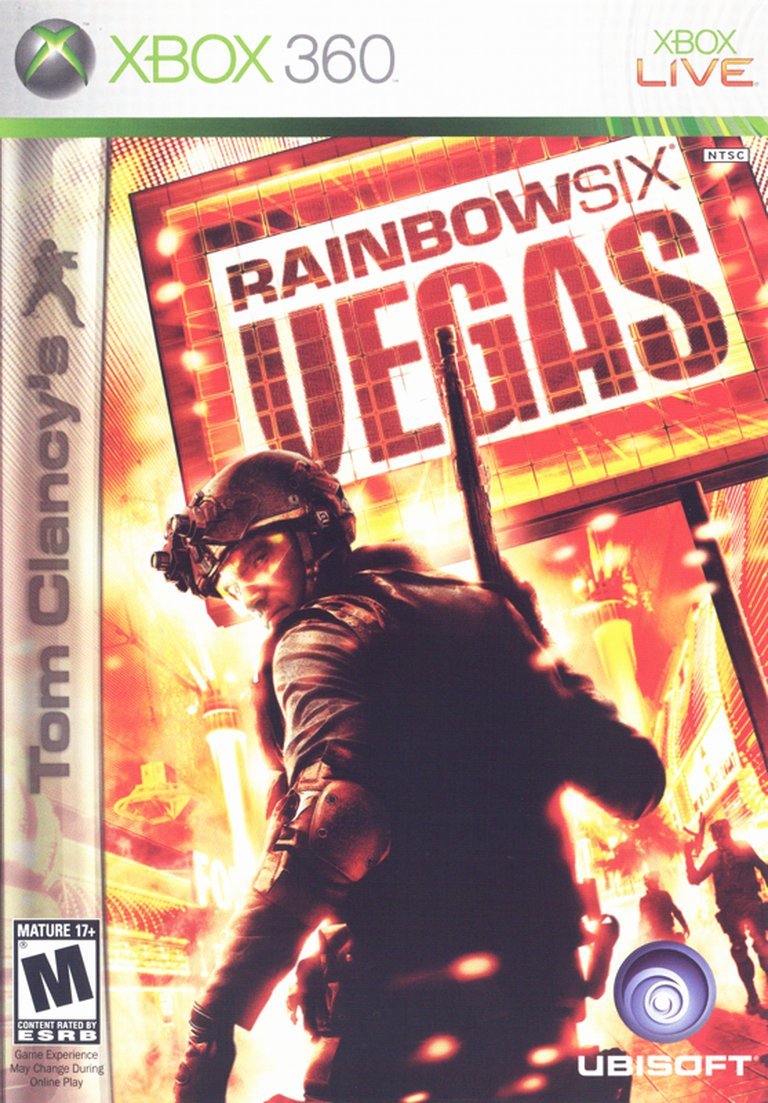
Description
Tom Clancy’s Rainbow Six: Vegas is a tactical first-person shooter set in Las Vegas, where players lead a Rainbow Six squad as Logan Keller to combat terrorists attempting to seize control of the city. The game blends action-driven gameplay with strategic team commands, featuring a connected storyline with missions like hostage rescues and bomb disarmament. Players utilize a variety of weapons and gadgets, while a dynamic health system replaces traditional health bars. The game also includes multiplayer modes for cooperative and competitive play.
Gameplay Videos
Where to Buy Tom Clancy’s Rainbow Six: Vegas
PC
Tom Clancy’s Rainbow Six: Vegas Free Download
Tom Clancy’s Rainbow Six: Vegas Cracks & Fixes
Tom Clancy’s Rainbow Six: Vegas Patches & Updates
Tom Clancy’s Rainbow Six: Vegas Mods
Tom Clancy’s Rainbow Six: Vegas Guides & Walkthroughs
Tom Clancy’s Rainbow Six: Vegas Reviews & Reception
metacritic.com (88/100): An incredible game online or offline. My high expectations, and they were indeed high, were met and exceeded in what I can only term one of my most favorite Xbox games yet.
ign.com : The result is the most accessible and among the most satisfying Rainbow Six titles yet — a treat for former Delta Force operatives and acne-ridden Halo gamers alike.
gamepressure.com (80/100): The gameplay, which spans across one in-game day, features first person perspective. The focus was put on tactical planning, so the operations fought in the city bathed in neon lights can be played out really professionally.
monstercritic.com (85/100): The gameplay mechanics are refined to the point of perfection and the presentation is stellar.
Tom Clancy’s Rainbow Six: Vegas Cheats & Codes
Xbox 360
Pause the game in Single Player mode, then hold LB and enter the following codes.
| Code | Effect |
|---|---|
| Left Thumbstick, Left Thumbstick, A, Right Thumbstick, Right Thumbstick, B, Left Thumbstick, Left Thumbstick, X, Right Thumbstick, Right Thumbstick, Y | Change Bullet Tracers Color |
| A, A, B, B, X, X, Y, Y, A, B, X, Y | Increase Ragdoll Strength |
| Left Thumbstick, Right Thumbstick, Left Thumbstick, Right Thumbstick, A, B, Left Thumbstick, Right Thumbstick, Left Thumbstick, Right Thumbstick, X, Y | Characters Are Killed With Only One Shot |
| B, X, A, Y, Left Thumbstick, Y, A, X, B, Right Thumbstick | All Characters Have Big Head |
| X, B, X, B, Left Thumbstick, Left Thumbstick, Y, A, Y, A, Right Thumbstick, Right Thumbstick | Third Person View |
| Left Analog-stick(2), A, Right Analog-stick(2), B, Left Analog-stick(2), X, Right Analog-stick(2), Y | Alternate bullet tracer color |
| B, X, A, Y, Left Analog-stick, Y, A, X, B, Right Analog-stick | Big heads |
| X, B, X, B, Left Analog-stick(2), Y, A, Y, A, Right Analog-stick(2) | Third person view |
| A(2), B(2), X(2), Y(2), A, B, X, Y | Stronger ragdoll effect |
| Left Analog-stick, Right Analog-stick, Left Analog-stick, Right Analog-stick, A, B, Left Analog-stick, Right Analog-stick, Left Analog-stick, Right Analog-stick, X, Y | One hit kills |
| Left Analog-stick(2), A, Right Analog-stick(2), B, Left Analog-stick(2), X, Right Analog-stick(2), Y | Laser bullets |
Tom Clancy’s Rainbow Six: Vegas: A Tactical Shooter Reborn
Introduction
In the annals of tactical shooters, few franchises have left as indelible a mark as Tom Clancy’s Rainbow Six. With its debut in 1998, the series redefined the genre, emphasizing meticulous planning, squad-based tactics, and a level of realism that set it apart from the run-and-gun shooters of the era. However, by the mid-2000s, the franchise had begun to falter, with Rainbow Six: Lockdown (2005) widely regarded as a misstep that diluted the series’ core identity. Enter Tom Clancy’s Rainbow Six: Vegas, a game that not only revitalized the franchise but also redefined what a tactical shooter could be in the next-generation console era.
Released in November 2006 for the Xbox 360, with subsequent ports to Windows and PlayStation 3, Rainbow Six: Vegas was a bold reinvention. It stripped away the cumbersome pre-mission planning of its predecessors while retaining the tactical depth that fans loved. It embraced the cinematic spectacle of modern shooters without sacrificing the methodical, squad-based gameplay that defined Rainbow Six. The result was a game that felt both fresh and familiar, a delicate balancing act that few sequels manage to achieve.
This review will delve deep into Rainbow Six: Vegas, exploring its development history, narrative structure, gameplay mechanics, and its lasting impact on the tactical shooter genre. We will examine how it successfully bridged the gap between the old-school tactical shooters of the late ’90s and the more action-oriented, cinematic shooters of the 2000s, and why it remains a pivotal entry in the Rainbow Six series.
Development History & Context
The Studio and the Vision
Rainbow Six: Vegas was developed by Ubisoft Montreal, a studio with a proven track record in the tactical shooter genre, having previously worked on Rainbow Six 3: Raven Shield (2003) and Ghost Recon: Advanced Warfighter (2006). The creative direction was led by Maxime Béland, who sought to modernize the Rainbow Six formula while preserving its tactical roots. The game was built on the Unreal Engine 3, a decision that allowed the team to leverage the engine’s advanced lighting, physics, and rendering capabilities to create a visually stunning and immersive experience.
The development cycle spanned over two years, with a team of approximately 180 people working on the project. The goal was clear: to create a Rainbow Six game that could compete with the likes of Gears of War and F.E.A.R. in terms of visual fidelity and action while maintaining the tactical depth that had defined the series. This was no small feat, as the Rainbow Six franchise had, by 2006, become synonymous with a slower, more methodical style of gameplay that was increasingly at odds with the faster-paced, more cinematic shooters dominating the market.
Technological Constraints and Innovations
The Xbox 360, the lead platform for Rainbow Six: Vegas, presented both opportunities and challenges. The console’s powerful hardware allowed for detailed environments, advanced AI, and smooth online multiplayer, but it also required the team to optimize the game for a fixed hardware configuration. The Unreal Engine 3, while powerful, was still relatively new, and the team had to work closely with Epic Games to ensure that the engine could handle the game’s ambitious scope.
One of the most significant technological innovations in Rainbow Six: Vegas was the introduction of a dynamic cover system. Inspired by Gears of War, which had released just a few months earlier, the cover system allowed players to seamlessly take cover behind objects, blind-fire, and pop out to engage enemies. This was a departure from the more static cover mechanics of previous Rainbow Six games and was a key factor in making the game more accessible to a broader audience.
Another major innovation was the “Rules of Engagement” system, which allowed players to issue context-sensitive commands to their squad mates using a radial menu. This system was designed to be intuitive and easy to use, even in the heat of combat, and it was a significant improvement over the more cumbersome squad command systems of previous games.
The Gaming Landscape in 2006
The release of Rainbow Six: Vegas in late 2006 came at a pivotal moment in the evolution of the first-person shooter genre. Gears of War, released just a month earlier, had set a new standard for third-person cover-based shooters, while F.E.A.R. had demonstrated the potential of advanced AI and physics in a first-person context. Meanwhile, Call of Duty 4: Modern Warfare, released in November 2007, was on the horizon, poised to revolutionize the military shooter genre with its cinematic single-player campaign and robust multiplayer.
In this context, Rainbow Six: Vegas faced the challenge of carving out its own niche. It needed to be tactical enough to satisfy longtime fans of the series while also being accessible enough to appeal to the broader audience that had embraced games like Gears of War and Halo. The developers achieved this by streamlining many of the series’ more complex mechanics, such as pre-mission planning and inventory management, while introducing new features like the cover system and the “Rules of Engagement” radial menu.
The game’s setting in Las Vegas was also a deliberate choice. The city’s neon-lit casinos, bustling streets, and iconic landmarks provided a stark contrast to the more mundane urban and military environments of previous Rainbow Six games. This not only made the game more visually distinctive but also allowed the developers to create a sense of spectacle and scale that was well-suited to the next-generation hardware.
Narrative & Thematic Deep Dive
Plot Overview
Rainbow Six: Vegas follows the story of Logan Keller, a member of the elite counter-terrorist unit Rainbow, as he and his team are deployed to Las Vegas to stop a terrorist threat led by the enigmatic Irena Morales. The game’s narrative is divided into two main acts: the first takes place in a Mexican border town, where Logan and his team are tasked with capturing Irena, while the second act unfolds in Las Vegas, where the team must prevent a series of coordinated terrorist attacks.
The story begins in 2010, with Logan, Gabriel Nowak, and Kan Akahashi deployed to a Mexican border town to capture Irena. The mission goes awry when Logan is separated from his team during a fast-rope insertion. He fights his way through the town, eventually regrouping with Gabriel and Kan at an old church. After infiltrating a train yard and freeing hostages, the team tracks Irena to a mine, where they are ambushed. Gabriel and Kan are captured, and Logan is left to fight his way out alone, armed only with his pistol.
After escaping, Logan is redeployed to Las Vegas, where he links up with a new team consisting of Michael Walters and Jung Park. The team’s first mission is to clear out the Calypso Casino, where they rescue hostages and uncover intelligence about the terrorists’ plans. Subsequent missions involve rescuing a kidnapped reporter, disarming a bomb in the Vertigo Spire luxury hotel, and infiltrating Dante’s Casino to rescue Gabriel and Kan. The climax of the game takes place at the Nevada Dam, where Logan confronts Irena and destroys a micro-pulse missile that threatens to devastate Las Vegas.
Characters and Dialogue
The characters in Rainbow Six: Vegas are, for the most part, archetypal military personnel, but they are given enough personality and depth to make them memorable. Logan Keller, the protagonist, is a stoic and capable leader, while his teammates Gabriel and Kan provide a mix of humor and professionalism. Michael Walters and Jung Park, the new team members introduced in the Las Vegas act, are similarly well-defined, with Michael serving as the team’s tech expert and Jung as the sniper.
The dialogue in the game is functional rather than exceptional, with most of the character interactions serving to advance the plot or provide tactical information. However, there are moments of levity, particularly in the interactions between Logan and his teammates, that help to humanize the characters and make them more relatable.
One of the more interesting aspects of the game’s narrative is the way it handles the transition between the Mexican border town and Las Vegas. The first act serves as a tutorial of sorts, introducing players to the game’s mechanics and establishing the stakes of the mission. The second act, set in Las Vegas, is where the game truly comes into its own, with larger, more complex missions and a greater sense of scale and spectacle.
Themes and Underlying Messages
At its core, Rainbow Six: Vegas is a game about teamwork and tactical precision. The narrative reinforces this theme by emphasizing the importance of coordination and communication between team members. Logan’s separation from his team in the opening mission serves as a reminder of the dangers of operating alone, while the subsequent missions in Las Vegas highlight the effectiveness of a well-coordinated squad.
The game also explores themes of loyalty and betrayal, particularly in the later stages of the narrative. The revelation that Gabriel Nowak is a mole working for Irena adds a layer of complexity to the story and forces players to question the motivations of the characters they have been fighting alongside.
Another underlying theme in Rainbow Six: Vegas is the tension between realism and spectacle. The game’s setting in Las Vegas, with its bright lights and iconic landmarks, is inherently cinematic, and the developers lean into this with set-piece moments like the infiltration of the Calypso Casino and the climactic battle at the Nevada Dam. However, the game also grounds these moments in a sense of tactical realism, with players needing to carefully plan their approach and coordinate with their team to succeed.
Storytelling Techniques
One of the most notable aspects of Rainbow Six: Vegas is its approach to storytelling. Unlike previous entries in the series, which relied heavily on pre-mission briefings and cutscenes, Rainbow Six: Vegas tells its story primarily through in-game events and dialogue. This creates a more immersive experience, as players are never taken out of the action to watch a cutscene. Instead, the narrative unfolds organically as players progress through the missions, with key plot points revealed through radio chatter, environmental storytelling, and scripted events.
The game also makes use of a heads-up display (HUD) that provides contextual information, such as mission objectives and intelligence updates, without breaking the immersion. This approach to storytelling was influenced by games like F.E.A.R. and Half-Life 2, which had demonstrated the effectiveness of in-game narrative techniques.
However, the game’s narrative is not without its flaws. The plot is relatively straightforward, with few twists or surprises, and the characters, while likable, are not particularly deep or complex. The game’s ending, which leaves several plot threads unresolved and sets up a sequel, has also been criticized for feeling abrupt and unsatisfying.
Gameplay Mechanics & Systems
Core Gameplay Loop
At its heart, Rainbow Six: Vegas is a tactical first-person shooter that emphasizes squad-based combat, careful planning, and precise execution. The core gameplay loop revolves around clearing rooms, securing objectives, and engaging in firefights with enemy forces. Players take on the role of Logan Keller, leading a squad of two AI-controlled teammates through a series of linear but tactically complex missions.
The game’s missions are structured around a series of objectives, such as rescuing hostages, disarming bombs, or eliminating high-value targets. Each mission is divided into smaller segments, with checkpoints placed at key points to ensure that players do not have to repeat large sections of the game if they fail. The checkpoints are generally well-placed, though some players have criticized the game for being overly punishing in certain sections, particularly when playing on higher difficulty settings.
Combat and Tactics
Combat in Rainbow Six: Vegas is a blend of tactical planning and fast-paced action. Players must carefully assess each situation, using tools like the snake cam to scout ahead and mark enemies before engaging. The snake cam, a small camera that can be deployed under doors or through small openings, is one of the game’s most innovative features, allowing players to gather intelligence and plan their approach without exposing themselves to enemy fire.
Once players have scouted the area, they can issue commands to their squad mates using the “Rules of Engagement” radial menu. This menu allows players to order their teammates to breach doors, provide covering fire, or engage specific targets. The AI in Rainbow Six: Vegas is generally competent, with teammates taking cover, suppressing enemies, and following orders effectively. However, there are moments where the AI can be frustrating, particularly when teammates fail to respond to commands or get stuck on environmental obstacles.
The game’s cover system is another key component of its combat mechanics. Players can take cover behind objects, blind-fire to suppress enemies, and pop out to take precise shots. The cover system is intuitive and responsive, making it easy for players to move fluidly between cover positions. This is a significant improvement over the more static cover mechanics of previous Rainbow Six games and is one of the reasons why Rainbow Six: Vegas feels more modern and accessible.
Weaponry and Equipment
Rainbow Six: Vegas features a wide variety of weapons, ranging from pistols and submachine guns to assault rifles and sniper rifles. Each weapon has its own strengths and weaknesses, and players are encouraged to experiment with different loadouts to find the ones that best suit their playstyle. The game also includes a variety of gadgets, such as flashbangs, frag grenades, and C4 explosives, which can be used to gain a tactical advantage in combat.
One of the most notable changes in Rainbow Six: Vegas is the ability to pick up weapons from fallen enemies. This was a first for the series and added a new layer of strategy to the gameplay, as players could now adapt their loadout on the fly based on the weapons they encountered. However, the game’s inventory system is somewhat limited, with players only able to carry a primary weapon, a secondary weapon, and a limited number of gadgets.
Health and Damage System
Rainbow Six: Vegas introduces a new health system that replaces the traditional health bar with a regenerative health mechanic. When players take damage, their vision blurs, and they must take cover to regenerate their health. This system is similar to the one used in Gears of War and was designed to make the game more accessible while still maintaining a sense of tension and danger.
The regenerative health system works well in practice, though it does have some drawbacks. For example, players can sometimes feel invincible, as they can take cover and regenerate their health even after sustaining significant damage. This can make the game feel less realistic than previous entries in the series, which featured a more punishing health system.
Multiplayer and Cooperative Play
Rainbow Six: Vegas features a robust multiplayer mode that supports up to 16 players online. The multiplayer modes include traditional deathmatch and team-based modes, as well as more tactical modes like Assault & Defend, where one team must defend an objective while the other team attempts to capture it. The multiplayer also includes a cooperative mode, where players can team up to complete the single-player campaign together.
The multiplayer in Rainbow Six: Vegas is generally well-received, with players praising the game’s tactical depth and the variety of modes on offer. However, the multiplayer does have some issues, particularly with lag and connectivity problems, which can detract from the overall experience.
User Interface and Controls
The user interface in Rainbow Six: Vegas is clean and intuitive, with a minimalist HUD that provides essential information without cluttering the screen. The controls are responsive and well-mapped, with a particular emphasis on making the cover system and squad commands easy to use. The game also supports voice commands, allowing players to issue orders to their squad mates using a headset.
One of the more innovative aspects of the game’s UI is the “Rules of Engagement” radial menu, which allows players to issue context-sensitive commands to their squad mates with a simple button press. This system is a significant improvement over the more cumbersome squad command systems of previous Rainbow Six games and is one of the reasons why the game feels more accessible to a broader audience.
World-Building, Art & Sound
Setting and Atmosphere
Rainbow Six: Vegas is set in two distinct locations: a Mexican border town and the city of Las Vegas. The Mexican border town serves as the setting for the game’s opening act and is designed to be a more traditional Rainbow Six environment, with a focus on tactical, squad-based combat. The town is filled with narrow streets, abandoned buildings, and industrial complexes, providing plenty of opportunities for ambushes and flanking maneuvers.
The second act of the game takes place in Las Vegas, a setting that is both visually stunning and thematically appropriate. The city’s neon-lit casinos, bustling streets, and iconic landmarks provide a stark contrast to the more mundane environments of previous Rainbow Six games. The developers have done an excellent job of capturing the essence of Las Vegas, from the opulent interiors of the casinos to the gritty back alleys and industrial areas.
The game’s atmosphere is further enhanced by its use of lighting and sound. The neon lights of the casinos cast a glow over the city, creating a sense of spectacle and grandeur, while the darker, more claustrophobic environments of the Mexican border town create a sense of tension and danger. The sound design is equally impressive, with the game’s soundtrack, composed by Paul Haslinger, providing a mix of tense, atmospheric tracks and more action-oriented pieces.
Visual Direction and Art Style
Rainbow Six: Vegas is a visually impressive game, thanks in large part to its use of the Unreal Engine 3. The game’s environments are detailed and immersive, with a particular emphasis on creating a sense of place. The Mexican border town is filled with dilapidated buildings, rusted machinery, and overgrown vegetation, while the casinos of Las Vegas are opulent and extravagant, with marble floors, chandeliers, and ornate decorations.
The character models in Rainbow Six: Vegas are also well-designed, with a particular emphasis on realism. The characters are detailed and expressive, with realistic animations and facial expressions. The game’s use of motion capture technology ensures that the characters move and behave in a believable manner, adding to the overall immersion.
One of the more impressive aspects of the game’s visual design is its use of lighting. The neon lights of the casinos cast a glow over the city, creating a sense of spectacle and grandeur, while the darker, more claustrophobic environments of the Mexican border town create a sense of tension and danger. The game’s use of dynamic lighting and shadows also adds to the realism, with characters and objects casting realistic shadows that change based on the position of the light source.
Sound Design and Music
The sound design in Rainbow Six: Vegas is top-notch, with a particular emphasis on creating a sense of immersion. The game’s weapons sound powerful and realistic, with each gun having its own distinct audio profile. The environmental sounds are equally impressive, with the game’s casinos filled with the sounds of slot machines, chatter, and music, while the Mexican border town is filled with the sounds of distant gunfire, wind, and creaking metal.
The game’s soundtrack, composed by Paul Haslinger, is a mix of tense, atmospheric tracks and more action-oriented pieces. The music is used sparingly, with the game relying more on environmental sounds and dialogue to create tension. However, when the music does kick in, it is effective, with the game’s more intense moments accompanied by a driving, percussive score that adds to the sense of urgency.
The voice acting in Rainbow Six: Vegas is generally well-done, with the characters sounding believable and professional. The dialogue is functional rather than exceptional, with most of the character interactions serving to advance the plot or provide tactical information. However, there are moments of levity, particularly in the interactions between Logan and his teammates, that help to humanize the characters and make them more relatable.
Reception & Legacy
Critical Reception
Rainbow Six: Vegas was released to widespread critical acclaim, with reviewers praising its tactical depth, impressive visuals, and robust multiplayer. The game holds an average score of 86% on MobyGames, based on 79 critic reviews, and a Metacritic score of 88/100 for the Xbox 360 version. Critics lauded the game’s blend of tactical gameplay and cinematic spectacle, with many noting that it successfully modernized the Rainbow Six formula while retaining the series’ core identity.
IGN called Rainbow Six: Vegas the “best first-person shooter on the Xbox 360,” while GameSpot described it as an “excellent, immersive tactical shooter.” The game’s cover system, AI, and multiplayer were particularly praised, with reviewers noting that these elements helped to make the game more accessible to a broader audience.
However, the game was not without its critics. Some reviewers felt that the game’s narrative was underdeveloped, with a plot that was straightforward and lacking in depth. Others criticized the game’s regenerative health system, which they felt made the game less realistic and more arcade-like. Despite these criticisms, the overall consensus was that Rainbow Six: Vegas was a triumphant return to form for the Rainbow Six franchise.
Commercial Success
Rainbow Six: Vegas was also a commercial success, selling over 1.7 million copies by March 2007. The game’s success on the Xbox 360 helped to establish the console as a viable platform for tactical shooters, and it remains one of the best-selling games in the Rainbow Six series. The game’s success also paved the way for a sequel, Rainbow Six: Vegas 2, which was released in 2008.
Influence on Subsequent Games
Rainbow Six: Vegas had a significant influence on the tactical shooter genre, with many subsequent games borrowing elements from its gameplay and design. The game’s cover system, in particular, became a staple of the genre, with games like Gears of War and Mass Effect adopting similar mechanics. The game’s “Rules of Engagement” radial menu also influenced the design of squad-based shooters, with many games adopting similar context-sensitive command systems.
The game’s success also helped to redefine the Rainbow Six franchise, with subsequent entries in the series, such as Rainbow Six: Siege, adopting a more modern, action-oriented approach while still retaining the tactical depth that has defined the series. Rainbow Six: Vegas is often cited as a key turning point in the franchise’s evolution, marking the transition from the more traditional, planning-heavy games of the past to the more accessible, action-oriented games of the present.
Legacy and Lasting Impact
Rainbow Six: Vegas remains a beloved entry in the Rainbow Six series, with many fans considering it to be one of the best games in the franchise. The game’s blend of tactical gameplay, cinematic spectacle, and robust multiplayer has ensured its lasting appeal, and it continues to be played and enjoyed by fans to this day.
The game’s legacy is also evident in the broader tactical shooter genre, where its influence can be seen in games like Ghost Recon: Advanced Warfighter, SOCOM: U.S. Navy SEALs, and SWAT 4. The game’s success helped to prove that tactical shooters could be both accessible and deep, and it paved the way for a new generation of games that blended tactical gameplay with cinematic storytelling.
Conclusion
Tom Clancy’s Rainbow Six: Vegas is a masterclass in how to modernize a classic franchise while retaining its core identity. The game successfully bridges the gap between the old-school tactical shooters of the late ’90s and the more action-oriented, cinematic shooters of the 2000s, offering a blend of tactical depth, cinematic spectacle, and robust multiplayer that few games have matched.
The game’s innovative cover system, intuitive squad commands, and immersive environments make it a standout entry in the Rainbow Six series, and its influence can be seen in countless games that followed. While it may not be as realistic or as deep as some of the earlier entries in the series, Rainbow Six: Vegas is a triumphant return to form that helped to redefine the tactical shooter genre for a new generation of players.
For fans of the Rainbow Six series, Rainbow Six: Vegas is a must-play, offering a perfect blend of the series’ tactical roots and modern gameplay mechanics. For newcomers to the genre, it serves as an excellent introduction to the world of tactical shooters, offering a more accessible and action-oriented experience without sacrificing depth or strategy.
In the end, Rainbow Six: Vegas is more than just a great tactical shooter; it is a testament to the power of innovation and the importance of staying true to a franchise’s core identity. It is a game that deserves to be remembered as one of the best in the Rainbow Six series and as a pivotal entry in the evolution of the tactical shooter genre.
Final Verdict: 9/10 – A masterful blend of tactical depth and cinematic spectacle, Rainbow Six: Vegas is a standout entry in the Rainbow Six series and a must-play for fans of tactical shooters.