
- Release Year: 2011
- Platforms: Windows
- Publisher: Ubisoft Entertainment SA
- Genre: Compilation
- Game Mode: Single-player
- Average Score: 69/100
Description
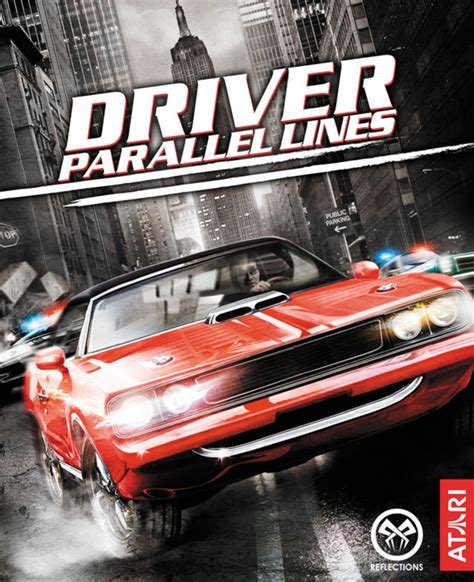
Driv3r / Driver: Parallel Lines (Zlatá Edice) is a compilation featuring two action-driving games from the Driver series. Driv3r (2004) follows undercover cop John Tanner in a globetrotting mission, while Driver: Parallel Lines (2006) shifts focus to TK, a getaway driver framed for murder in 1978 New York, who returns in 2006 for revenge. The latter game introduces an open-world New York City across two time periods, blending driving, shooting, and a felony system, with a mix of 1970s nostalgia and modern gameplay mechanics.
Driv3r / Driver: Parallel Lines (Zlatá Edice) Mods
Driv3r / Driver: Parallel Lines (Zlatá Edice) Guides & Walkthroughs
Driv3r / Driver: Parallel Lines (Zlatá Edice) Reviews & Reception
metacritic.com (69/100): It’s a compelling tale, which is more than backed up by some fly graphics, cool soundtracks and smooth gameplay.
thevintagegamers.com : Driver Parallel Lines is one of my absolute, all-time favorite games. I also feel it’s the most competent GTA clone ever made.
Driv3r / Driver: Parallel Lines (Zlatá Edice) Cheats & Codes
PC
Enter cheats in the ‘Cheats’ section of the ‘Options’ menu. (NOTE: In order to enter cheat codes in the PC version with a multi-lingual keyboard, set the default language to English on your keyboard before starting the game)
| Code | Effect |
|---|---|
| IRONMAN | Gives you infinite health |
| ROLLBAR | Make your vehicle indestructible |
| GUNBELT | Gives you infinite ammo |
| ZOOMZOOM | Gives you infinite nitro |
| KEYSTONE | Makes all cop cars weak |
| TOOLEDUP | Gives you zero cost when tuning or repairing in the garage |
| GUNRANGE | Gives you all weapons in era (doesn’t show up on the CHEATS screen) |
| CARSHOW | Gives you all vehicles (doesn’t show up on the CHEATS screen) |
PlayStation 2
Select ‘Settings’ at the map screen, then choose the ‘Cheats’ option to enter one of the following codes.
| Code | Effect |
|---|---|
| IRONMAN | Invincibility |
| KEYSTONE | Weaker police cars |
| ROLLBAR | Indestructible cars |
| CARSHOW | All vehicles |
| TOOLEDUP | Free garage |
| ZOOMZOOM | Infinite nitro |
| GUNRANGE | All weapons in era |
| GUNBELT | Infinite ammo |
Driv3r / Driver: Parallel Lines (Zlatá Edice): A Comprehensive Retrospective
Introduction
The Driv3r / Driver: Parallel Lines (Zlatá Edice) compilation is a fascinating artifact of early 2010s gaming, bundling two pivotal entries in the Driver series: Driv3r (2004) and Driver: Parallel Lines (2006). This review will dissect the compilation’s historical significance, gameplay mechanics, narrative depth, and legacy, while also exploring how these games reflect the evolution of open-world driving titles in the mid-2000s. While Driv3r is often remembered as a flawed experiment, Parallel Lines represents a bold attempt to reinvent the franchise, blending nostalgia with innovation. Together, they offer a snapshot of a series in transition, struggling to define its identity in the shadow of Grand Theft Auto while carving out its own niche.
Development History & Context
The Driver Series: A Legacy of Highs and Lows
The Driver series, developed by Reflections Interactive (later Ubisoft Reflections), debuted in 1999 with Driver, a groundbreaking title that emphasized realistic driving physics and cinematic car chases. Its sequel, Driver 2 (2000), expanded the formula with on-foot gameplay, but it was Driv3r (2004) that marked a controversial shift. Ambitiously attempting to compete with Grand Theft Auto, Driv3r introduced a fully open-world structure across three cities (Miami, Nice, and Istanbul) and a greater focus on on-foot combat. However, its rushed development led to glitches, awkward controls, and a disjointed experience, earning it a reputation as one of the most infamous “GTA clones” of its era.
The Birth of Parallel Lines
Driver: Parallel Lines (2006) emerged as a direct response to Driv3r‘s failures. Reflections Interactive, now under the umbrella of Ubisoft, sought to refine the open-world formula while addressing fan criticism. The game was developed with a renewed focus on driving mechanics, a tighter narrative, and a unique dual-era structure set in New York City (1978 and 2006). The decision to abandon the series’ traditional protagonist, undercover cop John Tanner, in favor of a new character, TK (“The Kid”), signaled a fresh start.
Technological Constraints and Innovations
The mid-2000s were a period of transition for open-world games. Parallel Lines was built on an upgraded version of the Driv3r engine, which allowed for a more detailed and interactive New York City. However, the game faced limitations in terms of draw distance, AI behavior, and physics, particularly on the PlayStation 2 and Xbox. The Wii and PC versions, released in 2007, benefited from slight improvements but still struggled with the era’s hardware constraints. Notably, the game’s felony system, which differentiated between personal and vehicle-based wanted levels, was an innovative attempt to add depth to police chases, though its execution was uneven.
The Gaming Landscape of 2006
Parallel Lines arrived in a crowded market dominated by Grand Theft Auto: San Andreas (2004) and The Warriors (2005). While it borrowed heavily from GTA‘s open-world template, it distinguished itself with its dual-era narrative and a stronger emphasis on driving. The game’s release was met with cautious optimism, as players and critics alike wondered whether Reflections could redeem the Driver series after Driv3r‘s missteps.
Narrative & Thematic Deep Dive
A Tale of Betrayal and Revenge
Driver: Parallel Lines weaves a story of crime, betrayal, and vengeance across two distinct eras. The protagonist, TK, begins as an ambitious 18-year-old getaway driver in 1978 New York, working his way up the criminal ladder under the mentorship of his friend Ray. However, after being framed for the murder of a Colombian drug lord, TK is sentenced to 28 years in prison. The game’s second act, set in 2006, follows TK’s release and his methodical quest for revenge against those who betrayed him.
Themes of Time and Consequence
The dual-era structure is more than a gimmick; it serves as a narrative device to explore themes of time, consequence, and transformation. The 1978 segments are bathed in a sepia-toned nostalgia, reflecting TK’s youthful naivety and the era’s gritty charm. In contrast, the 2006 segments are colder and more cynical, mirroring TK’s hardened resolve. The game’s New York City evolves alongside its protagonist, with landmarks like the World Trade Center serving as poignant reminders of the passage of time.
Character Depth and Dialogue
While Parallel Lines improves upon Driv3r‘s narrative, its characters remain somewhat archetypal. TK is a compelling protagonist, but his supporting cast—Ray, Slink, Bishop, and Corrigan—often feel underdeveloped. The dialogue, while serviceable, lacks the sharp wit of GTA or the emotional depth of later open-world narratives. However, the game’s cinematic presentation, particularly its use of licensed music and era-appropriate aesthetics, elevates the storytelling.
The Influence of Crime Cinema
The game’s narrative draws heavily from 1970s crime films like The French Connection and Serpico, as well as revenge thrillers like Death Wish. The 1978 segments, in particular, evoke the gritty realism of these films, while the 2006 segments lean into the hyper-stylized action of modern crime dramas. This cinematic influence extends to the game’s mission design, which often mimics classic car chase sequences.
Gameplay Mechanics & Systems
Driving: The Heart of the Experience
Parallel Lines returns to the series’ roots with a renewed focus on driving. The game features over 80 vehicles, ranging from 1970s muscle cars to modern sports cars, each with distinct handling characteristics. The driving mechanics are an improvement over Driv3r, offering a better balance between arcade accessibility and simulation depth. However, the controls can still feel stiff, particularly when using a keyboard on PC.
On-Foot Gameplay: A Necessary Evil
While driving is the star, Parallel Lines retains on-foot segments, though they are more polished than in Driv3r. The game introduces an auto-aim system for shooting, which makes combat more manageable but less skill-based. Melee combat is rudimentary, and the lack of swimming or jumping abilities (removed from Driv3r) limits exploration. The felony system, while innovative, can be frustrating, as police AI often feels unpredictable.
Mission Structure and Side Activities
The game’s 32-story missions are a mix of driving challenges, shootouts, and stealth segments. While some missions are exhilarating (e.g., high-speed chases through Times Square), others suffer from repetitive design or overly punishing difficulty spikes. Side activities, such as taxi driving, street racing, and vehicle theft, add depth but lack the variety of GTA‘s side content.
Vehicle Customization and Garages
A standout feature is the ability to customize vehicles at Ray’s Autos garage. Players can upgrade performance, add nitrous, and even adjust ride height, though the customization options are somewhat limited compared to later open-world games. The garage system also allows players to store and switch between vehicles, a welcome addition that enhances immersion.
Era-Shifting: A Unique Mechanic
After completing the story, players unlock the ability to manually switch between 1978 and 2006. This feature is more than a novelty; it allows players to experience the game’s world in two distinct ways, with era-appropriate vehicles, music, and aesthetics. However, the lack of meaningful gameplay differences between eras limits its potential.
World-Building, Art & Sound
A Living, Breathing New York City
Parallel Lines‘ interpretation of New York City is one of its strongest assets. While not GPS-accurate, the game’s condensed version of the city captures its essence, with iconic landmarks like the Empire State Building, Times Square, and the World Trade Center (in 1978). The city feels alive, with pedestrians engaging in dialogue, vendors selling food, and traffic behaving (mostly) realistically.
Visual Design: Nostalgia vs. Modernity
The game’s art direction effectively contrasts the two eras. The 1978 segments feature warm, sepia tones and retro aesthetics, while the 2006 segments are cooler and more clinical. The transition between eras is seamless, with subtle details like changing billboards and evolving architecture reinforcing the passage of time. However, the game’s graphics, even on PC, show their age, with muddy textures and stiff animations.
Sound Design and Music
The soundtrack is a highlight, featuring over 70 licensed tracks spanning 1970s funk, rock, and disco (e.g., Blondie, David Bowie) and modern alternative rock and hip-hop (e.g., Public Enemy, LCD Soundsystem). The music is contextually appropriate, with 1978 tracks playing during the retro segments and modern tracks in 2006. The sound design, from engine roars to police sirens, is immersive, though the voice acting is uneven.
Reception & Legacy
Critical Reception: Mixed but Improved
Parallel Lines received “mixed or average” reviews, with critics praising its narrative, soundtrack, and improved driving mechanics but criticizing its repetitive missions, stiff controls, and technical limitations. IGN scored it 7.2/10, calling it “a solid improvement on its dreadful predecessor,” while GameSpot gave it a 6.5/10, noting its derivative nature. The Wii version, in particular, was panned for its clunky controls.
Commercial Performance and Fan Reception
While not a commercial blockbuster, Parallel Lines performed respectably, outselling Driv3r and helping to restore some faith in the Driver franchise. Fans appreciated the return to driving-focused gameplay and the dual-era structure, though many still longed for the series’ earlier simplicity.
Influence on Future Driver Games
Parallel Lines set the stage for Driver 76 (2007), a PSP prequel that expanded on its narrative and mechanics. However, the series’ next major entry, Driver: San Francisco (2011), abandoned the open-world formula in favor of a more linear, story-driven approach. The Zlatá Edice compilation, released in 2011, remains a niche curiosity, offering a glimpse into the series’ turbulent mid-2000s era.
Conclusion
Driv3r / Driver: Parallel Lines (Zlatá Edice) is a compelling but flawed compilation that encapsulates the Driver series’ struggles and triumphs. Driv3r stands as a cautionary tale of ambition overreaching execution, while Parallel Lines represents a valiant attempt to course-correct. The latter’s dual-era narrative, improved driving mechanics, and immersive New York City make it a standout entry, despite its technical limitations and derivative design.
Final Verdict: Driver: Parallel Lines is a worthy but imperfect successor to the Driver legacy. It lacks the polish of GTA or the innovation of later open-world games, but its unique era-shifting mechanic and nostalgic charm make it a memorable experience. For fans of the series or open-world driving games, it’s a fascinating time capsule of mid-2000s gaming. 7/10.
Legacy: While overshadowed by GTA and later open-world titles, Parallel Lines remains a cult favorite, particularly among those who appreciate its blend of retro and modern aesthetics. Its influence can be seen in later games that experiment with time-shifting mechanics, though its full potential was never realized. The Zlatá Edice compilation, meanwhile, serves as a reminder of a time when the Driver series was still finding its footing in a rapidly evolving genre.