
- Release Year: 2008
- Platforms: Macintosh, Windows
- Publisher: astragon Software GmbH, Big Fish Games, Inc, GameMill Entertainment LLC
- Developer: GameMill Entertainment LLC, Gunnar Games, Inc., Virtual Prophecy Entertainment
- Genre: Adventure
- Perspective: 1st-person
- Game Mode: Single-player
- Gameplay: Hidden object, Puzzle elements
- Setting: Aquatic, Bermuda Triangle, Underwater
- Average Score: 60/100
Description
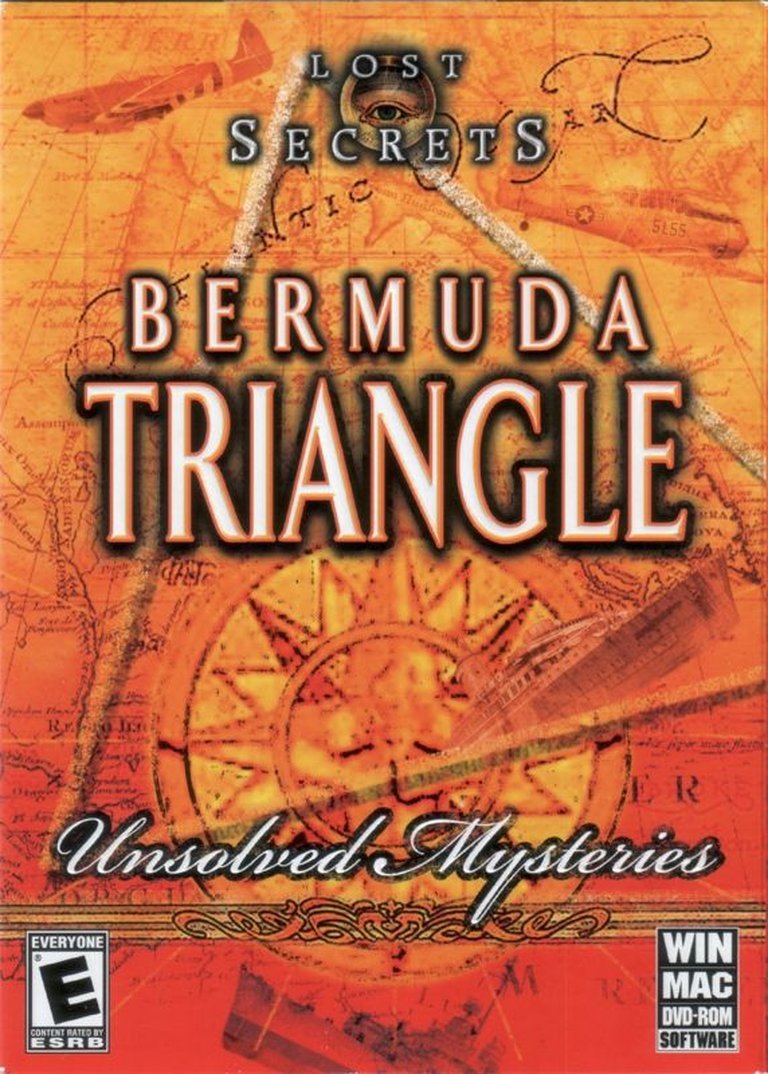
In ‘Lost Secrets: Bermuda Triangle’, Rachel Broadview embarks on a journey to the mysterious Bermuda Triangle after discovering her great-grandmother’s name in a book about the region. The game is a hidden object adventure where players scour detailed scenes to find items from a list, uncovering secrets hidden within shipwrecks. Between chapters, players can enjoy bonus mini-games, such as navigating a mini-submarine through a coral labyrinth or playing a tile-matching puzzle. With a hint system to aid in object discovery and a compelling narrative, the game offers a blend of exploration and puzzle-solving in an aquatic, underwater setting.
Gameplay Videos
Lost Secrets: Bermuda Triangle Free Download
Lost Secrets: Bermuda Triangle Guides & Walkthroughs
Lost Secrets: Bermuda Triangle Reviews & Reception
mobygames.com (60/100): A hidden object game with a story-driven adventure set in the Bermuda Triangle.
gamezebo.com (60/100): A good hidden object game with a great story and nice presentation.
Lost Secrets: Bermuda Triangle: A Hidden Object Odyssey Through Mystery and Myth
Introduction: The Allure of the Unknown
The Bermuda Triangle has long captivated the human imagination—a stretch of the Atlantic Ocean where ships vanish, planes disappear, and reality itself seems to warp. Into this enigmatic void steps Lost Secrets: Bermuda Triangle (2008), a hidden object adventure that weaves personal discovery with one of history’s greatest unsolved mysteries. Developed by Gunnar Games and Virtual Prophecy Entertainment, and published by GameMill Entertainment, this title arrived at a pivotal moment in the casual gaming boom, offering a narrative-driven twist on the burgeoning hidden object genre.
At its core, Lost Secrets is a game about inheritance—not just of blood, but of curiosity. Players assume the role of Rachel Broadview, a librarian who stumbles upon her great-grandmother’s name in a book chronicling the Triangle’s vanished vessels. What follows is a journey through sunken wrecks, pirate-infested waters, and the eerie silence of the deep, all rendered in the game’s signature blend of static imagery and interactive exploration. But does it transcend the limitations of its genre, or does it, like so many ships before it, succumb to the Triangle’s reputation for swallowing ambition whole?
This review will dissect Lost Secrets: Bermuda Triangle with the precision of a salvage diver, examining its development, narrative depth, mechanical execution, and lasting legacy. We’ll explore how it navigates the tensions between casual accessibility and thematic richness, and whether its secrets were truly worth uncovering.
Development History & Context: Riding the Casual Wave
The Studio and the Vision
Gunnar Games, founded in 1997 and based in Miami—a city geographically and culturally adjacent to the Bermuda Triangle—was no stranger to casual adventure titles. By 2008, the studio had carved a niche in the hidden object and puzzle-adventure space, with credits on games like Hidden Mysteries: Titanic and Buckingham Palace. Their collaboration with Virtual Prophecy Entertainment (a team including artists, programmers, and designers like Ramon Mujica and Scott Nixon) brought a polished, if formulaic, approach to Lost Secrets.
The game’s executive producer, Gary W. Miller of GameMill Entertainment, framed it as a project that would “stand above the rest” in the crowded hidden object market. In a 2008 press release, he emphasized its “in-depth levels, minigames, and puzzles,” while Gunnar Games’ president Jamie Nye highlighted the narrative’s blend of “romance and deception.” This was a game that aspired to be more than a mere checklist of objects—it wanted to tell a story.
Technological and Market Constraints
Released on September 26, 2008, for Windows and Macintosh, Lost Secrets arrived during the golden age of casual gaming. The mid-to-late 2000s saw an explosion of downloadable titles on platforms like Big Fish Games, GameHouse, and GameMill’s own portals. These games thrived on accessibility: low system requirements, simple controls, and bite-sized gameplay sessions tailored for the burgeoning audience of non-traditional gamers.
Technologically, Lost Secrets was unassuming. It ran on a fixed/flip-screen first-person perspective, with pre-rendered 2D environments and a point-and-click interface. The Macintosh version, notably, required a PowerPC or Intel processor and macOS 10.5.8, a reminder of the era’s rapid hardware transitions. The game’s shareware model—offering a free trial before a full purchase—was standard for the time, as was its distribution via CD-ROM, DVD-ROM, and digital downloads.
The Gaming Landscape of 2008
The hidden object genre was already well-established by 2008, with franchises like Mystery Case Files and Hidden Expedition dominating sales charts. What set Lost Secrets apart was its thematic ambition. While many competitors relied on generic haunted mansions or detective tropes, Lost Secrets anchored its gameplay in a real-world mystery, leveraging the Bermuda Triangle’s cultural cachet.
Yet, it also faced stiff competition. That same year saw the release of Echo: Secrets of the Lost Cavern and Sprill: The Mystery of the Bermuda Triangle, both of which explored similar themes with varying degrees of success. Lost Secrets had to differentiate itself not just through its setting, but through its execution.
Narrative & Thematic Deep Dive: A Librarian’s Quest
Plot and Characters: The Weight of Legacy
Rachel Broadview is an unlikely heroine—a librarian whose quiet life is upended by the discovery of her great-grandmother’s connection to the Bermuda Triangle. This premise is Lost Secrets’ greatest strength: it grounds the supernatural in the personal. Rachel isn’t a seasoned adventurer or a paranormal investigator; she’s an everyman (or, in this case, everywoman) driven by curiosity and familial duty.
The story unfolds through a series of static cutscenes and dialogue exchanges between levels. Rachel hires a salvage captain to guide her through the Triangle’s treacherous waters, and along the way, she encounters modern-day pirates who are equal parts hindrance and darkly comic relief. The narrative’s pacing is deliberate, with each hidden object scene advancing the plot incrementally. While the writing is functional rather than poetic, it effectively maintains a sense of intrigue.
Themes: Truth, Myth, and the Unknown
At its heart, Lost Secrets is a meditation on the tension between fact and fiction. The Bermuda Triangle is a real place, but its reputation is built on a mix of verified disappearances, exaggerated tales, and outright fabrications. The game leans into this ambiguity, presenting Rachel’s journey as both a literal and metaphorical dive into the unknown.
Key themes include:
– Inheritance and Identity: Rachel’s quest is as much about understanding her ancestor as it is about solving a mystery. The game suggests that the past is not just something to be uncovered, but something that shapes who we are.
– The Allure of the Unknowable: The Bermuda Triangle serves as a metaphor for the human desire to explain the unexplained. The game’s pirates, who “help” Rachel with their own agendas, embody the way myths are often exploited for personal gain.
– Isolation and Discovery: The underwater environments and shipwrecks are hauntingly beautiful, emphasizing both the loneliness of the search and the thrill of uncovering hidden truths.
Dialogue and Storytelling: A Mixed Bag
The dialogue in Lost Secrets is serviceable but rarely memorable. Rachel’s interactions with the salvage captain and pirates are functional, advancing the plot without delving deeply into character development. The game’s strongest narrative moments come not from its scripted exchanges, but from the environmental storytelling—finding a captain’s sextant or a faded logbook in a shipwreck speaks volumes without a single line of dialogue.
One notable misstep is the game’s occasional reliance on obscure references. The aforementioned “kokopelli” (a Hopi fertility deity) feels jarringly out of place in a Bermuda Triangle narrative, highlighting a disconnect between the game’s research and its setting. Such moments undermine the immersion, reminding players that they’re engaging with a constructed experience rather than a living world.
Gameplay Mechanics & Systems: The Hidden Object Formula
Core Gameplay Loop: Find, Click, Repeat
Lost Secrets: Bermuda Triangle is, at its core, a hidden object game. The player is presented with a static image of a location (a ship’s deck, a coral reef, a pirate’s hideout) and a list of items to find. The objective is simple: scour the scene, click on the listed objects, and progress to the next area.
The game’s approach to this formula is straightforward but polished:
– No Time Limits: Unlike some contemporaries, Lost Secrets eschews timed challenges, allowing players to explore at their own pace. This design choice aligns with its narrative focus, prioritizing immersion over pressure.
– Hint System: A hint button at the top of the screen, represented by a gem, glows orange when the cursor nears a required object. This is a more elegant solution than the blunt “circle the item” hints found in other games, though it can feel imprecise at times.
– Penalty for Mistakes: Clicking incorrectly too often depletes the hint meter, forcing players to rely on their own observation skills. This mechanic adds a light layer of strategy, though it’s hardly punishing.
Mini-Games and Variety: Breaking the Monotony
To prevent the hidden object gameplay from becoming stale, Lost Secrets intersperses its main levels with mini-games:
1. Submarine Maze: Players navigate a mini-sub through a coral labyrinth, collecting treasure chests while avoiding obstacles. This segment is the game’s most engaging diversion, offering a welcome change of pace.
2. Tile-Matching Puzzle: A simplified Bejeweled-style game where players match symbols to clear the board. While competent, it lacks the depth of dedicated match-3 titles.
These mini-games are tied loosely to the narrative (e.g., cleaning gunk off a lockbox to reveal a clue), but their repetition—especially the tile-matching—diminishes their impact over time.
Progression and Replayability: A Linear Journey
Lost Secrets is a linear experience with no branching paths or alternate endings. Once a player completes the 28 levels and 8 mini-games, there’s little incentive to revisit the adventure. The lack of additional modes (e.g., a “hardcore” mode with no hints or a collectible system) limits its longevity, a common critique of casual games of the era.
UI and Accessibility: Functional but Unremarkable
The game’s interface is clean and intuitive, with a list of objects on the right side of the screen and a hint button at the top. The cursor changes color when near an interactable object, a small but effective visual cue. However, the UI lacks the polish of later hidden object games, which would introduce features like zoom functions or interactive inventories.
One notable oversight is the game’s handling of revisited locations. As GameZebo’s review points out, returning to a previous scene often means hunting for the same objects in the same spots, a design choice that feels lazy rather than intentional.
World-Building, Art & Sound: Crafting the Triangle’s Mystery
Setting and Atmosphere: The Depths of the Unknown
Lost Secrets excels in its depiction of the Bermuda Triangle as a place of eerie beauty and latent danger. The game’s environments span:
– Shipwrecks: Rusting hulls and shattered decks, littered with the detritus of lost voyages.
– Underwater Caverns: Bioluminescent coral and shadowy depths, where the light barely penetrates.
– Pirate Hideouts: Cluttered with stolen goods and ominous paraphernalia.
– Beaches and Piers: Sun-bleached and abandoned, as if the people who once inhabited them simply vanished.
The fixed/flip-screen perspective enhances the sense of isolation. Unlike 3D adventure games, where the player can freely explore, Lost Secrets forces the player to confront each scene as a self-contained diorama—a snapshot of a moment frozen in time.
Visual Design: A Study in Static Beauty
The art direction, led by Ramon Mujica and Shawn Gooding, is one of the game’s strongest suits. The pre-rendered backgrounds are rich in detail, with a painterly quality that evokes the work of maritime artists. The underwater scenes, in particular, are striking, with shafts of light filtering through the water and schools of fish darting between coral.
That said, the visuals are not without their flaws. Some objects are poorly scaled or awkwardly placed, leading to moments of frustration when a “hidden” item is obscured by the environment’s clutter. The game’s reliance on static images also means that animations are minimal, limiting the sense of dynamism.
Sound Design: The Symphony of the Deep
Scott Nixon’s soundtrack is a masterclass in atmospheric composition. The music is haunting and melancholic, with slow, swelling strings and ethereal choirs that evoke the mystery of the Triangle. The underwater levels feature a subdued, aquatic ambiance, while the pirate encounters are accompanied by more rhythmic, swashbuckling themes.
The sound effects, handled by Joe Abbati, are equally effective. The creaking of a ship’s hull, the distant echo of waves, and the occasional cry of a seabird all contribute to the game’s immersive audio landscape. The absence of voice acting is noticeable but not detrimental; the silence of the protagonists allows the player to project themselves more fully into Rachel’s role.
Reception & Legacy: A Modest Splash
Critical Reception: A Solid but Unremarkable Entry
Lost Secrets: Bermuda Triangle received a tepid but generally positive response from critics. GameZebo’s Marc Saltzman awarded it a 60/100, praising its “great story and nice presentation” while noting its lack of replayability. The review highlighted the game’s strongest elements—its narrative ambition and atmospheric design—but also its shortcomings, such as the repetitive mini-games and occasional object-hunting frustrations.
Other outlets echoed these sentiments. GameHouse described it as a “fascinating search for lost souls,” emphasizing its thematic depth, while MacGameStore users gave it a mixed 3.6/5, with some praising its charm and others criticizing its brevity.
Commercial Performance and Audience
As a shareware title, Lost Secrets likely found its audience among casual gamers seeking a narrative-driven hidden object experience. Its inclusion in compilations like 10 Great PC Games (2011) and The Ultimate Lost Secrets Collection (2012) suggests it had enough commercial viability to warrant repackaging, though it never achieved the breakout success of franchises like Mystery Case Files.
Influence and Legacy: A Footnote in the Genre’s Evolution
Lost Secrets arrived at a time when the hidden object genre was rapidly evolving. By the late 2000s, developers were experimenting with hybrid mechanics, blending hidden object gameplay with adventure elements, inventory puzzles, and even light role-playing. Lost Secrets, with its linear structure and minimal innovation, feels like a relic of an earlier era—a well-crafted but conservative entry in a genre that was already moving forward.
Its legacy is perhaps best understood in the context of its setting. The Bermuda Triangle has inspired countless games, from Bermuda Triangle: Saving the Coral (2009) to Fort Defense: Bermuda Triangle (2015). Lost Secrets stands out for its narrative focus, proving that even a casual game could aspire to tell a compelling story. In this regard, it paved the way for later titles like Hidden Expedition: Devil’s Triangle (2009), which similarly married hidden object gameplay with a richly themed adventure.
Conclusion: A Journey Worth Taking, But Not Revisiting
Lost Secrets: Bermuda Triangle is a game of modest ambitions and modest achievements. It doesn’t redefine the hidden object genre, nor does it plumb the depths of the Bermuda Triangle’s mysteries with the depth of a Myst-style adventure. What it does offer is a competently crafted, atmospheric journey that respects its player’s intelligence and curiosity.
Its greatest strength lies in its narrative premise—a librarian’s personal quest to uncover her family’s lost history—and its ability to weave that story into the fabric of a real-world enigma. The gameplay, while formulaic, is polished and accessible, and the art and sound design create a genuinely immersive experience. Yet, its linear structure, repetitive mini-games, and lack of replayability prevent it from achieving greatness.
In the pantheon of Bermuda Triangle games, Lost Secrets is neither the best nor the worst. It is, however, one of the most earnest—a game that treats its subject matter with reverence rather than exploitation. For fans of hidden object adventures, it’s a worthwhile diversion, if not an essential one. For historians of the genre, it’s a fascinating snapshot of a time when casual games were beginning to embrace narrative complexity.
Final Verdict: 7/10 – A hidden object gem with a compelling story, but one that ultimately plays it safe.
Lost Secrets: Bermuda Triangle may not have vanished into obscurity like the ships it depicts, but neither has it achieved legendary status. Instead, it remains a quiet, unassuming title—a secret worth uncovering, even if it’s not one you’ll return to often.