
- Release Year: 2002
- Platforms: Windows
- Publisher: THQ Inc.
- Developer: KnowWonder, Inc.
- Genre: Driving, Racing, Simulation
- Perspective: 1st-person
- Game Mode: Single-player
- Gameplay: Custom track builder, Track racing, Vehicle simulator
- Setting: Formula 1, International tracks
- Average Score: 69/100
Description
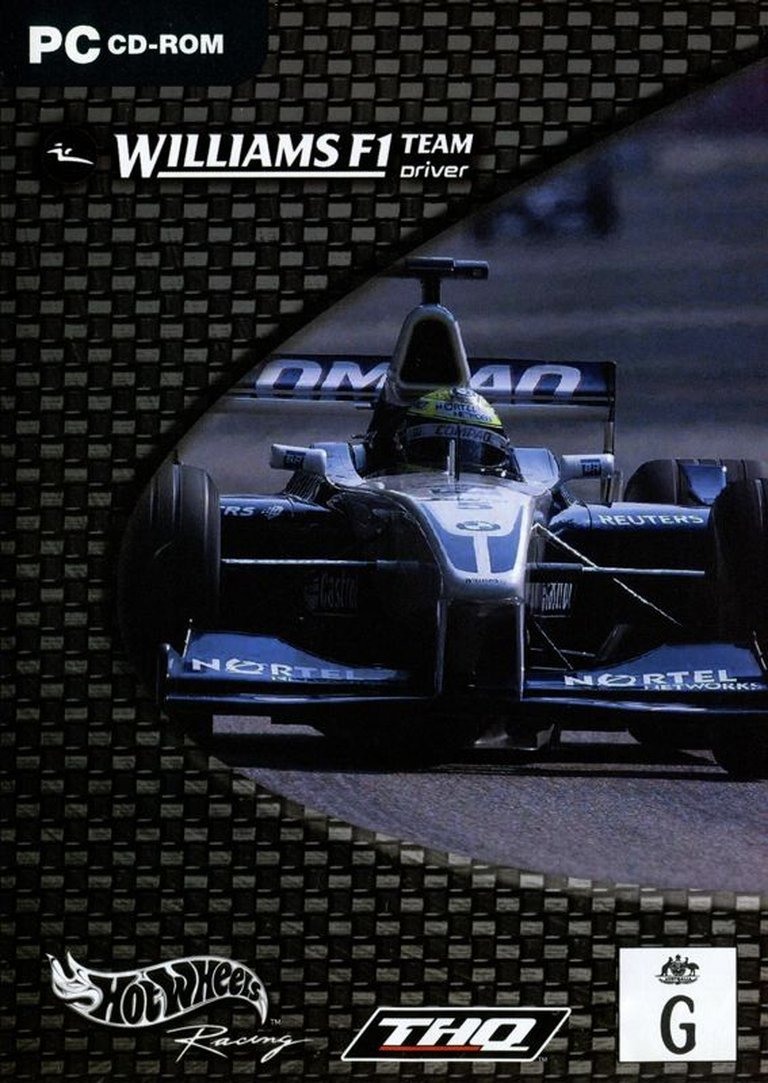
Hot Wheels Williams F1 Team Racer is a child-friendly racing simulation that guides players through the ranks of motorsport, starting with go-karts and progressing to F1600s, F3s, and ultimately Formula 1 cars. The game offers a realistic F1 training experience with 16 international tracks, a custom track builder, and super-realistic driving physics, immersing players in the thrilling world of Formula 1 racing.
Gameplay Videos
Hot Wheels Williams F1 Team Racer Reviews & Reception
myabandonware.com (96/100): Well, the game starts, the screen is normal but soon after it’s corrupted and it crashes during the intro, even with the latest ddraw.dll and Windows 98/ME compatibility.
mobygames.com (43/100): Average score: 43% (based on 5 ratings)
Hot Wheels Williams F1 Team Racer: A Forgotten Gem or a Flawed Experiment?
Introduction
In the early 2000s, the racing game genre was dominated by titans like Gran Turismo, Need for Speed, and F1 series. Amidst this competitive landscape, Hot Wheels Williams F1 Team Racer emerged as an ambitious yet flawed attempt to blend the accessibility of toy racing with the complexity of Formula 1 simulation. Developed by KnowWonder and published by THQ in 2001, this game promised to immerse players in the exhilarating world of F1 racing, offering a career path from go-karts to the pinnacle of motorsport. However, its reception was lukewarm at best, leaving it as a footnote in gaming history. This review delves deep into the game’s development, mechanics, and legacy to determine whether it was a misunderstood gem or a misguided experiment.
Development History & Context
The Studio and Vision
KnowWonder, the developer behind Hot Wheels Williams F1 Team Racer, was a studio known for creating family-friendly and licensed games. Their portfolio included titles like Hot Wheels: Stunt Track Driver and Disney•Pixar Finding Nemo: Nemo’s Underwater World of Fun. The studio’s vision for Williams F1 Team Racer was to create a game that would appeal to younger audiences while still offering a realistic F1 experience. This duality—balancing accessibility with simulation depth—would become both the game’s strength and its downfall.
The game was developed during a time when racing simulations were becoming increasingly sophisticated. Titles like Grand Prix 4 and F1 2001 set high standards for realism, physics, and graphical fidelity. KnowWonder aimed to carve out a niche by leveraging the Hot Wheels brand, which was synonymous with fun and accessibility, while incorporating the prestige of the Williams F1 team.
Technological Constraints
Released in 2001, Hot Wheels Williams F1 Team Racer was constrained by the hardware limitations of its era. The game required a Pentium MMX processor and 64 MB of RAM, which were modest specifications even for the time. The graphical capabilities of the game were limited, with textures and models that paled in comparison to contemporary titles. The use of the Smacker Video Codec for intro movies, which later became corrupted on modern systems, highlights the technological challenges faced by the developers.
The game’s physics engine was another area where technological constraints were evident. While the developers aimed for “super-realistic driving physics,” the execution fell short. The handling of the cars, particularly the F1 vehicles, was criticized for being unstable and unrealistic, a far cry from the precision demanded by F1 simulations.
The Gaming Landscape
The early 2000s were a golden age for racing games. The market was saturated with high-quality titles, from arcade-style racers like Need for Speed: Hot Pursuit 2 to hard-core simulations like Grand Prix Legends. Hot Wheels Williams F1 Team Racer entered this crowded space with a unique proposition: a game that could serve as both an introduction to F1 racing for younger players and a simulation for more experienced racers.
However, the game’s dual identity proved problematic. It struggled to find its audience, as it was neither as accessible as arcade racers nor as deep as dedicated simulations. This identity crisis was reflected in its critical reception, with reviewers noting its inability to excel in either category.
Narrative & Thematic Deep Dive
Plot and Career Mode
Hot Wheels Williams F1 Team Racer features a career mode that guides players through the ranks of motorsport, starting with go-karts and progressing through Formula 1600, Formula 3, and ultimately Formula 1. This progression system was designed to mimic the real-world career path of F1 drivers, offering a sense of accomplishment as players advanced.
The narrative, however, is minimal. There are no cutscenes or character interactions beyond the occasional dialogue with a mechanic. The game’s focus is squarely on the racing experience, with the career mode serving as a framework for progression rather than a storytelling device.
Characters and Dialogue
The game’s characters are largely forgettable. The player assumes the role of an unnamed driver, and the only other notable figure is the mechanic, who provides setup advice. The dialogue is functional but lacks depth, serving primarily to guide players through the game’s mechanics.
Underlying Themes
The primary theme of Hot Wheels Williams F1 Team Racer is the journey from amateur to professional. The game emphasizes the importance of skill development, vehicle setup, and strategic racing. It also touches on the theme of perseverance, as players must overcome the challenges of each racing tier to progress.
The Hot Wheels branding adds a layer of accessibility and fun, making the game more approachable for younger players. However, this branding also creates a disconnect, as the game’s simulation aspirations clash with the toy-like aesthetic of Hot Wheels.
Gameplay Mechanics & Systems
Core Gameplay Loop
The core gameplay loop of Hot Wheels Williams F1 Team Racer revolves around racing and progression. Players start in go-karts and must win races to unlock higher-tier vehicles. Each race is a test of driving skill, with the game offering a variety of tracks and conditions to master.
The game features 16 international tracks, each with its own challenges. The custom track builder is a notable addition, allowing players to create their own racing circuits. However, the builder is rudimentary by modern standards, offering limited customization options.
Driving Physics and Handling
The driving physics in Hot Wheels Williams F1 Team Racer are a mixed bag. The go-karts and lower-tier vehicles handle reasonably well, offering a fun and accessible driving experience. However, the F1 cars suffer from unstable and unrealistic handling, making them difficult to control. This inconsistency undermines the game’s simulation aspirations, as the F1 cars should be the pinnacle of driving precision.
The game’s physics engine struggles to convey the nuances of F1 racing. The cars lack the weight and responsiveness of real F1 vehicles, and the collision physics are simplistic. These issues make the game feel more like an arcade racer than a true simulation.
Vehicle Setup and Customization
One of the game’s standout features is its vehicle setup system. Players can adjust various parameters, such as tire pressure, wing angle, and gear ratios, to optimize their car’s performance. The game includes a question-and-answer system with the mechanic, which helps players understand the impact of each setting. This feature is particularly innovative, as it makes vehicle setup accessible to players who may not be familiar with the technical aspects of racing.
However, the setup system is not without its flaws. The lack of real-time feedback makes it difficult to gauge the effectiveness of changes, and the mechanic’s advice is often too simplistic to be truly helpful.
UI and Controls
The game’s user interface is functional but uninspired. The menus are straightforward, but the lack of polish is evident. The controls are configurable, with support for both keyboard and controller inputs. However, the default control scheme is awkward, and the lack of force feedback support further detracts from the immersion.
World-Building, Art & Sound
Visual Design and Atmosphere
Hot Wheels Williams F1 Team Racer features a visual design that blends realism with the toy-like aesthetic of Hot Wheels. The cars and tracks are modeled after real-world counterparts, but the textures and lighting are dated. The game’s color palette is bright and vibrant, reflecting the Hot Wheels branding, but this clashes with the more serious tone of F1 racing.
The atmosphere of the game is similarly inconsistent. The tracks are detailed, but the lack of crowd animations and dynamic weather effects makes them feel sterile. The game’s attempt to create a realistic F1 experience is undermined by its visual limitations.
Sound Design and Music
The sound design in Hot Wheels Williams F1 Team Racer is one of its stronger aspects. The engine sounds are realistic, and the tire screeches and collision noises add to the immersion. The game also features a soundtrack of anonymous rock music, which blends with the racing sounds to create a high-energy atmosphere.
However, the soundtrack is forgettable, and the lack of licensed music or memorable themes detracts from the overall experience. The sound design is functional but does little to elevate the game beyond its competitors.
Reception & Legacy
Critical Reception
Hot Wheels Williams F1 Team Racer received mixed to negative reviews upon release. Critics praised the game’s innovative vehicle setup system and its attempt to blend accessibility with simulation depth. However, the game’s unstable physics, dated graphics, and lack of polish were widely criticized.
German gaming magazine PC Games gave the game a score of 52%, noting that while the career progression and setup system were innovative, the unstable car handling made the game frustrating to play. PC Action scored the game 51%, criticizing its outdated graphics and poor controls. GameStar was even harsher, giving the game a 31% and stating that the game’s only redeeming feature was the included Hot Wheels toy car.
Commercial Performance
The game’s commercial performance was similarly lackluster. It failed to make a significant impact in the crowded racing game market, and its mixed reviews did little to attract players. The game’s niche appeal—targeting younger players while offering simulation depth—proved to be a double-edged sword, as it struggled to find a dedicated audience.
Legacy and Influence
Hot Wheels Williams F1 Team Racer is largely forgotten today, overshadowed by more successful racing games of its era. However, its innovative vehicle setup system and career progression mechanics can be seen as precursors to features in later racing games. The game’s attempt to blend accessibility with simulation depth was ambitious, and while it ultimately fell short, it remains an interesting experiment in racing game design.
The game’s legacy is also tied to its technical issues. The use of the Smacker Video Codec, which became corrupted on modern systems, has made the game difficult to play today. This technical limitation has further relegated the game to obscurity, as modern players are unable to experience it without significant effort.
Conclusion
Hot Wheels Williams F1 Team Racer is a flawed but fascinating experiment in racing game design. Its attempt to blend the accessibility of Hot Wheels with the depth of F1 simulation was ambitious, but the execution fell short. The game’s unstable physics, dated graphics, and lack of polish undermine its innovative features, such as the vehicle setup system and career progression.
While the game is largely forgotten today, it remains an interesting artifact of its era. Its mixed reception and commercial failure highlight the challenges of balancing accessibility with simulation depth in racing games. For those willing to overlook its flaws, Hot Wheels Williams F1 Team Racer offers a unique and occasionally rewarding experience. However, for most players, it is a relic of a time when racing games were still finding their footing in the transition from arcade to simulation.
Final Verdict: Hot Wheels Williams F1 Team Racer is a curious footnote in racing game history—ambitious in its vision but flawed in its execution. It is worth exploring for its innovative features, but it ultimately falls short of the standards set by its contemporaries. 6/10