
- Release Year: 2004
- Platforms: Windows
- Publisher: 1C Company, HD Interactive B.V., Koch Media GmbH (Austria), Micro Application, S.A., Porto Editora, Lda., Techland Sp. z o.o., US – ACTION, s.r.o., Valve Corporation, Zeta Multimedia S.A.
- Developer: Techland Sp. z o.o.
- Genre: Driving, Racing
- Perspective: 1st-person
- Game Mode: LAN, Online PVP, Single-player
- Gameplay: Arcade mode, Car customization, Career mode, Damage system, Dynamic Weather, Simulation Mode, Track Editor
- Setting: Finland, Kenya, Poland
- Average Score: 81/100
Description
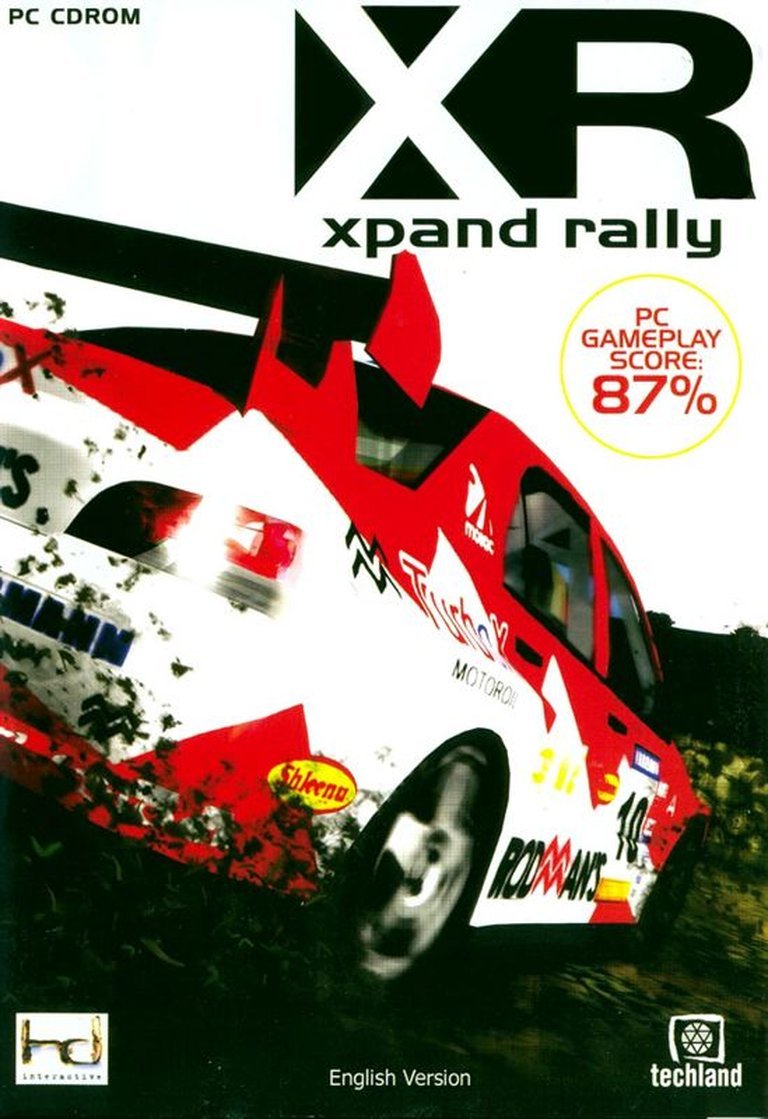
Xpand Rally is a high-octane racing game that thrusts players into the driver’s seat of tuned-up WRC machines across over seventy races in five diverse sceneries. Built on a modified Chrome engine, the game features dynamic day-night cycles, weather changes, and a realistic damage system that even affects the driver with potential injuries. Beyond traditional racing, players can build a rally career, upgrading their cars with over 800 parts while navigating arcade or simulation driving modes. The game also includes a robust editor, ChromEd, allowing players to create custom tracks and import 3D car designs, offering unparalleled freedom in both gameplay and creativity.
Gameplay Videos
Where to Buy Xpand Rally
PC
Xpand Rally Free Download
Xpand Rally Cracks & Fixes
Xpand Rally Patches & Updates
Xpand Rally Mods
Xpand Rally Guides & Walkthroughs
Xpand Rally Reviews & Reception
metacritic.com (82/100): Xpand Rally shows off a love for the sport that borders on obsessive, yet the game is truly accessible to any motor sports fan.
en.wikipedia.org (82/100): The game received “favorable” reviews according to the review aggregation website Metacritic.
mobygames.com (79/100): Xpand Rally puts you behind the wheel of a tuned-up WRC machine in over seventy races in five sceneries, using a modified version of the Chrome engine with fully movable obstacles, dynamic day time and weather changes, full collisions simulation and a complex car damage system.
engadget.com : This has been a pretty good year for fans of rally games. Richard Burns Rally was great. And now the genre is serviced again, with Xpand Rally.
Xpand Rally Cheats & Codes
PC
Press \ (European keyboard) or ~ (American keyboard) to display the console window at the indicated screen. Then, enter one of the following case-sensitive codes to activate the corresponding cheat function. Press [Enter] to resume the game.
| Code | Effect |
|---|---|
| Cheat.AddCash([number]) | Additional money |
| Cheat.AllRaces() | All races unlocked |
| Cheat.SkipCarCheck() | All cars |
Xpand Rally: A Deep Dive into Techland’s Underrated Rally Gem
Introduction
In the pantheon of rally racing games, Xpand Rally (2004) stands as a fascinating anomaly—a title that defies easy categorization, blending arcade accessibility with simulation depth, all while carving its own niche in a genre dominated by giants like Colin McRae Rally and Richard Burns Rally. Developed by the Polish studio Techland, Xpand Rally is a game that, at first glance, might seem like just another rally simulator. However, beneath its unassuming surface lies a rich, layered experience that rewards patience, skill, and a willingness to engage with its unique mechanics. This review aims to explore Xpand Rally in exhaustive detail, examining its development history, gameplay systems, narrative themes, and lasting legacy. By the end, we’ll argue that Xpand Rally is not just a forgotten relic of the mid-2000s racing scene but a bold, innovative title that deserves reconsideration in the context of rally gaming history.
Development History & Context
The Birth of Techland and the Vision for Xpand Rally
Techland, founded in 1991 by Paweł Marchewka, was a relatively young studio when Xpand Rally was conceived in the early 2000s. Based in Wrocław, Poland, the company had already made a name for itself with titles like Crime Cities (2000) and Chrome (2003), a futuristic first-person shooter that showcased the studio’s technical prowess. However, Xpand Rally represented a significant departure—a foray into the highly competitive world of racing simulations.
The vision for Xpand Rally was ambitious yet grounded. Techland sought to create a rally game that balanced realism with accessibility, appealing to both hardcore simulation fans and casual players. The studio’s approach was influenced by the success of Need for Speed Underground (2003), which had demonstrated the commercial viability of blending racing with deep customization and progression systems. However, unlike Underground, which focused on street racing, Xpand Rally aimed to capture the gritty, unpredictable nature of rally racing, where terrain, weather, and vehicle condition play pivotal roles.
Technological Constraints and Innovations
The mid-2000s were a period of rapid technological advancement in gaming, but they also presented significant challenges. Xpand Rally was developed using a modified version of the Chrome Engine, the same technology that powered Techland’s earlier FPS title. This engine was not originally designed for racing games, which meant the team had to adapt it to handle the unique demands of rally physics, dynamic weather, and deformable terrain.
One of the most notable innovations in Xpand Rally was its damage system. Unlike many contemporary racing games, which treated vehicle damage as a superficial visual effect, Xpand Rally simulated the mechanical consequences of collisions. Cars could sustain leg injuries to the driver, concussions, and even engine failures, all of which affected performance. This level of detail was unprecedented in rally games at the time and set Xpand Rally apart from its peers.
The game also featured dynamic day-night cycles and weather changes, which not only enhanced visual fidelity but also impacted gameplay. Rain-slicked roads, for example, required different driving techniques than dry tarmac, adding a layer of strategic depth. These features were made possible by the Chrome Engine’s flexibility, but they also pushed the limits of the hardware available in 2004. Players with mid-range PCs often had to compromise on graphical settings to maintain smooth performance, a common issue in games of this era.
The Gaming Landscape of 2004
Xpand Rally entered a crowded market. The early 2000s were a golden age for rally games, with titles like Colin McRae Rally 2.0 (2000), Richard Burns Rally (2004), and Rallisport Challenge (2002) setting high standards for realism and immersion. These games were critically acclaimed and had established fan bases, making it difficult for newcomers to gain traction.
Techland’s decision to focus on accessibility and customization was a strategic move to differentiate Xpand Rally from its competitors. While Richard Burns Rally was praised for its hyper-realistic physics, it was also criticized for its steep learning curve. Xpand Rally, by contrast, offered two distinct driving modes: arcade and simulation. The arcade mode provided a more forgiving experience, while the simulation mode catered to players seeking a challenge. This dual approach allowed the game to appeal to a broader audience.
The game’s release in September 2004 was met with moderate commercial success, particularly in Europe, where rally racing enjoyed a strong following. However, its North American release in April 2006 was overshadowed by the dominance of Need for Speed and other mainstream racing franchises. Despite this, Xpand Rally developed a cult following, thanks in part to its robust modding community and the inclusion of a full game editor, ChromEd, which allowed players to create and share custom tracks and vehicles.
Narrative & Thematic Deep Dive
The Career Mode: A Journey from Rookie to Champion
At its core, Xpand Rally is a game about progression. The career mode, which serves as the game’s primary narrative structure, tasks players with starting as a rookie driver and working their way up through the ranks of professional rally racing. This journey is not just about winning races but also about managing resources, upgrading vehicles, and adapting to different environments.
The career mode is structured around a series of championships, each set in a different region of the world. Players begin with a modest car and limited funds, forcing them to make strategic decisions about how to allocate their resources. Should they invest in engine upgrades to gain a speed advantage, or should they prioritize suspension and tires to handle rough terrain? These choices are not just mechanical but also narrative, as they shape the player’s experience and define their path to success.
Themes of Perseverance and Mastery
Xpand Rally is, at its heart, a game about perseverance. The rally racing genre is uniquely suited to exploring themes of endurance and resilience, as drivers must navigate unpredictable conditions and overcome setbacks. In Xpand Rally, this theme is reinforced by the game’s damage system, which ensures that every crash has consequences. A poorly timed collision can result in a broken suspension, a damaged engine, or even an injured driver, all of which must be repaired at a cost.
The game’s progression system also emphasizes the importance of mastery. Unlike arcade racers, where success is often determined by raw speed, Xpand Rally rewards players who take the time to learn the nuances of each track and vehicle. The game’s physics engine, while not as sophisticated as Richard Burns Rally, is still complex enough to require careful handling. Players must learn to anticipate turns, manage their speed, and adapt to changing conditions—a process that mirrors the real-world challenges faced by rally drivers.
The Absence of Traditional Narrative
One of the most striking aspects of Xpand Rally is its lack of a traditional narrative. There are no cutscenes, no voiced protagonists, and no overarching plot. Instead, the game relies on its gameplay systems to tell its story. The career mode, with its escalating challenges and unlockable content, serves as the primary narrative driver, while the game’s dynamic weather and terrain systems provide a sense of immersion and realism.
This minimalist approach to storytelling is a deliberate choice, reflecting Techland’s focus on simulation over spectacle. While games like Need for Speed Underground emphasized style and personality, Xpand Rally prioritized authenticity and depth. The result is a game that feels more like a tool for exploration than a scripted experience, allowing players to create their own narratives through their actions and decisions.
The Role of the Co-Driver
In real-world rally racing, the co-driver plays a crucial role, providing the driver with pace notes that describe the upcoming terrain and obstacles. Xpand Rally simulates this dynamic through its co-driver voice system, which offers verbal cues during races. While the voice acting is not particularly polished, it adds a layer of realism and immersion, reinforcing the game’s focus on authenticity.
The co-driver’s role is also reflected in the game’s UI, which provides visual cues and maps to help players navigate the tracks. This combination of auditory and visual feedback creates a sense of partnership between the player and the game, further enhancing the immersive experience.
Gameplay Mechanics & Systems
Core Gameplay Loop
The core gameplay loop in Xpand Rally is deceptively simple: select a car, choose a track, race, and repeat. However, the depth of the game lies in its progression systems and the strategic decisions players must make along the way.
-
Car Selection and Customization: Players begin with a basic vehicle and must earn money through races to unlock new cars and upgrades. The game features 35 sports cars across 8 divisions, ranging from compact hatchbacks to high-performance rally machines. Each car has its own handling characteristics, requiring players to adapt their driving style accordingly.
-
Track Selection: Xpand Rally offers over 70 races across five distinct environments, including forests, deserts, and snowy mountains. Each track presents unique challenges, from tight corners to rough terrain, and players must learn to navigate these obstacles to succeed.
-
Racing and Progression: Races are timed events, with players competing against AI opponents or the clock. Success in races earns money, which can be used to upgrade vehicles or repair damage. The career mode is structured around a series of championships, with players progressing through increasingly difficult events.
-
Damage and Repair: The game’s damage system is one of its most innovative features. Cars can sustain mechanical damage from collisions, which affects their performance. Players must balance the cost of repairs with the need to upgrade their vehicles, adding a layer of strategic depth to the gameplay.
Driving Modes: Arcade vs. Simulation
Xpand Rally offers two distinct driving modes, each catering to a different type of player:
-
Arcade Mode: This mode is designed for casual players, offering a more forgiving experience with simplified physics and reduced damage. It’s ideal for those who want to enjoy the game’s visuals and fast-paced action without the steep learning curve of simulation mode.
-
Simulation Mode: This mode is aimed at hardcore racing fans, featuring realistic physics, complex damage systems, and challenging AI opponents. It requires precise handling and strategic thinking, making it a rewarding experience for those willing to invest the time to master it.
The inclusion of both modes ensures that Xpand Rally has broad appeal, catering to both casual and hardcore players.
The Role of Weather and Terrain
One of the standout features of Xpand Rally is its dynamic weather and terrain systems. Unlike many racing games, which feature static environments, Xpand Rally simulates changing weather conditions that affect gameplay. Rain, for example, makes roads slippery, requiring players to adjust their driving style to maintain control. Similarly, snow and ice create additional challenges, forcing players to anticipate skids and slides.
The game’s terrain system is equally impressive. Tracks feature a variety of surfaces, from smooth tarmac to rough gravel, each with its own handling characteristics. Players must learn to adapt to these changes, using different techniques to navigate each type of terrain. This level of detail adds a layer of realism and strategic depth, making Xpand Rally more than just a simple racing game.
Multiplayer and Modding
Xpand Rally includes multiplayer support, allowing players to compete against each other in LAN or online matches. While the multiplayer mode is not as robust as some of its competitors, it adds a social dimension to the game, allowing players to test their skills against human opponents.
The game also features a full game editor, ChromEd, which allows players to create and share custom tracks and vehicles. This modding support has contributed to the game’s longevity, with a dedicated community continuing to create new content years after its release.
World-Building, Art & Sound
Visual Design and Atmosphere
Xpand Rally’s visual design is a product of its time, reflecting the technological limitations of the mid-2000s. The game uses a modified version of the Chrome Engine, which was not originally designed for racing games. As a result, the visuals are functional rather than groundbreaking, with a focus on realism over spectacle.
The game’s environments are diverse, ranging from lush forests to arid deserts, each with its own unique challenges. The tracks are well-designed, with a mix of tight corners, long straights, and rough terrain that keeps players on their toes. The game’s dynamic weather system adds to the visual variety, with rain, snow, and fog all affecting the look and feel of the tracks.
While the graphics may not hold up to modern standards, they are still impressive for a game released in 2004. The car models are detailed, with accurate representations of real-world vehicles, and the environments are richly textured, with a sense of depth and realism.
Sound Design and Immersion
The sound design in Xpand Rally is another area where the game excels. The game features a realistic engine sound system, with each car having its own unique audio profile. The roar of the engines, the screech of tires, and the crunch of gravel all contribute to the game’s immersive atmosphere.
The game’s co-driver voice system is also noteworthy. While the voice acting is not particularly polished, it adds a layer of realism, providing players with verbal cues during races. The combination of auditory and visual feedback creates a sense of partnership between the player and the game, further enhancing the immersive experience.
Music and Ambience
The game’s soundtrack is a mix of upbeat electronic tracks that complement the fast-paced action. While the music is not particularly memorable, it serves its purpose, providing a backdrop for the racing without distracting from the gameplay.
The ambient sounds, such as the rustling of leaves, the howling of wind, and the distant cheers of spectators, add to the game’s atmosphere, creating a sense of place and immersion. These details may seem minor, but they contribute to the overall experience, making Xpand Rally feel like a living, breathing world.
Reception & Legacy
Critical Reception
Xpand Rally received generally favorable reviews upon its release, with critics praising its accessibility, customization options, and innovative damage system. The game’s career mode was particularly well-received, with many reviewers noting its depth and replayability.
However, the game was not without its critics. Some reviewers felt that the physics engine was not as sophisticated as those in Richard Burns Rally or Colin McRae Rally, and the AI opponents were occasionally criticized for being too aggressive or unpredictable. Despite these flaws, Xpand Rally was seen as a solid entry in the rally racing genre, offering a unique blend of arcade and simulation elements.
Commercial Performance
Commercially, Xpand Rally was a moderate success, particularly in Europe, where rally racing enjoyed a strong following. The game’s North American release was less successful, overshadowed by the dominance of Need for Speed and other mainstream racing franchises. However, the game developed a cult following, thanks in part to its robust modding community and the inclusion of a full game editor.
Legacy and Influence
Xpand Rally’s legacy is somewhat mixed. While it was not a commercial blockbuster, it was a critical success that demonstrated Techland’s ability to innovate within the racing genre. The game’s damage system, dynamic weather, and customization options were all ahead of their time, and they influenced subsequent rally games, including DiRT Rally and WRC.
The game’s modding community also contributed to its longevity, with players continuing to create and share custom content years after its release. This community-driven approach to game development was a precursor to the modern indie gaming scene, where modding and user-generated content are commonplace.
Conclusion
Xpand Rally is a game that defies easy categorization. It is neither a pure simulation nor a straightforward arcade racer but a unique blend of both. Its innovative damage system, dynamic weather, and deep customization options set it apart from its contemporaries, while its career mode and progression systems provide a satisfying sense of achievement.
While the game may not have achieved the commercial success of Need for Speed or Colin McRae Rally, it remains a cult classic that deserves reconsideration. Its legacy is one of innovation and accessibility, demonstrating that rally racing games can appeal to both casual and hardcore players.
In the context of gaming history, Xpand Rally stands as a testament to Techland’s early ingenuity and a reminder that not all great games need to be blockbusters. It is a game that rewards patience, skill, and a willingness to engage with its unique mechanics, and it remains a worthy addition to any racing fan’s library.
Final Verdict: 8/10 – A bold, innovative rally game that deserves a place in the genre’s history.