
- Release Year: 2024
- Platforms: Windows
- Publisher: Harbinger Arts
- Developer: Harbinger Arts
- Genre: Adventure
- Perspective: 1st-person
- Game Mode: Single-player
- Gameplay: Visual novel
- Setting: Contemporary
- Average Score: 82/100
Description
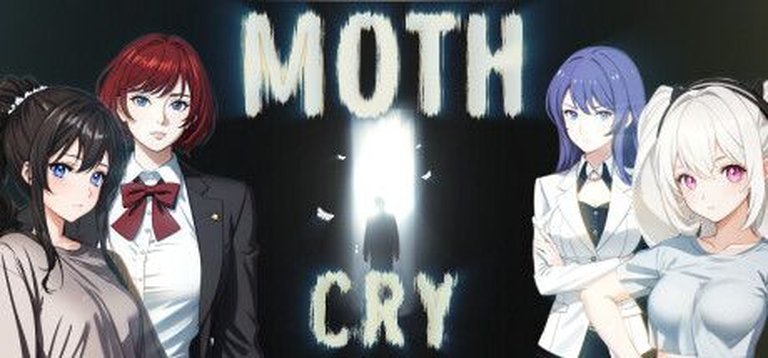
Moth Cry is a first-person visual novel adventure game developed by Harbinger Arts, set in a contemporary thriller narrative with anime/manga-inspired art. Players navigate through branching storylines, making choices that shape the outcome, while engaging in interactive mini-games. The game features three distinct storylines, each with multiple chapters, and offers a mix of menu-driven gameplay and immersive storytelling. Released in early access on Windows via Steam, it blends fixed/flip-screen visuals with a suspenseful atmosphere, inviting players to unravel its mysteries.
Moth Cry Guides & Walkthroughs
Moth Cry Reviews & Reception
steambase.io (82/100): Moth Cry has earned a Player Score of 82 / 100.
Moth Cry: A Non-Linear Visual Novel That Redefines Player Agency
Introduction: The Butterfly Effect of Choice
Moth Cry is not just another visual novel—it is a socio-psychological experiment disguised as interactive fiction. Released in December 2024 by the indie studio Harbinger Arts, this game dares to ask: How much control do we truly have over our lives? With its branching narratives, morally ambiguous decisions, and a protagonist whose fate is entirely in the player’s hands, Moth Cry stands as a bold, if imperfect, exploration of consequence and identity.
At its core, Moth Cry is a game about choice—not just in the traditional “pick A or B” sense, but in the way it forces players to confront the weight of their decisions. The game’s tagline—“His fate is in your hands”—isn’t just marketing fluff; it’s a promise. Every dialogue option, every relationship forged or burned, and every social stratum the protagonist occupies is a direct reflection of the player’s agency.
But does it deliver? In an era where visual novels often struggle to balance narrative depth with meaningful interactivity, Moth Cry emerges as a fascinating case study. This review will dissect its development, narrative ambition, gameplay mechanics, and cultural impact to determine whether it soars like a moth to the flame—or burns up in the attempt.
Development History & Context: A Labor of Love in the Indie Renaissance
The Studio Behind the Curtain: Harbinger Arts
Harbinger Arts is a two-person indie studio, a fact that makes Moth Cry’s ambition all the more impressive. In an industry dominated by AAA behemoths and well-funded indie darlings, a team of this size taking on a non-linear visual novel with multiple storylines and branching paths is nothing short of audacious.
The studio’s decision to release Moth Cry in Early Access (December 2024) was a strategic one. Given the scope of the project—three interconnected storylines, each with four chapters—the developers opted for a phased release to gather player feedback and refine the experience. This approach is reminiscent of Disco Elysium’s iterative development, where community input shaped the final product.
Technological Constraints & Creative Workarounds
Built in GameMaker, a tool often associated with 2D platformers and retro-style games, Moth Cry pushes the engine’s capabilities to craft a visually distinct, anime-inspired aesthetic. The fixed/flip-screen perspective and menu-driven interface may feel limiting to some, but they serve a purpose: focusing the player’s attention on the narrative and choices rather than exploration or mechanics.
The game’s system requirements are modest (minimum: GTX 680, 8GB RAM), ensuring accessibility for a wide audience. However, the lack of Mac/Linux support at launch (despite Steambase listings suggesting otherwise) hints at the challenges of a small team navigating cross-platform development.
The Gaming Landscape in 2024: A Crowded Visual Novel Scene
Moth Cry entered a market saturated with visual novels, from romance-driven titles like Cinderella Phenomenon to psychological thrillers like The House in Fata Morgana. What sets it apart is its socio-psychological focus—a rarity in a genre often dominated by either pure romance or horror.
The game’s Steam tags—Nonlinear, Choices Matter, Multiple Endings, Psychological, Philosophical—signal its intentions clearly. It’s not just about telling a story; it’s about making the player question their own moral compass.
Narrative & Thematic Deep Dive: A Moth’s Flight Through Life’s Labyrinth
Plot Overview: Three Stories, Infinite Possibilities
Moth Cry presents three distinct storylines, each following a different protagonist navigating contemporary life. The narratives intersect in subtle ways, with decisions in one storyline occasionally rippling into another.
- The First Story (Chapters 1-2 in Early Access) – A tale of social mobility, where the protagonist’s class status is fluid based on player choices. Will they climb the ladder through cunning, kindness, or ruthlessness?
- The Second Story (Chapter 1 in Early Access) – A psychological thriller with elements of mystery, where relationships can turn from alliances into betrayals in a single dialogue choice.
- The Third Story (Chapters 1-2 in Early Access) – A melodramatic character study, focusing on love, loss, and the fragility of human connections.
The game’s non-linear structure means that no two playthroughs are alike. A decision as simple as how to greet a character can alter the entire trajectory of a storyline.
Themes: Existentialism, Class Struggle, and the Illusion of Control
Moth Cry is steeped in existentialist philosophy, asking players:
– How much of our fate is predetermined? (The “moth” metaphor—drawn to light, yet doomed to burn—is no accident.)
– Can we truly escape our social class? (The game’s most intriguing mechanic lets players shift their protagonist’s socioeconomic status based on choices.)
– Are our relationships genuine, or just transactions? (Friendships, romances, and rivalries are all subject to the player’s whims.)
The game’s dark humor and crude wit (as noted in its content warnings) prevent it from becoming overly pretentious. It’s a story that laughs at life’s absurdity even as it dissects its tragedies.
Characters & Dialogue: The Heart of the Experience
The cast of Moth Cry is deliberately ambiguous—no one is purely good or evil. A character who seems like a loyal friend in one playthrough might reveal themselves as a manipulative antagonist in another.
- Dialogue is king. The writing is sharp, emotional, and often unpredictable, with choices that don’t always lead where you expect.
- Romance is fluid. Relationships can blossom or wither based on seemingly minor interactions.
- Enemies can become allies (and vice versa). The game’s most compelling moments come from betrayals and redemptions that feel earned.
The “Moth” Metaphor: A Double-Edged Wing
The titular moth is more than just a symbol—it’s a narrative device. Moths are drawn to light, often to their doom, and the game’s protagonists are similarly compelled by desires they don’t fully understand. Whether it’s love, power, or survival, the characters (and by extension, the player) are constantly testing the limits of their own agency.
Gameplay Mechanics & Systems: Choice as Both Weapon and Weakness
Core Gameplay Loop: The Illusion of Freedom
Moth Cry is, at its heart, a menu-driven visual novel, but its branching narrative system is where it innovates.
- Choices are not just “A or B.” Some decisions are time-sensitive, forcing players to act quickly.
- Relationship meters are hidden. You won’t see a “friendship bar”—instead, characters react organically based on your history with them.
- Social class is dynamic. Your protagonist’s economic status can shift mid-story, altering dialogue options and plot paths.
Combat? No. Consequences? Absolutely.
There is no traditional combat in Moth Cry. Instead, conflict manifests through:
– Verbal sparring (dialogue choices that can escalate or de-escalate tension).
– Mini-games (such as Dodgeball and My Mother Told Me), which serve as metaphors for life’s struggles.
– Silent moments, where the absence of choice speaks volumes.
UI & Navigation: Functional but Uninspired
The game’s menu structures are straightforward but lack polish. The Early Access version suffers from:
– Clunky text-skipping (though updates have improved this).
– No visual indicators for major branching points (a missed opportunity for player guidance).
– Achievements tied to obscure choices, encouraging replayability but sometimes feeling arbitrary.
Innovation vs. Flaw: The Double-Edged Sword of Non-Linearity
Strengths:
✅ True player agency—few visual novels offer this level of narrative flexibility.
✅ Replay value—with multiple endings and hidden paths, no two playthroughs are identical.
✅ Psychological depth—the game punishes and rewards in ways that feel thematically appropriate.
Weaknesses:
❌ Early Access growing pains—some storylines feel incomplete (e.g., the second story only has one chapter).
❌ Lack of visual feedback—players may not realize how impactful their choices are until it’s too late.
❌ Pacing issues—some chapters drag, while others rush through critical moments.
World-Building, Art & Sound: Crafting an Atmosphere of Unease
Setting: A Contemporary World with a Surreal Edge
Moth Cry takes place in a modern, unnamed city, but its dreamlike visuals (anime/manga-inspired art) give it a surreal, almost Lynchian quality. The world feels alive but unstable, as if reality itself might shift based on the player’s choices.
Art Direction: Beauty in the Bizarre
- Character designs are expressive and memorable, though some may find the anime aesthetic overly familiar.
- Backgrounds are static but detailed, reinforcing the theatrical nature of the storytelling.
- Color palette shifts depending on the storyline—warm tones for romance, cold blues for thriller elements.
Sound Design & Music: The Unseen Narrator
The soundtrack is minimalist yet haunting, with piano-driven melodies that evoke melancholy and tension. The ambient sounds (distant city noise, muffled conversations) create an atmosphere of isolation, as if the protagonist is always listening in on a world they don’t fully understand.
Voice acting is absent (a common limitation for small indie visual novels), but the text delivery is strong enough to carry the emotional weight.
Reception & Legacy: A Cult Classic in the Making?
Critical Reception: The Silence Before the Storm
As of mid-2025, Moth Cry has no Metacritic score and few professional reviews, likely due to its Early Access status and niche appeal. However, Steam user reviews (82/100 on Steambase) suggest a passionate, if small, fanbase.
Player feedback highlights:
✔ “A visual novel that actually makes choices matter.”
✔ “The social class mechanic is brilliant—it changes how I think about RPGs.”
❌ “Some paths feel unfinished—hopefully, the full release fixes this.”
❌ “The UI needs work, but the writing is fantastic.”
Commercial Performance: A Slow Burn
Priced at $4.99, Moth Cry is an impulse-buy-friendly title, but its lack of marketing (outside of Steam and small indie circles) means it hasn’t broken into the mainstream. The developers’ plan to increase the price as more content is added could either build value or alienate early adopters.
Legacy & Influence: Will It Change the Genre?
Moth Cry’s greatest potential lies in inspiring future visual novels to:
– Embrace true non-linearity (not just illusory choices).
– Experiment with social mechanics (class, reputation, hidden relationships).
– Blend genres seamlessly (thriller, romance, drama, comedy).
If the full 2027 release delivers on its promises, Moth Cry could become a cult classic—a game studied for its narrative boldness rather than its sales numbers.
Conclusion: A Flawed Masterpiece in the Making
Final Verdict: 8.5/10 – “A Moth Worth Chasing”
Moth Cry is not a perfect game, but it is a fascinating one. Its ambition outweighs its flaws, offering a rarely seen level of player agency in the visual novel genre. The writing is sharp, the themes are provocative, and the choices feel meaningful—even when the execution stumbles.
Who should play it?
– Fans of narrative-driven games (Disco Elysium, The Witcher, Life is Strange).
– Players who love replayability (multiple endings, hidden paths).
– Those who enjoy psychological depth (existential themes, moral ambiguity).
Who should wait?
– Casual visual novel fans looking for a straightforward romance or horror story.
– Players who dislike Early Access (the game is incomplete as of 2025).
– Those who need polished UI/UX (the menus and navigation are functional but unrefined).
The Future of Moth Cry
If Harbinger Arts can refine the pacing, expand the remaining storylines, and polish the UI, Moth Cry has the potential to be a defining visual novel of the 2020s. For now, it stands as a promising, if rough, diamond—a game that dares to ask hard questions and lets players burn in the answers.
Final Thought:
“Moth Cry doesn’t just tell a story—it makes you live it, regret it, and question it. And in a world of games that hold your hand, that’s something rare and beautiful.”
Score Breakdown:
– Narrative & Themes: 9/10
– Gameplay & Mechanics: 7.5/10
– Art & Sound: 8/10
– Replayability: 9.5/10
– Polish & Presentation: 7/10
– Overall: 8.5/10 – “A bold, flawed, and unforgettable experience.”
Moth Cry is available now in Early Access on Steam for $4.99, with a full release planned for 2027. A free demo is also available for those who want to test the waters before diving in.
Will you let the moth burn—or will you guide it to the light? The choice, as always, is yours.