
- Release Year: 2018
- Platforms: Windows
- Publisher: Garage Games
- Developer: Divertic
- Genre: Adventure
- Perspective: Fixed / flip-screen
- Game Mode: Single-player
- Gameplay: Point and select
- Average Score: 49/100
Description
Hangover is an adventure game released in 2018, developed by Divertic and published by Garage Games. The game features a fixed/flip-screen visual style and a point-and-select interface, immersing players in a narrative-driven experience. While specific details about the plot and setting are sparse, the game’s title and genre suggest a story likely centered around themes of recovery, mystery, or consequence, possibly blending humor or intrigue within its adventure framework.
Where to Buy Hangover
PC
Hangover Guides & Walkthroughs
Hangover Reviews & Reception
steambase.io (49/100): Hangover has earned a Player Score of 49 / 100.
Hangover: A Forgotten Gem in the Point-and-Click Adventure Genre
Introduction
In the vast ocean of indie games released in the late 2010s, Hangover (2018) stands as a curious, often overlooked title that blends the charm of classic point-and-click adventures with a modern, humorous twist. Developed by Divertic and published by Garage Games, Hangover is a short but engaging narrative-driven experience that challenges players to navigate the aftermath of a wild party while grappling with moral dilemmas, absurd puzzles, and a ticking clock. Despite its obscurity, the game offers a unique glimpse into the potential of small-scale, story-rich adventures in an era dominated by open-world epics and battle royales.
This review aims to dissect Hangover in exhaustive detail, exploring its development context, narrative depth, gameplay mechanics, artistic choices, and legacy. By the end, we will determine whether Hangover is a hidden masterpiece, a flawed experiment, or simply a footnote in gaming history.
Development History & Context
The Studio and Creators’ Vision
Hangover was developed by Divertic, a small indie studio with little prior recognition in the gaming industry. The team’s vision was to create a short, replayable adventure game that emphasized player agency and consequence, drawing inspiration from classic point-and-click titles like Monkey Island and Day of the Tentacle, as well as modern narrative-driven games like The Walking Dead by Telltale Games.
The game’s premise—a protagonist waking up after a wild party with no memory of the previous night’s events—is a familiar trope in comedy and film (e.g., The Hangover movie franchise). However, Divertic sought to subvert expectations by focusing on moral ambiguity and player choice rather than outright slapstick humor. The goal was to craft a game where players could explore their own ethics, asking questions like:
– Are you a good person, or is there a villain hiding inside you?
– Do you take the easy way out, or do you embrace the harder path?
– Will you risk your job to save your friends?
Technological Constraints and Design Choices
Released in January 2018, Hangover was built using Garage Games’ Torque 2D engine, a toolset known for its accessibility to indie developers. The engine’s limitations influenced several key design decisions:
1. Fixed/Flip-Screen Visuals: Unlike modern open-world games, Hangover employs a static, room-based perspective, reminiscent of classic adventure games. This choice was both a nod to retro design and a practical solution to development constraints.
2. Point-and-Select Interface: The game’s interaction system is intentionally simplistic, relying on mouse-driven item combination and environmental manipulation. This design harkens back to the golden age of adventure gaming while ensuring accessibility for casual players.
3. Short Playtime: With a runtime of under an hour, Hangover was designed to be a bite-sized experience, prioritizing replayability through multiple endings and hidden Easter eggs.
The Gaming Landscape in 2018
Hangover launched into a crowded indie market dominated by several trends:
– Narrative-Driven Games: Titles like What Remains of Edith Finch (2017) and Night in the Woods (2017) had set high standards for storytelling in indie games.
– Battle Royale Craze: PlayerUnknown’s Battlegrounds (2017) and Fortnite (2017) were reshaping multiplayer gaming, leaving little room for single-player adventures.
– Metroidvanias and Roguelikes: Games like Hollow Knight (2017) and Dead Cells (2018) were capturing attention with their blend of exploration and replayability.
In this environment, Hangover’s low-key release and minimal marketing meant it struggled to gain traction. The game’s Steam launch relied heavily on word-of-mouth and niche communities, limiting its reach. Despite this, its unique art style, humorous tone, and moral dilemmas carved out a small but dedicated fanbase.
Narrative & Thematic Deep Dive
Plot Overview
Hangover begins with the protagonist waking up in a disheveled apartment after a night of heavy partying. The player quickly learns:
– They have one hour to get to work.
– They were supposed to bring something important (later revealed to be a CD).
– Their memories of the previous night are fragmented, and the apartment is littered with clues.
The game’s narrative unfolds through environmental storytelling and item interactions. Players must piece together what happened by:
– Reading notes (e.g., a wet paper hinting at the CD’s importance).
– Combining items (e.g., using glasses to read small text).
– Making critical choices that lead to different endings.
Characters and Dialogue
Hangover features a minimalist cast, with the protagonist as the sole playable character. Other “characters” are implied through environmental details:
– The Friend: A mysterious figure whose legs are visible under a door, hinting at a darker subplot.
– The Boss: Referenced in notes, representing the pressure of work and responsibility.
– The Player’s Alter Ego: The game frequently breaks the fourth wall, asking players to reflect on their own morality.
The dialogue is sparse but impactful, delivered through text-based interactions and achievement descriptions. For example:
– “Are you a good person or are you hiding villain deep inside?”
– “Will you risk getting fired so you save your friends?”
These lines reinforce the game’s central theme: moral ambiguity in everyday life.
Themes: Responsibility, Memory, and Consequence
Hangover explores several philosophical and psychological themes:
1. The Burden of Responsibility:
– The protagonist’s dilemma—whether to prioritize work or help a friend—mirrors real-life struggles between personal and professional obligations.
– The game’s multiple endings reflect the consequences of these choices, with no “perfect” outcome.
-
Memory and Identity:
- The protagonist’s fragmented memory serves as a metaphor for self-discovery.
- Players must reconstruct the past through clues, much like piecing together one’s own identity.
-
Moral Relativism:
- The game avoids black-and-white morality, instead presenting players with shades of gray.
- For example, destroying the CD (a work obligation) to save a friend is framed as both selfless and reckless.
-
Absurdism and Humor:
- The game’s cartoony art style and whimsical achievements (e.g., “I’m a proud creep”) contrast with its darker themes, creating a tonal balance between comedy and introspection.
Storytelling Techniques
Hangover employs several narrative techniques to immerse players:
– Environmental Storytelling: The apartment’s cluttered state tells a story of chaos and poor decisions.
– Non-Linear Progression: Players can explore rooms in any order, discovering clues at their own pace.
– Player Agency: Choices feel meaningful, even in a short game, due to the permanent consequences of each ending.
Gameplay Mechanics & Systems
Core Gameplay Loop
Hangover’s gameplay revolves around three core mechanics:
1. Item Collection and Combination:
– Players gather objects (e.g., screwdriver, wallet, duct tape) and combine them to solve puzzles.
– Example: Using glasses + wet paper to read a crucial note.
-
Environmental Interaction:
- Clicking on objects in the environment (e.g., TV, stove, locked door) triggers events or reveals clues.
-
Moral Choices:
- Key decisions (e.g., destroying the CD, helping the friend) lead to branching paths and multiple endings.
Puzzle Design: Strengths and Flaws
Strengths:
– Intuitive Logic: Most puzzles follow real-world logic (e.g., using a screwdriver to open a drawer).
– Creative Solutions: Some puzzles require lateral thinking, such as using duct tape to restrain a friend.
– Replayability: The multiple endings and hidden Easter eggs encourage repeat playthroughs.
Flaws:
– Lack of Depth: Some puzzles are overly simplistic, relying on trial-and-error rather than clever design.
– Limited Feedback: The game occasionally lacks clear hints, leaving players stuck.
– Technical Issues: A few interactions (e.g., the “Argh!” achievement) suffer from bugs or unclear triggers.
UI and Controls
- Point-and-Click Interface: The mouse-driven controls are responsive but unremarkable.
- Inventory System: Items are stored in a bottom-of-screen bar, allowing for easy drag-and-drop combinations.
- Achievement System: The game’s 21 achievements serve as both guidelines and jokes, adding humor and replay value.
Innovation vs. Convention
Hangover does not reinvent the wheel but instead refines classic adventure game mechanics for a modern audience. Its greatest innovation lies in its moral ambiguity and short-form storytelling, proving that narrative depth can exist in a compact experience.
World-Building, Art & Sound
Setting and Atmosphere
Hangover takes place entirely within a single apartment, yet the environment feels lived-in and dynamic:
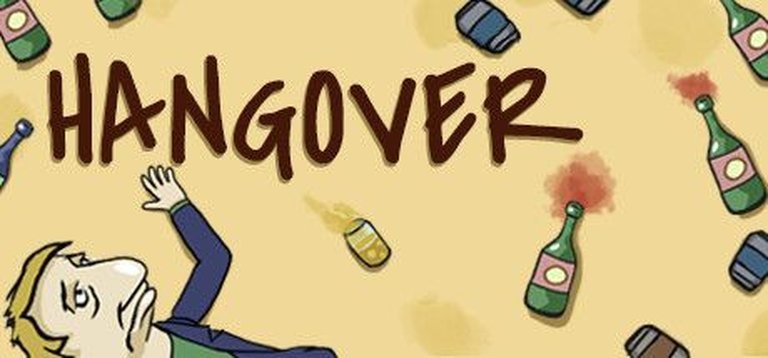
– Visual Clutter: The apartment’s messy state (e.g., empty bottles, scattered notes) reinforces the hangover theme.
– Room Variety: Each area (bathroom, bedroom, kitchen) has distinct visual and functional purposes, preventing monotony.
Art Direction: A Cartoonish Nightmare
The game’s cartoony, hand-drawn art style is its most distinctive feature:
– Exaggerated Proportions: Characters and objects have a whimsical, almost surreal appearance.
– Color Palette: Bright, saturated colors contrast with the game’s darker themes, creating a juxtaposition between humor and seriousness.
– Animations: Simple but expressive, such as the friend’s legs twitching under the door.
Sound Design and Music
- Ambient Sounds: The apartment is filled with subtle noises (e.g., dripping water, distant chatter) that enhance immersion.
- Music: The soundtrack is minimalist, with light, playful tunes that complement the game’s tone.
- Voice Acting: Nonexistent, relying entirely on text and sound effects—a missed opportunity for deeper emotional engagement.
Reception & Legacy
Critical and Commercial Reception
Hangover received little critical attention upon release, with no major reviews from gaming outlets. Its Steam reception has been mixed, with a 49/100 player score based on 150 reviews (as of 2026). Common praises and criticisms include:
– Praises:
– “Charming and funny” (players appreciated the humor and art style).
– “Short but sweet” (the game’s brevity was seen as a strength).
– “Creative puzzles” (some players enjoyed the item combinations).
– Criticisms:
– “Too short” (many felt the game ended abruptly).
– “Buggy achievements” (technical issues frustrated completionists).
– “Lack of depth” (some puzzles were deemed overly simplistic).
Evolution of Reputation
Over time, Hangover has gained a cult following among:
– Achievement Hunters: The game’s 21 achievements and hidden Easter eggs make it a speedrunning and completionist challenge.
– Indie Enthusiasts: Players who enjoy short, experimental narratives have championed the game.
– Retro Gamers: Fans of classic point-and-click adventures appreciate its nostalgic design.
Influence on Subsequent Games
While Hangover did not directly inspire major titles, its design philosophy aligns with trends in short-form indie storytelling, seen in games like:
– A Short Hike (2019): Emphasizes brevity and emotional impact.
– Inscryption (2021): Blends puzzle-solving with narrative depth.
– The Past Within (2022): Focuses on moral choices in a compact experience.
Conclusion: The Final Verdict
Hangover is a flawed but fascinating experiment in narrative-driven adventure gaming. It succeeds in:
– Delivering a unique, morally ambiguous story in under an hour.
– Reviving classic point-and-click mechanics with a modern twist.
– Creating a memorable, if niche, experience through humor and player agency.
However, it stumbles in:
– Technical polish (buggy achievements, unclear puzzles).
– Lack of depth (some interactions feel shallow).
– Limited replay value beyond achievement hunting.
Final Rating: 7/10 – A Hidden Gem with Rough Edges
Hangover is not a masterpiece, but it is a worthy addition to the point-and-click canon, offering a brief yet thought-provoking journey through the fog of a hangover—both literal and metaphorical. For fans of narrative adventures, moral dilemmas, and indie charm, it’s a game worth experiencing, even if only for an hour.
Where It Stands in History:
Hangover will likely remain a cult classic rather than a mainstream hit, but its bold storytelling and unique art style ensure it won’t be entirely forgotten. In the grand tapestry of gaming, it’s a small but vibrant thread—one that reminds us that great stories don’t always need epic scales.
Additional Resources
For those interested in exploring Hangover further:
– Steam Page: Hangover on Steam
– Walkthrough Guide: Steam Community Guide
– Developer Insights: Check out Divertic’s other projects for similar indie experiences.
Hangover may not have left a hangover on the industry, but it certainly leaves a lingering aftertaste—one of curiosity, humor, and introspection. Cheers to the little games that dare to ask big questions.