
- Release Year: 2019
- Platforms: Browser, Windows
- Developer: Arkshija
- Genre: Idle, Strategy, Tactics
- Perspective: Fixed / flip-screen
- Game Mode: Single-player
- Gameplay: Time management
- Average Score: 61/100
Description
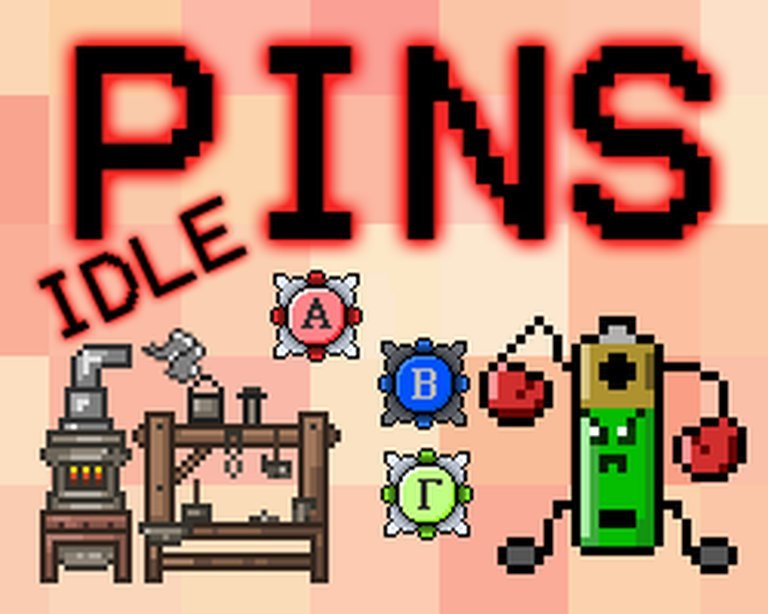
Idle Pins is a strategic idle game where players fuse and upgrade Pins to create stronger versions, unlocking new abilities and formations. Set in a persistent, real-time world, the game features exploration across diverse zones, crafting, prestige mechanics, and over 250 unique Pins to collect. Players can customize their attack strategies, manage resources, and build their own Tower while progressing through a deep upgrade system.
Gameplay Videos
Where to Buy Idle Pins
PC
Idle Pins Mods
Idle Pins Guides & Walkthroughs
Idle Pins Reviews & Reception
steambase.io (62/100): Idle Pins has earned a Player Score of 62 / 100.
store.steampowered.com (61/100): 61% of the 536 user reviews for this game are positive.
steamcommunity.com : The game isn’t slow perse, just not fast-paced. And that’s apparently too much for some people.
Idle Pins Cheats & Codes
PC
To redeem codes go to Options of your game, find the “code” field, paste the code there and click the “get” button.
| Code | Effect |
|---|---|
| Cheesychipsu | None |
| FreeCell | None |
| Nitro | None |
| FreeSuperCell | None |
| ThatGreenThing | None |
| That BrownThing | None |
| SomeInvaders | None |
Idle Pins: A Deep Dive into the Incremental Masterpiece
Introduction: The Grind That Rewards
Idle Pins (2019) is not just another incremental game—it’s a love letter to the genre, crafted by a self-proclaimed “incremental addict” for those who crave depth, strategy, and the slow-burn satisfaction of progress. Released initially as a browser game before migrating to Steam in 2021, Idle Pins stands out in a crowded field by rejecting the mindless clicker formula in favor of a meticulously designed fusion of strategy, resource management, and long-term planning.
At its core, Idle Pins is about merging, upgrading, and optimizing “Pins”—color-coded units that battle enemies across a series of zones. But beneath this simple premise lies a labyrinth of systems: formations with unique bonuses, a prestige mechanic (Seasons), a tower-climbing endgame, alchemy, crafting, and a Black Market teeming with upgrades. The game’s tagline—“Tired of those incremental games where you have to buy the first highlighted upgrade without thinking?”—isn’t just marketing; it’s a mission statement.
This review will dissect Idle Pins from every angle: its development, mechanics, narrative (or lack thereof), reception, and legacy. By the end, you’ll understand why it’s both a niche gem and a polarizing experience—one that rewards patience but punishes impatience.
Development History & Context: A Labor of Love
The Solo Developer’s Vision
Idle Pins is the brainchild of Arkshija, a solo developer who spent two years refining the game as a passion project. Originally launched on Kongregate in December 2019, it was later rebuilt and optimized for a Steam release in October 2021. Arkshija’s involvement didn’t end at launch; the game received consistent updates, seasonal events (like Halloween and Christmas), and community-driven balance tweaks.
The developer’s hands-on approach is evident in the game’s Discord community and Steam forums, where Arkshija frequently engaged with players, addressed bugs, and even hosted giveaways of Derium (the premium currency). This level of post-launch support is rare for a free-to-play incremental game, especially one created by a single person.
Technological Constraints & Design Philosophy
Built in Unity, Idle Pins is a browser-turned-desktop game that prioritizes functionality over flashy aesthetics. The pixel-art visuals are serviceable but not groundbreaking, and the sound design is minimal (the Steam page even jokes: “The game has no sound… Well, it has one but meh”).
What Idle Pins lacks in polish, it makes up for in systemic depth. Arkshija designed the game to be:
– Slow but rewarding – Progress is deliberate, with no “instant win” mechanics.
– Strategic – Players must plan Pin fusions, formation setups, and resource allocation.
– Non-linear – Unlike many idlers, there’s no single “correct” path; experimentation is encouraged.
This philosophy clashes with the expectations of casual incremental fans, which explains the game’s mixed reception (61% positive on Steam). Players who crave fast-paced idle games (like Cookie Clicker or Adventure Capitalist) often bounce off Idle Pins, while those who enjoy deep, grindy RPGs (à la NGU Idle or Melvor Idle) find it addictive.
The Incremental Landscape in 2019-2021
When Idle Pins launched, the incremental genre was already saturated with:
– Clicker games (Cookie Clicker, Clicker Heroes)
– Hybrid idlers (Kittens Game, A Dark Room)
– Mobile gacha-idlers (AFK Arena, Idle Heroes)
Idle Pins carved its niche by:
1. Rejecting pay-to-win mechanics – While Derium (premium currency) exists, it’s primarily for quality-of-life upgrades (e.g., faster crafting, extra inventory slots). The game is fully playable without spending a dime.
2. Emphasizing strategy over automation – Unlike AFK Arena, where you set a team and forget it, Idle Pins demands active management of Pins, formations, and upgrades.
3. Offering a prestige system with meaningful choices – The Season mechanic (a soft reset) isn’t just about grinding for a bigger number—it unlocks permanent upgrades that alter gameplay.
Narrative & Thematic Deep Dive: The Story of Pins
The Lack of a Traditional Plot
Idle Pins has no overt story. There are no cutscenes, no dialogue, and no lore-heavy worldbuilding. Instead, the “narrative” emerges from:
– Progression milestones (unlocking The Tower, defeating Leaders)
– Thematic zones (each with distinct enemies and materials)
– The alchemy system (which implies a world where Pins are forged, not just collected)
This minimalist approach is intentional. Arkshija wanted players to focus on mechanical mastery rather than narrative fluff. The game’s “story” is the player’s journey—from fusing their first Beta Pin to conquering The Tower.
Themes: Grind, Mastery, and the Joy of Optimization
Idle Pins explores several underlying themes:
1. The Reward of Patience – The game punishes rushing. Players who fuse Pins too quickly often hit a wall, while those who plan their fusions (e.g., saving Epsilon Pins for the Turtle Formation) progress smoothly.
2. Resource Scarcity & Opportunity Cost – Every Chikara Point (currency) and material must be spent wisely. Should you craft a new Pin or save for a Formation upgrade?
3. The Illusion of Automation – While Idle Pins has auto-battle features, true optimization requires manual tweaking. The best players constantly adjust their setup.
4. Prestige as Renewal – The Season system isn’t just a reset—it’s a chance to refine your strategy with new upgrades.
The World of Pins: What Are They?
The game never explains what Pins are, but fan theories suggest:
– Living weapons (given their combat role)
– Alchemical constructs (due to the SynthLab and fusion mechanics)
– Sentient energy forms (since they “rest” and recover HP)
This ambiguity adds to the game’s charm. The lack of lore makes the world feel mysterious, inviting players to fill in the gaps.
Gameplay Mechanics & Systems: The Engine of Addiction
Core Gameplay Loop
- Fuse Pins – Combine two identical Pins to create a stronger one (e.g., Alpha → Beta → Gamma).
- Place Pins in Formations – Each Formation has color-coded slots and unique bonuses.
- Battle Enemies – Pins auto-attack, charging a bar that drops loot.
- Craft & Upgrade – Use materials to unlock new Pins, Formations, and features.
- Prestige (Season Reset) – Sacrifice progress for permanent upgrades.
This loop is deceptively simple but hides layers of complexity.
Pin Fusion & The Color System
Pins follow a color-coded tier system:
– Red (Alpha, Zeta, etc.)
– Blue (Beta, Eta, etc.)
– Green (Gamma, Theta, etc.)
– Purple (Delta, Iota, etc.)
– Yellow (Epsilon, Kappa, etc.)
Fusion Rules:
– Fusing two Pins of the same tier always yields a higher-tier Pin.
– The color cycles in a fixed order: Red → Blue → Green → Purple → Yellow → Red…
– Example: Two Gamma (Green) Pins fuse into a Delta (Purple).
Strategic Implications:
– Formations restrict Pin colors (e.g., The Noob allows 2 Red, 2 Blue, 2 Green).
– Slow Pins (Epsilon, Iota, Lambda) shine in the Turtle Formation, which reduces cooldowns.
– Fast Pins (Alpha, Beta) are better for early-game grinding.
Formations: The Heart of Strategy
Formations are more than just stat boosts—they dictate playstyle. Key examples:
| Formation | Slots | Bonus | Best Use Case |
|---|---|---|---|
| The Noob | 2R, 2B, 2G, 1S | +CPS | Early-game grinding |
| The Unity | 1R, 1B, 1G, 1P, 1Y, 2S | Balanced | Mid-game flexibility |
| The Turtle | 7 Slow, 2S | CD -0.5s, HP x5 | Late-game powerhouse |
| The Vortex | 5 Fast, 2S | Attack Speed | Speed farming |
Why The Turtle is OP:
– Cooldown reduction makes slow Pins attack much faster.
– HP x5 lets Pins survive longer, reducing downtime.
– Synergizes with Epsilon/Iota Pins, which have high base damage.
The Tower: Endgame Content
Unlocked via Scrap (from fusing Plasma Swords and Ice Shurikens), The Tower is a roguelike dungeon with:
– Randomized floors (enemies, loot)
– Expeditions (send Pins to explore)
– Floor customization (keep/remove floors)
It’s the ultimate long-term goal, offering:
– Unique Pins (e.g., Tower Exclusive sets)
– Massive resource rewards
– A reason to keep playing after “beating” the game
Prestige System (Seasons)
Resetting via Seasons grants Season Points (SP), used to buy permanent upgrades like:
– Auto-Fuse (automates Pin fusion)
– Research Cells (boosts Pin leveling)
– Global Discharge (increases damage)
Key Strategy:
– Short Seasons = More SP but weaker runs
– Long Seasons = Fewer SP but stronger late-game progress
Crafting & The Black Market
- Blueprints unlock via progression (e.g., Rest Pin at Zone 3-3).
- Materials drop from enemies (e.g., Grass, Wood, Crysblood).
- The Black Market sells rare upgrades (e.g., Ancient Gem for better sword drops).
Optimal Crafting Priority:
1. Formations (unlock more slots)
2. Rest Pin (essential for healing)
3. Sword Set Pins (for Global Discharge farming)
Alchemy & The SynthLab
- Dismantle Pins for Cells (used to level up Pins).
- Tune Pins to improve stats (e.g., Critical Chance, Multihit).
- Alchemy lets you transmute materials (e.g., turn Grass into Wood).
Pro Tip:
– Core Set Pins (e.g., Core Alpha) are best for dismantling (high Cell yield).
– S+ Tune ranks are endgame goals—require massive grinding.
World-Building, Art & Sound: Minimalism with Purpose
Visual Design: Functional Pixel Art
- Pins are color-coded sprites with simple animations.
- Enemies are static images (e.g., Slime, Golem, High RPM Fan).
- Zones have distinct backgrounds (forest, cave, tower).
Strengths:
✅ Clear UI – Easy to track Pin cooldowns, HP, and enemy charge.
✅ Color-coding – Makes Pin management intuitive.
Weaknesses:
❌ Lack of animation – Battles feel static.
❌ Repetitive enemy designs – Little visual variety.
Sound Design: The Silent Grind
- No background music (intentional, per Steam page).
- Minimal sound effects (e.g., Pin attacks, fusion sounds).
Why It Works:
– Reduces distraction – Players focus on strategy, not sensory overload.
– Fits the “grind” aesthetic – The silence amplifies the satisfaction of progress.
Why It Fails:
– Feels “unfinished” to some players.
– Lack of auditory feedback makes long sessions tedious.
Atmosphere: The Zen of Incrementalism
Idle Pins doesn’t need epic music or cinematic cutscenes—its atmosphere comes from:
– The rhythm of fusion (watching Pins evolve).
– The thrill of unlocking a new Formation.
– The dopamine hit of a perfect S+ Tune.
It’s a meditative experience, akin to Stardew Valley’s farming loop or Factorio’s automation.
Reception & Legacy: A Cult Classic in the Making?
Critical Reception: Mixed but Passionate
| Platform | Score | Verdict |
|---|---|---|
| Steam | 61% Positive (536 reviews) | “Mixed” |
| Metacritic | No critic reviews | N/A |
| Steambase | 62/100 Player Score | “Mixed” |
Common Praise:
✔ “Best incremental game for strategy lovers” – Players who enjoy depth adore it.
✔ “Rewarding grind” – The slow progression feels earned.
✔ “No pay-to-win” – Derium is optional, not required.
Common Criticism:
✖ “Too slow” – Casual players quit early.
✖ “Confusing for beginners” – The lack of tutorials hurts accessibility.
✖ “Buggy at times” – Some report crashes (though Arkshija patched many).
Community & Longevity
- Active Discord & Steam forums – Players share builds, strategies, and event guides.
- Seasonal events (Halloween, Christmas) – Keep the game fresh.
- Wiki & guides – The IdlePins Fandom Wiki is essential for new players.
Player Retention:
– Average playtime: 276.8 hours (PlayTracker)
– Median playtime: 3.3 hours (many quit early, but dedicated players sink hundreds of hours).
Influence on the Genre
Idle Pins didn’t revolutionize incrementals, but it refined key mechanics:
1. Meaningful prestige systems (Seasons with real choices).
2. Formation-based strategy (inspiring games like Idle Champions).
3. Hybrid idle-active gameplay (not fully AFK, but not pure clicker).
Games It Inspired:
– King Pins (2020) – A direct spiritual successor.
– Idle Slayer – Borrows the fusion + formation mechanic.
– Almost a Hero – Similar prestige + upgrade structure.
Conclusion: A Masterpiece for the Patient
Idle Pins is not for everyone. If you want instant gratification, look elsewhere. But if you crave a game that respects your time, rewards planning, and offers genuine depth, this is a hidden gem.
Final Verdict: 8.5/10 – “A Slow Burn Worth the Wait”
✅ Pros:
– Deep, strategic gameplay (not just “click and forget”).
– No pay-to-win (free-to-play done right).
– Endless optimization (Tower, Alchemy, Seasons).
– Active developer & community.
❌ Cons:
– Steep learning curve (wiki required for beginners).
– Slow early-game (first 5 hours feel grindy).
– Minimalist presentation (won’t win art awards).
Who Should Play?
– Fans of NGU Idle, Melvor Idle, or Soda Dungeon.
– Players who love spreadsheets and optimization.
– Those who enjoy the journey, not just the destination.
Who Should Avoid?
– Casual gamers who want instant action.
– Players who hate reading guides.
– Anyone expecting a narrative-driven RPG.
Final Thoughts: The Grind That Gives Back
Idle Pins is proof that incremental games can be more than mindless clickers. It’s a testament to thoughtful design, where every mechanic serves a purpose, and every hour spent feels meaningful.
In a world of shallow mobile idlers, Idle Pins is a deep, rewarding experience—one that demands patience but repays it tenfold.
Play it. Grind it. Master it.
(And maybe keep the wiki open in another tab.)