
- Release Year: 2021
- Platforms: Windows
- Publisher: Shanhai Game Studio
- Developer: Shanhai Game Studio
- Genre: Puzzle
- Perspective: 3rd-person
- Game Mode: Single-player
- Gameplay: Platform
- Average Score: 75/100
Description
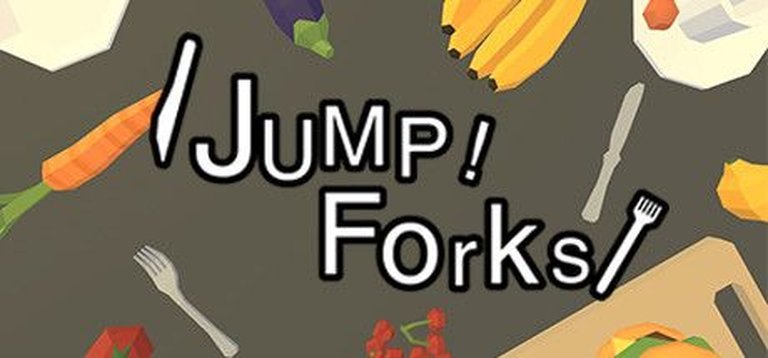
Jump! Fork! is a whimsical puzzle-platformer where players control a fork, navigating obstacles to reach a plate of food. Developed by Shanhai Game Studio and released in 2021, the game transforms the mundane act of searching for meals into a playful challenge, blending real-time physics-based gameplay with a lighthearted theme. Players must carefully aim and bounce the fork using mouse controls, overcoming tricky terrain while avoiding falls, all set in a charming, food-centric world.
Where to Buy Jump! Fork!
PC
Jump! Fork! Patches & Updates
Jump! Fork! Guides & Walkthroughs
Jump! Fork! Reviews & Reception
steambase.io (75/100): Jump! Fork! has earned a Player Score of 75 / 100.
Jump! Fork!: A Whimsical, Physics-Driven Puzzle Platformer That Redefines the Mundane
Introduction: The Fork as Hero
In the vast, often overcrowded landscape of indie games, Jump! Fork! (2021) emerges as a delightful oddity—a game that transforms the mundane act of foraging for food into a physics-based, third-person puzzle-platforming adventure. Developed by the obscure Shanhai Game Studio, this $0.99 Steam title is a minimalist yet charming experiment in game design, where players control a sentient fork bouncing toward a plate of food, navigating obstacles with mouse-driven precision. At first glance, it’s a simple, almost absurd premise, but beneath its whimsical surface lies a meditative reflection on the universal human experience of hunger, anticipation, and the small joys of everyday life.
This review will dissect Jump! Fork! in exhaustive detail, exploring its development context, narrative subtleties, gameplay mechanics, artistic direction, and its place in gaming history. While it may not be a blockbuster or a critical darling, Jump! Fork! represents something far more interesting: a game that dares to find poetry in the prosaic.
Development History & Context: A Game Born from a Simple Question
The Studio Behind the Fork
Jump! Fork! is the brainchild of Shanhai Game Studio, a developer with virtually no prior footprint in the gaming industry. Little is known about the team behind the project, but their Steam description offers a rare glimpse into their creative process:
“One day I suddenly wondered if I could make the usual process of searching for food into a game. It’s like we always think about what to eat at noon and what to eat at night. Turn this process into an experience.”
This statement is the game’s mission in microcosm. Unlike most indie developers chasing trends or nostalgia, Shanhai Game Studio took inspiration from the most basic human ritual—eating—and distilled it into a gameplay loop. The result is a title that feels both deeply personal and universally relatable.
Technological Constraints & Design Philosophy
Built in Unity, Jump! Fork! is a technically modest game, but its simplicity is intentional. The developers embraced the following design principles:
– Minimalist Controls: The entire game is controlled via mouse drag-and-release mechanics, eliminating the need for complex inputs.
– Physics-Based Movement: The fork’s trajectory is governed by realistic (if exaggerated) physics, requiring players to master momentum and angles.
– Procedural-Esque Level Design: While not fully procedural, the game’s obstacles are arranged in a way that encourages experimentation and replayability.
The game’s November 7, 2021 release on Steam positioned it alongside a wave of experimental indie titles, many of which explored unconventional themes. However, Jump! Fork! stands out for its sheer ordinariness—it doesn’t rely on dystopian narratives, retro aesthetics, or roguelike mechanics. Instead, it asks: What if the journey to your plate was an adventure?
The Gaming Landscape in 2021: A Year of Experimentation
2021 was a banner year for indie games that defied convention:
– Wildermyth (procedural storytelling)
– Inscryption (meta-narrative card games)
– Unpacking (emotional storytelling through mundane tasks)
Jump! Fork! fits into this trend by taking an everyday activity and gamifying it without irony or cynicism. It’s a game that could only exist in an era where developers are increasingly willing to explore niche, personal ideas.
Narrative & Thematic Deep Dive: The Philosophy of the Fork
Plot? What Plot?
Jump! Fork! has no traditional narrative. There are no cutscenes, no dialogue, and no characters beyond the fork itself. Yet, its Steam description hints at a deeper thematic undercurrent:
“Experience every wonderful experience of foraging, sometimes simple, sometimes difficult. Enjoy the process. Maybe you will have a new understanding of eating later.”
This is not just a game about moving a fork—it’s a metaphor for the human relationship with food.
Themes: Hunger, Patience, and the Joy of Small Victories
-
The Universality of Hunger
- The fork’s journey mirrors the daily struggle of deciding what to eat, a ritual every human engages in.
- The game’s obstacles (gaps, moving platforms, wind currents) symbolize the small frustrations of meal preparation.
-
Patience and Persistence
- The game’s trial-and-error mechanics reinforce the idea that even simple tasks require effort.
- Falling off the map and restarting mimics the real-life experience of failed cooking attempts.
-
Mindfulness in the Mundane
- By slowing down the act of “reaching the plate,” the game forces players to savor the journey rather than the destination.
- The lack of a score or time limit removes pressure, making it a meditative experience.
The Fork as a Silent Protagonist
The fork is more than a tool—it’s an avatar of desire. Its movements are clumsy yet determined, much like a person stumbling through a kitchen at 2 AM, craving a snack. The game’s lack of anthropomorphism is key; the fork remains an inanimate object, yet players project emotion onto it, celebrating when it lands safely and groaning when it tumbles into the abyss.
Gameplay Mechanics & Systems: The Art of the Bounce
Core Gameplay Loop
Jump! Fork! is, at its heart, a physics-based puzzle platformer with the following mechanics:
1. Mouse-Driven Trajectory Control
– Players click and drag to determine the fork’s launch angle and power.
– The longer the drag, the stronger the bounce.
– Precision is key—too much force sends the fork flying off-screen; too little leaves it stuck.
-
Obstacle Navigation
- Levels feature gaps, moving platforms, fans (wind mechanics), and bouncy surfaces.
- Some obstacles require multiple attempts to overcome, reinforcing the game’s theme of persistence.
-
Failure and Restart
- If the fork falls, players instantly reset with no penalty.
- The game encourages experimentation rather than punishment.
Progression & Difficulty Curve
- Early Levels: Simple jumps, introducing basic physics.
- Mid-Game: Moving obstacles and wind mechanics force players to adapt.
- Late-Game: Complex multi-bounce puzzles that require strategic planning.
UI & Feedback
- Minimalist HUD: Only the fork and the plate are visible—no health bars, no timers.
- Sound Cues: A satisfying clink when the fork lands, a disheartening thud when it fails.
- Visual Feedback: The fork’s shadow helps players gauge landing spots.
Innovations & Flaws
✅ Strengths:
– Intuitive Controls: Anyone can pick it up, but mastering it takes skill.
– Relaxing Yet Challenging: The lack of pressure makes it accessible, but physics-based precision keeps it engaging.
– Replayability: Short levels encourage quick restarts and improvement.
❌ Weaknesses:
– Limited Content: Only a handful of levels, with no procedural generation.
– Repetitive Aesthetics: The visuals are functional but lack variety.
– No Narrative Payoff: The game’s philosophical themes are intriguing but underdeveloped.
World-Building, Art & Sound: A Minimalist Feast
Visual Design: The Aesthetics of Simplicity
- Art Style: Clean, low-poly 3D with a pastel color palette.
- Environment: Mostly abstract platforms and floating islands, evoking a dreamlike kitchen landscape.
- Fork Design: The protagonist is a realistic yet cartoonish fork, animated with a slight wobble to emphasize its precarious journey.
Sound Design: The Symphony of the Bounce
- Ambient Music: Soft, lo-fi beats that enhance the meditative mood.
- SFX:
- Bounce Sounds: Metallic clangs that vary based on surface.
- Failure Sound: A deflating whoosh when the fork falls.
- Success Sound: A triumphant ding upon reaching the plate.
Atmosphere: A Dreamlike Kitchen Odyssey
The game’s abstract visuals and soothing audio create a hypnotic, almost ASMR-like experience. It’s less about high-stakes action and more about the rhythm of movement, making it a perfect palate cleanser between more intense gaming sessions.
Reception & Legacy: The Fork’s Quiet Impact
Critical & Commercial Reception
- Steam Reviews: A 75/100 player score (as of 2026), with players praising its charm and simplicity but criticizing its short length.
- Metacritic: No critic reviews, indicating it flew under the radar of major outlets.
- Sales: Likely modest, given its $0.99 price point and niche appeal.
Influence & Cultural Footprint
While Jump! Fork! hasn’t spawned a genre, it contributes to a growing trend of games about mundane activities, such as:
– Unpacking (2021) – The emotional weight of moving boxes.
– A Short Hike (2019) – The joy of climbing a mountain.
– Coffee Talk (2020) – The art of conversation.
Its legacy lies in proving that even the simplest concepts can be engaging if executed with care.
Conclusion: A Small Game with Big Ideas
Jump! Fork! is not a masterpiece, nor is it a flawed gem—it’s something far more interesting: a game that dares to be ordinary. In an industry obsessed with epic narratives, open worlds, and hyper-realistic graphics, Shanhai Game Studio took a risk by focusing on the humble act of moving a fork toward food.
Final Verdict: 7/10 – A Delightful Oddity
✅ Play It If:
– You enjoy physics-based puzzles with a relaxed pace.
– You appreciate games that find meaning in the mundane.
– You want a short, charming experience that doesn’t overstay its welcome.
❌ Skip It If:
– You need deep storytelling or complex mechanics.
– You dislike repetitive trial-and-error gameplay.
– You expect high production values.
Jump! Fork! won’t revolutionize gaming, but it reminds us that great ideas can come from the simplest places. In a world where games often strive to be bigger, louder, and more spectacular, this little fork’s journey is a quiet revolution—one bounce at a time.
Final Thought:
“Sometimes, the most profound games aren’t about saving the world—they’re about reaching the plate.”