
- Release Year: 2007
- Platforms: Windows
- Publisher: CITY interactive Sp. z o.o., Groove Media Inc.
- Developer: Invictus Games, Ltd.
- Genre: Driving, Racing
- Perspective: 1st-person, 3rd-person
- Game Mode: Online PVP, Single-player
- Gameplay: Betting System, Car customization, Pinkslip Races, Street racing
- Setting: City, Los Angeles
- Average Score: 64/100
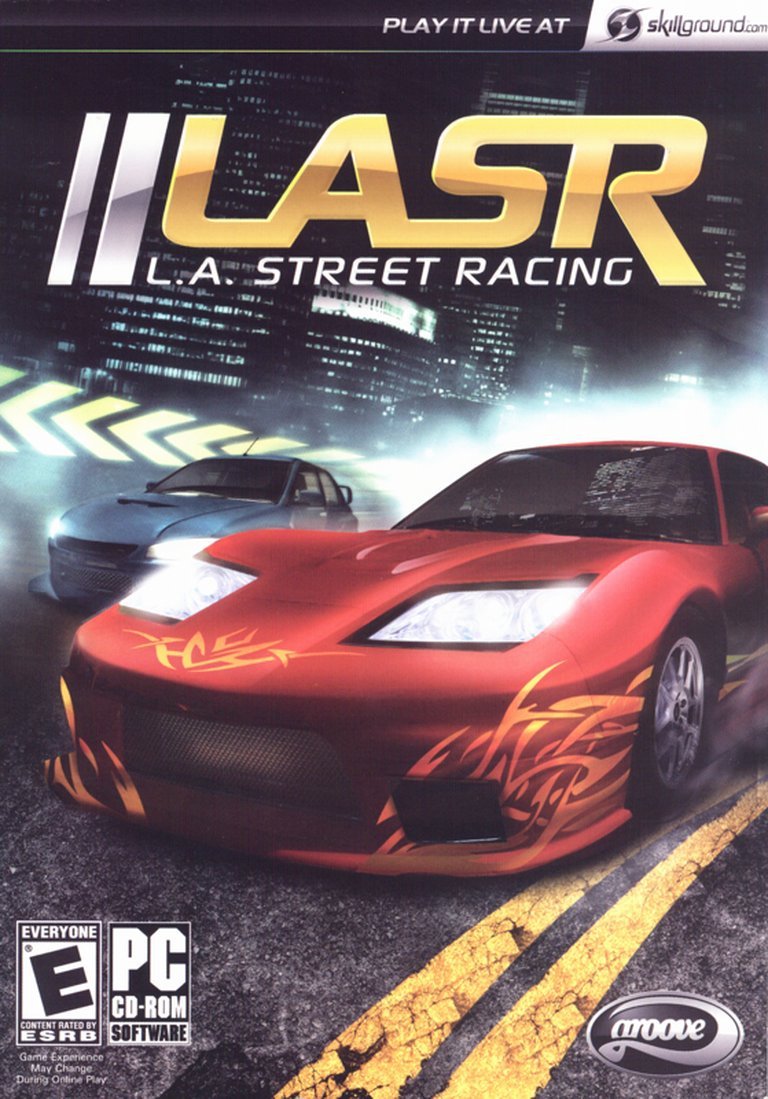
Description
L.A. Street Racing is an underground street racing game set in Los Angeles, where players start as a newcomer aiming to dethrone the reigning champion, Matt Peacock. Beginning at rank 61, players must race their way up by betting car parts, tuning their vehicles, and competing in high-stakes pinkslip races to win opponents’ cars. The game features realistic handling mechanics, nighttime street races across L.A., and a prestige system that unlocks new racing locations as players progress. With both single-player and online multiplayer modes supporting up to eight players, the game blends strategic car customization with intense, skill-based racing.
Gameplay Videos
L.A. Street Racing Free Download
L.A. Street Racing Reviews & Reception
metacritic.com (65/100): An interesting, thrilling option. Hopefully, Groove and Invictus will get their act together, take the game back to the shop for an overhaul and re-release it as the full-fledged, non-budget title it deserves to be.
en.wikipedia.org (65/100): The framework for a very cool racing game is here, and certainly the driving physics are superb. Yet so much
ign.com (65/100): A rarity—a budget racer that looks pretty and drives sublimely. Why then isn’t it a great game?
L.A. Street Racing: A Flawed but Fascinating Relic of the Underground Racing Genre
Introduction: The Underdog of the Street Racing Scene
In the mid-2000s, the street racing genre was dominated by titans like Need for Speed: Underground and Juiced, games that blended high-octane action with deep customization and urban aesthetics. Amidst this competitive landscape, L.A. Street Racing (2006) emerged as an ambitious but deeply flawed underdog, developed by the relatively unknown Hungarian studio Invictus Games and published by Groove Games. Marketed as a gritty, realistic take on underground racing, the game promised a hardcore experience where every victory was earned through skill and strategy. Yet, despite its lofty aspirations, L.A. Street Racing stumbled out of the gate, earning mixed reviews and fading into obscurity.
This review seeks to re-examine L.A. Street Racing not just as a product of its time, but as a fascinating case study in game design ambition clashing with execution. Was it a misunderstood gem, or a cautionary tale of overreach? By dissecting its development, mechanics, narrative, and legacy, we can uncover why this game remains a polarizing footnote in racing game history.
Development History & Context: The Rise and Fall of a Budget Racer
The Studio and the Vision
Invictus Games, a Hungarian developer with a modest portfolio, took on L.A. Street Racing with the goal of creating a street racing simulator that prioritized realism over arcade-style spectacle. The studio’s previous work included titles like WarPath and Marine Sharpshooter 3, which hinted at a focus on simulation and tactical gameplay. For L.A. Street Racing, the team aimed to craft a game where car handling, tuning, and strategic betting were as important as raw speed.
The game’s development coincided with the peak of the street racing craze, fueled by the Fast & Furious franchise and games like Need for Speed: Most Wanted. However, unlike its competitors, L.A. Street Racing eschewed the glamour of underground racing culture in favor of a grittier, more mechanical approach. The developers wanted players to feel the weight of every decision, from the parts they bet in races to the way their car handled on L.A.’s winding streets.
Technological Constraints and Budget Limitations
Released in late 2006 in Europe and mid-2007 in North America, L.A. Street Racing was constrained by the technological limitations of its era. The game ran on a proprietary engine that struggled to compete with the visual fidelity of contemporaries like Need for Speed: Carbon. The result was a game that, while functional, lacked the polish and graphical flair of its peers. Textures were muddy, lighting was flat, and the city of Los Angeles felt more like a series of disconnected racing corridors than a living, breathing urban environment.
Budgetary constraints further hampered the game’s potential. With a smaller team and limited resources, Invictus Games had to make tough decisions about where to allocate development efforts. The result was a game that excelled in some areas (notably its physics and tuning systems) but felt incomplete in others (such as its presentation and AI).
The Gaming Landscape of 2006-2007
By the time L.A. Street Racing hit shelves, the street racing genre was already showing signs of fatigue. Need for Speed: Carbon had been released in late 2006, offering a more refined and visually impressive experience. Juiced and Street Racing Syndicate had also carved out their niches, leaving little room for a newcomer like L.A. Street Racing to make a splash.
The game’s budget pricing—it was later re-released as Overspeed: High Performance Street Racing in 2008—reflected its position as a second-tier title. Critics and players alike approached it with lowered expectations, which may have contributed to its lukewarm reception. In a market saturated with high-profile racing games, L.A. Street Racing struggled to find its audience.
Narrative & Thematic Deep Dive: The Myth of Matt Peacock
Plot: A Simple but Effective Premise
L.A. Street Racing’s narrative is straightforward: you play as an up-and-coming street racer in Los Angeles, aiming to dethrone the reigning champion, Matt Peacock. Starting at the bottom of the underground racing scene (rank 61), you must climb the ranks by winning races, upgrading your car, and outsmarting your rivals.
The game’s story is minimalist, with no cutscenes or voice acting to speak of. Instead, the narrative is conveyed through text-based interactions and the progression system itself. Your rivals are faceless opponents, distinguished only by their car models and the parts they’re willing to bet. This lack of personality extends to Matt Peacock, who exists more as a mythical figure than a fully realized character.
Themes: Risk, Reward, and the Cost of Ambition
At its core, L.A. Street Racing is a game about risk and reward. Every race is a gamble, not just in terms of victory or defeat, but in the parts you stand to lose or gain. The game’s betting mechanic forces players to weigh the potential benefits of upgrading their car against the very real possibility of losing everything in a single race.
This theme of high-stakes competition is reinforced by the game’s punishing difficulty. Unlike other racing games where failure simply means retrying a race, L.A. Street Racing makes every loss feel consequential. Lose a pink slip race, and you could find yourself back at square one, stripped of all your hard-earned upgrades. This design choice reflects the game’s underlying philosophy: in the underground racing world, there are no second chances.
Characters and Dialogue: The Absence of Personality
One of the most glaring weaknesses of L.A. Street Racing is its lack of character development. The game’s rivals are little more than names on a leaderboard, with no backstories, personalities, or even distinct voices. Dialogue is limited to brief, often poorly translated text prompts that do little to immerse the player in the world.
This absence of personality extends to the game’s protagonist, who is a silent cipher with no defined motivations beyond the desire to win. While this approach allows players to project themselves onto the character, it also robs the game of emotional depth. Without compelling characters or a gripping narrative, L.A. Street Racing relies entirely on its gameplay to carry the experience.
Gameplay Mechanics & Systems: A Double-Edged Sword
Core Gameplay Loop: The Grind to the Top
L.A. Street Racing’s gameplay revolves around a simple but punishing loop: race, win parts, upgrade your car, and repeat. The game begins with the player choosing one of two basic cars, after which they must wait at designated locations (like the COOL-Market) for rivals to challenge them. Each race is a high-stakes affair, with the player betting one of their own car parts against a part from their opponent’s vehicle.
This system creates a tense, strategic layer to the racing. Players must decide whether to risk a valuable part for a chance at a better one, or play it safe and grind for smaller upgrades. The lack of a manual save system amplifies the tension, as losing a critical part can set the player back hours of progress.
The Prestige System: A Hierarchy of Power
The game’s ranking system is divided into four prestige levels, each with its own set of locations and opponents. As players climb the ranks, they unlock new areas and face tougher rivals. However, this system also introduces a frustrating limitation: players can only race in locations that match their current prestige level. Attempting to race in a higher-tier area will result in being turned away, while racing in a lower-tier area will yield no rewards.
This design choice reinforces the game’s themes of hierarchy and exclusivity in the underground racing scene. However, it also creates a rigid, linear progression that can feel restrictive. Players are funneled through a predetermined path, with little room for exploration or experimentation.
Car Handling and Physics: A Realistic but Flawed Approach
L.A. Street Racing’s most praised feature is its realistic car handling. Unlike the arcade-style physics of Need for Speed, the game’s cars require careful management of speed, braking, and drifting. Taking a corner too sharply can send the car spinning into the scenery, and over-reliance on the handbrake can lead to disastrous results.
This realism is a double-edged sword. On one hand, it rewards skilled players who take the time to master the game’s mechanics. On the other, it punishes newcomers with a steep learning curve that can feel unfair. The lack of adjustable difficulty settings exacerbates this issue, leaving players with no recourse but to adapt or quit.
The Tuning and Upgrade System: A Test of Strategy
The game’s tuning system is one of its most innovative features. Players can upgrade individual parts of their car, from the engine to the nitro system, in multiple stages. However, mixing parts from different stages can negatively impact the car’s handling, forcing players to make strategic decisions about how to balance power and control.
This system adds a layer of depth to the gameplay, as players must weigh the benefits of a more powerful engine against the potential drawbacks of reduced handling. However, it also introduces a level of complexity that may overwhelm casual players.
Multiplayer: A Missed Opportunity
L.A. Street Racing includes an online multiplayer mode that allows up to eight players to compete in races. However, this feature was poorly implemented, with laggy connections and a lack of matchmaking options. The game’s small player base further limited the appeal of multiplayer, making it a largely forgotten aspect of the experience.
World-Building, Art & Sound: A City of Missed Potential
Setting: Los Angeles at Night
L.A. Street Racing takes place in a fictionalized version of Los Angeles, with races occurring on closed-off streets at night. The game’s developers attempted to capture the gritty, neon-lit aesthetic of underground racing, but the result falls short of its ambitions.
The city feels sterile and lifeless, with little in the way of environmental detail or ambient activity. The streets are lined with generic buildings and repetitive scenery, giving the impression of a racing track rather than a living urban environment. The lack of pedestrians, traffic, or other dynamic elements further detracts from the immersion.
Visual Design: A Budget Aesthetic
The game’s visual design is a product of its budget constraints. Car models are detailed but lack the polish of higher-profile racing games. The lighting is flat and uninspired, with neon signs and streetlights failing to create a compelling atmosphere. The game’s color palette is muted, with a heavy reliance on grays and blues that give the city a drab, uninviting look.
The UI is functional but unremarkable, with menus that feel clunky and outdated. The lack of visual feedback during races—such as damage indicators or speedometers—further detracts from the experience.
Sound Design: A Forgettable Soundtrack
The game’s sound design is equally underwhelming. The soundtrack consists of generic rock and electronic tracks that do little to enhance the racing experience. The sound effects are functional but unremarkable, with engine noises and tire screeches lacking the punch of more polished racing games.
The absence of voice acting or ambient city sounds further contributes to the game’s sterile atmosphere. Without the hum of traffic, the chatter of pedestrians, or the roar of the crowd, L.A. Street Racing feels like a ghost town.
Reception & Legacy: A Game Caught Between Ambition and Execution
Critical Reception: A Mixed Bag
L.A. Street Racing received a lukewarm reception from critics, with an average score of 53% on MobyGames. Reviews praised the game’s realistic handling and strategic depth but criticized its repetitive gameplay, lack of polish, and punishing difficulty.
- PC Powerplay (81%): Praised the game’s driving physics and steering wheel support but criticized its sparse presentation and lackluster menus.
- IGN (65%): Noted the game’s potential but lamented its incomplete features and unpolished AI.
- GameSpot (47%): Called the game a budget title that struggled to compete with more polished racing games.
- Eurogamer (30%): Dismissed the game as a joke, criticizing its lack of innovation and poor execution.
Player reception was similarly mixed, with an average score of 3.2 out of 5 on MobyGames. Some players appreciated the game’s realism and strategic depth, while others found it frustrating and repetitive.
Commercial Performance: A Budget Title’s Fate
L.A. Street Racing was released as a budget title, and its commercial performance reflected its niche appeal. The game failed to make a significant impact in the crowded racing genre, and its later re-release as Overspeed: High Performance Street Racing did little to revive its fortunes.
Legacy: A Cult Following and Nostalgic Appeal
Despite its flaws, L.A. Street Racing has developed a small but dedicated cult following. Players who appreciate its realistic handling and strategic depth continue to champion the game as an underrated gem. Nostalgic players who grew up with the game often recall it fondly, remembering the thrill of climbing the ranks and the tension of high-stakes races.
The game’s legacy is also tied to its status as a budget title. While it never achieved the mainstream success of Need for Speed or Juiced, it remains a fascinating example of what can happen when ambition outpaces execution.
Conclusion: A Flawed but Fascinating Experiment
L.A. Street Racing is a game of contradictions. It aspires to realism but stumbles in execution. It offers strategic depth but punishes players with punishing difficulty. It captures the gritty aesthetic of underground racing but fails to bring its world to life.
Yet, for all its flaws, L.A. Street Racing is not without merit. Its realistic handling and strategic betting system set it apart from its contemporaries, offering a unique take on the street racing genre. For players willing to overlook its rough edges, the game provides a challenging and rewarding experience.
In the end, L.A. Street Racing is a cautionary tale of ambition unfulfilled. It had the potential to be a standout title in the street racing genre but was ultimately undone by its budget constraints and design missteps. Today, it stands as a fascinating relic—a game that dared to be different but fell short of its lofty goals.
Final Verdict: 6/10 – A flawed but fascinating experiment that rewards patience and skill, but ultimately falls short of greatness.