
- Release Year: 1997
- Platforms: Windows
- Publisher: Digital Nightmares
- Developer: Digital Nightmares
- Genre: Puzzle
- Perspective: Top-down
- Game Mode: Online PVP, Single-player
- Gameplay: Falling block puzzle
- Average Score: 100/100
Description
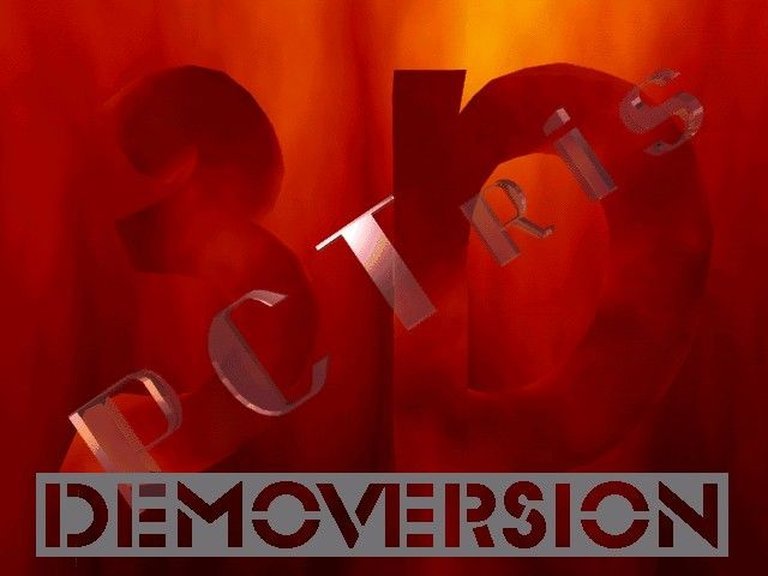
PCTris 3D is a 3D adaptation of the classic Tetris game, released in 1997 for Windows. Players manipulate falling blocks within a 3D well, rotating them along three axes to complete horizontal layers. The game features a top-down perspective, real-time gameplay, and multiplayer support via LAN, modem, or internet. Blocks are color-coded by level, and completed layers vanish, causing upper blocks to drop. The interface includes a score panel, level tracker, and a preview of the current block. Developed by Digital Nightmares, it offers a unique twist on the traditional falling block puzzle genre.
PCTris 3D Reviews & Reception
mobygames.com (100/100): Its like blockout, 3d tetris.
PCTris 3D: A 3D Revolution in the Tetris Legacy
Introduction
In the late 1990s, the gaming world was undergoing a seismic shift. The transition from 2D to 3D graphics was in full swing, and developers were eager to explore the new dimensions of gameplay that this technology afforded. Amidst this backdrop, PCTris 3D emerged as a bold reimagining of one of the most iconic puzzle games of all time—Tetris. Developed by Digital Nightmares and released in 1997, PCTris 3D took the timeless mechanics of Tetris and elevated them into a three-dimensional space, offering players a fresh yet familiar challenge. This review delves deep into the game’s development, mechanics, reception, and legacy, exploring how it carved its niche in the puzzle genre during a transformative era in gaming history.
Development History & Context
The Studio and Creators
PCTris 3D was developed by Digital Nightmares, a small but ambitious studio known for its work on shareware and puzzle games. The team behind PCTris 3D was compact, with Michael Haar handling coding and sound, and Rebecca Ludolphy contributing to the game’s graphics. This lean development team was typical of the shareware era, where small studios could create innovative games with limited resources.
The game was part of a broader trend in the late 1990s where developers experimented with 3D adaptations of classic 2D games. PCTris 3D was not the first attempt at a 3D Tetris—games like BlockOut (1989) had already explored the concept—but it was one of the first to bring the idea to a wider audience through the Windows platform.
Technological Constraints and Innovations
The late 1990s were a time of rapid technological advancement, but developing a 3D game on early Windows systems presented challenges. The hardware of the era was not yet optimized for complex 3D rendering, and developers had to work within tight constraints. PCTris 3D addressed these limitations by using a top-down perspective with 3D-rendered blocks, allowing players to rotate pieces along three axes using keyboard controls. This approach struck a balance between innovation and accessibility, ensuring that the game remained playable on the hardware of the time.
The game also featured multiplayer options, including LAN, modem, and internet play, which was a significant innovation for a puzzle game in 1997. This multiplayer functionality reflected the growing interest in networked gaming, a trend that would dominate the industry in the coming years.
The Gaming Landscape in 1997
1997 was a pivotal year in gaming history. The industry was transitioning from 2D to 3D graphics, with landmark titles like Super Mario 64 (1996) and Tomb Raider (1996) setting new standards for what games could achieve. The PlayStation and Nintendo 64 were the dominant consoles, while PC gaming was thriving with titles like Quake II and Fallout.
Against this backdrop, PCTris 3D stood out as a niche but innovative title. It was part of a wave of games that sought to redefine classic genres for the 3D era, appealing to both casual players and hardcore puzzle enthusiasts. The game’s shareware distribution model also reflected the broader trends in PC gaming, where shareware and freeware titles were gaining popularity as a way to reach a wider audience.
Narrative & Thematic Deep Dive
Plot and Characters
PCTris 3D does not feature a traditional narrative or characters in the way that story-driven games do. Instead, it relies on the universal appeal of the Tetris mechanics, which have always been about strategy, spatial reasoning, and quick decision-making. The game’s “story” is implicit in its gameplay: players must clear layers of blocks by strategically placing falling pieces, with each cleared layer representing a small victory in an ongoing challenge.
Themes
The themes of PCTris 3D are rooted in the broader appeal of puzzle games:
1. Strategy and Planning: The game rewards players who think ahead, rotating blocks to fit into the 3D well and planning several moves in advance.
2. Persistence and Skill Development: Like all great puzzle games, PCTris 3D encourages players to improve their skills through repeated play, with higher levels offering greater challenges.
3. Competition and Community: The inclusion of multiplayer modes taps into the competitive spirit of gaming, allowing players to test their skills against others.
While the game lacks a traditional narrative, its themes are universal and timeless, making it accessible to a wide audience.
Gameplay Mechanics & Systems
Core Gameplay Loop
At its heart, PCTris 3D retains the core mechanics of Tetris but expands them into three dimensions. The gameplay loop is as follows:
1. Block Rotation and Placement: Players control falling blocks, rotating them along the X, Y, and Z axes using keyboard controls (arrow keys in conjunction with Shift or Control). This adds a layer of complexity not present in traditional Tetris, as players must consider the block’s orientation in all three dimensions.
2. Layer Clearing: The objective is to complete a layer by filling all the squares on that level. When a layer is completed, it disappears, causing the blocks above it to drop down. This mechanic is similar to Tetris but adapted for a 3D environment.
3. Scoring and Progression: Players earn points for clearing layers, with the game increasing in difficulty as the player progresses through levels. The current block is shown in outline until it is placed, helping players visualize their next move.
Combat and Character Progression
PCTris 3D is not a combat-driven game, but it does feature a form of progression through its level system. As players clear layers and accumulate points, they advance to higher levels, where the blocks fall faster and the challenge increases. This progression system is simple but effective, providing a sense of accomplishment as players improve their skills.
UI and Controls
The game’s user interface (UI) is straightforward, with a 3D well displaying the playing field and a side pane showing the player’s score, level, and the next block. The controls are keyboard-based, with players using the arrow keys to move blocks and Shift/Control + arrow keys to rotate them. This control scheme is intuitive for players familiar with Tetris but adds depth with the 3D rotation mechanics.
Innovative and Flawed Systems
PCTris 3D introduced several innovations to the Tetris formula:
1. 3D Block Rotation: The ability to rotate blocks along three axes was a significant departure from traditional Tetris, offering a fresh challenge for players.
2. Multiplayer Modes: The inclusion of LAN, modem, and internet play was ahead of its time, allowing players to compete against others in real-time.
3. Visual and Audio Feedback: The game featured color-coded blocks to aid in placement and a soundtrack that enhanced the gaming experience.
However, the game was not without its flaws:
1. Technical Limitations: The 3D rendering was rudimentary by modern standards, and the game’s graphics could appear blocky and simplistic.
2. Steep Learning Curve: The addition of 3D rotation made the game more challenging for newcomers, potentially alienating casual players.
3. Limited Replayability: While the core gameplay was engaging, the lack of additional game modes or variations could make the game feel repetitive over time.
World-Building, Art & Sound
Setting and Atmosphere
PCTris 3D does not feature a traditional “world” in the sense of story-driven games. Instead, it creates an abstract, geometric environment where the focus is entirely on the gameplay. The 3D well serves as the game’s setting, with blocks falling into it and layers disappearing as they are completed. This minimalist approach ensures that the player’s attention remains on the puzzle-solving mechanics.
Visual Direction
The game’s visual style is functional and clean, with a focus on clarity and readability. The 3D-rendered blocks are color-coded to help players distinguish between different layers, and the top-down perspective ensures that the playing field is always visible. While the graphics are not visually stunning by today’s standards, they were innovative for their time, offering a fresh take on the Tetris formula.
Sound Design
The sound design in PCTris 3D is simple but effective. The game features a soundtrack that complements the gameplay, with upbeat, electronic tunes that enhance the puzzle-solving experience. The sound effects are minimal but functional, providing feedback for actions like block placement and layer clearing.
Reception & Legacy
Critical and Commercial Reception
PCTris 3D received a positive reception from players, with an average score of 5.0 out of 5 based on player ratings. The game was praised for its innovative 3D mechanics and multiplayer options, which set it apart from other Tetris clones of the era. However, the game’s limited distribution and shareware model meant that it did not achieve the same level of commercial success as mainstream titles.
Influence on Subsequent Games
While PCTris 3D was not a commercial blockbuster, it had a lasting influence on the puzzle genre. The game’s 3D mechanics inspired later titles like BlockOut and Blocmania 3D, which further explored the concept of 3D puzzle-solving. The inclusion of multiplayer modes also foreshadowed the rise of online gaming, which would become a dominant trend in the early 2000s.
Evolution of Its Reputation
Over time, PCTris 3D has been remembered as a cult classic among puzzle game enthusiasts. While it may not have achieved the same level of fame as Tetris or Tetris 3D, it remains a notable entry in the genre, offering a unique twist on a timeless formula. The game’s legacy is one of innovation and experimentation, reflecting the broader trends in gaming during the late 1990s.
Conclusion
PCTris 3D is a fascinating artifact of the late 1990s gaming scene. It took the timeless mechanics of Tetris and reimagined them in three dimensions, offering players a fresh challenge while retaining the core appeal of the original. The game’s innovative 3D mechanics, multiplayer options, and clean visual design set it apart from other puzzle games of the era, even if its technical limitations and steep learning curve prevented it from achieving mainstream success.
In the grand tapestry of video game history, PCTris 3D occupies a unique niche. It is not a game that redefined the industry, but it is one that pushed the boundaries of what a puzzle game could be. For fans of Tetris and puzzle games in general, PCTris 3D remains a worthy and engaging experience, offering a glimpse into the creative experimentation that defined the late 1990s.
Final Verdict: PCTris 3D is a solid and innovative puzzle game that offers a fresh take on the Tetris formula. While it may not have achieved the same level of fame as its inspiration, it remains a notable and enjoyable entry in the genre, particularly for those who appreciate its 3D mechanics and multiplayer options. For puzzle game enthusiasts, it is well worth a play. 7.5/10.