
- Release Year: 2006
- Platforms: Macintosh, Windows
- Publisher: Phantom EFX, Inc.
- Developer: Phantom EFX, Inc.
- Genre: Card, Casino game, Gambling, Tile game
- Perspective: 1st-person
- Game Mode: Single-player
- Gameplay: Cards, Tiles, Turn-based
- Setting: Contemporary
- Average Score: 100/100
Description
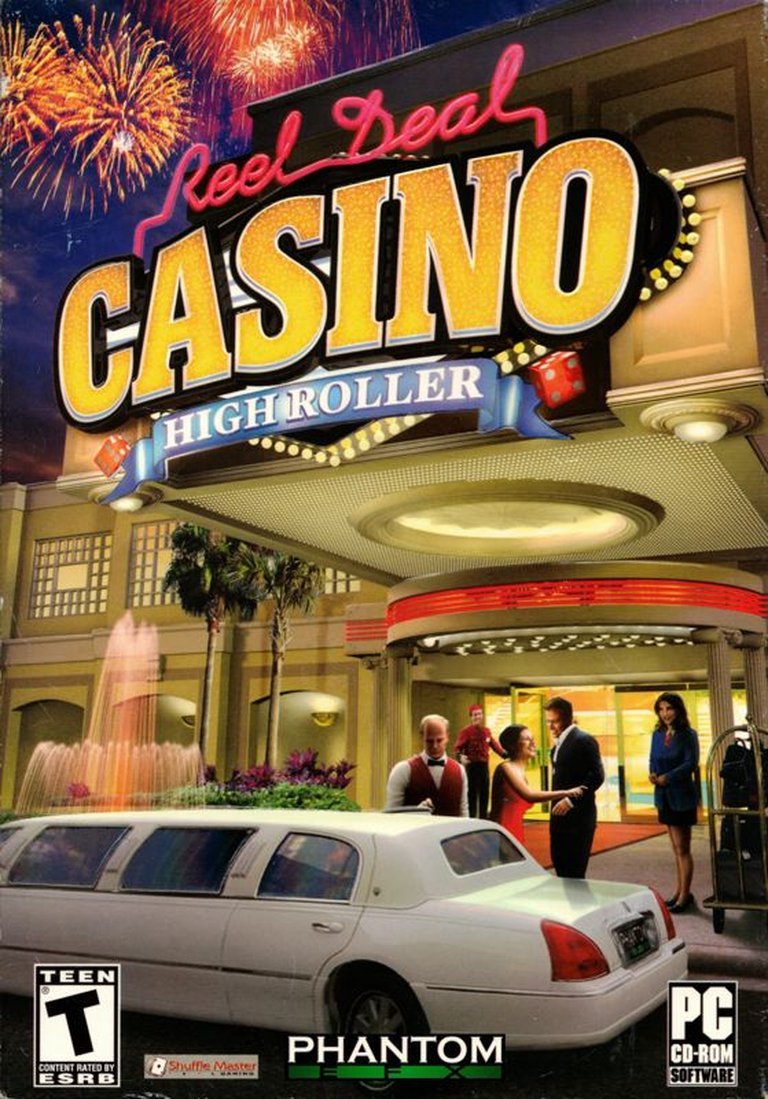
Reel Deal Casino: High Roller is a casino simulation game that offers a wide variety of classic and modern casino games, including blackjack, craps, roulette, poker, and slot machines. Players can compete in high-stakes tournaments, design their own custom casino suites, and participate in unique tournament types like 24-hour log-in and guild vs. guild battles. The game blends strategy and chance, providing an immersive experience for fans of gambling and casino-style gameplay.
Reel Deal Casino: High Roller Free Download
Reel Deal Casino: High Roller Cracks & Fixes
Reel Deal Casino: High Roller Patches & Updates
Reel Deal Casino: High Roller Guides & Walkthroughs
Reel Deal Casino: High Roller Reviews & Reception
geardiary.com : The graphics are good, animation flows well and it is a very enjoyable casino experience.
myabandonware.com (100/100): 5/5 – 1 vote
Reel Deal Casino: High Roller – A Comprehensive Retrospective
Introduction: The Pinnacle of Virtual Gambling Simulation
Reel Deal Casino: High Roller (2006) stands as a fascinating artifact of mid-2000s gaming—a time when digital casino simulations were evolving from simple card games into immersive, feature-rich experiences. Developed and published by Phantom EFX, Inc., this title represented the culmination of the Reel Deal series, offering an unprecedented variety of gambling games, tournament structures, and customization options. While often overlooked in broader gaming discourse, High Roller occupies a unique niche as both a product of its era and a harbinger of modern social casino gaming.
This review will dissect High Roller across multiple dimensions: its development context, narrative and thematic ambitions, gameplay mechanics, audiovisual presentation, critical reception, and lasting legacy. Through this analysis, we will argue that High Roller was not merely a gambling simulator but a bold attempt to merge competitive gaming, virtual socialization, and the allure of high-stakes gambling into a cohesive (if flawed) experience.
Development History & Context: Phantom EFX’s Gambit
The Studio Behind the Slots
Phantom EFX, Inc. was a relatively small but prolific developer specializing in casino and card games throughout the 2000s. Founded in the late 1990s, the studio carved out a reputation for creating accessible, visually appealing gambling simulations for PC. By the time High Roller released in 2006, Phantom EFX had already established the Reel Deal franchise with titles like Reel Deal Slots: Nickels & More! (2004) and Reel Deal Casino: Championship Edition (2004).
The team behind High Roller was led by Aaron Schurman (Director/Designer), Danny Stokes (Technical Director), and Marty Van Zee (Art Director). Notably, many team members had worked on previous Reel Deal entries, ensuring continuity in design philosophy. The game’s development coincided with a period of rapid growth in online gambling, yet Phantom EFX opted for an offline-first approach with optional online features—a decision that would later prove prescient as regulatory crackdowns on online gambling loomed.
Technological Constraints & Design Philosophy
High Roller was built for mid-2000s PC hardware, requiring:
– Windows 2000/XP
– DirectX 9.0b
– 1.5 GB hard drive space
– 64 MB RAM (128 MB recommended)
These modest specs reflected the game’s target audience: casual gamers and gambling enthusiasts who might not have high-end rigs. The engine prioritized smooth 2D animation and menu navigation over 3D rendering, a choice that allowed for a wide array of games without taxing system resources.
The design philosophy centered on three pillars:
1. Variety – Offering an unmatched selection of casino games.
2. Progression – Introducing tournament ladders and suite customization.
3. Socialization – Experimenting with guilds and online multiplayer (though this feature was underdeveloped at launch).
The Gaming Landscape in 2006
High Roller arrived during a transitional period for digital gambling:
– Online poker was booming (thanks to platforms like PokerStars and Full Tilt Poker).
– Console gambling games (e.g., World Series of Poker series) were gaining traction.
– Regulatory uncertainty loomed, with the U.S. passing the Unlawful Internet Gambling Enforcement Act (UIGEA) later in 2006.
Phantom EFX’s decision to focus on a single-player/offline experience with optional online features was shrewd. While competitors like Microsoft Casino (2000) and Bicycle Casino Games (2001) offered simpler experiences, High Roller aimed to be the ultimate virtual casino—a place where players could learn, compete, and fantasize about high-stakes gambling without real-world consequences.
Narrative & Thematic Deep Dive: The Illusion of High Society
The Grand Master Tournament Path
Unlike traditional casino games, High Roller attempted to weave a loose narrative around the player’s ascent from novice to “Grand Master”—a high-stakes gambler invited to exclusive tournaments. This progression was structured through:
– Tiered tournaments (beginner to invitational).
– Guild vs. Guild competitions (a proto-esports concept for casino games).
– “King of the Hill” and 24-hour login tournaments (encouraging sustained play).
The narrative was minimal but effective: players started with a modest bankroll and worked their way up, unlocking new games, decorations, and eventually their own customizable suite. This suite served as both a trophy room and a personal gambling den, reinforcing the fantasy of wealth and exclusivity.
Themes: Gambling as Aspiration
High Roller’s themes revolved around:
1. The American Dream of Gambling – The idea that skill (or luck) could elevate anyone to “high roller” status.
2. Consumerism & Reward Systems – VIP points, treasure chests, and virtual prizes (e.g., lava lamps, chocolates) mirrored real-world casino comp systems.
3. Community & Competition – Guilds and tournaments framed gambling as a social, skill-based activity rather than a solitary vice.
The game’s ESRB Teen rating (for “Comic Mischief” and “Simulated Gambling”) reflected its attempt to straddle the line between realistic simulation and family-friendly entertainment. The absence of real-money gambling kept it legally safe, but the presentation—glitzy, fast-paced, and reward-driven—mirrored the psychological hooks of actual casinos.
Characters & Dialogue: The Phantom EFX Staff
The game featured voice acting from Phantom EFX staff, including P.J. Stoppleworth, lending a quirky, almost amateurish charm. Dialogue was limited to tutorial prompts, dealer interactions, and tournament announcements, but the tone was consistently upbeat and encouraging—reinforcing the fantasy of winning big.
One notable omission was a lack of NPC personalities. Unlike later social casino games (e.g., Poker Night at the Inventory), High Roller’s dealers and opponents were faceless, reducing immersion. This was likely a technical constraint, but it left the world feeling sterile despite its vibrant art style.
Gameplay Mechanics & Systems: A Gambler’s Paradise
The Core Gameplay Loop
High Roller’s gameplay revolved around:
1. Earning Money & VIP Points – Through slots, table games, and tournaments.
2. Unlocking New Games & Decorations – Via the Prize Vault and suite customization.
3. Climbing the Tournament Ladder – From beginner events to high-stakes invitational.
The game offered 27 distinct casino games, including:
– Classics: Blackjack, Roulette, Craps, Baccarat
– Poker Variants: Texas Hold’em, Omaha, Pai Gow Poker
– Exotics: Sic Bo, Red Dog, Casino War
– Slots & Video Poker: Multiple machines with bonus rounds
Innovations & Flaws
Strengths:
✅ Unmatched Variety – Few games before or since have offered such a comprehensive casino experience.
✅ Tournament Structure – The Grand Master path provided long-term goals.
✅ Suite Customization – A novel feature that let players design their own gambling space.
✅ Tutorial System – Helpful for beginners learning complex games like craps or baccarat.
Weaknesses:
❌ Clunky UI – Navigating between games and menus could be cumbersome.
❌ Underdeveloped Online Features – Guilds and multiplayer were promised but poorly implemented.
❌ Repetitive Grind – Some tournaments required excessive playtime for minimal rewards.
❌ Lack of AI Personality – Dealers and opponents had no distinct behaviors or dialogue.
The Prize Vault & Progression
One of High Roller’s most unique systems was the Prize Vault, where players spent VIP points to unlock:
– New slot machines (e.g., the Dice Slot with a bonus round).
– Decorations for their suite (lava lamps, paintings, etc.).
– Novelty items (T-shirts, chocolates—purely cosmetic).
This system borrowed from RPG progression mechanics, giving players tangible rewards for sustained play. However, some treasure chests were intentionally empty, a design choice that frustrated players expecting consistent payoffs.
Tournaments: The Heart of High Roller
The tournament system was the game’s standout feature, offering:
– 24-Hour Tournaments – Encouraging players to return daily.
– Guild vs. Guild – A proto-esports concept for casino games.
– King of the Hill – A competitive ladder system.
Winning tournaments awarded trophies, cash, and invitations to higher-tier events, creating a sense of prestige. However, the lack of a robust matchmaking system meant that skilled players could dominate easily, discouraging newcomers.
World-Building, Art & Sound: Neon Dreams & Digital Dice
Visual Design: A Cartoonish Casino
High Roller’s art style was bright, cartoonish, and slightly exaggerated, evoking the neon glow of a Vegas casino without the grit. Key elements included:
– Vibrant color palettes – Reds, golds, and blues dominated.
– 2D sprites with simple animations – Smooth but not overly detailed.
– Suite customization – Players could arrange tables, slots, and decorations in their personal space.
The visuals were functional rather than groundbreaking, prioritizing clarity (e.g., easy-to-read card suits, distinct slot symbols) over realism. The top-down and first-person perspectives worked well for table games but made slot machines feel less immersive.
Sound Design: The Symphony of the Casino
Audio played a crucial role in selling the casino fantasy:
– Slot machine jingles – Satisfying chimes and bonus round fanfares.
– Dealer calls – “Blackjack!” “Place your bets!” (voiced by Phantom EFX staff).
– Ambient casino noise – Murmurs, chip clinks, and occasional cheers.
The soundtrack was upbeat and loopable, though some players found the table game music louder than slot machine audio, creating an inconsistent experience.
Atmosphere: The Illusion of Luxury
High Roller succeeded in creating a fantasy of high-stakes gambling without the risks. The combination of:
– Unlockable decorations (e.g., gold-plated tables).
– Tournament trophies.
– VIP rewards.
…reinforced the idea that players were earning their way into an exclusive world. However, the lack of NPC interactions or dynamic events (e.g., “high roller” NPCs entering the casino) meant the world felt static despite its visual flair.
Reception & Legacy: A Cult Classic in the Making?
Critical Reception: A Mixed Hand
High Roller received little formal critical coverage, but the few reviews (e.g., Gear Diary) praised:
✔ Variety of games.
✔ Smooth animations and tutorial system.
✔ Value for money ($19.99 MSRP).
Criticisms focused on:
✖ Clunky installation (requiring two CDs).
✖ Underwhelming online features.
✖ Repetitive grind in tournaments.
Metacritic lists no critic reviews, and MobyGames has no user scores, suggesting High Roller was overshadowed by bigger franchises (World Series of Poker, Poker Night).
Commercial Performance & Abandonware Status
High Roller was not a blockbuster, but it found a niche audience among:
– Casino enthusiasts who wanted offline play.
– Tournament players drawn to the Grand Master path.
– Retro gamers who later rediscovered it via abandonware sites.
Today, the game is available on MyAbandonware and eBay, with copies selling for $10–$20. Its two-disc structure and lack of modern compatibility (e.g., Windows 10 issues) have made it a cult collectible rather than a mainstream revival.
Influence on Later Games
High Roller’s legacy can be seen in:
1. Social Casino Games – Titles like Zynga Poker and Slotomania adopted its progression systems and virtual rewards.
2. Suite Customization – Later games (e.g., Fallout: New Vegas’ casino DLC) borrowed the idea of player-designed gambling spaces.
3. Tournament Ladders – Esports-style competition in casino games (e.g., PokerStars’ online tournaments).
However, Phantom EFX failed to capitalize on this innovation. Their subsequent Reel Deal: Vegas Casino Experience (2009) was a step backward, focusing on slots over tournaments. The studio eventually faded into obscurity, leaving High Roller as their magnum opus.
Conclusion: A Flawed Gem in Gaming’s Side Alley
Reel Deal Casino: High Roller is a fascinating relic—a game that dared to blend casino simulation, RPG progression, and social competition in an era before microtransactions and live-service models dominated. Its ambition outweighed its execution, resulting in a title that was brilliant in concept but uneven in practice.
Final Verdict: 7.5/10 – A High-Stakes Experiment
Pros:
✅ Unmatched variety of casino games.
✅ Innovative tournament and suite systems.
✅ Strong tutorial system for beginners.
✅ Charming, if dated, presentation.
Cons:
❌ Clunky UI and installation process.
❌ Underdeveloped online features.
❌ Repetitive grind in later stages.
❌ Lack of NPC personality or dynamic events.
Legacy:
While not a commercial juggernaut, High Roller remains a cult favorite among retro gambling game enthusiasts. Its Grand Master tournament path and suite customization were ahead of their time, influencing later social casino games. Yet, its technical limitations and niche appeal prevented it from achieving mainstream success.
In the grand tapestry of gaming history, Reel Deal Casino: High Roller is a footnote—but a fascinating one. It represents a moment when developers experimented with gambling as a competitive, aspirational experience, long before loot boxes and gacha mechanics turned probability into controversy. For those willing to tinker with abandonware or hunt down a physical copy, it remains a unique and rewarding dive into mid-2000s gaming eccentricity.
Final Recommendation:
– For retro gamers & casino fans: A must-try curiosity.
– For modern players: A flawed but intriguing time capsule.
– For historians: A case study in pre-microtransaction progression design.
High Roller may not have been a jackpot, but it was certainly a bold bet—and in gaming, sometimes the risk is worth the reward. 🎰