
- Release Year: 2004
- Platforms: Windows
- Publisher: Planeta DeAgostini S.A.
- Developer: Gaelco, S.A.
- Genre: Simulation, Sports
- Perspective: Diagonal-down
- Game Mode: Online PVP, Single-player
- Gameplay: Business simulation, Managerial
- Setting: Football (European), Soccer
- Average Score: 47/100
Description
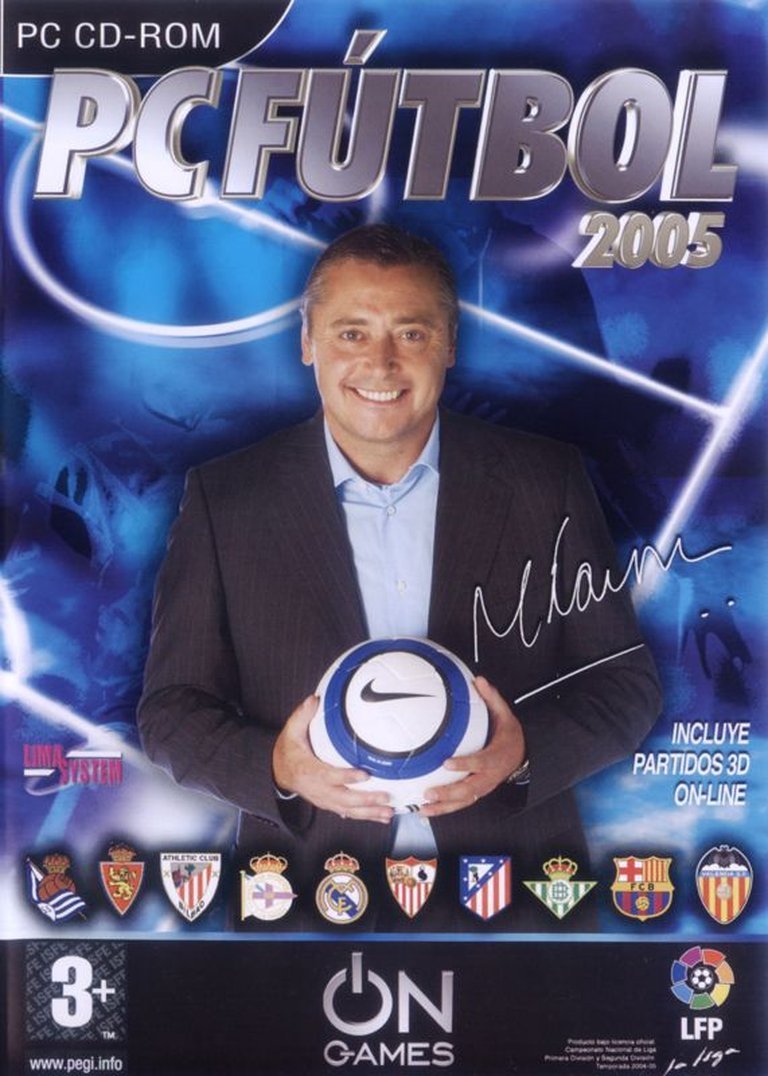
PC Fútbol 2005 is a football (soccer) management simulation game that allows players to take control of their favorite team, guiding it to success through strategic decisions. Players can sign and train athletes, manage finances, expand stadiums, and negotiate sponsorships, all while overseeing a vast database of 2,000 teams and 48,000 real-life players. The game features 3D match visuals for real-time tactical adjustments or the option to skip directly to results, with official licenses ensuring authentic player names and appearances.
PC Fútbol 2005 Reviews & Reception
mobygames.com (34/100): Critics Average score: 34% (based on 2 ratings)
myabandonware.com (60/100): 3 / 5 – 2 votes
retro-replay.com : PC Fútbol 2005 places you firmly in the manager’s seat, offering a comprehensive suite of tools to steer your chosen club toward glory.
PC Fútbol 2005: A Flawed but Fascinating Relic of Football Management’s Golden Age
Introduction: The Legacy of a Legend and Its Troubled Revival
PC Fútbol 2005 is a game that exists in the shadow of its own legacy. The PC Fútbol series, born in 1992 under Dinamic Multimedia, was more than just a football management simulator—it was a cultural phenomenon in Spain and Latin America, a game that taught a generation how to use a PC while letting them live out their wildest footballing fantasies. By the time PC Fútbol 2005 arrived in late 2004, developed by Gaelco and published by Planeta DeAgostini, the series had already cemented its place in gaming history. Yet, this iteration is often remembered not for its innovations, but for its flaws—a rushed, bug-ridden product that struggled to live up to the expectations of a fanbase that had grown accustomed to the depth and polish of competitors like Championship Manager and FIFA Manager.
This review aims to dissect PC Fútbol 2005 in its entirety: its development context, its gameplay mechanics, its world-building, and its lasting impact. It is a game that, despite its shortcomings, offers a fascinating snapshot of a transitional era in sports management simulations—one where the charm of retro design clashed with the rising standards of modern gaming.
Development History & Context: The Rise, Fall, and Revival of a Spanish Icon
The Golden Age of Dinamic Multimedia
The PC Fútbol series began in 1992 with Simulador Profesional de Fútbol, a modest but ambitious project by Dinamic Multimedia. At a time when football games were primarily arcade-style experiences (Sensible Soccer, Kick Off), PC Fútbol dared to blend management and gameplay, allowing players to take on the roles of both manager and player. This dual approach was revolutionary, predating similar features in mainstream titles like FIFA by over a decade.
The series flourished throughout the 1990s, with each iteration expanding its database, refining its management systems, and deepening its simulation of the beautiful game. By PC Fútbol 7 (1998), the game had sold over 360,000 copies in Spain alone, a staggering figure for a niche title in a market dominated by piracy. Key to its success were:
– Accessibility: Sold at budget prices in kiosks and supermarkets, making it available to casual fans.
– Localization: Focused on Spanish and Latin American leagues, filling a gap left by international titles.
– Licensing: Early adoption of official licenses from the Liga de Fútbol Profesional (LFP) and FIFPro, ensuring real player names and likenesses.
– Updates: Monthly data patches that kept the game current with real-world transfers and results.
The series also benefited from the charismatic presence of Michael Robinson, a former Liverpool player turned Spanish TV pundit, who became the face and voice of the franchise. His commentary and analysis added a layer of authenticity and personality that resonated deeply with fans.
The Decline and Fall
By the late 1990s, cracks began to show. PC Fútbol 2000 and 2001 were plagued by bugs, and the once-innovative formula started to feel stale compared to the polished offerings from Sports Interactive (Championship Manager) and EA Sports (FIFA Manager). Dinamic Multimedia, struggling financially, ceased support for the series in 2001 and ultimately closed its doors. The final nail in the coffin was the rise of Championship Manager, which offered deeper tactics, smoother gameplay, and a more intuitive interface.
The Gaelco Revival: A Troubled Return
In 2004, Planeta DeAgostini acquired the rights to the PC Fútbol name and tasked Gaelco—a Spanish developer known for arcade games like Smashing Drive—with reviving the series. The result was PC Fútbol 2005, released in November 2004. The game was a commercial success, selling briskly in Spain (second only to The Sims 2 in December 2004), but it was met with widespread disappointment from critics and fans alike.
The development of PC Fútbol 2005 was rushed, a fact evident in its numerous bugs and unfinished features. Gaelco, primarily an arcade developer, lacked the experience in deep management simulations that Dinamic had cultivated over a decade. The game’s interface was clunky, its AI unpredictable, and its match engine outdated. Critics lambasted it as an unfinished product, a shadow of its former self. Meristation gave it a 4/10, while VicioJuegos.com awarded it a scathing 27/100, calling it “a game without finish” that “destroys all the illusions of those who once waited for a new installment of the saga.”
Despite its flaws, PC Fútbol 2005 remains a fascinating artifact—a bridge between the golden age of PC Fútbol and the modern era of football management games. It is a game that, for all its shortcomings, still captures the essence of what made the series great: the thrill of building a team, the joy of tactical experimentation, and the dream of leading an underdog to glory.
Narrative & Thematic Deep Dive: The Story You Write Yourself
PC Fútbol 2005, like all great management simulators, is not a game with a scripted narrative. Instead, it is a canvas upon which players paint their own stories. The game’s “plot” emerges organically from the decisions you make, the risks you take, and the triumphs and tragedies that unfold over the course of a season—or a career.
Themes: Power, Ambition, and the Beautiful Game
At its core, PC Fútbol 2005 explores themes of power, ambition, and the unpredictability of sport. As a manager, you are tasked with balancing the expectations of fans, the demands of the board, and the egos of your players. Every decision—whether it’s splashing cash on a star signing, nurturing a young talent, or gambling on an unorthodox tactic—carries weight. The game’s depth lies in how it simulates the human drama of football:
– The Underdog Story: Taking a small club like Gimnasia y Tiro de Salta (a fan-favorite in the series) and transforming it into a continental powerhouse.
– The Fall from Grace: Managing a giant like Real Madrid or Barcelona, where anything less than a trophy is considered failure.
– The Transfer Saga: Navigating the cutthroat world of player contracts, release clauses, and last-minute deals.
– The Tactical Gambit: Outsmarting rivals with innovative formations or exploiting weaknesses in their defense.
The game’s emergent storytelling is its greatest strength. A last-minute winner in the Copa del Rey, a young prospect blossoming into a world-beater, or a relegation battle decided on the final day of the season—these moments, crafted by the player’s choices, create a narrative that feels deeply personal.
Characters: The Stars, the Journeymen, and the Unknowns
PC Fútbol 2005’s cast is its database: 48,000 players across 2,000 teams, each with their own stats, personalities, and potential. The game’s licensing ensures that real-world stars like Ronaldinho, Raúl, and Zidane are faithfully represented, but the true magic lies in the unknowns—the hidden gems waiting to be discovered in lower leagues or youth academies.
The game’s player attributes are straightforward but effective:
– Technical Skills (Passing, Shooting, Dribbling)
– Physical Attributes (Speed, Stamina, Strength)
– Mental Traits (Leadership, Work Rate, Composure)
What sets PC Fútbol 2005 apart is how these attributes translate into on-pitch performance. A player with high leadership might rally the team in a tough match, while a hot-headed striker could get sent off in a crucial derby. These nuances add layers of realism that make each player feel unique.
Dialogue and Presentation: The Voice of the Game
While PC Fútbol 2005 lacks the voice acting of its predecessors (Michael Robinson’s absence is keenly felt), it compensates with text-based commentary and match reports that capture the drama of football. Post-match analysis highlights key moments—a missed penalty, a last-ditch tackle, a manager’s tactical masterstroke—while transfer news and boardroom updates keep the player immersed in the world.
The game’s menu-driven interface, though dated, reinforces its thematic focus on information management. As a manager, you are bombarded with data: injury reports, scout updates, financial statements. The challenge is not just making the right decisions, but making them quickly and efficiently—a reflection of the high-pressure world of real football management.
Gameplay Mechanics & Systems: The Beautiful Game, Simulated
PC Fútbol 2005 is, at its heart, a football management simulator, but it distinguishes itself with a blend of deep strategy and accessible gameplay. The game’s mechanics can be divided into several core systems:
1. Club Management: The Boardroom and Beyond
The management side of PC Fútbol 2005 is where the game truly shines. Players take on the role of manager, director, and president, juggling:
– Finances: Setting ticket prices, negotiating sponsorships, and balancing the books. A poorly managed budget can lead to financial ruin.
– Infrastructure: Expanding stadiums, upgrading training facilities, and improving youth academies. These long-term investments pay dividends over multiple seasons.
– Staff Hiring: From assistant managers to physios, each staff member plays a role in the club’s success.
The financial system is particularly punishing. Overspending on transfers can lead to debt, while underinvesting in facilities can stunt the growth of young players. The game’s dynamic economy means that player wages, transfer fees, and sponsorship deals fluctuate based on performance, adding a layer of realism rarely seen in modern management games.
2. Transfers and Scouting: The Art of the Deal
The transfer market in PC Fútbol 2005 is a high-stakes poker game. Players must navigate:
– Negotiations: Haggling over transfer fees, wages, and contract lengths.
– Scouting: Uncovering hidden talents in lower leagues or foreign markets.
– Loan Deals: Temporary signings to fill gaps in the squad.
The game’s database of 48,000 players ensures that there is always a gem to be found, whether it’s a young Argentine wonderkid or a veteran Spanish midfielder nearing the end of his career. The thrill of signing a player for a bargain and watching him develop into a star is one of the game’s most rewarding experiences.
3. Tactics and Training: The Chess Match
PC Fútbol 2005 offers a deep but accessible tactical system. Players can:
– Choose Formations: From classic 4-4-2 to experimental 3-5-2.
– Set Player Roles: Defensive midfielders, wingbacks, target men.
– Adjust Strategies: Counter-attacking, possession-based, or direct play.
The training system allows managers to focus on specific skills (e.g., improving a striker’s finishing or a defender’s tackling). Over time, these investments pay off, turning raw talents into world-class players.
4. Match Engine: The Beautiful Game in 3D
The 3D match engine is PC Fútbol 2005’s most divisive feature. While it allows for real-time tactical adjustments (changing formations, substituting players, altering strategies), it is also clunky and outdated by 2004 standards. Player animations are stiff, AI can be unpredictable, and the physics engine often feels unrealistic.
That said, the match engine serves its purpose: it simulates the chaos and unpredictability of football. A last-minute goal, a controversial red card, or a stunning upset—these moments, though sometimes frustrating, capture the essence of the sport.
5. Multiplayer: The Managerial Duel
PC Fútbol 2005 supports online multiplayer (via Internet, LAN, or modem), allowing up to 16 players to compete in the same league. This feature, though rudimentary by modern standards, was groundbreaking at the time, offering a social experience that few management games could match.
World-Building, Art & Sound: The Atmosphere of Football
Visual Design: Functional Over Flashy
PC Fútbol 2005’s visuals are utilitarian rather than spectacular. The game’s menu-driven interface, while dated, is clean and functional, with clearly labeled tabs and intuitive navigation. The 2D tactical overview is particularly well-designed, allowing managers to visualize formations and player movements with ease.
The 3D match engine, however, is a mixed bag. Player models are blocky and stiff, animations are repetitive, and stadiums lack detail. Yet, there is a charm to its simplicity—a reminder of an era when gameplay depth mattered more than graphical fidelity.
Sound Design: The Roar of the Crowd
The game’s sound design is minimal but effective. Crowd noises, referee whistles, and the occasional commentary snippet (though limited) create a lively atmosphere during matches. The lack of full voice acting is noticeable, but the text-based updates and match reports compensate by delivering key moments with dramatic flair.
World-Building: The Illusion of a Living League
PC Fútbol 2005’s greatest strength is its simulation of a living, breathing football world. The game’s dynamic league system ensures that:
– Teams rise and fall based on performance.
– Players retire, transfer, or decline over time.
– Rivalries and derbies feel meaningful, with matches against local opponents carrying extra weight.
The inclusion of real-world licenses (Spanish LFP, FIFPro) adds authenticity, ensuring that players recognize their favorite stars and clubs. The game’s database updates (a carryover from the Dinamic era) keep the experience fresh, though PC Fútbol 2005’s updates were less frequent and comprehensive than its predecessors.
Reception & Legacy: A Flawed Gem in the Crown of Football Management
Critical Reception: A Disappointing Return
PC Fútbol 2005 was not well-received by critics. Reviews highlighted its bugs, clunky interface, and outdated match engine:
– Meristation (4/10): “A product that feels unfinished.”
– VicioJuegos.com (27/100): “A game that destroys the illusions of fans.”
Players were equally disappointed, with an average score of 2.1/5 on MobyGames. Many felt that the game failed to innovate, relying too heavily on the legacy of its predecessors while offering little new.
Commercial Success: A Sales Hit Despite Flaws
Despite the criticism, PC Fútbol 2005 was a commercial success, selling strongly in Spain and Latin America. Its budget price, nostalgic appeal, and deep management systems attracted a dedicated fanbase, even as competitors like Championship Manager and FIFA Manager dominated the global market.
Legacy: The End of an Era
PC Fútbol 2005 marked the beginning of the end for the series. Gaelco developed two more iterations (2006 and 2007), but neither recaptured the magic of the Dinamic era. The series faded into obscurity, with failed revival attempts (PC Fútbol 8 in 2024) further tarnishing its legacy.
Yet, PC Fútbol 2005 remains an important artifact in the history of football management games. It represents:
– The transition from retro management sims to modern, polished experiences.
– The struggle of a beloved series to adapt to changing expectations.
– The enduring appeal of deep, strategic gameplay over flashy presentation.
For fans of the genre, PC Fútbol 2005 is a flawed but fascinating experience—a game that, despite its shortcomings, still captures the thrill of the beautiful game.
Conclusion: A Game of Two Halves
PC Fútbol 2005 is a game of contradictions. It is deep yet clunky, ambitious yet unfinished, nostalgic yet outdated. It is not the best football management game of its era—that honor belongs to Championship Manager or FIFA Manager. Nor is it the most polished or innovative. But it is, in many ways, the most PC Fútbol—a game that embodies the spirit of the series: accessible, ambitious, and unapologetically Spanish.
For modern players, PC Fútbol 2005 is a time capsule, offering a glimpse into a bygone era of gaming where depth mattered more than graphics, and where a single game could define a genre. For veterans of the series, it is a bittersweet reminder of what once was—a flawed but beloved entry in a legendary franchise.
Final Verdict: 6/10 – A Flawed Classic
PC Fútbol 2005 is not a game for everyone. Its clunky interface, buggy match engine, and outdated presentation will frustrate modern players accustomed to the polish of Football Manager or FIFA. But for those willing to look past its flaws, it offers a deep, rewarding, and uniquely Spanish football management experience—one that, despite its shortcomings, still captures the magic of the beautiful game.
In the pantheon of football management simulators, PC Fútbol 2005 is not a champion. But it is a survivor, a testament to the enduring appeal of a series that, for a brief moment in the 1990s, ruled the hearts of football fans across Spain and Latin America. And for that alone, it deserves to be remembered.
Final Thought:
“PC Fútbol 2005 is like a aging striker past his prime—no longer the force he once was, but still capable of moments of brilliance. It’s not the best, but it’s ours. And sometimes, that’s enough.”
Would I recommend it? Only to die-hard fans of the series or retro management sims. For everyone else, Football Manager or FIFA Manager offer a more polished experience. But for those who grew up with PC Fútbol, this flawed gem is a nostalgic trip worth taking.
Where to Play:
PC Fútbol 2005 is available as abandonware on sites like MyAbandonware and RetroLorean. It runs on modern Windows systems with minimal tinkering, though fans have created patches and mods to improve stability.
Further Reading:
– Wikipedia: PC Fútbol
– 421 News: The Rise and Fall of PC Fútbol
– MobyGames: PC Fútbol 2005
Final Scorecard:
| Category | Score (10) | Notes |
|---|---|---|
| Gameplay Depth | 8 | Deep management, rewarding progression, but clunky execution. |
| Graphics | 4 | Dated 3D engine, functional but uninspired menus. |
| Sound | 5 | Minimal but effective; lacks voice acting. |
| Replayability | 7 | Endless tactical and transfer possibilities, but bugs can frustrate. |
| Innovation | 3 | Few new ideas; relies on legacy systems. |
| Overall | 6 | A flawed but fascinating relic of football management’s golden age. |