
- Release Year: 1996
- Platforms: Windows 16-bit, Windows
- Publisher: Sierra On-Line, Inc.
- Developer: Dynamix, Inc.
- Genre: Action, Simulation
- Perspective: 1st-person
- Game Mode: Single-player
- Gameplay: Flight Simulation, Vehicular combat
- Setting: Modern military
- Average Score: 73/100
Description
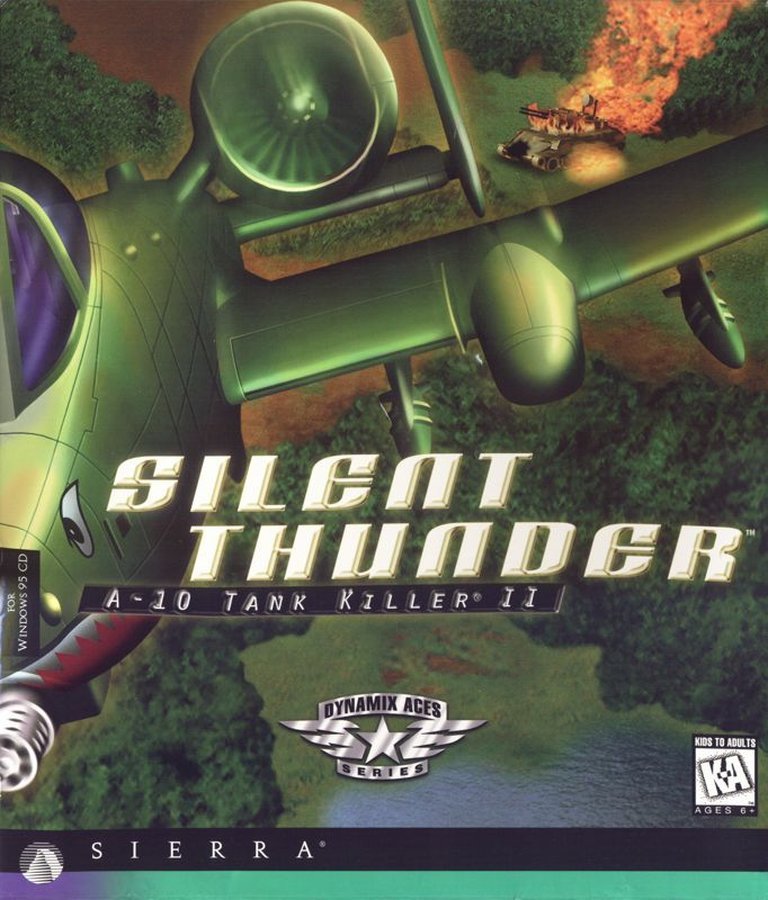
Silent Thunder: A-10 Tank Killer II is a flight simulation game that puts players in the cockpit of the Fairchild-Republic A-10A Thunderbolt II, a powerful anti-tank aircraft used by the US Air Force. The game features 24 missions with a variety of weapons, friendly and enemy aircraft, and ground vehicles, offering an immersive combat experience. As the sequel to A-10 Tank Killer, it builds on the original with enhanced graphics, mission design, and gameplay mechanics, delivering a challenging and realistic simulation of aerial combat.
Gameplay Videos
Silent Thunder: A-10 Tank Killer II Free Download
Silent Thunder: A-10 Tank Killer II Patches & Updates
Silent Thunder: A-10 Tank Killer II Guides & Walkthroughs
Silent Thunder: A-10 Tank Killer II Reviews & Reception
en.wikipedia.org (85/100): a wicked, clean, no-B.S. combat sim with enough options and realism to hold the serious gamer’s interest.
gamepressure.com (64/100): The second part of the well-known A-10 Warthdog simulator, often called Tank Killer, which in the 1970s took an active part in fighting in Afghanistan, for example.
mobygames.com (72/100): Silent Thunder: A-10 Tank Killer II is the sequel to A-10 Tank Killer.
Silent Thunder: A-10 Tank Killer II: A Comprehensive Retrospective
Introduction
In the mid-1990s, the combat flight simulation genre was a battleground of its own, with developers vying to deliver the most immersive, realistic, and exhilarating experiences. Amidst this competitive landscape, Silent Thunder: A-10 Tank Killer II emerged as a standout title, blending arcade accessibility with simulation depth. Developed by Dynamix and published by Sierra On-Line in 1996, this sequel to the 1989 classic A-10 Tank Killer sought to modernize the experience while retaining the raw, visceral thrill of piloting the Fairchild-Republic A-10A Thunderbolt II—affectionately known as the “Warthog.” This review delves deep into the game’s development, narrative, gameplay, technical achievements, and lasting legacy, offering a definitive analysis of its place in gaming history.
Development History & Context
The Studio and Vision
Dynamix, a subsidiary of Sierra On-Line, was no stranger to flight simulators by the mid-1990s. With a portfolio that included Red Baron, Aces of the Pacific, and the original A-10 Tank Killer, the studio had established itself as a leader in the genre. Silent Thunder was directed by Frank Evers, who envisioned a game that would bridge the gap between hardcore simulation and accessible action. The goal was to create a title that appealed to both seasoned flight sim enthusiasts and casual players looking for high-octane aerial combat.
The development team, led by producer/director Frank Evers and lead programmer Nels Bruckner, faced the challenge of leveraging the technological advancements of the mid-1990s while staying true to the A-10’s unique characteristics. The A-10, designed for close air support and anti-tank warfare, was an unconventional choice for a flight sim—its slow speed, heavy armor, and brutal firepower made it a far cry from the sleek, high-speed jets that dominated the genre. This uniqueness became the game’s selling point, offering players a fresh perspective on aerial combat.
Technological Constraints and Innovations
Silent Thunder was developed during a transitional period in PC gaming. The shift from DOS to Windows 95 was underway, and 3D acceleration was still in its infancy. The game was designed to run on mid-range hardware of the era, with recommended specs including a Pentium 90MHz processor and 32MB of RAM—a far cry from today’s standards but cutting-edge for 1996.
One of the game’s most notable technical achievements was its use of high-resolution textures and detailed 3D environments. The terrain, though not as expansive as modern open-world games, was richly detailed, with varied landscapes that included deserts, forests, and urban areas. The A-10 itself was meticulously modeled, with accurate cockpit instrumentation and damage modeling. The game also featured dynamic lighting and weather effects, adding to the immersion.
The sound design was another highlight, with a rocking soundtrack that blended rock and orchestral elements to heighten the intensity of combat. The game’s audio also included realistic engine noises, weapon sounds, and radio chatter, all of which contributed to the sense of being in the cockpit of a real A-10.
The Gaming Landscape of 1996
The mid-1990s were a golden age for flight simulators. Titles like Jane’s Combat Simulations, Falcon 3.0, and EF2000 were pushing the boundaries of realism, while arcade-style games like Wing Commander and TIE Fighter offered more accessible experiences. Silent Thunder carved out its niche by focusing on the A-10, a plane that was often overlooked in favor of faster, more glamorous fighters.
The game’s release in March 1996 coincided with the rise of CD-ROM as the dominant media format for PC games. This allowed for higher-quality audio, video, and larger game worlds. Silent Thunder took full advantage of this, offering a robust campaign mode with 24 missions, each with its own objectives and challenges.
Narrative & Thematic Deep Dive
Plot and Setting
Silent Thunder places players in the role of an A-10 pilot deployed in various global conflict zones. The game’s narrative is minimalistic, focusing more on the missions themselves than on a overarching story. However, the missions are framed within a broader geopolitical context, with players taking on roles in fictionalized conflicts that draw inspiration from real-world events.
The game’s campaign mode is structured around a series of missions that escalate in difficulty and complexity. Players begin with basic training and gradually take on more challenging objectives, including reconnaissance, ground attacks, and air-to-air combat. The missions are set in diverse environments, from the deserts of the Middle East to the jungles of South America, each with its own unique challenges and enemy types.
Characters and Dialogue
Unlike many flight simulators of the era, Silent Thunder does not feature a cast of named characters or extensive dialogue. The focus is squarely on the player’s experience as the pilot, with mission briefings and radio communications providing the necessary context. The lack of a strong narrative or character development is not a detraction, however, as the game’s strength lies in its gameplay and immersion.
The mission briefings are concise and to the point, outlining objectives, enemy threats, and friendly forces. The radio chatter during missions adds a layer of realism, with wingmen and command providing updates and warnings. While the dialogue is functional rather than cinematic, it serves its purpose well, keeping players informed and engaged.
Themes
Silent Thunder explores themes of warfare, technology, and the role of air power in modern combat. The A-10, with its focus on close air support, embodies the idea of precision strikes and the importance of ground-air coordination. The game’s missions often involve protecting friendly forces, destroying enemy armor, and neutralizing strategic targets, highlighting the tactical and strategic dimensions of aerial warfare.
The game also touches on the human cost of war, albeit subtly. The destruction of enemy vehicles and installations is visceral, with explosions and debris flying in all directions. The game does not shy away from the brutality of combat, but it also does not dwell on it. Instead, it presents war as a series of objectives to be completed, a reflection of the military mindset.
Gameplay Mechanics & Systems
Core Gameplay Loop
At its heart, Silent Thunder is a mission-based flight simulator. Players take on the role of an A-10 pilot, completing a series of objectives in each mission. The core gameplay loop involves:
- Mission Briefing: Players receive a briefing outlining the mission objectives, enemy threats, and friendly forces.
- Pre-Flight Preparation: Players can customize their loadout, choosing from a variety of weapons, including the A-10’s signature GAU-8 Avenger cannon, missiles, and bombs.
- Mission Execution: Players fly to the mission area, engage enemy forces, and complete objectives. This involves navigating through varied terrain, avoiding enemy fire, and using the A-10’s weapons effectively.
- Debriefing: After completing the mission, players receive a debriefing, with performance evaluated based on objectives completed, damage taken, and friendly fire incidents.
Combat and Weapon Systems
The A-10’s weapon systems are the star of the show in Silent Thunder. The game features 10 different weapons, each with its own strengths and weaknesses. The GAU-8 Avenger, a 30mm rotary cannon, is the A-10’s primary weapon, capable of tearing through enemy armor with ease. Players can also equip missiles, bombs, and rockets, each suited to different types of targets.
The combat in Silent Thunder is fast-paced and intense, with players often facing waves of enemy vehicles and aircraft. The game’s AI is competent, with enemy forces using tactics like flanking and ambushes to challenge the player. Friendly forces, while helpful, are not invincible, and players must be careful to avoid friendly fire.
Character Progression and UI
Silent Thunder does not feature a traditional character progression system. Instead, players unlock new missions and weapons as they progress through the campaign. The game’s UI is functional and intuitive, with a heads-up display (HUD) that provides essential information like altitude, speed, and weapon status. The cockpit view is particularly impressive, with detailed instrumentation that adds to the immersion.
One of the game’s most innovative features is its damage modeling system. The A-10 can take a significant amount of damage before being destroyed, reflecting the plane’s real-world durability. Players must manage damage to critical systems, such as engines and hydraulics, to ensure they can complete the mission and return to base.
Innovative and Flawed Systems
Silent Thunder introduced several innovative features that set it apart from other flight simulators of the era. The game’s dynamic campaign system, while not as complex as later titles, offered a sense of progression and variety. The mission design was also noteworthy, with objectives that required players to think tactically and adapt to changing situations.
However, the game was not without its flaws. The lack of a multiplayer mode was a significant omission, especially given the rise of online gaming in the mid-1990s. The game’s difficulty curve was also steep, with later missions becoming punishingly hard. Additionally, the game’s AI, while competent, could be unpredictable at times, leading to frustrating moments.
World-Building, Art & Sound
Setting and Atmosphere
Silent Thunder excels in creating a sense of place and atmosphere. The game’s missions are set in a variety of environments, each with its own unique look and feel. The desert missions, for example, feature vast, open landscapes with sand dunes and rocky outcrops, while the jungle missions are dense and claustrophobic, with thick foliage and narrow valleys.
The game’s art direction is top-notch, with detailed textures and realistic lighting effects. The A-10 itself is a marvel of 3D modeling, with accurate cockpit instrumentation and damage modeling. The enemy vehicles and aircraft are also well-designed, with distinct silhouettes that make them easy to identify in the heat of battle.
Visual Direction
The visual direction in Silent Thunder is focused on realism and immersion. The game’s environments are richly detailed, with varied terrain that includes deserts, forests, and urban areas. The A-10 is meticulously modeled, with accurate cockpit instrumentation and damage modeling. The enemy vehicles and aircraft are also well-designed, with distinct silhouettes that make them easy to identify.
The game’s use of dynamic lighting and weather effects adds to the immersion. Missions can take place in different weather conditions, from clear skies to heavy rain, each affecting visibility and gameplay. The game’s visuals hold up surprisingly well today, a testament to the skill of the development team.
Sound Design
The sound design in Silent Thunder is another highlight. The game features a rocking soundtrack that blends rock and orchestral elements to heighten the intensity of combat. The soundtrack is dynamic, changing to reflect the action on screen. The game’s audio also includes realistic engine noises, weapon sounds, and radio chatter, all of which contribute to the sense of being in the cockpit of a real A-10.
The voice acting, while not extensive, is well-done, with mission briefings and radio communications providing the necessary context. The sound effects are particularly impressive, with the GAU-8 Avenger cannon sounding especially brutal. The game’s audio design is a key part of its immersive experience, drawing players into the world of the A-10.
Reception & Legacy
Critical and Commercial Reception
Silent Thunder was met with generally positive reviews upon its release. Critics praised the game’s accessibility, mission design, and immersive experience. GameSpot’s Chris Hudak scored the game 8.5/10, calling it “a wicked, clean, no-B.S. combat sim with enough options and realism to hold the serious gamer’s interest.” Other publications, such as PC Joker and Gameplay (Benelux), also lauded the game, with scores of 86% and 84%, respectively.
However, not all reviews were glowing. PC Gamer gave the game a 70%, criticizing its lack of depth as a simulation. Computer Gaming World was even harsher, scoring it 40% and calling it “a bust” as a simulation. These criticisms highlight the game’s struggle to balance accessibility and realism, a challenge that many flight simulators of the era faced.
Commercially, Silent Thunder was a success, selling well enough to warrant inclusion in several compilation packs, such as Aces: Collection Series and Best of Sierra Nr. 10. The game’s popularity was bolstered by its inclusion in budget releases, which introduced it to a wider audience.
Evolution of Reputation
Over the years, Silent Thunder has developed a cult following among flight sim enthusiasts. Its unique focus on the A-10, combined with its accessible gameplay and immersive experience, has made it a favorite among fans of the genre. The game’s reputation has been further enhanced by its availability on abandonware sites, allowing new generations of players to experience it.
The game’s legacy is also evident in its influence on subsequent flight simulators. Titles like A-10 Attack! and A-10 Cuba! drew inspiration from Silent Thunder, building on its strengths while addressing its weaknesses. The game’s focus on the A-10 also helped to popularize the plane among gamers, leading to its inclusion in other flight sims and even mainstream games like Call of Duty.
Influence on the Industry
Silent Thunder played a significant role in shaping the flight simulation genre. Its blend of accessibility and realism set a new standard for combat flight sims, influencing titles like Jane’s Combat Simulations and Falcon 4.0. The game’s focus on the A-10 also helped to diversify the genre, showing that flight sims didn’t have to be limited to high-speed jets.
The game’s success also demonstrated the viability of mid-tier flight simulators, proving that there was a market for games that weren’t as complex as hardcore sims but offered more depth than arcade-style titles. This middle ground has since become a staple of the genre, with games like IL-2 Sturmovik and DCS World offering a similar blend of accessibility and realism.
Conclusion
Silent Thunder: A-10 Tank Killer II is a landmark title in the combat flight simulation genre. Its unique focus on the A-10, combined with its accessible gameplay and immersive experience, set it apart from other flight sims of the era. While it may not have the depth of hardcore simulators or the polish of modern titles, it remains a beloved classic among fans of the genre.
The game’s strengths lie in its mission design, weapon systems, and immersive experience. Its weaknesses, such as the lack of multiplayer and steep difficulty curve, are outweighed by its innovations and overall quality. Silent Thunder is a testament to the skill of its development team and a reminder of the golden age of flight simulators.
In the pantheon of flight simulation games, Silent Thunder: A-10 Tank Killer II stands as a unique and influential title. It may not be the most realistic or the most polished, but it is one of the most enjoyable, offering a thrilling and immersive experience that has stood the test of time. For fans of flight sims and aerial combat, it remains a must-play classic.
Final Verdict: 8.5/10 – A thrilling and immersive combat flight simulator that stands the test of time.