
- Release Year: 2018
- Platforms: Macintosh, Windows
- Genre: Action
- Perspective: 3rd-person
- Game Mode: Single-player
- Gameplay: Arcade, Mini-games
- Setting: Fantasy
- Average Score: 81/100
Description
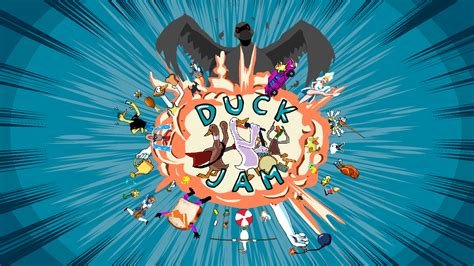
Duck Jam is a fast-paced, action-packed game where ducks prepare for a concert but accidentally destroy their equipment, needing the player’s help to fix things. The game features a series of micro-mini-games, each lasting just five seconds, with increasing difficulty to unlock better endings for the ducks. Packed with references to famous video games and movies, Duck Jam offers a quirky, fantasy setting with 2D scrolling and side-view gameplay, blending arcade-style challenges with direct control mechanics.
Duck Jam Patches & Updates
Duck Jam Reviews & Reception
itch.io (81/100): Unique retro art style, nice humor and tons of minigames. What can you ask for?
Duck Jam: A Quirky, Fast-Paced Ode to Microgames and Duck-Themed Chaos
Introduction: The Birth of a Cult Classic
In the vast, often homogenous landscape of indie games, Duck Jam (2018) stands out as a delightful anomaly—a game that embraces absurdity, nostalgia, and sheer chaotic fun. Developed by a small but passionate team (BOON, PixelDough, and Zen00) and crafted in GameMaker, Duck Jam is a love letter to WarioWare, packed with rapid-fire microgames, self-aware humor, and a premise so ridiculous it could only work: a band of ducks destroys their own equipment and must earn money back through a series of bizarre, five-second challenges.
This review will dissect Duck Jam in exhaustive detail, exploring its development, gameplay, narrative quirks, reception, and lasting impact. While it may not have achieved the mainstream fame of its inspirations, Duck Jam is a hidden gem that deserves recognition for its creativity, charm, and unapologetic weirdness.
Development History & Context: A Labor of Love and Game Jams
The Team Behind the Quack
Duck Jam was born from the collaborative efforts of three developers:
– BOON (lead programmer and designer)
– PixelDough (artist and co-designer)
– Zen00 (programmer)
The team’s background in game jams is evident in Duck Jam’s structure. Originally submitted to The HEART JAM, Meta Game Jam, and APRIL FOOL’S JAM, the game was designed to be a meta-commentary on gaming itself—a self-aware, humorous take on microgame compilations. The team’s rapid iteration and community engagement (via itch.io and Steam) allowed them to refine the game post-launch, adding new minigames, bosses, and polish based on player feedback.
Technological Constraints and Design Philosophy
Built in GameMaker Studio 2, Duck Jam leverages the engine’s accessibility to create a tight, responsive experience. The team’s decision to limit each microgame to five seconds was both a nod to WarioWare and a deliberate constraint to force creativity. As BOON noted in developer logs:
“We focused on making sure we got the most amount of humor with the least amount [of assets]. Allowing us to work really fast and move really fast.”
This philosophy extended to the game’s retro pixel art (inspired by 16-bit classics) and chiptune soundtrack, which evoked nostalgia while maintaining a modern, irreverent tone.
The Gaming Landscape in 2018
Duck Jam arrived during a renaissance of indie microgame collections, following titles like Mini Metro and Nidhogg 2. However, it distinguished itself through:
– Absurdist humor (e.g., a dating sim where the correct choice is “vomit bread on her”).
– Self-referential meta-commentary (e.g., a minigame where the instruction is simply “MOVE,” forcing players to realize they must use their mouse for the first time).
– A crowdfunding attempt (ultimately unsuccessful, but a testament to the team’s ambition).
The game’s Kickstarter campaign (launched May 30, 2018) promised expanded content, but the team continued updating Duck Jam regardless, showcasing their dedication.
Narrative & Thematic Deep Dive: Ducks, Disaster, and Meta-Humor
The “Plot”: A Thin but Charming Premise
Duck Jam’s story is minimal but effective:
“The ducks are getting ready for a concert, but accidentally wreck their equipment, and need your help. Help them by playing a series of micro-mini-games…”
This framing device is little more than an excuse to string together absurd challenges, but it works because:
1. It’s relatable—who hasn’t had a last-minute disaster before a big event?
2. It’s flexible—the “concert” justification allows for any minigame, from Frogger parodies to Dungeon Crawler send-ups.
3. It’s meta—the ducks’ plight mirrors the developers’ own scrappy, DIY ethos.
Themes: Chaos, Nostalgia, and Player Agency
While Duck Jam lacks deep lore (despite fan theories on Steam forums), its themes are clear:
– Controlled Chaos: The game thrives on overwhelming the player with rapid, disparate challenges, rewarding adaptability.
– Nostalgia as Comedy: Many minigames parody classics (Super Mario, Pong, Flappy Bird), subverting expectations with duck-themed twists.
– Player as Performer: The “concert” framing casts the player as both savior and entertainer, blurring the line between participant and audience.
The Endings: A Tiered Reward System
Duck Jam features three endings based on performance:
1. Bad Ending: The ducks fail miserably (e.g., playing to an empty venue).
2. OK Ending: A modest success (e.g., a small but appreciative crowd).
3. Good Ending: A triumphant concert with a spectacular musical finale (praised by Kotaku as “glorious”).
The tiered system incentivizes replayability, though some players criticized the Quacksino minigame (a Pachinko-style challenge) for being unfairly difficult.
Gameplay Mechanics & Systems: Five Seconds of Pure Adrenaline
Core Gameplay Loop
Duck Jam’s structure is simple:
1. A microgame appears (e.g., “Dodge the rocks!”).
2. Instructions flash (often cryptic or humorous).
3. Five seconds to succeed or fail.
4. Repeat, with increasing difficulty.
This loop is addictive because:
– Variety: Over 50+ minigames, ranging from Frogger clones to Japanese dating sims.
– Unpredictability: Players never know what’s next, keeping them engaged.
– Humor: Failures often result in absurd animations (e.g., a duck getting squashed by a boulder).
Control Scheme and Accessibility
The game uses:
– Keyboard (arrow keys, spacebar).
– Mouse (for select minigames, like “MOVE”).
Criticisms of the controls include:
– Precision issues in platforming sections (e.g., the “Duck Cave” minigame).
– Text-heavy challenges (e.g., the dating sim) being too fast to read.
However, the team addressed some of these in updates, adding cloud platforms to ease jumps and simplified dialogue options.
Innovative (and Flawed) Systems
- Boss Battles: Later updates introduced boss fights, which break the five-second rule for extended, multi-phase challenges. These were praised for adding depth.
- Procedural Generation: Minigames are randomized, ensuring no two playthroughs are identical.
- Meta-Humor: Some minigames break the fourth wall, like one where the instruction is “PRESS SPACE” but the spacebar does nothing—until you realize you must press the spacebar on your keyboard.
Flaws:
– Repetition: Early versions reused the same “castle” and “cave” backdrops, which grew tedious.
– Difficulty Spikes: Some minigames (e.g., Quacksino) feel unfair due to RNG.
World-Building, Art & Sound: A Feast for the Senses
Visual Design: Retro Meets Absurd
Duck Jam’s art style is a love letter to 16-bit era games, with:
– Pixel-perfect sprites (ducks, enemies, and environments).
– Vibrant colors that pop despite the low resolution.
– Exaggerated animations (e.g., ducks flailing when hit).
The team remixed classic assets (e.g., Super Mario’s special stage) while adding their own twist, like duck-themed power-ups (e.g., a “quack attack”).
Sound Design: Chiptune Glory
The soundtrack, composed by OCRemix artists, is a standout:
– Catchy chiptune tracks that evoke Mega Man and Castlevania.
– Dynamic audio that shifts with the action (e.g., faster tempo during boss fights).
– Hilarious sound effects (e.g., a duck’s indignant “QUACK!” when hit).
The Good Ending’s musical finale was singled out by reviewers as a highlight, blending multiple tracks into a triumphant crescendo.
Atmosphere: Pure, Unfiltered Fun
Duck Jam’s tone is lighthearted and self-aware, with:
– Fourth-wall breaks (e.g., a minigame where the instruction is “DON’T READ THIS”).
– Easter eggs (e.g., references to Metal Gear Rising, as seen in the “Duck Bible” fan lore).
– A sense of camaraderie—the ducks’ plight feels like a shared joke between player and developer.
Reception & Legacy: A Cult Hit with Lasting Appeal
Critical Reception: Praise for Creativity
Duck Jam received overwhelmingly positive reviews from players and critics:
– Kotaku: “Duck Jam brims with charm and plenty of wild games that are sure to brighten up your day.”
– AlphaBetaGamer: “A delightfully ducky adventure well worth checking out.”
– Peach’s Castle: “Nonstop action… guaranteed laughs.”
Common Praise:
– Humor and creativity.
– Polished execution despite being a jam game.
– Nostalgic yet fresh gameplay.
Common Criticisms:
– Some minigames feel unfair.
– Lack of a “proper” single-player mode (though the arcade-style works for its intent).
Commercial Performance and Community
While Duck Jam didn’t achieve blockbuster sales, it cultivated a dedicated fanbase:
– Speedrunning community: A leaderboard exists on speedrun.com.
– Fan theories: Steam forums debated the “lore” of Duck Game (a separate title), with players crafting elaborate backstories for ducks like “John Mallard.”
– Modding potential: The team’s use of GameMaker made the game ripe for community tweaks.
Influence and Legacy
Duck Jam’s impact lies in its proof that small teams can create big fun:
– It inspired other microgame collections (e.g., Duck Paradox, 2022).
– Its meta-humor paved the way for games like Pato Box (2021), which also blended nostalgia with absurdity.
– The team’s transparency and engagement set a standard for indie devs.
Conclusion: A Quirky Masterpiece Worth Celebrating
Duck Jam is not a “perfect” game—it’s janky, unpolished in spots, and unapologetically weird. But that’s precisely why it’s brilliant. In an era of bloated open-world epics, Duck Jam reminds us that games can be:
– Short but memorable (most playthroughs last 30–60 minutes).
– Funny without being mean-spirited.
– Innovative without needing a AAA budget.
Final Verdict: 8.5/10 – A must-play for fans of WarioWare, retro humor, and games that don’t take themselves too seriously.
Duck Jam may have started as a game jam experiment, but it evolved into something greater—a testament to the power of creativity, community, and the enduring appeal of ducks in absurd situations. Quack on.
Post-Script: For those curious about the “Duck Bible” lore (a fan-made mythos involving Jetstream Sam from Metal Gear Rising creating ducks), it’s a fascinating example of how players invent narratives where none exist. The fact that Duck Jam inspired such creativity is perhaps its greatest legacy.
Where to Play:
– itch.io (Free/Pay-What-You-Want)
– Steam (discontinued, but archives exist)
Final Thought: If you’ve ever wanted to vomit bread on a duck in a dating sim or dodge boulders as a feathered Indiana Jones, Duck Jam is your game. Just don’t blame the ducks if you laugh until you cry.