
- Release Year: 2001
- Platforms: Windows
- Publisher: Bohemia Interactive s.r.o.
- Developer: Centauri Production s.r.o.
- Genre: Adventure, Educational
- Perspective: Side view
- Game Mode: Single-player
- Gameplay: Foreign language, Graphic adventure, Mini-games, Pre-school, Puzzle elements, toddler
- Setting: Fantasy
Description
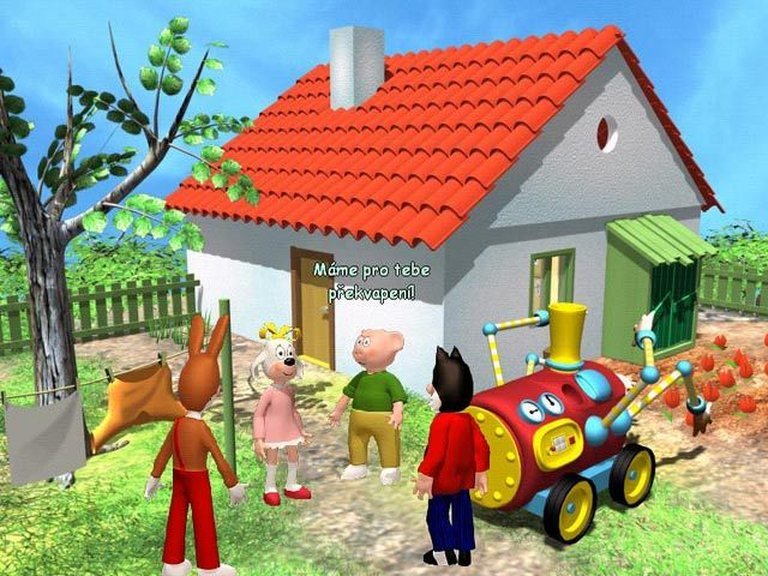
Čtyřlístek CD-Romek 16: Na plese is the 16th installment in the popular Czech educational adventure series, distributed with CD-Romek magazine. The game combines a graphic adventure with mini-games and puzzles, designed to enhance children’s perception, memory, and ecological awareness. It also includes English language exercises, making it both entertaining and educational for young players. Set in a fantasy world, the game follows the beloved Čtyřlístek characters through a series of challenges and activities, blending storytelling with interactive learning.
Čtyřlístek CD-Romek 16: Na plese Patches & Updates
Čtyřlístek CD-Romek 16: Na plese: A Comprehensive Retrospective
Introduction: A Forgotten Gem of Czech Gaming History
In the annals of video game history, certain titles slip through the cracks, overshadowed by blockbusters or lost to the relentless march of technological progress. Čtyřlístek CD-Romek 16: Na plese (also known as Čtyřlístek: Opravdu podařený prášek or Čtyřlístek: Fifinka na dovolené) is one such title—a charming, educational adventure game that emerged from the early 2000s Czech gaming scene. Released in 2001 by Centauri Production and published by Bohemia Interactive, this game was part of the CD-Romek series, a multimedia project that blended interactive storytelling with educational mini-games. While it may not have achieved global recognition, Na plese stands as a testament to the creativity and ingenuity of Czech developers during a formative era in gaming.
This review aims to dissect Čtyřlístek CD-Romek 16: Na plese in exhaustive detail, exploring its development history, narrative depth, gameplay mechanics, artistic design, and lasting legacy. By the end, we will determine whether this title deserves a place in the pantheon of classic adventure games or if it remains a niche curiosity for retro enthusiasts.
Development History & Context: The Birth of a Czech Classic
The Studio and Vision Behind the Game
Čtyřlístek CD-Romek 16: Na plese was developed by Centauri Production, a Czech studio founded in the late 1990s. Centauri was known for its work on adventure games, including Pohádka o Mrazíkovi, Ivanovi a Nastěnce and the Memento Mori series. The studio’s collaboration with Bohemia Interactive (later Cenega Czech) brought the CD-Romek series to life, a project that sought to merge entertainment with education for young audiences.
The CD-Romek series was unique in its structure. Each installment was distributed alongside a physical magazine, offering a blend of interactive storytelling, mini-games, and educational content. The games were designed to be accessible to children, focusing on logic, memory, and language skills—particularly English—while maintaining a playful, adventurous tone.
Technological Constraints and Innovations
Released in 2001, Na plese was constrained by the technological limitations of its time. The game ran on Windows and utilized a side-view perspective, a common choice for adventure games of the era. The CPAL2 engine, developed by Centauri, powered the game’s mechanics, allowing for point-and-click interactions and simple puzzle-solving.
Despite these constraints, the developers managed to create a visually engaging experience. The game’s 2D graphics were colorful and expressive, capturing the whimsical charm of the Čtyřlístek comic series. The voice acting, featuring Ota Jirák (Myšpulín, Pinďa, Bobík) and Helena Brabcová (Fifinka), added a layer of personality that resonated with young players.
The Gaming Landscape of 2001
The early 2000s were a transitional period for gaming. While 3D graphics were becoming more prevalent, 2D adventure games still held a significant place, particularly in educational and indie circles. Na plese competed with titles like Scooby-Doo!: Case File N°2 and Mixed-Up Mother Goose Deluxe, which similarly blended storytelling with interactive gameplay.
In the Czech Republic, the CD-Romek series was a cultural phenomenon, introducing children to both gaming and language learning. The inclusion of English vocabulary exercises and ecological themes reflected a growing emphasis on educational gaming—a trend that would later evolve into the “edutainment” genre.
Narrative & Thematic Deep Dive: A Tale of Friendship and Mischief
Plot Summary: Fifinka’s Holiday and the Boys’ Misadventures
Na plese follows the misadventures of the Čtyřlístek quartet—Fifinka, Bobík, Myšpulín, and Pinďa—as they navigate a series of comedic and chaotic events. The story begins with Fifinka’s birthday, where the boys attempt to surprise her with a universal weeding machine (a contraption meant to automate gardening). However, their invention backfires, destroying Fifinka’s rose garden and sending her into a fury.
Fifinka, fed up with the boys’ antics, decides to take a holiday at a spa to relax. Meanwhile, the boys—left to their own devices—attempt to prove they can manage the household without her. Myšpulín, ever the inventor, concocts a laundry detergent tablet that accidentally grants him invisibility. This leads to a series of slapstick escapades, including a prank on Pinďa, who is terrified of ghost stories.
The narrative culminates in Fifinka’s return, where she discovers the chaos the boys have wrought. Despite their bumbling efforts, the story reinforces themes of friendship, responsibility, and the value of teamwork.
Character Analysis: The Čtyřlístek Quartet
- Fifinka – The level-headed leader of the group, Fifinka often serves as the voice of reason. Her frustration with the boys’ antics is relatable, making her a sympathetic protagonist.
- Bobík – The strong but dim-witted member, Bobík’s physical strength is often undercut by his lack of foresight. His attempts to help usually result in comedic disasters.
- Myšpulín – The eccentric inventor, Myšpulín’s creations are a mix of brilliance and absurdity. His invisibility tablets drive the plot forward, showcasing his unpredictable genius.
- Pinďa – The anxious and superstitious member, Pinďa’s fear of ghosts and horror stories makes him the perfect target for the boys’ pranks.
Themes and Moral Lessons
Na plese explores several themes relevant to its young audience:
– Responsibility – The boys’ attempts to manage the household without Fifinka highlight the importance of taking ownership of one’s actions.
– Friendship – Despite their squabbles, the quartet’s bond remains unbreakable, emphasizing loyalty and camaraderie.
– Creativity and Consequences – Myšpulín’s inventions, while imaginative, often have unintended consequences, teaching players about the risks of unchecked experimentation.
The game’s humor is lighthearted and slapstick, appealing to children while offering subtle moral lessons. The dialogue, though simple, is witty and engaging, thanks in part to the strong voice acting.
Gameplay Mechanics & Systems: A Blend of Adventure and Education
Core Gameplay Loop
Na plese is a point-and-click adventure game with a strong emphasis on puzzle-solving. Players navigate through the Čtyřlístek household, interacting with objects and characters to progress the story. The game’s structure is linear, with players completing tasks in a set order.
Key mechanics include:
– Inventory Management – Players collect and use items to solve puzzles (e.g., finding ingredients for Myšpulín’s inventions).
– Dialogue Choices – While limited, conversations with characters provide hints and advance the plot.
– Mini-Games – The game features educational mini-games, such as memory challenges and logic puzzles, designed to enhance cognitive skills.
Combat and Progression
Unlike traditional adventure games, Na plese lacks combat. Instead, progression is tied to puzzle-solving and exploration. The game’s difficulty is modest, making it accessible to younger players.
UI and Accessibility
The user interface is simple and intuitive, with a point-and-select system that allows players to interact with the environment easily. The inventory system is straightforward, though some puzzles require creative thinking.
One notable flaw is the lack of a hint system, which could leave younger players stuck. However, the game’s linear design mitigates this issue to some extent.
Innovative and Flawed Systems
- Educational Integration – The inclusion of English language exercises and ecological themes was ahead of its time, blending entertainment with learning.
- Voice Acting – The Czech dubbing added depth to the characters, though the lack of subtitles could be a barrier for non-Czech speakers.
- Replayability – The game’s linear structure limits replay value, though the mini-games offer some variety.
World-Building, Art & Sound: A Whimsical Czech Masterpiece
Setting and Atmosphere
Na plese is set in the fictional town of Třeskoprsky, the home of the Čtyřlístek quartet. The game’s environments—ranging from the Čtyřlístek household to the local spa—are rendered in a colorful, cartoonish style that mirrors the original comic series.
The atmosphere is lighthearted and humorous, with a focus on slapstick comedy and whimsical inventions. The game’s fantasy elements (e.g., invisibility tablets) add a layer of magical realism, making the world feel both familiar and extraordinary.
Visual Design
The 2D graphics are vibrant and expressive, with hand-drawn animations that bring the characters to life. The character designs stay true to the comic series, ensuring continuity for fans.
Sound Design and Music
The soundtrack is cheerful and upbeat, complementing the game’s playful tone. The voice acting is a standout feature, with Ota Jirák and Helena Brabcová delivering memorable performances. The sound effects—from Myšpulín’s tinkering to the boys’ comedic mishaps—enhance the game’s immersive quality.
Reception & Legacy: A Cult Classic in the Making
Critical and Commercial Reception
Upon release, Na plese received positive feedback from Czech audiences, particularly parents and educators who appreciated its educational value. However, the game remained largely unknown outside the Czech Republic, limiting its commercial success.
Evolution of Reputation
Over time, Na plese has gained a cult following among retro gaming enthusiasts. Its nostalgic charm and unique blend of adventure and education have earned it a place in Czech gaming history. The game’s preservation has been aided by fan efforts, including the recovery of lost dabing files and the restoration of the final unreleased installment (Čtyřlístek na horách).
Influence on Subsequent Games
The CD-Romek series paved the way for future educational adventure games in the Czech Republic. Its success demonstrated the viability of edutainment in gaming, influencing titles like Ferda CD-Romek and Polda.
Conclusion: A Timeless Adventure for Young and Old
Čtyřlístek CD-Romek 16: Na plese is a hidden gem of early 2000s gaming—a title that seamlessly blends adventure, humor, and education. While it may not have achieved global fame, its charming narrative, engaging gameplay, and nostalgic appeal make it a worthy addition to any retro gamer’s collection.
Final Verdict: 8.5/10 – A delightful, if niche, adventure that stands as a testament to Czech gaming ingenuity.
For those seeking a lighthearted, educational adventure, Na plese is a must-play. And for historians of gaming, it offers a fascinating glimpse into the evolution of edutainment in the early 2000s.
Further Reading:
– Centauri Production’s Official Page
– Knihovnička Čtyřlístek (Fan Site)
– Vortex Article on the Lost Game’s Recovery
Would you like additional details on any specific aspect of the game?