
- Release Year: 2018
- Platforms: PlayStation 4, Windows, Xbox One
- Publisher: Nilo Studios LLC
- Developer: Nilo Studios LLC
- Genre: Adventure
- Perspective: 1st-person
- Game Mode: Single-player
- Gameplay: Graphic adventure
- Average Score: 80/100
Description
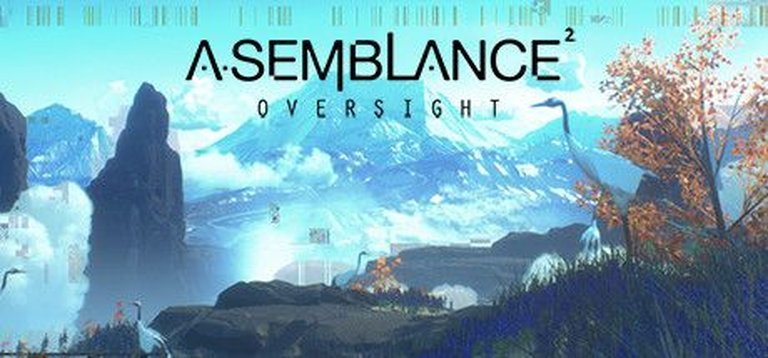
In ‘Asemblance: Oversight’, players join an elite team tasked with simulating the human mind in a high-stakes facility where secrets and memories intertwine. As you navigate the labyrinthine corridors of the mind, you uncover forbidden truths that challenge the mission’s very foundation, blurring the line between reality and simulation. With relentless oversight and dangerous revelations at every turn, your choices shape the outcome in this psychological thriller, where the consequences of uncovering the truth could be dire.
Gameplay Videos
Where to Buy Asemblance: Oversight
PC
Asemblance: Oversight Free Download
Asemblance: Oversight Cracks & Fixes
Asemblance: Oversight Patches & Updates
Asemblance: Oversight Guides & Walkthroughs
Asemblance: Oversight Reviews & Reception
metacritic.com (90/100): Asemblance was bottled lightning. Oversight was never going to be able to recreate that, but it comes as close as it possibly can.
metacritic.com (60/100): I enjoyed my time with Oversight, but I’d have liked to see more cohesion in its storytelling, a longer running time, and a concrete idea of what exactly I was working towards.
metacritic.com (90/100): The first Asemblance was a brilliant short story ****, and Oversight is just as wonderful. One can consider this series a collection of short, Sci-Fi, Psychological Thriller styled experiences.
metacritic.com (70/100): For as long as I can remember, I’ve enjoyed stories that let the viewer draw their own conclusions. If done properly, this will promote conversation and encourage revisiting the narrative again and again; if failed, the participant will lack interest or chalk it up to poor story telling.
monstercritic.com (90/100): Like the first game, the process of finding all those secrets and trying to piece the puzzle together is where Asemblance: Oversight is at its best.
thexboxhub.com : The original Asemblance first arrived earlier in 2018, receiving some decent reviews for its short but mind-bending first-person adventure experience.
Asemblance: Oversight: A Masterclass in Psychological Horror and Narrative Experimentation
Introduction: The Illusion of Control
Asemblance: Oversight (2018) is a game that defies easy categorization. At its core, it is a first-person psychological thriller, a puzzle box of fragmented memories, and a meta-commentary on the nature of simulation, free will, and corporate oversight. Developed by the enigmatic Nilo Studios, Oversight is both a sequel and a spiritual successor to the 2016 cult hit Asemblance, expanding its universe while refining its mechanics. Yet, it is also a game that polarizes—lauded by some as a brilliant, if brief, exploration of existential dread, and dismissed by others as an obtuse, overambitious walking simulator.
This review will argue that Asemblance: Oversight is a flawed masterpiece, a game whose strengths—its atmospheric world-building, its intricate puzzle design, and its willingness to leave questions unanswered—far outweigh its weaknesses. It is a game that demands patience, collaboration, and a tolerance for ambiguity, rewarding those who engage with it on its own terms. In an era where many narrative-driven games prioritize cinematic spectacle over player agency, Oversight is a rare beast: a game that trusts its audience to piece together its mysteries, even if the journey is frustrating.
Development History & Context: The Birth of a Cult Classic
The Studio Behind the Simulation
Nilo Studios is a small, independent developer with a penchant for secrecy. Little is known about the team behind Asemblance, but their work is deeply influenced by Black Mirror-esque dystopian sci-fi, Stanley Parable-style meta-narratives, and the puzzle-box design of games like The Talos Principle. The studio’s first game, Asemblance (2016), was a surprise hit, praised for its short but impactful storytelling and its use of “shifts”—alternate reality states that players could uncover by interacting with the environment in specific ways.
Oversight was developed in Unreal Engine 4, a choice that allowed for photorealistic environments and dynamic lighting effects, both of which play a crucial role in the game’s oppressive atmosphere. The game was released with minimal fanfare—no major marketing campaign, no lengthy beta period—just a sudden drop on May 15, 2018, for PC, PlayStation 4, and Xbox One. This low-key release strategy mirrored the first game’s approach, reinforcing the series’ cult status.
The Gaming Landscape in 2018
2018 was a year dominated by open-world epics (Red Dead Redemption 2, God of War) and multiplayer juggernauts (Fortnite, Call of Duty: Black Ops 4). In this climate, Asemblance: Oversight—a short, single-player, puzzle-driven experience—was an outlier. It belonged to a subgenre of “thinking man’s horror” games, alongside titles like:
– The Talos Principle (2014)
– SOMA (2015)
– Observer (2017)
– What Remains of Edith Finch (2017)
These games prioritized narrative depth, philosophical themes, and environmental storytelling over traditional gameplay mechanics. Oversight fit snugly into this tradition, though it distinguished itself with its community-driven puzzle-solving and ARG (Alternate Reality Game) elements.
The Vision: A Game About Unanswerable Questions
Nilo Studios’ vision for Oversight was clear: to create a game that felt like a living, breathing mystery, one that players would need to collaborate to solve. The developers intentionally designed puzzles that required external research, pattern recognition, and even real-world knowledge (e.g., scientific principles, historical references). This was not a game that could be brute-forced; it demanded lateral thinking.
The game’s official description sets the tone:
“We were chosen for a reason. One incredible breakthrough and the greatest minds of each generation were called upon to do the impossible—recreate a precise simulation of the human mind. But beneath all that competing genius hides a terrible truth. Ask the wrong questions or pry too deep, and you’ll be dealt with… accordingly.”
This premise—a corporate-run simulation of human consciousness—is ripe for exploration, and Oversight delivers on it in spades.
Narrative & Thematic Deep Dive: The Labyrinth of the Mind
Plot Summary: A Descent into Corporate Espionage
Asemblance: Oversight places you in the role of an unnamed scientist working at one of four Asemblance facilities, each dedicated to simulating and manipulating human memories. Your guide is a glitching, unreliable AI, whose voice and demeanor shift unpredictably, hinting at deeper layers of deception.
The game begins in a sterile control room, where you access a terminal that allows you to “dive” into simulated memories. These memories are fragmented, nonlinear, and often surreal, ranging from lush forests to abandoned laboratories. Your goal? To uncover the truth behind the Asemblance project—why it exists, who controls it, and what happens to those who ask too many questions.
Themes: Reality, Control, and the Illusion of Free Will
Oversight is a game obsessed with themes of control and surveillance. Some of its most prominent ideas include:
-
The Nature of Reality
- Are the memories you’re exploring real, or are they constructs?
- Is the AI your ally, or is it manipulating you?
- Are you even real, or are you just another simulation?
-
Corporate Oversight and Censorship
- The game’s title is a double entendre: it refers both to the act of watching over (oversight) and the failure to see (oversight as neglect).
- The facility’s “Management” is an ever-present, Orwellian force, erasing data, altering memories, and punishing curiosity.
-
The Fragility of Memory
- Memories in Oversight are mutable, unreliable, and often contradictory.
- The game suggests that memory is not a recording but a reconstruction, subject to distortion and manipulation.
-
The Ethics of Simulation
- If a simulated mind believes it is real, does it deserve rights?
- Is it ethical to trap consciousness in a loop for the sake of research?
Characters and Dialogue: The Unreliable Narrator
The game’s only “character” is the AI, whose voice, tone, and directives change depending on which “shift” (reality state) you’re in. This unreliable narration is central to the experience:
– In some shifts, the AI is helpful, almost maternal.
– In others, it is cold, mechanical, or outright hostile.
– At times, it glitches, repeats phrases, or speaks in distorted tones, reinforcing the idea that something is very wrong.
The dialogue is minimal but effective, often delivering cryptic hints rather than outright explanations. For example:
“You shouldn’t be here. They’ll know you’ve seen this.”
“The Source is the key. But the key is also the lock.”
“Do you hear the static? That’s the sound of them listening.”
Endings and Player Agency
Oversight features multiple endings, each unlocked by discovering different combinations of clues, interacting with objects in specific orders, and triggering hidden “shifts.” Some endings are abrupt and unsettling, while others provide fleeting glimpses of the larger conspiracy.
Crucially, no single ending provides all the answers. The game deliberately leaves gaps, encouraging players to:
– Compare notes in online forums (e.g., the official Asemblance Discord).
– Replay the game with new knowledge.
– Engage with the ARG elements (e.g., hidden codes, real-world references).
This lack of closure is frustrating for some players but brilliant for others. It mirrors real-life mysteries—some questions are meant to remain unanswered.
Gameplay Mechanics & Systems: Puzzles, Shifts, and the Source
Core Gameplay Loop: Exploration and Discovery
Asemblance: Oversight is, at its heart, a puzzle-adventure game with light exploration elements. The core loop involves:
1. Accessing a memory from the central terminal.
2. Exploring the environment for clues, interactive objects, and hidden triggers.
3. Unlocking “shifts”—alternate versions of the same memory with different visual filters, objects, and dialogue.
4. Piecing together the narrative by comparing shifts and finding patterns.
The Shift System: A Stroke of Genius
The shift mechanic is Oversight’s most innovative feature. Shifts are parallel versions of the same memory, each with:
– A unique color tint (e.g., “redshift,” “blueshift”).
– Altered objects, documents, or environmental details.
– Different AI behavior and dialogue.
For example:
– In one shift, a door might be locked.
– In another shift, the same door might be open, revealing a hidden room.
– In a third shift, the door might not exist at all.
Triggering shifts requires:
– Interacting with specific objects in a particular order.
– Paying attention to environmental cues (e.g., a flickering light, a distorted sound).
– Using items found in one shift to unlock another (e.g., a voice recording that activates a sensor).
This system encourages meticulous exploration and rewards players who think outside the box.
The Source: The Game’s Central Mystery
At the heart of Oversight is The Source, a sentient, glowing cube that appears in certain shifts. The Source is:
– A data repository containing hidden memories and secrets.
– A puzzle-solving tool—interacting with it can trigger new shifts or reveal hidden paths.
– A narrative device—it may represent the core of the simulation itself.
The Source’s true nature is never fully explained, but it is central to unlocking the game’s deepest secrets.
Puzzle Design: Clever but Occasionally Obtuse
The puzzles in Oversight are logic-based but often abstract. They require:
– Pattern recognition (e.g., matching symbols, deciphering codes).
– Environmental awareness (e.g., noticing a misplaced object that only appears in one shift).
– Real-world knowledge (e.g., understanding basic scientific principles, recognizing historical references).
Strengths of the Puzzle Design:
✅ Encourages collaboration—some puzzles are nearly impossible to solve alone.
✅ Rewards curiosity—players who examine every detail are more likely to uncover secrets.
✅ Feels organic—puzzles are woven into the environment, not arbitrarily gated.
Weaknesses of the Puzzle Design:
❌ Can be too vague—some triggers are unintuitive, leading to frustration.
❌ Lacks feedback—the game rarely indicates when you’re on the right track.
❌ Some solutions feel arbitrary—e.g., interacting with a seemingly random object to trigger a shift.
UI and Accessibility
The UI is minimalist, with:
– A clean, futuristic HUD that only appears when interacting with objects.
– Subtitles for all dialogue (a welcome accessibility feature).
– No traditional inventory system—items are context-sensitive.
However, the game lacks some modern QOL features, such as:
– A map or objective marker (intentional, but frustrating for some).
– A hint system (the game expects players to figure things out or ask for help online).
– Adjustable difficulty (puzzles are fixed in complexity).
World-Building, Art & Sound: A Masterclass in Atmosphere
Setting: A Facility of Lies
Oversight takes place in a high-tech research facility, but the true setting is the simulated memories you explore. These range from:
– Sterile laboratories (cold, clinical, oppressive).
– Lush natural environments (forests, beaches—too perfect to be real).
– Surreal, glitching spaces (where geometry distorts and time loops).
The facility itself is a character, with:
– Flickering lights that hint at instability.
– Distorted audio logs that change between shifts.
– Hazmat-suited figures that watch you from a distance.
Visual Design: Photorealism with a Twist
The game’s Unreal Engine 4 graphics are stunning, with:
– Highly detailed textures (wood grain, metal surfaces, fabric—almost tactile).
– Dynamic lighting that shifts with the game’s reality states.
– Subtle visual glitches (e.g., screen tears, flickering objects) that reinforce the simulation theme.
However, the art direction is deliberately unsettling:
– Colors are either too vibrant (unnatural) or too muted (oppressive).
– Some environments feel “off”—too symmetrical, too empty, too perfect.
– The “redshift” and “blueshift” filters create a dreamlike, surreal atmosphere.
Sound Design: The Sound of Paranoia
The audio in Oversight is one of its strongest elements, with:
– A haunting, ambient soundtrack (composed by Johnny Goss) that evolves with the shifts.
– Distorted voice acting—the AI’s glitching, layered dialogue is unnerving.
– Environmental sounds that change between shifts (e.g., a ticking clock in one reality, silence in another).
The sound design reinforces the game’s themes:
– Static and white noise suggest surveillance and interference.
– Sudden silences create tension and unease.
– Echoing footsteps make the player feel watched.
Atmosphere: A Game That Gets Under Your Skin
Oversight is not a horror game in the traditional sense—there are no jump scares, no monsters, no gore. Instead, it relies on psychological horror:
– The uncertainty of what’s real.
– The feeling of being manipulated.
– The slow realization that you might not be in control.
It’s a game that lingers in the mind long after playing, haunting you with its unanswered questions.
Reception & Legacy: A Cult Classic in the Making
Critical Reception: Praised but Polarizing
Asemblance: Oversight received generally positive reviews, with critics praising its atmosphere, puzzle design, and narrative ambition, while criticizing its short length and obtuse mechanics.
Notable Review Scores:
– Digitally Downloaded: 90% – “Oversight comes as close as it possibly can to recapturing the magic of the first game.”
– Garage Band Gamers: 70% – “A thought-provoking look at the mind, but short on content.”
– Rely on Horror: 9/10 – “A rare treat for players who want to expend mental effort.”
– TheXboxHub: Mixed but Positive – “Not for everyone, but a brilliant experience for fans of the first game.”
Common Praise:
✔ Atmospheric and immersive.
✔ Innovative puzzle design.
✔ Encourages community collaboration.
Common Criticisms:
✖ Too short (can be completed in under 2 hours).
✖ Some puzzles are overly cryptic.
✖ Lacks a satisfying, definitive ending.
Commercial Performance: A Niche Success
Oversight was not a commercial blockbuster, but it found its audience:
– Sold modestly on Steam, PS4, and Xbox One.
– Developed a dedicated fanbase that actively solved its puzzles together.
– Sparked discussions in gaming forums about its themes and hidden secrets.
Legacy and Influence
While Oversight didn’t revolutionize the gaming industry, it left a mark on:
1. Narrative-Driven Puzzle Games
– Games like The Talos Principle 2 (2023) and The Witness (2016) share its philosophical depth and environmental storytelling.
2. ARG-Inspired Game Design
– Oversight proved that community-driven puzzle-solving could work in a single-player game.
3. Psychological Horror Without Jump Scares
– Its atmospheric, slow-burn horror influenced later games like In Sound Mind (2021) and Signalis (2022).
The Future of the Asemblance Series
As of 2024, Nilo Studios has remained silent about future entries. However, the ending of Oversight strongly hints at a larger conspiracy, leaving the door open for:
– A third game (perhaps exploring the other Asemblance facilities).
– A remaster or definitive edition (with additional content).
– An ARG expansion (further community-driven mysteries).
Conclusion: A Flawed but Unforgettable Experience
Asemblance: Oversight is not a game for everyone. It is:
– Short (but dense with meaning).
– Frustrating (but rewarding for those who persist).
– Ambiguous (but thought-provoking in its ambiguity).
Yet, for those who embrace its challenges, it is one of the most unique and haunting experiences in modern gaming. It is a game that respects its players’ intelligence, trusts them to piece together its mysteries, and leaves them with more questions than answers.
Final Verdict: 8.5/10 – A Masterpiece of Atmospheric Storytelling
Asemblance: Oversight is not just a game—it’s an experience, one that blurs the line between player and participant, reality and simulation, truth and deception. It may not be perfect, but it is unforgettable, and that is a rare achievement in gaming.
For fans of: The Stanley Parable, SOMA, The Talos Principle, What Remains of Edith Finch
Play it if you: Enjoy puzzle games, psychological horror, and narratives that make you think.
Avoid it if you: Prefer action, clear objectives, or neatly wrapped-up stories.
In the end, Asemblance: Oversight is a testament to the power of interactive storytelling—a game that doesn’t just tell a story, but makes you live it, question it, and remember it long after the credits roll.