
- Release Year: 2016
- Platforms: Windows
- Publisher: Cybreath
- Developer: Cybreath
- Genre: Action
- Perspective: 1st-person
- Game Mode: Single-player
- Average Score: 79/100
Description
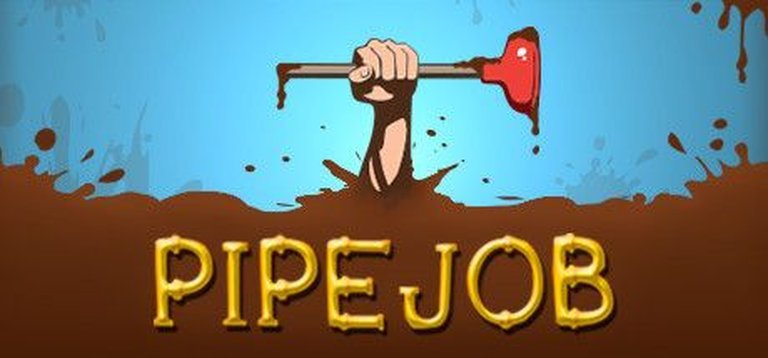
Pipejob is a first-person action game where players take on the role of a plumber trapped in a bathroom, tasked with fixing and upgrading pipes while dealing with chaotic challenges like unclogging toilets and avoiding drowning in waste. The game also features a creative mode where players can paint with poo and save their artwork in the Gallery of Poo, blending humor and absurdity with survival mechanics.
Where to Buy Pipejob
PC
Pipejob Guides & Walkthroughs
Pipejob Reviews & Reception
steambase.io (80/100): Pipejob has earned a Player Score of 80 / 100.
store.steampowered.com (78/100): Mostly Positive (78% of 47)
datahumble.com (80/100): 80.39%
Pipejob: A Scatological Simulator That Defies Convention
Introduction: The Unlikely Hero of VR Plumbing
Few games dare to embrace the absurd with the unapologetic fervor of Pipejob. Released in 2016 by the obscure Polish studio Cybreath, this VR-exclusive title thrusts players into the unglamorous role of a plumber trapped in a bathroom, battling against the relentless tide of fecal matter while repairing pipes and—inexplicably—painting with excrement. At first glance, Pipejob appears to be a crude joke, a novelty title capitalizing on the shock value of its premise. Yet, beneath its scatological veneer lies a surprisingly polished, if niche, experience that challenges conventional notions of what a “serious” VR game can be.
This review will dissect Pipejob in exhaustive detail, exploring its development, mechanics, thematic audacity, and the curious legacy it has carved in the annals of indie gaming. Is it a masterpiece of absurdist design, or a gimmick that outstays its welcome? The answer, as with most things in Pipejob, is far messier than it seems.
Development History & Context: The Birth of a Bizarre Vision
Cybreath: The Studio Behind the Stench
Cybreath, the developer and publisher of Pipejob, is a relatively unknown entity in the gaming industry. Based in Poland, the studio has maintained a low profile, with Pipejob standing as its most recognizable (and infamous) release. Little is known about the team’s background, but their choice of subject matter—plumbing, feces, and VR—suggests a deliberate embrace of the unconventional.
The game was built using the Unity engine, a common choice for indie developers due to its accessibility and VR compatibility. Given the constraints of a small team and limited resources, Pipejob’s technical achievements are modest but effective. The decision to make it VR-only was a bold one, especially in 2016, when VR gaming was still in its infancy. This choice likely stemmed from a desire to immerse players fully in the game’s grotesque world, forcing them to confront its absurdity head-on.
The Gaming Landscape of 2016: VR’s Wild West
Pipejob launched on October 15, 2016, a pivotal year for VR gaming. The Oculus Rift and HTC Vive had recently hit the market, and developers were experimenting with the medium’s possibilities. While major studios focused on high-budget experiences like EVE: Valkyrie or Job Simulator, indie developers explored weirder, more niche concepts. Pipejob fits squarely into the latter category, alongside titles like Surgeon Simulator VR and I Expect You To Die, which also embraced humor and physical comedy as core mechanics.
However, Pipejob distinguished itself by leaning entirely into its grotesque premise. Where other VR games used humor as a secondary element, Pipejob made it the foundation. This was not a game about plumbing—it was a game about the experience of plumbing, complete with all its visceral, disgusting, and oddly satisfying moments.
Narrative & Thematic Deep Dive: The Philosophy of Poop
Plot? What Plot?
Pipejob is not a narrative-driven game. There is no grand story, no character arcs, and no lore to uncover. The premise is simple: you are a plumber trapped in a bathroom, and your goal is to fix pipes, unclog toilets, and survive the onslaught of sewage. The game’s “story” is delivered through its mechanics and environmental storytelling—specifically, the ever-increasing chaos of the bathroom as pipes burst, toilets overflow, and the player’s sanity (and cleanliness) deteriorates.
Yet, within this minimalist framework, Pipejob manages to convey a surprising amount of thematic depth. The game is, at its core, a meditation on futility, labor, and the absurdity of existence. The plumber’s struggle is Sisyphian—no matter how many pipes you fix, the bathroom will always descend into chaos. The game’s tagline, “Survive the longest you can and beat the world record!”, underscores this: there is no victory, only temporary respite before the inevitable deluge.
Themes: Labor, Absurdism, and the Grotesque
-
The Absurdity of Labor
Pipejob frames plumbing as a thankless, endless task. The player is not a hero but a cog in a broken system, forever battling against entropy. This resonates with the real-world perception of plumbing as a dirty, underappreciated job. The game’s humor arises from the disconnect between the mundane (fixing pipes) and the extreme (drowning in feces). -
The Grotesque as Comedy
The game’s reliance on fecal matter is not merely shock value—it’s a deliberate aesthetic choice. The grotesque has long been a tool in comedy, from medieval carnival humor to modern shock comedians. Pipejob weaponizes disgust, forcing players to engage with something society teaches us to avoid. The act of painting with poop, in particular, subverts expectations, turning something repulsive into a creative act. -
VR as a Tool for Immersion (and Discomfort)
Pipejob uses VR to amplify its themes. The first-person perspective makes the player’s struggle visceral. When sewage sprays into your face, you feel it. When you’re elbow-deep in a toilet, the discomfort is palpable. This immersion is key to the game’s humor—it’s funny because it’s real in a way non-VR games can’t replicate.
Gameplay Mechanics & Systems: The Art of Plumbing Under Pressure
Core Gameplay Loop: Fix, Survive, Repeat
Pipejob’s gameplay is deceptively simple but deviously challenging. The player must:
-
Repair Pipes
- Pipes leak, burst, or become misaligned. The player must grab, rotate, and reconnect them using VR motion controls.
- The physics-based interaction is intentionally finicky, mimicking the frustration of real plumbing.
-
Unclog the Toilet
- The toilet periodically overflows, spewing sewage. The player must use a plunger to clear it, all while avoiding the spray.
-
Upgrade Pipes
- As the game progresses, players can upgrade pipes to handle higher pressure, delaying the inevitable collapse.
-
Survive
- The bathroom gradually floods with sewage. The longer you last, the higher your score.
The “Gallery of Poo”: A Bizarre Creative Outlet
In a stroke of surreal genius, Pipejob includes a secondary mode where players can “paint” using feces. This mode is entirely separate from the main game and serves no mechanical purpose—it’s pure, unadulterated absurdity. Players can create “artwork,” save it, and display it in the in-game “Gallery of Poo.”
This feature is Pipejob’s most fascinating element. It transforms the game from a simple simulator into a commentary on creativity itself. Why paint with poop? Because the game says you can. It’s a rejection of conventional game design, a middle finger to the idea that games must have “purpose.”
Controls & VR Implementation: A Mixed Bag
The game’s VR controls are functional but flawed. Players report issues with:
- Pipe Grabbing
- The hitboxes for grabbing pipes are inconsistent, leading to frustration.
- Bow (Plunger) Mechanics
- Some players struggled with the plunger’s physics, especially in VR.
- Movement
- The game is room-scale VR, which can be disorienting for new players.
These issues are not deal-breakers but highlight the game’s indie roots. Pipejob is not a AAA VR experience—it’s a janky, passionate labor of love.
World-Building, Art & Sound: A Bathroom of Nightmares
Setting & Atmosphere: The Horror of the Mundane
Pipejob takes place entirely within a single bathroom—a claustrophobic, tiled hellscape. The art style is cartoonish but detailed, with exaggerated animations for sewage sprays and pipe bursts. The bathroom starts pristine but quickly devolves into a biohazard zone, with brown sludge coating every surface.
The game’s atmosphere is a mix of comedy and horror. The sound design amplifies this:
- Squelching, Gurgles, and Splashes
- Every interaction with water or feces is accompanied by exaggerated, wet sound effects.
- The Dreaded “Toilet Alarm”
- A loud, ominous gurgle signals an impending overflow, ratcheting up tension.
- Upbeat, Ironically Cheerful Music
- The soundtrack contrasts with the grotesque visuals, enhancing the absurdity.
Visual Design: The Aesthetics of Filth
The game’s visuals are intentionally exaggerated. Pipes are oversized, sewage is an unnatural shade of brown, and the player’s hands become progressively dirtier. The VR perspective makes the filth feel real, which is both immersive and nauseating.
The “Gallery of Poo” is a visual highlight, with player-created “artworks” displayed in golden frames—a mockery of highbrow art culture.
Reception & Legacy: The Game That Refused to Be Ignored
Critical Reception: A Polarizing Experience
Pipejob received little mainstream critical attention, but player reactions on Steam are overwhelmingly positive (80/100 based on 51 reviews). Players praise its:
- Humor and Absurdity
- Many reviewers highlight the game’s ability to make them laugh despite its gross-out premise.
- VR Immersion
- The first-person perspective is frequently cited as a strength.
- Unique Concept
- Few games dare to be this weird, and players appreciate the boldness.
However, criticisms focus on:
- Technical Issues
- Bugs, inconsistent controls, and VR compatibility problems (e.g., Oculus Rift support).
- Repetitive Gameplay
- Some players find the core loop grows stale after extended play.
Legacy: The Cult of the Plumber
Pipejob has not spawned sequels or imitators, but it has earned a cult following. It represents a specific strain of indie VR games that prioritize experience over polish, humor over seriousness. Its legacy lies in its refusal to conform—it is a game that exists because it’s ridiculous, not in spite of it.
In the broader context of gaming history, Pipejob is a footnote, but an important one. It proves that VR can be used for more than just shooters or puzzle games—it can be a medium for pure, unfiltered absurdity.
Conclusion: A Masterpiece of Mess
Pipejob is not a game for everyone. It is gross, repetitive, and technically flawed. But it is also brilliant—a daring experiment in VR design, a celebration of the grotesque, and a surprisingly deep commentary on labor and futility.
Final Verdict: 7.5/10 – A Flawed but Unforgettable Experience
Pros:
✅ Hilariously absurd premise executed with commitment.
✅ VR immersion amplifies the humor and horror.
✅ The “Gallery of Poo” is a stroke of genius.
✅ A rare game that embraces its niche without apology.
Cons:
❌ Janky controls and technical issues.
❌ Repetitive gameplay loop.
❌ Limited appeal outside of VR enthusiasts and absurdism fans.
Pipejob is not a game you play for hours—it’s a game you experience, laugh at, and then tell your friends about in disbelief. It is a testament to the power of indie gaming to push boundaries, even (or especially) when those boundaries involve virtual feces.
In the grand tapestry of video game history, Pipejob is a small, brown stain—but it’s a stain that refuses to be scrubbed out. And for that, we should be grateful.