
- Release Year: 2005
- Platforms: Windows
- Publisher: Ubisoft Entertainment SA
- Genre: Compilation
- Game Mode: Online PVP, Single-player
- Average Score: 100/100
Description
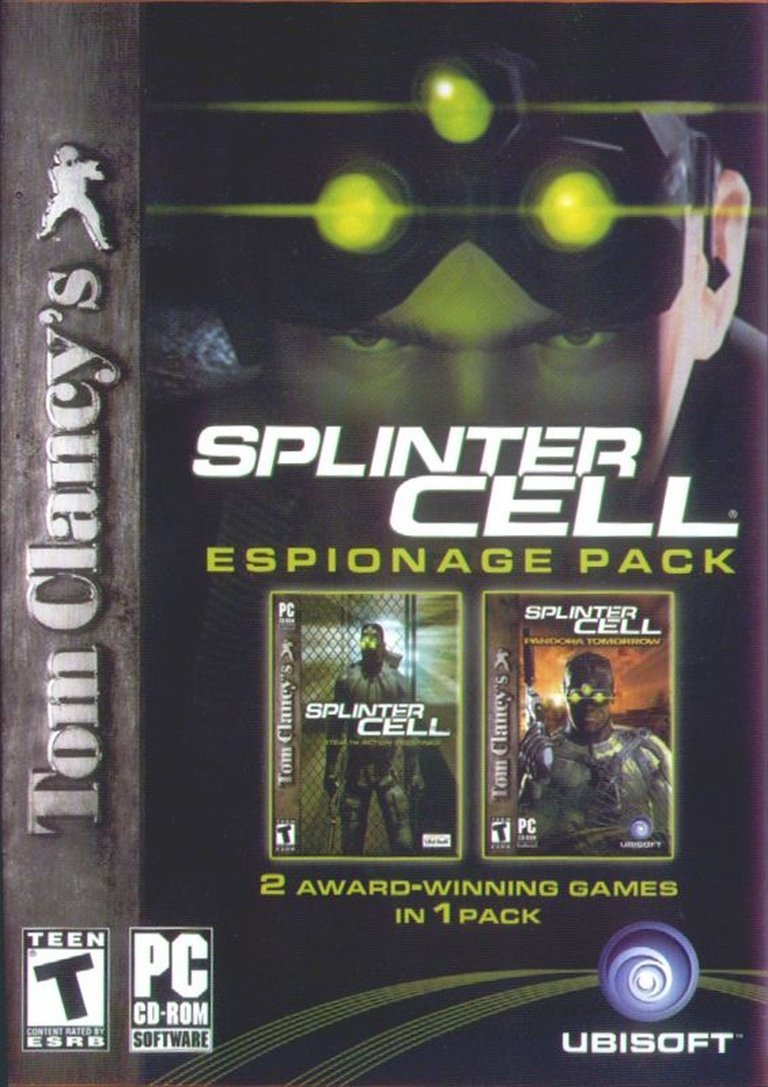
Tom Clancy’s Splinter Cell: Espionage Pack is a compilation that bundles two critically acclaimed stealth-action games: the original Tom Clancy’s Splinter Cell (2002) and its sequel, Tom Clancy’s Splinter Cell: Pandora Tomorrow (2004). Players assume the role of Sam Fisher, a highly trained operative of the NSA’s secretive Third Echelon unit, as he undertakes high-stakes covert missions across global hotspots. The games emphasize tactical espionage, requiring players to navigate shadowy environments, utilize advanced gadgets, and employ non-lethal or lethal tactics to complete objectives while avoiding detection. With a focus on realism and tension, the Espionage Pack delivers a gripping experience that blends intricate storytelling with intense, methodical gameplay.
Tom Clancy’s Splinter Cell: Espionage Pack Free Download
Tom Clancy’s Splinter Cell: Espionage Pack Reviews & Reception
ign.com : Ubi Soft’s excellent espionage game is the birth of a new franchise and the best title on Xbox this year.
mobygames.com (100/100): Average score: 5.0 out of 5
Tom Clancy’s Splinter Cell: Espionage Pack Cheats & Codes
PC
Press [F2] to display the console window, then type one of the following codes and press [Enter]. Note: Press [Tab] instead of [F2] in the demo version of the game.
| Code | Effect |
|---|---|
| FLY | Fly Mode |
| AMMO | Full Ammo |
| HEALTH | Full Health |
| INVISIBLE 1 | Invisibility On |
| INVISIBLE 0 | Invisibility Off |
| WALK | Disable no clipping |
| GHOST | No Clipping |
| PLAYERSONLY | Freeze Enemies |
| PLAYERSONLY 0 | Unfreeze enemies |
| KILLPAWNS | No Enemies |
| MISSION WIN | Instantly Win Level |
| PREFERENCES | Change settings |
| STEALTH | Change Stealth Stats |
| invincible 1 | God Mode On |
| invincible 0 | God Mode Off |
| health | Full Health |
| invisible 1 | Invisibility On |
| invisible 0 | Invisibility Off |
| ammo | Full Ammo |
| fly | Fly Mode |
| ghost | Walk Through Walls |
| walk | Normal Mode |
| playersonly 1 | Enemies Frozen On |
| playersonly 0 | Enemies Frozen Off |
| killpawns | No enemies |
| summon | Spawn indicated item |
Tom Clancy’s Splinter Cell: Espionage Pack: A Comprehensive Retrospective
Introduction: The Shadow of a Legacy
In the pantheon of stealth games, few franchises have left as indelible a mark as Tom Clancy’s Splinter Cell. The Espionage Pack, released in 2005, is a compilation that bundles the first two entries in the series—Tom Clancy’s Splinter Cell (2002) and Tom Clancy’s Splinter Cell: Pandora Tomorrow (2004)—offering players a chance to experience the genesis of a franchise that redefined the stealth genre. This review aims to dissect the Espionage Pack not just as a product of its time, but as a historical artifact that encapsulates the evolution of stealth gameplay, narrative depth, and technological innovation.
The Splinter Cell series emerged in a post-9/11 world, where the geopolitical landscape was ripe for stories of covert operations and asymmetric warfare. The games tapped into the zeitgeist, blending Tom Clancy’s signature military realism with Ubisoft Montreal’s vision for a stealth experience that prioritized light, shadow, and sound over brute force. The Espionage Pack serves as a time capsule, preserving the raw, unfiltered essence of what made Splinter Cell a critical and commercial success.
This review will explore the Espionage Pack through multiple lenses: its development history, narrative and thematic depth, gameplay mechanics, world-building, and its lasting legacy. By the end, we will determine whether this compilation stands as a testament to the golden age of stealth games or merely a relic of a bygone era.
Development History & Context: The Birth of a Stealth Revolution
The Studio and the Vision
Ubisoft Montreal, the primary developer behind the Splinter Cell series, was tasked with creating a game that could compete with the likes of Metal Gear Solid while carving out its own identity. The studio’s vision was clear: craft a stealth experience grounded in realism, where players would embody Sam Fisher, a lone operative navigating a world of shadows and deception. The Espionage Pack compiles the first two games in the series, both of which were developed under the constraints of early 2000s technology but pushed the boundaries of what was possible in stealth gameplay.
The original Splinter Cell (2002) was built on a modified version of the Unreal Engine 2, a choice that allowed for dynamic lighting and shadow systems—key components of the game’s stealth mechanics. Pandora Tomorrow (2004) expanded on this foundation, introducing multiplayer modes and refining the AI to adapt to player actions. Both games were developed during a period when stealth games were still finding their footing, and Ubisoft Montreal’s innovations set a new standard for the genre.
Technological Constraints and Innovations
The early 2000s were a time of rapid technological advancement, but developers still faced significant limitations. The Espionage Pack games were designed to run on hardware that, by today’s standards, was rudimentary. Yet, the developers managed to create a lighting system that dynamically affected enemy detection, a feature that was revolutionary at the time. Shadows weren’t just aesthetic; they were a gameplay mechanic, and players had to learn to manipulate them to survive.
The AI in Splinter Cell and Pandora Tomorrow was also a marvel of its time. Enemies reacted to noise, light, and player movements in ways that felt organic and unpredictable. This was a far cry from the scripted behaviors of earlier stealth games, where enemies followed rigid patrol routes and could be easily exploited. The Espionage Pack games demanded patience, precision, and adaptability—qualities that would become hallmarks of the Splinter Cell series.
The Gaming Landscape of the Early 2000s
When Splinter Cell debuted in 2002, the gaming landscape was dominated by action-heavy titles like Halo and Call of Duty. Stealth games were a niche genre, with Metal Gear Solid being the most prominent example. Splinter Cell differentiated itself by focusing on realism and tactical gameplay rather than the cinematic, over-the-top antics of Metal Gear. The Espionage Pack arrived at a time when players were hungry for something different, and it delivered an experience that was both challenging and immersive.
The success of Splinter Cell and Pandora Tomorrow paved the way for future entries in the series, including Chaos Theory (2005), which is often regarded as the pinnacle of the franchise. The Espionage Pack serves as a reminder of the series’ humble beginnings and the innovations that made it a standout in the stealth genre.
Narrative & Thematic Deep Dive: Espionage in the Shadows
Plot and Characters
The Espionage Pack introduces players to Sam Fisher, a veteran operative of the NSA’s Third Echelon, a clandestine unit tasked with carrying out deniable black ops missions. The first game, Splinter Cell, follows Fisher as he investigates a coup in Georgia and uncovers a conspiracy involving a rogue faction within the U.S. government. Pandora Tomorrow shifts the focus to a bioterrorism threat, with Fisher racing against time to stop a terrorist group from unleashing a smallpox virus on the world.
Both games are steeped in the geopolitical tensions of the early 2000s, reflecting the anxieties of a world still reeling from the 9/11 attacks. The narratives are grounded in realism, with Fisher’s missions involving high-stakes infiltrations, interrogations, and sabotage. The dialogue is sharp and to the point, with Fisher’s dry wit and no-nonsense demeanor making him a compelling protagonist.
Themes of Betrayal and Loyalty
A recurring theme in the Splinter Cell series is the tension between loyalty to one’s country and the moral ambiguities of covert operations. Fisher is often forced to make difficult choices, and the Espionage Pack games explore the psychological toll of his work. In Splinter Cell, Fisher uncovers a conspiracy within Third Echelon, forcing him to question the very organization he serves. Pandora Tomorrow delves into the ethical dilemmas of using lethal force, with Fisher grappling with the consequences of his actions.
The games also touch on the theme of information warfare, a concept that was still relatively new in the early 2000s. Fisher’s missions often involve hacking into enemy systems, intercepting communications, and manipulating data—elements that would become central to later entries in the series.
Dialogue and Voice Acting
The voice acting in the Espionage Pack is top-notch, with Michael Ironside delivering a standout performance as Sam Fisher. Ironside’s gravelly voice and deadpan delivery bring Fisher to life, making him one of the most iconic characters in gaming. The supporting cast, including Fisher’s handler Irving Lambert and hacker Anna Grímsdóttir, also deliver strong performances, adding depth to the game’s narrative.
The dialogue is minimalistic but effective, with Fisher’s quips and one-liners providing moments of levity amid the tension. The games also feature a dynamic soundtrack that enhances the atmosphere, with tense, pulsating tracks that heighten the sense of danger.
Gameplay Mechanics & Systems: The Art of Stealth
Core Gameplay Loop
The Espionage Pack games are built around a core gameplay loop that emphasizes stealth, reconnaissance, and tactical decision-making. Players must navigate through enemy territory, avoiding detection while gathering intel and completing objectives. The games reward patience and precision, with players encouraged to take their time and plan their moves carefully.
The stealth mechanics are deep and nuanced, with light and shadow playing a crucial role in determining Fisher’s visibility. Players must stay in the shadows to avoid detection, using the environment to their advantage. The games also feature a sound system that tracks noise levels, with loud actions like running or firing unsuppressed weapons alerting enemies.
Combat and Gadgets
While the Espionage Pack games prioritize stealth, they also offer a variety of combat options for players who prefer a more aggressive approach. Fisher is equipped with a range of gadgets, including night vision goggles, sticky cameras, and EMP devices, which can be used to disable enemy equipment and create distractions.
The games also feature a robust melee system, with Fisher able to perform non-lethal takedowns and interrogations. The combat is weighty and satisfying, with each action feeling deliberate and impactful. However, the games discourage outright violence, with players penalized for killing enemies unnecessarily.
UI and Progression
The user interface in the Espionage Pack games is clean and intuitive, with a minimalist HUD that keeps the focus on the action. The games also feature a progression system that rewards players for completing objectives stealthily, with bonuses for avoiding detection and minimizing collateral damage.
The Espionage Pack games are challenging but fair, with a difficulty curve that ramps up gradually. Players who take the time to learn the mechanics and master the stealth systems will find the games to be deeply rewarding.
World-Building, Art & Sound: Crafting a Living, Breathing World
Setting and Atmosphere
The Espionage Pack games take players to a variety of locations, from the war-torn streets of Georgia to the high-tech facilities of the NSA. Each environment is meticulously crafted, with a level of detail that immerses players in the world of Splinter Cell. The games’ art direction is gritty and realistic, with a color palette that emphasizes shadows and muted tones.
The atmosphere in the Espionage Pack games is tense and oppressive, with a sense of danger lurking around every corner. The games’ sound design plays a crucial role in creating this atmosphere, with ambient noises like distant gunfire and enemy chatter adding to the immersion.
Visual Direction
The Espionage Pack games were developed during a time when graphics technology was rapidly evolving, and the developers made the most of the available tools. The games feature dynamic lighting and shadow systems that affect gameplay, with enemies reacting to changes in light levels. The character models are detailed and expressive, with Fisher’s animations conveying a sense of weight and realism.
The games’ visuals hold up surprisingly well today, thanks to their focus on realism and attention to detail. While they may not have the polish of modern games, they still manage to create a compelling and immersive world.
Sound Design
The sound design in the Espionage Pack games is exceptional, with a dynamic soundtrack that adapts to the player’s actions. The games feature a mix of tense, pulsating tracks and ambient noises that enhance the atmosphere. The voice acting is also top-notch, with Michael Ironside’s performance as Sam Fisher being a standout.
The games’ sound design plays a crucial role in the stealth mechanics, with players able to hear enemy movements and reactions. This adds an extra layer of tension to the gameplay, as players must constantly be aware of their surroundings.
Reception & Legacy: A Lasting Impact on the Stealth Genre
Critical and Commercial Reception
The Espionage Pack games were met with widespread critical acclaim upon their release, with reviewers praising their innovative stealth mechanics, immersive atmosphere, and compelling narratives. Splinter Cell and Pandora Tomorrow both received high scores from critics, with many hailing them as some of the best stealth games of their time.
Commercially, the Espionage Pack was also a success, with both games selling millions of copies worldwide. The success of the Espionage Pack helped to establish Splinter Cell as one of Ubisoft’s flagship franchises, paving the way for future entries in the series.
Influence on Subsequent Games
The Espionage Pack games had a profound influence on the stealth genre, with their innovative mechanics and realistic approach to stealth gameplay setting a new standard for the genre. Games like Hitman and Dishonored would later draw inspiration from Splinter Cell, incorporating similar stealth systems and environmental interactions.
The Espionage Pack also helped to popularize the use of light and shadow as gameplay mechanics, a feature that would become a staple of the stealth genre. The games’ emphasis on realism and tactical decision-making also influenced later entries in the Splinter Cell series, including Chaos Theory and Blacklist.
Evolution of the Series
The Espionage Pack represents the early days of the Splinter Cell series, a time when the franchise was still finding its footing. Later entries in the series would refine and expand on the mechanics introduced in these games, with Chaos Theory often regarded as the pinnacle of the franchise.
However, the Espionage Pack remains an important part of the Splinter Cell legacy, offering players a chance to experience the series’ humble beginnings. The games’ focus on realism, tactical gameplay, and immersive storytelling set the stage for the franchise’s future success.
Conclusion: A Timeless Classic or a Relic of the Past?
The Tom Clancy’s Splinter Cell: Espionage Pack is more than just a compilation of two great games—it’s a snapshot of a pivotal moment in the evolution of the stealth genre. The Espionage Pack games introduced players to Sam Fisher, a character who would become one of the most iconic figures in gaming, and set a new standard for stealth gameplay with their innovative mechanics and immersive atmosphere.
While the Espionage Pack may not have the polish or complexity of later entries in the series, it remains a compelling and rewarding experience for fans of stealth games. The games’ focus on realism, tactical decision-making, and environmental interaction makes them a timeless classic, and their influence can still be felt in modern stealth games.
For those who have never experienced the Splinter Cell series, the Espionage Pack is an excellent starting point. It offers a chance to see where the franchise began and to appreciate the innovations that made it a standout in the stealth genre. For longtime fans, the Espionage Pack is a nostalgic trip down memory lane, a reminder of the series’ humble beginnings and the promise of what was to come.
In the end, the Tom Clancy’s Splinter Cell: Espionage Pack is more than just a compilation—it’s a testament to the power of innovation, the art of stealth, and the enduring legacy of one of gaming’s most iconic franchises.
Final Verdict: 9/10 – A Must-Play for Stealth Enthusiasts