
- Release Year: 2008
- Platforms: Windows
- Genre: Action
- Perspective: Top-down
- Game Mode: Single-player
- Gameplay: Procedural generation, Time-based challenges, Word uncovering
- Average Score: 59/100
Description
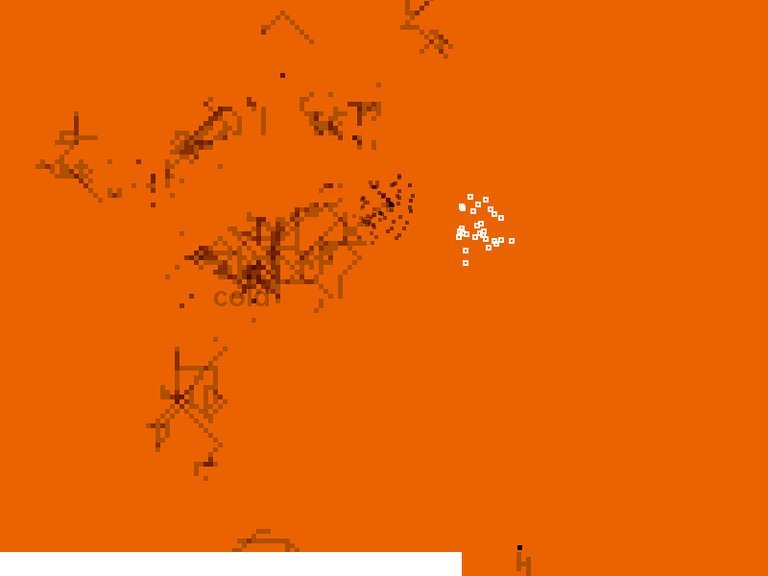
Sesame Seeds is a fast-paced, procedurally generated action game where players must uncover hidden words to progress through levels. Using a mouse-controlled white swarm of nano-fiends, players wipe away black markings to reveal a word, all while evading a pursuing black swarm. Once the word is visible, players must quickly pause the action, type the word, and then eliminate the black swarm—all within a tight time limit. Later levels introduce decoy words with intentional misspellings to increase the challenge. The game’s title cleverly references both procedural generation (‘seeds’) and the ‘Open Sesame’ phrase, tying into its password-unlocking gameplay.
Sesame Seeds Reviews & Reception
mobygames.com (64/100): A fast, procedurally generated action game where players need to uncover words to move on to new levels.
vgtimes.com (55/100): A top-down arcade game with a dash of action.
Sesame Seeds: A Procedural Puzzle of Words and Wits
Introduction
In the vast, often overlooked landscape of indie games, Sesame Seeds (2008) stands as a curious artifact—a fleeting experiment in procedural generation, wordplay, and arcade-style tension. Released as freeware for Windows, this top-down action-puzzle hybrid challenges players to uncover hidden words while evading a relentless digital predator, all within a tightly constrained time frame. Though it lacks the polish or recognition of mainstream titles, Sesame Seeds embodies the spirit of experimental game design, blending the mechanical precision of arcade classics with the emergent chaos of procedural systems. This review delves into its development, mechanics, and legacy, arguing that despite its obscurity, the game offers a fascinating case study in minimalist design and the creative potential of procedural generation.
Development History & Context
The Studio and the Vision
Sesame Seeds was developed by an unknown creator (or small team) and released in June 2008 as part of the TIGSource Procedural Generation Competition (PG Comp), a community-driven event that challenged developers to explore the boundaries of algorithmically generated content. The competition, hosted on the influential indie game forum TIGSource, fostered a wave of innovative titles, from Dwarf Fortress to Spelunky, and Sesame Seeds emerged as one of its more unconventional entries.
The game’s title is a clever double entendre:
1. Procedural “Seeds”: The term refers to the seed values used in procedural generation, where a single input (e.g., a word or number) can generate entirely unique levels.
2. “Open Sesame”: A nod to the magical phrase from Ali Baba and the Forty Thieves, reinforcing the game’s core mechanic of uncovering hidden words to progress.
The developer’s vision was to create a game that was fast, replayable, and cognitively engaging, merging the reflex-driven tension of arcade games with the cerebral challenge of word puzzles. The result is a title that feels like a cross between Asteroids and a typing tutor, with a dash of Bomberman’s strategic urgency.
Technological Constraints and Design Philosophy
Released in the late 2000s, Sesame Seeds was built with the limitations of early procedural generation in mind. Unlike modern titles that leverage complex algorithms to craft sprawling worlds, this game relies on simple, rule-based generation to create its levels. The “seed” input (a word or phrase entered by the player at the start) determines the arrangement of black markings (which obscure the target word) and the behavior of the pursuing black swarm.
The game’s minimalist aesthetic—black-and-white visuals, abstract swarms, and stark typography—reflects both a technical constraint (likely developed with limited tools or engine support) and a deliberate design choice. By stripping away superfluous details, the developer forces players to focus on the core mechanics: observation, quick typing, and evasion.
The Gaming Landscape of 2008
2008 was a pivotal year for indie games, marked by the rise of digital distribution platforms like Steam and the growing influence of communities like TIGSource. Titles such as Braid, World of Goo, and Audiosurf demonstrated that small teams could craft experiences rivaling AAA productions in innovation and depth. Sesame Seeds, while far less ambitious in scope, aligns with this ethos of experimental, mechanics-first design.
However, its obscurity is telling. Unlike the aforementioned hits, Sesame Seeds lacks a strong narrative hook, polished art, or the marketing push of a platform like Xbox Live Arcade. It exists as a pure gameplay experiment, a testament to the creativity thriving in the margins of the indie scene.
Narrative & Thematic Deep Dive
The Absence of Story
Sesame Seeds is, at its core, a mechanics-driven experience with no traditional narrative. There are no characters, no lore, and no overarching plot. Instead, the game’s “story” emerges from its procedural systems and player interaction. The act of uncovering words and outmaneuvering the black swarm becomes a metaphor for deciphering chaos, a theme reinforced by the game’s abstract visuals and frantic pacing.
Themes: Order vs. Chaos, Discovery, and Pressure
-
Order vs. Chaos:
- The white swarm (controlled by the player) represents order—methodically erasing the black markings to reveal the hidden word.
- The black swarm embodies chaos—a relentless, unpredictable force that threatens to consume the player’s progress.
- The tension between these two forces mirrors classic arcade dynamics (e.g., Pac-Man’s ghosts vs. the player), but with a cognitive twist.
-
Discovery Under Pressure:
- The game’s core loop—uncovering a word, typing it correctly, and eliminating the black swarm—creates a high-stakes puzzle where hesitation leads to failure.
- The procedural generation ensures that no two playthroughs are identical, reinforcing the theme of adaptation in the face of the unknown.
-
The Illusion of Control:
- While players can influence the level generation via the seed input, the game’s randomness (e.g., decoy words in later levels) underscores the fragility of control.
- The black swarm’s erratic movement and the tight time limits force players to embrace imperfection, a rare design choice in an era obsessed with precision platforming and perfect combos.
Dialogue and Player Agency
The game’s only “dialogue” comes from the player’s input:
– The seed word (e.g., “apple,” “dragon,” “TIGSource”) shapes the level’s layout, giving players a sense of authorship.
– The typed solution (the uncovered word) is the player’s direct interaction with the game’s systems, a moment of collaboration between human and algorithm.
This minimalist approach to player agency—where input directly alters the experience—anticipates later procedural titles like No Man’s Sky (2016), albeit on a far smaller scale.
Gameplay Mechanics & Systems
Core Gameplay Loop
Sesame Seeds distills its experience into a three-phase loop:
-
Uncovering the Word:
- Players control a white swarm (a cluster of particles) with the mouse, dragging it across the screen to erase black markings.
- The markings obscure a hidden word, which must be fully revealed before proceeding.
- The black swarm chases the white swarm, gradually whittling it down upon collision. If the white swarm is entirely consumed, the game ends.
-
Typing the Solution:
- Once the word is visible, players press Space to pause the action and type the word.
- Accuracy and speed are critical—mistakes or hesitation allow the black swarm to regain the upper hand.
-
Eliminating the Black Swarm:
- After correctly inputting the word, the roles reverse: the white swarm becomes the hunter, and the black swarm flees.
- Players must chase and eliminate the black swarm to advance to the next level.
This loop is brutally efficient, with each phase lasting mere seconds. The game’s difficulty escalates as players progress, introducing:
– Decoy words (misspelled variants of the target word) to mislead players.
– Faster black swarms with more aggressive pursuit patterns.
– Complex level layouts where the target word is fragmented or partially hidden.
Combat and Character Progression
Sesame Seeds lacks traditional combat or progression systems. Instead, it relies on:
– Skill-Based Mastery: Players improve by refining their mouse control, typing speed, and pattern recognition.
– Procedural Scaling: The game’s difficulty is tied to the seed input and the player’s performance, with no explicit “leveling up” or unlocks.
This design philosophy aligns with rogue-like principles, where mastery comes from understanding systems rather than grinding for upgrades.
UI and Feedback
The game’s UI is spartan but effective:
– A timer (displayed as a shrinking bar) indicates how much time remains to uncover and type the word.
– The white and black swarms are visually distinct, with the white swarm shrinking as it takes damage.
– Sound cues (e.g., a chime when the word is fully revealed) provide auditory feedback in the absence of detailed visuals.
The minimalist UI ensures that players remain focused on the core mechanics without distraction.
Innovative (and Flawed) Systems
-
Procedural Generation:
- Strengths: The seed-based generation ensures high replayability, with each input creating a unique challenge.
- Weaknesses: The algorithm occasionally produces unfair or unsolvable layouts, where the target word is nearly impossible to uncover in time.
-
Typing as Gameplay:
- Strengths: The integration of typing into the core loop is innovative, blending cognitive and motor skills.
- Weaknesses: Players with slower typing speeds may find the game frustratingly punishing, as the black swarm closes in during input.
-
Decoy Words:
- Strengths: The misspelled decoys add a layer of psychological tension, forcing players to double-check their observations.
- Weaknesses: Some decoys are too similar to the target word, leading to guesswork rather than skill-based play.
World-Building, Art & Sound
Setting and Atmosphere
Sesame Seeds takes place in an abstract, monochromatic void, where the only “world” is the procedural playground of swarms and markings. The lack of a traditional setting is compensated by the game’s atmosphere of urgency and discovery. The stark contrast between the white swarm and black markings creates a visual metaphor for enlightenment—erasing darkness to reveal truth.
Visual Direction
The game’s art style is minimalist by necessity, but it serves the gameplay well:
– High Contrast: The black-and-white palette ensures clarity, even during the game’s most chaotic moments.
– Particle Effects: The swarms are composed of small, shifting particles, giving them an organic, unpredictable feel.
– Typography: The uncovered words are rendered in a bold, sans-serif font, emphasizing their importance as both goal and obstacle.
While not visually impressive by modern standards, the art style is functional and thematically coherent, reinforcing the game’s focus on mechanics over aesthetics.
Sound Design
Sesame Seeds features a sparse but effective soundtrack:
– Ambient Hum: A low, pulsating drone underscores the tension, evoking the feeling of a ticking clock.
– Sound Effects:
– A soft “whoosh” accompanies the white swarm’s movement.
– A sharp “ding” signals the successful uncovering of a word.
– A harsh, electronic buzz plays when the black swarm damages the white swarm.
– Silence During Typing: The game mutes all sound during the typing phase, creating a moment of isolation where the player’s focus is solely on the keyboard.
The sound design enhances the game’s psychological pressure, using audio cues to heighten urgency and reward precision.
Reception & Legacy
Critical and Commercial Reception
Sesame Seeds received little mainstream attention upon release, likely due to its niche appeal and lack of marketing. On MobyGames, it holds an average player score of 3.2/5 (based on a single rating), with no formal reviews. The game’s obscurity is further evidenced by its absence from major gaming databases like Metacritic (where it is listed but lacks reviews) and its minimal presence on retro gaming sites like My Abandonware.
However, within the TIGSource community, the game was likely appreciated as a clever, if flawed, experiment in procedural design. Its inclusion in the PG Comp suggests that it was recognized for its innovative use of seed-based generation and its fusion of arcade action with wordplay.
Evolution of Reputation
Over time, Sesame Seeds has faded into obscurity, remembered primarily by indie game historians and procedural generation enthusiasts. Its legacy is not one of commercial success or critical acclaim, but of inspiration for future developers. The game’s core ideas—procedural puzzles, typing as gameplay, and minimalist tension—can be seen in later titles like:
– The Typing of the Dead (2000): A typing-based shooter that shares Sesame Seeds’ emphasis on keyboard input as a core mechanic.
– Baba Is You (2019): A puzzle game where players manipulate rules via text, echoing Sesame Seeds’ focus on word-based interaction.
– Inscryption (2021): A card-based rogue-like that uses procedural generation to create unpredictable, high-stakes scenarios.
Influence on the Industry
While Sesame Seeds did not directly influence major titles, it contributes to the broader history of experimental indie games that push the boundaries of interaction and procedural design. Its legacy lies in proving that even the simplest mechanics can create compelling tension when paired with smart systems.
Conclusion: A Hidden Gem of Procedural Design
Sesame Seeds is not a game for everyone. Its brutal difficulty, abstract visuals, and lack of narrative will alienate casual players, and its procedural quirks occasionally lead to frustration. Yet, for those willing to engage with its systems, it offers a unique, adrenaline-fueled puzzle experience that rewards quick thinking and adaptability.
In the grand tapestry of video game history, Sesame Seeds occupies a modest but meaningful niche. It is a testament to the creativity of indie developers in the late 2000s, a time when small teams were redefining what games could be. While it may never achieve the recognition of Braid or Spelunky, it stands as a fascinating footnote—a game that dared to merge arcade action, wordplay, and procedural chaos into something wholly original.
Final Verdict: 7.5/10 – A Flawed but Fascinating Experiment
Sesame Seeds is best appreciated as a historical curiosity and a design case study. It is not a game to be played for hours on end, but one to be experienced, analyzed, and respected for its bold ideas. For fans of procedural generation, arcade tension, or unconventional puzzles, it is well worth the (free) download. For everyone else, it serves as a reminder of the endless possibilities that emerge when developers prioritize mechanics over marketability.
Where to Play: The game is available as freeware on sites like My Abandonware. Given its age, it may require compatibility tweaks to run on modern systems.
Final Thought: In an era where games are increasingly bloated with content, Sesame Seeds is a refreshing throwback to an time when a single, well-executed idea could carry an entire experience. It may not be a masterpiece, but it is undeniably a piece of history.