
- Release Year: 2002
- Platforms: Windows
- Publisher: Cenega Czech s.r.o.
- Developer: Centauri Production s.r.o.
- Genre: Adventure, Educational
- Perspective: Side view
- Game Mode: Single-player
- Gameplay: Graphic adventure, Mini-games, Puzzle elements
- Setting: Fantasy
Description
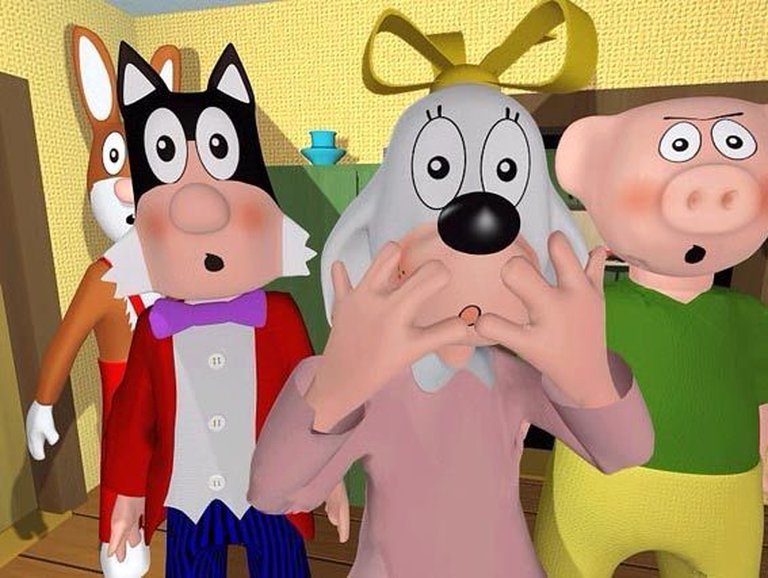
Čtyřlístek CD-Romek 20: Čarodějnice, also known as Čtyřlístek: Víkend s Luckou, is the 20th installment in the popular Czech educational adventure series, released in 2002. The game is part of an interactive CD-ROM distributed with CD-Romek magazine, featuring a mix of graphic adventure gameplay, mini-games, and puzzles designed to enhance children’s perception, memory, and ecological awareness. It also includes English language exercises, making it both entertaining and educational for young players. Set in a fantasy world, the game follows the beloved Čtyřlístek characters through a weekend adventure with Lucka, blending storytelling with skill-building activities.
Čtyřlístek CD-Romek 20: Čarodějnice: A Comprehensive Retrospective
Introduction
In the annals of Czech gaming history, few franchises have left as indelible a mark as Čtyřlístek. The beloved comic series, created by Jaroslav Němeček, transcended its printed origins to become a multimedia phenomenon, most notably through the CD-Romek series. Among these, Čtyřlístek CD-Romek 20: Čarodějnice (also known as Čtyřlístek: Víkend s Luckou) stands as a fascinating artifact of early 2000s educational gaming. Released on August 6, 2002, this title is not merely a game but a cultural touchstone, blending adventure, education, and the whimsical charm of its source material.
This review aims to dissect Čtyřlístek CD-Romek 20: Čarodějnice in exhaustive detail, exploring its development, narrative, gameplay, and legacy. Through this analysis, we will argue that while the game may not have achieved widespread critical acclaim, its significance lies in its innovative approach to edutainment and its role in preserving the Čtyřlístek legacy in the digital age.
Development History & Context
The Studio and Creators
Čtyřlístek CD-Romek 20: Čarodějnice was developed by Centauri Production s.r.o., a Czech studio renowned for its work on adventure games and educational software. Centauri Production was founded in the late 1990s and quickly established itself as a key player in the Czech gaming industry. The studio’s portfolio includes notable titles such as Pohádka o Mrazíkovi, Ivanovi a Nastěnce and the Memento Mori series. Their collaboration with Cenega Czech s.r.o., the publisher, was instrumental in bringing the CD-Romek series to life.
The CD-Romek series itself was a unique venture, combining a physical magazine with an interactive CD-ROM. This hybrid format was innovative for its time, offering a tangible connection between traditional media and digital entertainment. The series began in 2000, initially featuring localized Polish content before transitioning to original Czech adventures based on the Čtyřlístek comic series.
Technological Constraints and Innovations
The early 2000s were a period of rapid technological advancement in gaming. However, Čtyřlístek CD-Romek 20: Čarodějnice was constrained by the hardware limitations of its era. The game was designed to run on Windows PCs, which at the time were typically equipped with modest specifications. This necessitated a focus on efficient asset management and straightforward gameplay mechanics.
Despite these constraints, the game leveraged the CPAL2 engine, a proprietary technology developed by Centauri Production. This engine allowed for the integration of various gameplay elements, including point-and-click adventure mechanics, mini-games, and educational content. The CPAL2 engine was versatile, supporting multiple languages and facilitating the inclusion of English language lessons, a hallmark of the CD-Romek series.
The Gaming Landscape of 2002
The early 2000s were a transitional period for the gaming industry. The rise of 3D graphics and immersive gameplay experiences was well underway, with titles like Half-Life and The Legend of Zelda: Ocarina of Time setting new standards. However, the educational gaming sector remained relatively niche, often overshadowed by mainstream commercial successes.
In this context, Čtyřlístek CD-Romek 20: Čarodějnice carved out a unique space. It was part of a broader trend of edutainment software aimed at children, blending entertainment with educational content. The game’s focus on logic puzzles, memory exercises, and language learning was indicative of a growing recognition of the potential of video games as educational tools.
Narrative & Thematic Deep Dive
Plot Overview
Čtyřlístek CD-Romek 20: Čarodějnice follows the adventures of the iconic quartet from Třeskoprsky: Fifinka, Bobík, Myšpulín, and Pinďa. The game’s narrative is centered around a weekend spent with Lucka, a character who adds a new dynamic to the group’s usual antics. The story unfolds as the characters embark on a series of adventures, encountering various challenges and puzzles that test their wits and teamwork.
The game’s title, Čarodějnice (Witches), hints at a supernatural theme, though the actual narrative is more grounded in the everyday adventures of the characters. The story is lighthearted and whimsical, staying true to the spirit of the Čtyřlístek comics. The characters’ interactions are filled with humor and camaraderie, making the game accessible and engaging for its target audience of young players.
Character Analysis
The four main characters—Fifinka, Bobík, Myšpulín, and Pinďa—are central to the game’s appeal. Each character brings a unique personality and set of skills to the table:
- Fifinka: The de facto leader of the group, Fifinka is intelligent, resourceful, and often the voice of reason. Her role in the game is to guide the player through various challenges, offering hints and solutions when needed.
- Bobík: Bobík is the group’s resident inventor and tinkerer. His technical prowess is frequently called upon to solve puzzles and overcome obstacles.
- Myšpulín: Myšpulín is the most adventurous and impulsive of the group. His enthusiasm often leads the characters into new and exciting situations.
- Pinďa: Pinďa is the youngest and most innocent member of the group. His naivety and curiosity provide a counterbalance to the more experienced characters.
The interactions between these characters are a highlight of the game, capturing the essence of the Čtyřlístek comics. The dialogue is witty and engaging, with each character’s unique voice shining through.
Themes and Educational Content
At its core, Čtyřlístek CD-Romek 20: Čarodějnice is an educational game. It incorporates a variety of learning activities designed to engage young players and foster cognitive development. The game’s educational content is seamlessly integrated into its narrative and gameplay, making learning an organic part of the experience.
Key educational themes include:
- Logic and Problem-Solving: The game features a range of puzzles that require players to think critically and use logical reasoning. These puzzles vary in complexity, ensuring that players of different skill levels are challenged.
- Memory and Perception: Mini-games such as memory matching and pattern recognition exercises help players develop their memory and perceptual skills.
- Ecological Thinking: The game includes activities that promote environmental awareness, encouraging players to think about the impact of their actions on the natural world.
- English Language Learning: One of the most innovative aspects of the game is its inclusion of English language lessons. These lessons are designed to be fun and engaging, using interactive exercises to teach basic vocabulary and grammar.
The game’s educational content is presented in a way that is both entertaining and effective. By blending learning with gameplay, Čtyřlístek CD-Romek 20: Čarodějnice succeeds in making education an enjoyable experience.
Gameplay Mechanics & Systems
Core Gameplay Loop
Čtyřlístek CD-Romek 20: Čarodějnice is a graphic adventure game with a strong emphasis on puzzle-solving and exploration. The core gameplay loop involves navigating through various environments, interacting with objects and characters, and solving puzzles to progress the story.
The game’s point-and-click interface is intuitive and user-friendly, making it accessible to young players. Players use the mouse to interact with the game world, clicking on objects to examine them, pick them up, or use them in combination with other items. The inventory system is straightforward, allowing players to keep track of collected items and use them as needed.
Mini-Games and Educational Activities
In addition to the main adventure, the game features a variety of mini-games and educational activities. These activities serve as both a diversion from the main story and a means of reinforcing the game’s educational themes.
Some notable mini-games include:
- Pexeso: A memory-matching game that challenges players to remember the locations of various cards.
- Honička veselého houbaře: A chase game that tests players’ reflexes and spatial awareness.
- English Language Exercises: Interactive lessons that teach basic English vocabulary and grammar through fun and engaging activities.
These mini-games are well-integrated into the overall experience, providing a welcome break from the main adventure while still contributing to the game’s educational goals.
Combat and Character Progression
Unlike many adventure games of its era, Čtyřlístek CD-Romek 20: Čarodějnice does not feature traditional combat mechanics. Instead, the game focuses on puzzle-solving and exploration, with character progression tied to the completion of various challenges and the acquisition of new items.
The game’s lack of combat is not a detriment but rather a reflection of its target audience and educational goals. By eschewing violent gameplay mechanics, the game creates a safe and engaging environment for young players to explore and learn.
User Interface and Accessibility
The game’s user interface is designed with young players in mind. The point-and-click mechanics are intuitive, and the inventory system is easy to navigate. The game also features a hint system that provides guidance to players who may be stuck on a particular puzzle.
One of the game’s strengths is its accessibility. The controls are simple and responsive, and the game’s visual and auditory cues are clear and easy to understand. This makes the game suitable for players of varying skill levels, ensuring that even younger children can enjoy the experience.
World-Building, Art & Sound
Setting and Atmosphere
Čtyřlístek CD-Romek 20: Čarodějnice is set in the fictional town of Třeskoprsky, the home of the Čtyřlístek characters. The game’s environments are colorful and vibrant, capturing the whimsical charm of the comic series. From the bustling streets of Třeskoprsky to the serene beauty of the surrounding countryside, the game’s world is richly detailed and full of life.
The game’s atmosphere is lighthearted and playful, reflecting the spirit of the Čtyřlístek comics. The characters’ adventures are filled with humor and excitement, creating a sense of wonder and discovery that is sure to captivate young players.
Visual Direction
The game’s visual style is heavily influenced by the Čtyřlístek comics, with bright, colorful graphics and exaggerated character designs. The art direction is consistent with the source material, ensuring that fans of the comics will feel right at home.
The game’s environments are rendered in a side-view perspective, with fixed or flip-screen transitions between areas. This approach allows for a high level of detail in each scene, with intricate backgrounds and animated characters bringing the world to life.
Sound Design and Music
The game’s sound design is simple but effective, with clear and distinct sound effects that enhance the gameplay experience. The music is cheerful and upbeat, complementing the game’s lighthearted tone.
One of the standout features of the game’s audio is its voice acting. The characters are brought to life by a talented cast of voice actors, including Ota Jirák (Myšpulín, Pinďa, Bobík), Helena Brabcová (Fifinka, Lucka), and Pavel Tesař (Bobíkův kamarád). The voice acting is top-notch, with each character’s unique personality shining through in their delivery.
Reception & Legacy
Critical and Commercial Reception
Čtyřlístek CD-Romek 20: Čarodějnice was released to a mixed but generally positive reception. Critics praised the game’s educational content and its faithful adaptation of the Čtyřlístek comics. The game’s accessibility and engaging gameplay were also highlighted as strengths.
Commercially, the game performed well, thanks in part to its distribution as part of the CD-Romek magazine. The hybrid format of the magazine and CD-ROM proved to be a successful marketing strategy, attracting both fans of the comics and parents looking for educational software for their children.
Evolution of Reputation
Over the years, Čtyřlístek CD-Romek 20: Čarodějnice has gained a reputation as a cult classic among fans of the Čtyřlístek series. Its unique blend of adventure, education, and humor has endeared it to a generation of players who grew up with the CD-Romek series.
The game’s legacy is also tied to its role in preserving the Čtyřlístek franchise in the digital age. As one of the earliest digital adaptations of the comics, Čtyřlístek CD-Romek 20: Čarodějnice helped to introduce the characters to a new audience and ensured their continued relevance in the years to come.
Influence on Subsequent Games
The success of Čtyřlístek CD-Romek 20: Čarodějnice paved the way for future installments in the CD-Romek series. The game’s innovative approach to edutainment and its seamless integration of educational content into gameplay have influenced subsequent titles in the series and beyond.
The game’s use of the CPAL2 engine also set a precedent for future Centauri Production titles, demonstrating the versatility and effectiveness of the technology. The engine’s support for multiple languages and its ability to handle a variety of gameplay mechanics have made it a valuable tool for educational game development.
Conclusion
Čtyřlístek CD-Romek 20: Čarodějnice is a remarkable achievement in the realm of educational gaming. Its faithful adaptation of the Čtyřlístek comics, engaging gameplay, and innovative educational content make it a standout title in the CD-Romek series.
While the game may not have achieved the same level of critical acclaim as some of its contemporaries, its significance lies in its role as a cultural touchstone and its contribution to the evolution of edutainment. Čtyřlístek CD-Romek 20: Čarodějnice is a testament to the power of video games as educational tools and a shining example of how beloved characters can be brought to life in new and exciting ways.
In the annals of Czech gaming history, Čtyřlístek CD-Romek 20: Čarodějnice deserves a place of honor. It is a game that has captivated generations of players, introduced countless children to the joys of learning, and ensured the continued relevance of the Čtyřlístek franchise in the digital age. For these reasons, it stands as a true classic of its genre.